Elise Blackwell - The Lower Quarter
Здесь есть возможность читать онлайн «Elise Blackwell - The Lower Quarter» весь текст электронной книги совершенно бесплатно (целиком полную версию без сокращений). В некоторых случаях можно слушать аудио, скачать через торрент в формате fb2 и присутствует краткое содержание. Год выпуска: 2015, Издательство: Unbridled Books, Жанр: Современная проза, на английском языке. Описание произведения, (предисловие) а так же отзывы посетителей доступны на портале библиотеки ЛибКат.
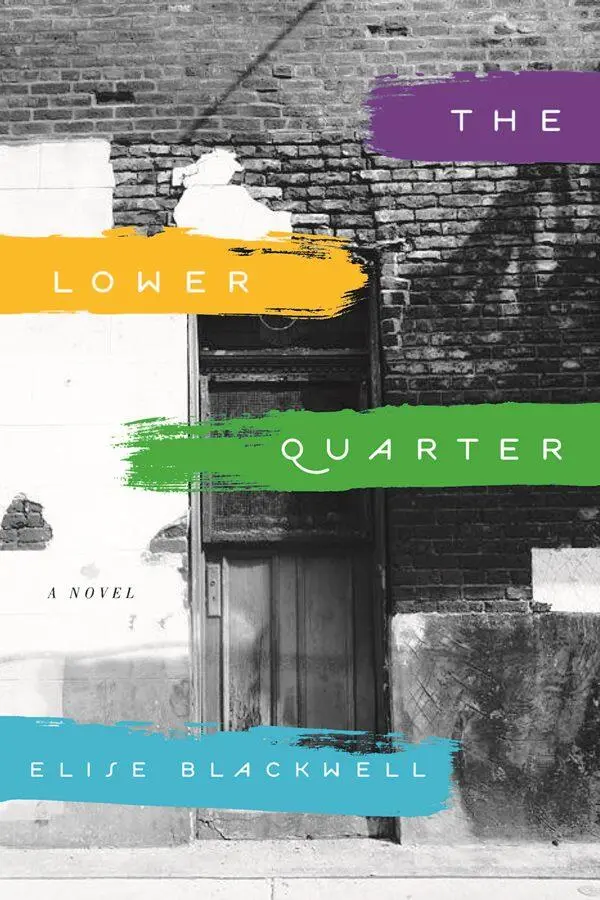
- Название:The Lower Quarter
- Автор:
- Издательство:Unbridled Books
- Жанр:
- Год:2015
- ISBN:нет данных
- Рейтинг книги:4 / 5. Голосов: 1
-
Избранное:Добавить в избранное
- Отзывы:
-
Ваша оценка:
The Lower Quarter: краткое содержание, описание и аннотация
Предлагаем к чтению аннотацию, описание, краткое содержание или предисловие (зависит от того, что написал сам автор книги «The Lower Quarter»). Если вы не нашли необходимую информацию о книге — напишите в комментариях, мы постараемся отыскать её.
An acquaintance, Clay Fontenot, who has enabled a wide variety of personal violations in his life, some of which he has enjoyed, is the scion of a powerful New Orleans family.
And Marion is an artist and masseuse from the Quarter who has returned after Katrina to rebuild her life.
When Eli, a convicted art thief, is sent to find the missing painting, all of their stories weave together in the slightly deranged halls of the Quarter.
The Lower Quarter — читать онлайн бесплатно полную книгу (весь текст) целиком
Ниже представлен текст книги, разбитый по страницам. Система сохранения места последней прочитанной страницы, позволяет с удобством читать онлайн бесплатно книгу «The Lower Quarter», без необходимости каждый раз заново искать на чём Вы остановились. Поставьте закладку, и сможете в любой момент перейти на страницу, на которой закончили чтение.
Интервал:
Закладка:
There were days that she pedaled home disappointed, still anxious, still craving. Usually this happened because she could not suspend her disbelief, could not experience Clay’s power as real and unchallengeable. Once it was because the narrative was one of infantilization, which she found comic and nonsexual. But most often she could believe in the stories he told, or that they plotted together, and so got what she came for.
There were days on which things went too far and left her rearranged, put back together after the taking apart but not quite in the right order. She would notice the next day an extra piece, happen upon an unrecognizable shard of herself. Like those common dreams of a long-known house revealed to hold a corridor to a secret room, the discovery was unsettling but not unpleasant. Yet she worried, often, that the opposite process was occurring unnoticed, that she would on some day reach for some necessary part of her psyche — some defense mechanism or piece of knowledge — and find it missing.
Yet when things went too far she never stopped them, never used the word they agreed would break the scene or even the yellow-light word, and she held to the idea that Clay would not abide by it if she did. She needed to believe that events were not in her hands, that she couldn’t stop things even if she really tried. It was part of the suspension of disbelief necessary for real release. It was a point of pride, too. She was stronger than Clay was, and he could not make her say the word. He had met his match.
At the end of one visit, as she dressed and took stock of the damage, estimating the longevity of her new marks, she told him she was considering a tattoo.
“Do you want to know what I think?” he asked, his voice now soft.
She waited, nodded. “That’s why I mentioned it.”
“I think that my opinion matters only in this room. Here you do what I tell you or else. Out there, you shouldn’t think of me at all. Make your own decisions.”
“I wasn’t agreeing to do what you said.” Marion’s voice hardened in her throat, leaving her mouth holding something solid. “I only wanted to know what you thought.”
“I think that you should do whatever you want. But if you do get one, I would like to watch.”
Her jaw relaxed a little. “So you can see me in pain.”
He smiled at her — a rarity. “Another kind of pain, yes, for me. As a voyeur. I would like to witness it, but it’s not the same thing when I’m not causing it. It would be a diversion. Or maybe I should say a delicacy — something you don’t really like that much but is enjoyable because rare.”
She told him she’d think about it, but she’d already decided that she would visit Eddie and not invite Clay to watch. He would discover the tattoo later and know that he’d missed out, that another man had been alone with her pain. The idea of what might follow already formed a small thrill.
She had a dilemma, then, and she weighed the cost of paying Eddie for his work and having the blond woman — Johanna — restore some of her paintings. She thought that Eddie would tell her to choose art, against his own interests. Or maybe he would tell her to cut her losses and start over. That was what Johanna had told her before pity had made her generous. It’s what Johanna would surely repeat after she evaluated the two canvases that Marion had brought her to assess: a small, angled oil of a pawnshop that had once been her parents’ furniture shop and a horizontal seascape darkened by the shadow of the Beau Rivage casino over the Gulf — the original building and not the new casino so quickly built in its place after the storm.
Her doubled desire for money, on top of her habitual need for it, made it all the more strange that she said no when a call came in one afternoon while she was sitting at home, idle. Nothing she did paid more than strapping herself in black and putting some man in his place, and she didn’t have a shift at Molly’s that night. Still, she said no.
She was seized by the idea that surfaced from time to time: Eventually her number would come up. A scene would turn unpleasant, get out of her control, and she’d be hurt in ways she didn’t want to be by someone she didn’t want to be hurt by — either on the job or on the way home, alone on her bike at night. She’d declined calls on instinct before, the same way that some people, once in a while, give up their seat on a flight whose number doesn’t sound quite right or whose pilot looks tipsy, only to feel foolish when they arrive at their destination ten hours late to discover that no airline crash made the news that day.
Of course in her line of work, she never knew if she had dodged tragedy or not. Maybe a girl had gone missing and no one had noticed, or maybe a potential killer had struck out on the phone across the board and been forced to wait for another day. Maybe she’d saved her life, or maybe she’d just missed a nice paycheck. What bothered her most on these occasions was that she’d never get to know which way it was.
Still, she felt the relief of potential escape when she declined this particular call. Yet fear of losing the lottery was not the only reason she turned down the gig, because what she did next was take an inventory of her supplies, check the freshness of her paints, count how many new canvases she had and how many she owned that she could paint over without regret.
When the phone rang again, she prepared a more vehement no, but the offer was different this time. The Ritz-Carlton had recently approved her résumé for its waiting list. There was a room massage booked and a sick therapist. “Yes,” she said, “I’ll be there.” She’d been trying to get in at that hotel for weeks, and perhaps the single session would lead to something more permanent. She didn’t have time to prepare properly, but she switched her cutoffs for cargo pants that hid the marks on the backs of her thighs, changed T-shirts, and pulled her hair back into a bun she hoped looked more sanitary than it was.
There was rigmarole accessing the club level of the hotel — more than if she’d been dressed for her seedier line of work — but everything was easy after that. The portable table was already set up in the room, and the man — tall and thin and the blackest man she’d ever seen — answered the door as soon as she knocked.
“I’m sorry I’m late,” she said. “I was just asked to fill in.”
“No worries, no worries. Just tell me how this goes.” His voice was deep, the accent the Queen’s English after being transported to some part of the world being colonized.
It struck her how the beginning of sessions wasn’t much different whether she was present as massage therapist or dominatrix.
“I’ll step into the bathroom. Disrobe to your comfort level and get under the sheet, on your stomach, your face in the face cradle. I’ll knock before I come back out to make sure you’re ready.”
When she returned, she placed her hand on his back through the sheet, establishing the physical connection that she would maintain for the entire hour. She swallowed tension from her throat and mentally prepared her gentle voice, slightly husky. “Before we start, I’ll ask if there are any areas that are talking to you, that need special attention.”
“It’s all good and all bad, so proceed with your usual approach. I am going to warn you, though, before you lower the sheet, that I have some bad scars on my back. Don’t be frightened of hurting them — they are old and long healed. I just don’t want to startle you.”
Marion felt a flutter in her throat, which she swallowed as quietly as she could. She started, as she usually did, by massaging through the sheet. Easing into intimacy, they called it in school, though it was also intended to warm the client before uncovering him. Even through the thick, high-thread-count cotton, she could feel the webbing: a woven mat across most of his back down to his waist. To hide her surprise required concentration, so she focused on delivering the massage as though the grooves and pocks were not there, reaching for the muscle below. She went a bit harder than usual, even, proving to him or at least to herself that she was nonchalant, that she was a girl who’d seen everything and was moved by nothing.
Читать дальшеИнтервал:
Закладка:
Похожие книги на «The Lower Quarter»
Представляем Вашему вниманию похожие книги на «The Lower Quarter» списком для выбора. Мы отобрали схожую по названию и смыслу литературу в надежде предоставить читателям больше вариантов отыскать новые, интересные, ещё непрочитанные произведения.










Обсуждение, отзывы о книге «The Lower Quarter» и просто собственные мнения читателей. Оставьте ваши комментарии, напишите, что Вы думаете о произведении, его смысле или главных героях. Укажите что конкретно понравилось, а что нет, и почему Вы так считаете.