Elise Blackwell - The Lower Quarter
Здесь есть возможность читать онлайн «Elise Blackwell - The Lower Quarter» весь текст электронной книги совершенно бесплатно (целиком полную версию без сокращений). В некоторых случаях можно слушать аудио, скачать через торрент в формате fb2 и присутствует краткое содержание. Год выпуска: 2015, Издательство: Unbridled Books, Жанр: Современная проза, на английском языке. Описание произведения, (предисловие) а так же отзывы посетителей доступны на портале библиотеки ЛибКат.
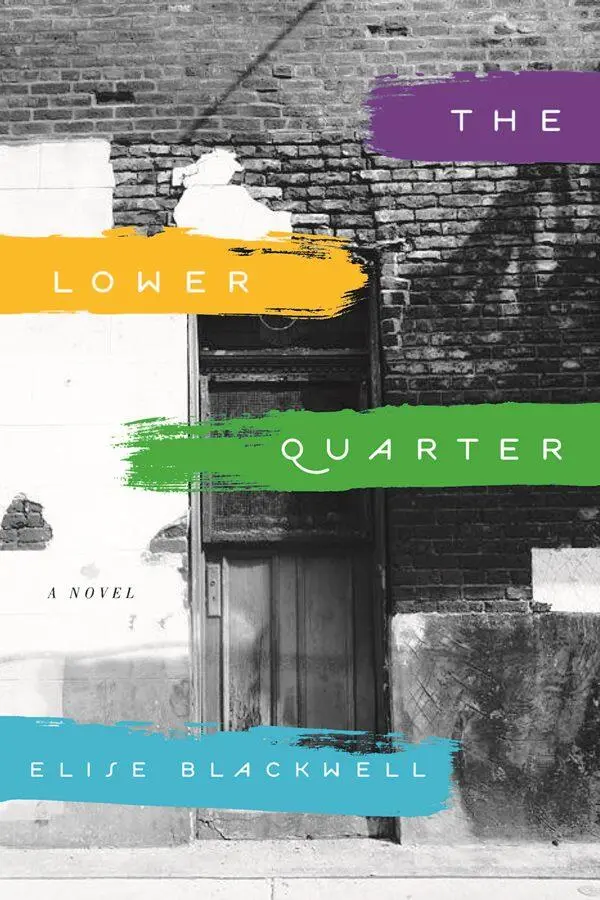
- Название:The Lower Quarter
- Автор:
- Издательство:Unbridled Books
- Жанр:
- Год:2015
- ISBN:нет данных
- Рейтинг книги:4 / 5. Голосов: 1
-
Избранное:Добавить в избранное
- Отзывы:
-
Ваша оценка:
The Lower Quarter: краткое содержание, описание и аннотация
Предлагаем к чтению аннотацию, описание, краткое содержание или предисловие (зависит от того, что написал сам автор книги «The Lower Quarter»). Если вы не нашли необходимую информацию о книге — напишите в комментариях, мы постараемся отыскать её.
An acquaintance, Clay Fontenot, who has enabled a wide variety of personal violations in his life, some of which he has enjoyed, is the scion of a powerful New Orleans family.
And Marion is an artist and masseuse from the Quarter who has returned after Katrina to rebuild her life.
When Eli, a convicted art thief, is sent to find the missing painting, all of their stories weave together in the slightly deranged halls of the Quarter.
The Lower Quarter — читать онлайн бесплатно полную книгу (весь текст) целиком
Ниже представлен текст книги, разбитый по страницам. Система сохранения места последней прочитанной страницы, позволяет с удобством читать онлайн бесплатно книгу «The Lower Quarter», без необходимости каждый раз заново искать на чём Вы остановились. Поставьте закладку, и сможете в любой момент перейти на страницу, на которой закончили чтение.
Интервал:
Закладка:
“One thing,” she said to Eli. “I’m going to put an asterisk by the name of one of the appraisers. Prejean is his last name. Go gently if at all with him.”
Eli borrowed her gesture, raising his eyebrows.
“What I mean,” Felicia said, “is that I wouldn’t tell him who you work for. He’s out on his own now, but a couple of years ago he was working for one of our excellent local institutions. The Lost Art Register got in touch with him — I don’t think it was Ted but someone else — because there was a lead on a painting that had been stolen from the museum — a Pissarro or Sisley, I believe it was. The LAR offered to pursue it for a fee. The museum couldn’t really afford it, or didn’t think it had to, and went to the police instead. I don’t know exactly what happened, but the painting still has never been recovered, and folks at the museum harbor some hard feelings.”
Eli set down his fork, lifted it again. “I’m sorry to hear that.”
“Well, it’s not like Ted pretends your outfit is a law-enforcement agency or a nonprofit. You guys find a lot of stuff that would never been found if it was left up to local police or even the national enforcement agencies, but do go gently with Prejean if you talk to him. My impression of his impression is that he thinks the LAR knew where the painting was or could have put your hands on it but didn’t and then, because you weren’t getting paid, refused to cooperate with the police.”
Eli started to say something apologetic, but Felicia hushed him.
“It was before your time. Anyway, as for restorers, there’s a woman who works for us sometimes. She’s excellent but a bit of an odd bird. Has a shop in the Lower Quarter, on Decatur.”
The woman’s face came to him, almost as though she had just walked into the restaurant, and he sat up straight, recognizing the feeling as attraction. He’d never in his life — not once — chosen a blond over a brunette or light eyes over brown. But here he was, almost paralyzed by the thought of the absent blond even as he sat across the table from an attractive and thoroughly present brunette.
“I met her,” he said as plainly as possible. “Do you know where she’s from?”
Felicia shook her head, took a sip of the new beer. “Eastern or Central Europe. Some people refer to her as Polish— Polack is the word they use, I’m sorry to say — but I don’t think that’s right. I’m pretty sure she’s not from Belgium, though, if that’s what you were thinking, given the artist.”
When they were done, Eli paid the bill using the company credit card Ted had told him to live it up with.
“I’ll email that list this evening,” Felicia said and thanked him, a bit too exuberantly relative to the price of the meal.
He told her that it was he who was indebted for her time, feeling more confident about his ability to deliver his expected lines than he had been before lunch.
“Just let me know the outcome,” she said, her voice slightly huskier than it had been at the beginning of lunch. “I like mysteries.”
They hugged on the sidewalk — she initiating the contact and Eli accepting it awkwardly, not knowing whether to go first to the left or the right for the double-air kiss.
“Speaking of Belgium,” she said, turning back, “there’s a man in town from an old New Orleans family — his father and his great-grandfather were mayors. He actually served as ambassador to Belgium back a ways. At least I think it was Belgium, though it might have been the Netherlands or Liechtenstein or something. I can’t imagine he’d be mixed up with a stolen painting — if only because he’s a man who can buy whatever he wants — but he is a collector, paintings especially. I’ll include his name in the list.”
Eli had taken a cab to the restaurant, in part so that he could find it, but he decided to make the long walk back to the Lower Quarter. The humidity that had assaulted him on his arrival remained, but some of the heat had fallen away. Also, he was getting used to humidity again. Growing up, he’d never thought about heat or humidity or even mosquitoes, but he knew how quickly a person could get used to comfort. It was an embarrassing fact about the human species, really. He worried that if he stayed in Los Angeles much longer, he wouldn’t be able to tolerate winter or summer anywhere else. Even though it seemed as likely as not that he would live there for a long time — even after he was off parole, no one else would hire him at the kind of salary he was pulling, if at all — it still didn’t seem real to him. At any moment, his life could change. It wasn’t simply that he needed to believe this; he did believe it.
As he walked down Magazine Street and around Lee Circle, he knew he was walking not to his hotel but to the art-restoration studio on Decatur Street. That the two were in the same direction allowed him to pretend that this was not what he was doing — or at least not to think about it much. A good thing, because he had no idea what he was going to say to her when he got there.
He walked most of the Quarter’s length on Decatur, passing by a pair of tourist bars occupying spaces that had housed some of the first gay bars in the country before stopping in the Louisiana Music Factory. The owner had thinning long hair collected in a ponytail, the kind of look Eli associated with bad taste in music, or good taste in jazz only. Still, Eli bought some CDs on the man’s recommendation and arranged for them to be mailed to his office in Los Angeles: a funk album from Galactic with an assortment of local celebrity guest singers, a zydeco band he’d heard of, a female singer he’d never heard of, and an up-and-coming local band called the Resurrectionists. He continued along Decatur, skirting Jackson Square, where he turned down a solicitation for a horse-and-carriage ride and reminded himself to cross over later to look at the river.
A half block short of the restorer’s studio, he entered a bar and bought a beer so that he could use the bathroom and choose an approach. The bartender was short and thin — early twenties, probably — with long, almost black hair. She was very pretty, almost delicate except for the leathery toughness of her expression. She looked angry, or maybe just hardened in a way she seemed too young for. A large group of men entered just after Eli, and she worked quickly, her movements efficient, to fill their complicated orders and match person to drink. All she said to Eli and to the other men was “What’ll it be?” and the price of their drinks when she delivered them. As soon as she made change or returned a credit card, she moved on to someone else.
On the door of the bathroom was a sign that read, “One customer per bathroom or you will be asked to leave.” Eli remembered seeing, long ago in a San Juan nightclub, a couple having sex on a chair, the woman’s panties around one ankle as she straddled her seated man, the skirt of her dress partially covering his thighs their only effort to conceal what they were doing. Just over a year later he’d found out what it meant to want someone that intensely. Te quiero . Now, and for the first time, this memory did not trigger the usual image of dark hair on a white shoulder, the stab to his solar plexus.
From the sidewalk, he watched the blond woman working through the windows of her studio. Her movements were as deliberate as the bartender’s but slower, responding not to the demands of people but to the rhythms of her own work with the inanimate objects she treated as though they might be breathed to life yet. When he’d seen her before, when he’d helped her carry in canvases from her van, she’d seemed uncomfortable, self-conscious and almost cautious or at least restrained in her gestures. Now that she was alone — or thought she was — she seemed at ease in her body. She stood as she cleaned a painting that lay flat on her worktable, her feet planted but her body making small twists back and forth in response to the movements of her hands. She wore faded slim jeans and a white T-shirt. Her hair hung long and straight on her back, and her feet were bare on the old wooden floor. He imagined how the direct contact with the old wood floor felt — felt to her, would feel to him if he were in her place.
Читать дальшеИнтервал:
Закладка:
Похожие книги на «The Lower Quarter»
Представляем Вашему вниманию похожие книги на «The Lower Quarter» списком для выбора. Мы отобрали схожую по названию и смыслу литературу в надежде предоставить читателям больше вариантов отыскать новые, интересные, ещё непрочитанные произведения.







Обсуждение, отзывы о книге «The Lower Quarter» и просто собственные мнения читателей. Оставьте ваши комментарии, напишите, что Вы думаете о произведении, его смысле или главных героях. Укажите что конкретно понравилось, а что нет, и почему Вы так считаете.