Michael Crummey - Sweetland
Здесь есть возможность читать онлайн «Michael Crummey - Sweetland» весь текст электронной книги совершенно бесплатно (целиком полную версию без сокращений). В некоторых случаях можно слушать аудио, скачать через торрент в формате fb2 и присутствует краткое содержание. Год выпуска: 2014, Издательство: Doubleday Canada, Жанр: Современная проза, на английском языке. Описание произведения, (предисловие) а так же отзывы посетителей доступны на портале библиотеки ЛибКат.
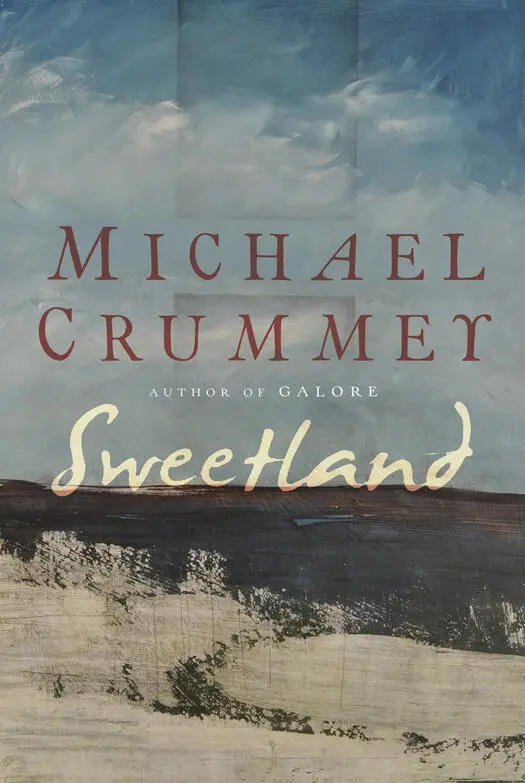
- Название:Sweetland
- Автор:
- Издательство:Doubleday Canada
- Жанр:
- Год:2014
- ISBN:нет данных
- Рейтинг книги:3 / 5. Голосов: 1
-
Избранное:Добавить в избранное
- Отзывы:
-
Ваша оценка:
Sweetland: краткое содержание, описание и аннотация
Предлагаем к чтению аннотацию, описание, краткое содержание или предисловие (зависит от того, что написал сам автор книги «Sweetland»). Если вы не нашли необходимую информацию о книге — напишите в комментариях, мы постараемся отыскать её.
That coot is Moses Sweetland. Motivated in part by a sense of history and belonging, haunted by memories of the short and lonely time he spent away from his home as a younger man, and concerned that his somewhat eccentric great-nephew will wilt on the mainland, Moses refuses to leave. But in the face of determined, sometimes violent, opposition from his family and his friends, Sweetland is eventually swayed to sign on to the government's plan. Then a tragic accident prompts him to fake his own death and stay on the deserted island. As he manages a desperately diminishing food supply, and battles against the ravages of weather, Sweetland finds himself in the company of the vibrant ghosts of the former islanders, whose porch lights still seem to turn on at night.
Sweetland — читать онлайн бесплатно полную книгу (весь текст) целиком
Ниже представлен текст книги, разбитый по страницам. Система сохранения места последней прочитанной страницы, позволяет с удобством читать онлайн бесплатно книгу «Sweetland», без необходимости каждый раз заново искать на чём Вы остановились. Поставьте закладку, и сможете в любой момент перейти на страницу, на которой закончили чтение.
Интервал:
Закладка:
What the Christ was that? he asked.
I know, she said. Tell your friends. And she winked at him. Marion, her name was. She was still wearing the mustard-yellow polyester uniform from the lunch counter, a blue name tag pinned above her breast.
Nothing more then before Effie Burden fumbling at his fly in Bob-Sam’s wagon on the way to the light at the Mackerel Cliffs.
And that was the end of such things for him.
He still walked as far as the lighthouse on Sundays if the weather was anywhere shy of miserable. It was a slow trip out, an hour longer than walking in summer. He didn’t bother trying to break into the light tower at Burnt Head, built a small fire in the lee of the keeper’s house and boiled snow-water for tea, sitting on his coat, feeding the dog stale Purity crackers and salt fish and slivers of bottled beet.
Before starting back he walked down past the house to look out at the Fever Rocks and beyond them to the busy grey-blue of the ocean. He thought he might catch a glimpse of a container ship swinging wide for the eastern seaboard of the States, some evidence of the world rumoured beyond the island’s ark. But there was only the endless conveyor belt of the waves ticking toward the shoreline.
He never went down as far as the cliffs, not since the night he’d watched the crowd assemble there in their echoing cathedral silence. A lunatic’s vision, he expected, though something about it seemed beyond his capacity for fabrication, even drunk as he was. And he felt it would be a trespass to walk where those strangers had been standing, hushed and oddly expectant. He couldn’t recall a single detail of those faces in the light of day but it still niggled at him, the sense that he’d known them in another lifetime, that their names were adrift below the surface and just about to come to him. But he never managed to hook a single one.
Since the first snow of the fall he’d been taking the short detour to the new cemetery on his way back down into the cove. He walked through the rows to spend a few minutes with the dead lying there. His closest blood lined off near the back fence, his mother and Ruthie, Uncle Clar and Jesse.
Jesse had liked to follow Sweetland up to the cemetery when he cut the grass or spent a morning painting the fence. It was the only time Sweetland actively discouraged the boy’s company, knowing it would lead to questions about Hollis’s absent marker. Clara thought that might be the reason Jesse fixated on him — the lack of definition to the loss, the absence of a clear resting place. The thought that Hollis was somewhere out there still.
It makes Hollis sad, Jesse said one afternoon. Not having a headstone with the others.
Is that right? Sweetland said.
It makes him feel lonely.
Well, boo-fucken-hoo. Tell him when he stops wandering around the cove with you, maybe we’ll put one up for him.
And Jesse had carried on a dialogue with Sweetland’s dead brother then, walking through the graveyard to discuss the size and colour and style of headstone Hollis might prefer. It made Sweetland nearly mental at the time, listening to that one-sided conversation, and he told Jesse to shut up or bugger off home out of it. But he had less and less room to judge the youngster. He knelt to clear the fresh fall of snow from the names and dates on the stones, Jesse’s and Uncle Clar’s and Ruthie’s and his mother’s. Queenie Coffin’s and Effie Priddle’s. Old Mr. Vatcher and Sara Loveless. Saying hello to each of them aloud and telling them the weather and what he planned to cook for his supper. Like a Jesus idiot.
The flour he’d bought in Miquelon was brown and had no preservatives and he lost most of it to mould and weevils by the new year. He’d known there wasn’t enough salt meat to see him through the winter, even rationing it as he did. The rabbit and occasional brown trout and cured cod he lived on was so lean he couldn’t keep the flesh on his bones. His clothes began to hang off his frame in unfamiliar ways, sloughing at his shoulders and hips. He added an extra hole in his belt with a hammer and four-inch nail, to keep his pants from slipping around his arse. He ran out of store-bought liquor and salt beef halfway through January month. He had a final meal of rabbit stew the first week of February and he cut the last morsels of meat on his plate into bite-sized chunks, sharing them out with the dog. He put the plate on the floor to be licked clean of gravy and when the dog looked up again he showed his empty hands. “All gone, Mr. Fox,” he said.
The snow in the woods on the mash was too deep and rotten to allow for setting snares and, with the exception of a single partridge he’d managed to shoot on a walk to the lighthouse, he subsisted on homebrew and root vegetables and the cod he’d put up in the fall. He had eaten through the fish that was properly cured. All that was left to him was under-salted and slimy, the stacked layers of flesh gone green at the edges. He soaked the brine from the fish overnight and boiled it most of an afternoon, adding fresh water every hour, just to make it palatable. He put down a bowl for the dog, who nosed it awhile and walked away to lie three or four feet distant with its head on its paws. Sometimes the maggoty fish sat there a full day before the dog gave in to its hunger, chewing at the sour meat with an obvious distaste Sweetland wouldn’t have thought an animal capable of.
“Go catch your own goddamn dinner, you don’t like it,” he said.
On occasion the dog did just that, carrying home bones it discovered up on the mash or dug out of someone’s backyard garbage pile, and it lay near Diesel’s house, grinding at a long-discarded T-bone or the jaw of a sheep or a young cow.
Sweetland saw the animal trotting up from the waterfront one afternoon with its head held high, some flaccid creature in its mouth. He stood at the kitchen window as the dog came closer, watching it stop now and then to drop its cargo and walk around it, until it had found a more manageable way to carry the awkward load. It was a bullbird the dog had gotten hold of, the black and white creature about the same size as the dog’s head. Dovekies they were called elsewhere in the world, according to Jesse.
It was an unlikely catch. Sweetland hadn’t often seen bullbirds west of Cape Race and they were usually gone out to sea by the first of February. He knelt over the dog, who growled to have him so close to his prize. “All right there, Mr. Fox,” he said, and he gave the dog a flick with the back of his hand. He picked up the bird and turned it over. It wasn’t oiled that he could tell, and there was no obvious injury to explain the dog’s luck. Sweetland ran a thumb along the breastbone and then stood to look out at the harbour, shading his eyes to see the water against the sun’s glare.
He went into the shed for a dip net stored in the rafters and walked down the path. Before he was halfway to the shoreline he could see them rolling in on the tidal surge. Dozens of bullbirds dead in the water, the corpses like tiny buoys off their moorings and drifting in past the breakwater. More again already grounded on the beach. Sweetland scooped up eight or ten and he walked back to the house with the loaded dip net on his shoulder, seawater dripping behind him.
He sat them in a row on the counter and leaned there a minute to look them over. He picked one up, turned it one side and the other, admiring the symmetry of the face. Beautiful creatures, he’d always thought. Sleek and delicate looking, plush as a child’s toy. Hard to imagine them spending months out on the winter Atlantic without ever coming ashore.
The bird’s breastbone jutted against his thumb beneath the down. They were all in the same emaciated condition, which likely meant they had starved. So little flesh on their bones he didn’t know if it would be worth the effort of cleaning them. But the thought of a single morsel of fresh meat was making his legs shake. He put on a pot of water to scald the birds, to make them easier to pluck. And while he waited for the pot to boil, he went back to the shoreline to gather more.
Читать дальшеИнтервал:
Закладка:
Похожие книги на «Sweetland»
Представляем Вашему вниманию похожие книги на «Sweetland» списком для выбора. Мы отобрали схожую по названию и смыслу литературу в надежде предоставить читателям больше вариантов отыскать новые, интересные, ещё непрочитанные произведения.







Обсуждение, отзывы о книге «Sweetland» и просто собственные мнения читателей. Оставьте ваши комментарии, напишите, что Вы думаете о произведении, его смысле или главных героях. Укажите что конкретно понравилось, а что нет, и почему Вы так считаете.