Hedi Kaddour - Waltenberg
Здесь есть возможность читать онлайн «Hedi Kaddour - Waltenberg» весь текст электронной книги совершенно бесплатно (целиком полную версию без сокращений). В некоторых случаях можно слушать аудио, скачать через торрент в формате fb2 и присутствует краткое содержание. Год выпуска: 2009, Издательство: Vintage, Жанр: Современная проза, на английском языке. Описание произведения, (предисловие) а так же отзывы посетителей доступны на портале библиотеки ЛибКат.
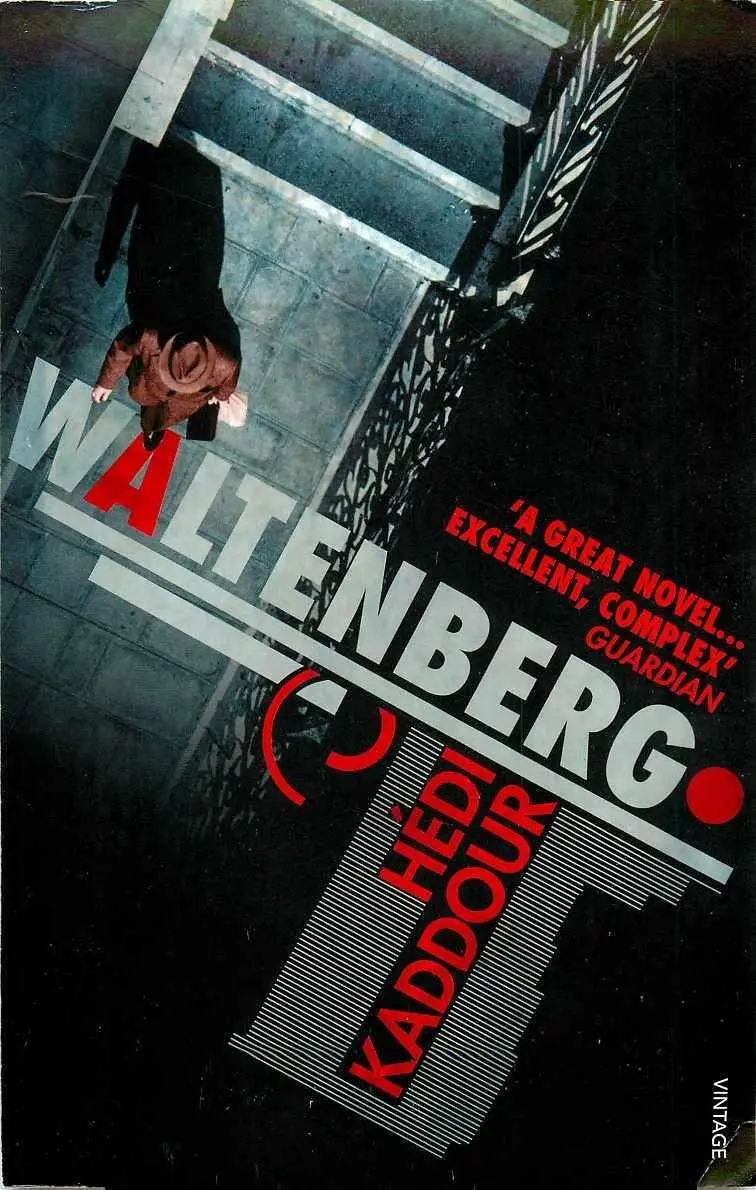
- Название:Waltenberg
- Автор:
- Издательство:Vintage
- Жанр:
- Год:2009
- ISBN:нет данных
- Рейтинг книги:3 / 5. Голосов: 1
-
Избранное:Добавить в избранное
- Отзывы:
-
Ваша оценка:
Waltenberg: краткое содержание, описание и аннотация
Предлагаем к чтению аннотацию, описание, краткое содержание или предисловие (зависит от того, что написал сам автор книги «Waltenberg»). Если вы не нашли необходимую информацию о книге — напишите в комментариях, мы постараемся отыскать её.
Waltenberg
Waltenberg — читать онлайн бесплатно полную книгу (весь текст) целиком
Ниже представлен текст книги, разбитый по страницам. Система сохранения места последней прочитанной страницы, позволяет с удобством читать онлайн бесплатно книгу «Waltenberg», без необходимости каждый раз заново искать на чём Вы остановились. Поставьте закладку, и сможете в любой момент перейти на страницу, на которой закончили чтение.
Интервал:
Закладка:
The sounds didn’t come from the back of his throat or his nose, it was more a spasm of the abdomen, the muscles of the abdomen, but not a command transmitted to the muscles of the abdomen, muscles which instinctually respond to something which comes from the entrails, a place where time does not exist, snatches of an ancient voice in the depth of me, it’s not my voice, I’ll tell you everything, the truth is a bitch, a voice from before my time, a voice trying to get out, Max is not listening now, he is no longer looking, he is absorbed into the voice, that voice from before, and the dead people in my life, mud in mouths, the man is talking to you and next moment you’re stuffing his right leg into a bag, a pal hands you something small, muddy, hairy, his moustache, stuck to what’s left of a rifle butt.
He had no right to go away like that, taking with him whole chunks of what you are, of what you had shown him, without him you’re nothing, what a mess, the kids, when they opened the doors of the cattle-trucks at Novosibirsk, gulag kids, rigor mortis well set in, you don’t take notes because you know you have to make them forget you’re a journalist, you say to the Red Army officer: war never kharacho , a show of fatalism you put on for him, actually you think it’s as normal as he does, though maybe he doesn’t find it at all normal but he hides it too, a fatalist, roll on peace, comrade journalist, we must be steel so that the bread of the future may finally be baked.
Mustn’t tell him what you think of his half-baked metaphors, all your humanity has shrunk to an urge to puke and you hate yourself for not being able to puke, be steel, comrade dickhead, stay silent, the voices of silence, these are the real voices of silence, I have peeled my mind like an orange, both halves, and I’ve left nothing in the middle, that’s what the Adventure is.
‘They made out I was just a joker,’ says Max, ‘a silly, clowning Clappique, whereas my real name is Carnival, all the more reason for turning me into a jester.’
Indicating Max, de Vèze says to Malraux:
‘He hasn’t changed one bit, so why is he the only one you’ve allowed to come back?’
‘Because he never asked me for anything,’ replies Malraux.
De Vèze regrets having asked the question.
Max has heard and laughs:
‘It was because our Great Author here wants to write Twenty Years After, or even thirty, and also because I’m the most important character in The Human Condition, my friend.’
He counts off his fingers:
‘Kyo, Katow, Tchen, and I’m d’Artagnan!’
And the young woman, to Malraux:
‘He’s not wrong, he’s just as important as the others.’
‘Ah, so you noticed,’ said Malraux in a gentler voice.
‘He’s your anti-hero,’ the young woman said to Malraux who is looking at her intensely.
Forgetting de Vèze, she goes on:
‘It’s Clappique who gives the story its true dimension, its reverse image.’
Malraux smiles at the young woman and de Vèze tries not to let his mouth hang open, many years ago someone told him it makes you look stupid, but if he clamps his jaws together he ends up looking like a martinet, just close your mouth without clenching your teeth, but he knows his face is on the full side, he stops thinking about the way the yellow material swoops down, what gives her the right to barge into the conversation like this? What gives her the right to get noticed by Malraux? This is de Vèze’s moment, it doesn’t belong to the wife of a historian, a blue-stocking, anti-hero my foot, do you know what you’re talking about? When de Vèze and his friends took Amilakhvari back, no one felt like playing at being anti-heroes nor at being Clappique either, history and its obverse, give me a break, not with a cheeky comic valet like Jug Ears around.
To short-circuit the proceedings de Vèze murmurs under his breath to Malraux:
‘I belong to the generation that learned Kyo’s funeral oration by heart, I took orders from Amilak.’
Max has heard, he mimics Malraux’s voice, his intonation descends from higher up in the pharynx, it is a voice that hangs an exclamation mark over the end of every statement, as if it was constantly at the pitch of Don Diègue’s words ‘that he should die!’ Max exaggerating every characteristic, rubato, glissando, he recites the death of Kyo, as if it were pastiche, he almost bleats: ‘“He fought for what in his day would have carried the deepest of meanings and the greatest of hopes.” Shush! don’t interrupt, that’s great prose, children!’
Max laughs the way you cough, between the words, expelling great bursts of laughter from his lungs and his very bones, he shakes with laughter, testing the limits of sarcasm:
‘Chateaubriand, in that prison yard, in Shanghai!’
The Consul looks anxiously at Malraux whose face has turned pale.
The parody and the laughter have made de Vèze momentarily furious, he could kick Max, such a stupid thing to do, trying to pass himself off as Clappique, he could also have kicked the woman, he never imagined it would all turn out like this, this is his moment, de Vèze wanted to tell Malraux that he had recited the death of Kyo to himself at El-Alamein, after Bir Hakeim, a tricky business, there’s a rocky outcrop bottling up the battlefield at El-Alamein, the Free French are sent in, Amilak, you’ve got two hours to take the position, go along the thalweg.
And Dimitri Zedguinidze, alias Amilakhvari, a Georgian prince forced to flee in 1917 by the revolutionaries, a lieutenant-colonel in the Foreign Legion, moves off to attack for France and for Montgomery, with a batch of French twenty-year-olds, Spanish anarchists and German Marxists, no artillery support, the attack fails, retreat.
Amilak brings up the rear, in his kepi, he was made a Companion of the Liberation, killed by a piece of shrapnel in the head, de Vèze stood before Amilakhvari’s wooden cross and recited ‘the deepest of meanings and the greatest of hopes’ and the rest of it, he had to, ‘the deepest of meanings’, because the assault on the rocky outcrop was a shambles, a shambles that was followed three days later by victory, but a real shambles nonetheless and a hero who dies as the result of a cock-up needs ‘the deepest of meanings’, and here is Max parodying the whole thing, playing the fool.
Max is not looking at anyone now, he toys with his fork, for fifty years they’ve been saying I’m always clowning, last night I played poker again with two German officers, I first spotted them in 1914, they were running away just ahead of me, under shellfire, I mowed them down, two bullets in the back, range of two metres, 14 September, they didn’t see a thing, sometimes they come back at night, we play poker, I can’t make out their faces but I can see their cards, I let them win, I clown around, this man who was at Bir Hakeim has never managed to get away from it, he’s a clown in his own way, the face he made when I said ‘The Great Adventure is buggered!’, you want wars fought by parfit knights, just like that agent for Native Affairs, a war of chivalrous warriors, like the first war with its photo-opportunity cavalry charges, there we were, facing courageous Arabo-Berber enemies, on the knoll, Colonel Corap, an old student of Pétain, five journalists around the Colonel who shouts: ‘Bournazel, you may attack’, he didn’t actually say ‘attack!’ he didn’t issue an order, he gave prancing heroes their heads, heroism doesn’t stand around waiting, we all took it down in shorthand.
The Colonel’s swagger stick points to the hill opposite, and Bournazel leads the charge with his three lieutenants and his seventy native mounted troops, pose for the photo; he’s wearing a red cloak and a blue kepi, as Corap tells it, the insurgents believe that the bullets fired at the red coat bounce back and kill the man who fired them, got to show these types from Paris what we do in Morocco, here ‘under a blazing sky, in this burning, pulsating wilderness of rock and scree’, a war fought by noble lords against fierce warriors, courageous to the point of foolhardiness, one of Max’s colleagues will write about ‘what our officers are capable of: standing in their stirrups as they charge, red burnoose streaming on the wind, devil’s gallop, heady excitement, hill captured, Bournazel lights a cigarette, trots back nonchalantly to his commanding officer, elegant figure carelessly wrapped in his cloak’, the insurgents are beaten, one of them was found hiding in a cave, both thighs broken, his comrades hadn’t been able to take him with them, or maybe he’d refused to go, he sat with his back to the rock wall, protected to the eyeballs by a low dry-stone wall, three rifles, water, olives, they didn’t know he was alone, he delayed us for two days.
Читать дальшеИнтервал:
Закладка:
Похожие книги на «Waltenberg»
Представляем Вашему вниманию похожие книги на «Waltenberg» списком для выбора. Мы отобрали схожую по названию и смыслу литературу в надежде предоставить читателям больше вариантов отыскать новые, интересные, ещё непрочитанные произведения.





Обсуждение, отзывы о книге «Waltenberg» и просто собственные мнения читателей. Оставьте ваши комментарии, напишите, что Вы думаете о произведении, его смысле или главных героях. Укажите что конкретно понравилось, а что нет, и почему Вы так считаете.