Chimamanda Adichie - Americanah
Здесь есть возможность читать онлайн «Chimamanda Adichie - Americanah» весь текст электронной книги совершенно бесплатно (целиком полную версию без сокращений). В некоторых случаях можно слушать аудио, скачать через торрент в формате fb2 и присутствует краткое содержание. Год выпуска: 2013, Издательство: Knopf, Жанр: Современная проза, на английском языке. Описание произведения, (предисловие) а так же отзывы посетителей доступны на портале библиотеки ЛибКат.
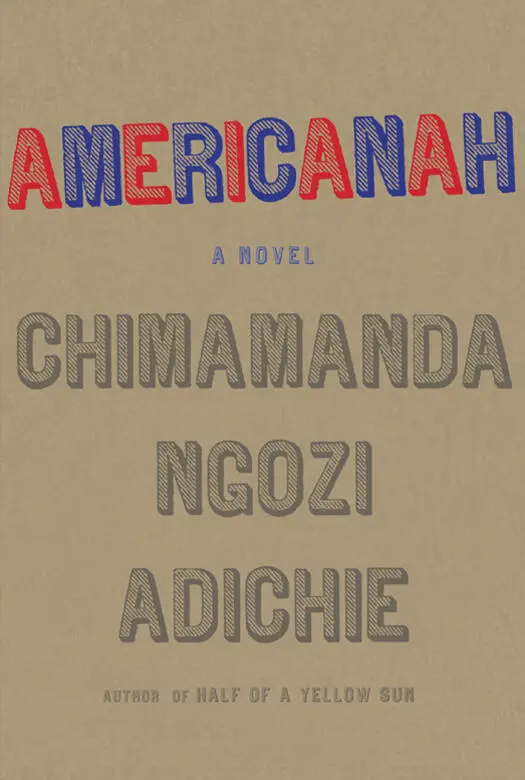
- Название:Americanah
- Автор:
- Издательство:Knopf
- Жанр:
- Год:2013
- ISBN:нет данных
- Рейтинг книги:4 / 5. Голосов: 1
-
Избранное:Добавить в избранное
- Отзывы:
-
Ваша оценка:
Americanah: краткое содержание, описание и аннотация
Предлагаем к чтению аннотацию, описание, краткое содержание или предисловие (зависит от того, что написал сам автор книги «Americanah»). Если вы не нашли необходимую информацию о книге — напишите в комментариях, мы постараемся отыскать её.
, a dazzling new novel: a story of love and race centered around a young man and woman from Nigeria who face difficult choices and challenges in the countries they come to call home.
As teenagers in a Lagos secondary school, Ifemelu and Obinze fall in love. Their Nigeria is under military dictatorship, and people are leaving the country if they can. Ifemelu — beautiful, self-assured — departs for America to study. She suffers defeats and triumphs, finds and loses relationships and friendships, all the while feeling the weight of something she never thought of back home: race. Obinze — the quiet, thoughtful son of a professor — had hoped to join her, but post-9/11 America will not let him in, and he plunges into a dangerous, undocumented life in London.
Years later, Obinze is a wealthy man in a newly democratic Nigeria, while Ifemelu has achieved success as a writer of an eye-opening blog about race in America. But when Ifemelu returns to Nigeria, and she and Obinze reignite their shared passion — for their homeland and for each other — they will face the toughest decisions of their lives.
Fearless, gripping, at once darkly funny and tender, spanning three continents and numerous lives,
is a richly told story set in today’s globalized world: Chimamanda Ngozi Adichie’s most powerful and astonishing novel yet.
Americanah — читать онлайн бесплатно полную книгу (весь текст) целиком
Ниже представлен текст книги, разбитый по страницам. Система сохранения места последней прочитанной страницы, позволяет с удобством читать онлайн бесплатно книгу «Americanah», без необходимости каждый раз заново искать на чём Вы остановились. Поставьте закладку, и сможете в любой момент перейти на страницу, на которой закончили чтение.
Интервал:
Закладка:
The couch was soft. Her skin was glowing. At school, she took extra credits and raised her GPA. Outside the tall living room windows, the Inner Harbor spread out below, water gleaming and lights twinkling. A sense of contentment overwhelmed her. That was what Curt had given her, this gift of contentment, of ease. How quickly she had become used to their life, her passport filled with visa stamps, the solicitousness of flight attendants in first-class cabins, the feathery bed linen in the hotels they stayed in and the little things she hoarded: jars of preserves from the breakfast tray, little vials of conditioner, woven slippers, even face towels if they were especially soft. She had slipped out of her old skin. She almost liked winter, the glittering coat of frosted ice on the tops of cars, the lush warmth of the cashmere sweaters Curt bought her. In stores, he did not look first at the prices of things. He bought her groceries and textbooks, sent her gift certificates for department stores, took her shopping himself. He asked her to give up babysitting; they could spend more time together if she didn’t have to work every day. But she refused. “I have to have a job,” she said.
She saved money, sent more home. She wanted her parents to move to a new flat. There had been an armed robbery in the block of flats next to theirs.
“Something bigger in a better neighborhood,” she said.
“We are okay here,” her mother said. “It is not too bad. They built a new gate in the street and banned okadas after six p.m., so it is safe.”
“A gate?”
“Yes, near the kiosk.”
“Which kiosk?”
“You don’t remember the kiosk?” her mother asked. Ifemelu paused. A sepia tone to her memories. She could not remember the kiosk.
Her father had, finally, found a job, as the deputy director of human resources in one of the new banks. He bought a mobile phone. He bought new tires for her mother’s car. Slowly, he was easing back into his monologues about Nigeria.
“One could not describe Obasanjo as a good man, but it must be conceded that he has done some good things in the country; there is a flourishing spirit of entrepreneurship,” he said.
It felt strange to call them directly, to hear her father’s “Hello?” after the second ring, and when he heard her voice, he raised his, almost shouting, as he always did with international calls. Her mother liked to take the phone out to the verandah, to make sure the neighbors overheard: “Ifem, how is the weather in America?”
Her mother asked breezy questions and accepted breezy replies. “Everything is going well?” and Ifemelu had no choice but to say yes. Her father remembered classes she’d mentioned, and asked about specifics. She chose her words, careful not to say anything about Curt. It was easier not to tell them about Curt.
“What are your employment prospects?” her father asked. Her graduation was approaching, her student visa expiring.
“I have been assigned to a career counselor, and I’m meeting her next week,” she said.
“All graduating students have a counselor assigned to them?”
“Yes.”
Her father made a sound, of admiring respect. “America is an organized place, and job opportunities are rife there.”
“Yes. They have placed many students in good jobs,” Ifemelu said. It was untrue, but it was what her father expected to hear. The career services office, an airless space, piles of files sitting forlornly on desks, was known to be full of counselors who reviewed résumés and asked you to change the font or format and gave you outdated contact information for people who never called you back. The first time Ifemelu went there, her counselor, Ruth, a caramel-skinned African-American woman, asked, “What do you really want to do?”
“I want a job.”
“Yes, but what kind?” Ruth asked, slightly incredulous.
Ifemelu looked at her résumé on the table. “I’m a communications major, so anything in communications, the media.”
“Do you have a passion, a dream job?”
Ifemelu shook her head. She felt weak, for not having a passion, not being sure what she wanted to do. Her interests were vague and varied, magazine publishing, fashion, politics, television; none of them had a firm shape. She attended the school career fair, where students wore awkward suits and serious expressions, and tried to look like adults worthy of real jobs. The recruiters, themselves not long out of college, the young who had been sent out to catch the young, told her about “opportunity for growth” and “good fit” and “benefits,” but they all became noncommittal when they realized she was not an American citizen, that they would, if they hired her, have to descend into the dark tunnel of immigration paperwork. “I should have majored in engineering or something,” she told Curt. “Communications majors are a dime a dozen.”
“I know some people my dad did business with, they might be able to help,” Curt said. And, not long afterwards, he told her she had an interview at an office in downtown Baltimore, for a position in public relations. “All you need to do is ace the interview and it’s yours,” he said. “So I know folks in this other bigger place, but the good thing about this one is they’ll get you a work visa and start your green card process.”
“What? How did you do it?”
He shrugged. “Made some calls.”
“Curt. Really. I don’t know how to thank you.”
“I have some ideas,” he said, boyishly pleased.
It was good news, and yet a soberness wrapped itself around her. Wambui was working three jobs under the table to raise the five thousand dollars she would need to pay an African-American man for a green-card marriage, Mwombeki was desperately trying to find a company that would hire him on his temporary visa, and here she was, a pink balloon, weightless, floating to the top, propelled by things outside of herself. She felt, in the midst of her gratitude, a small resentment: that Curt could, with a few calls, rearrange the world, have things slide into the spaces that he wanted them to.
When she told Ruth about the interview in Baltimore, Ruth said, “My only advice? Lose the braids and straighten your hair. Nobody says this kind of stuff but it matters. We want you to get that job.”
Aunty Uju had said something similar in the past, and she had laughed then. Now, she knew enough not to laugh. “Thank you,” she said to Ruth.
Since she came to America, she had always braided her hair with long extensions, always alarmed at how much it cost. She wore each style for three months, even four months, until her scalp itched unbearably and the braids sprouted fuzzily from a bed of new growth. And so it was a new adventure, relaxing her hair. She removed her braids, careful to leave her scalp unscratched, to leave undisturbed the dirt that would protect it. Relaxers had grown in their range, boxes and boxes in the “ethnic hair” section of the drugstore, faces of smiling black women with impossibly straight and shiny hair, beside words like “botanical” and “aloe” that promised gentleness. She bought one in a green carton. In her bathroom, she carefully smeared the protective gel around her hairline before she began to slather the creamy relaxer on her hair, section by section, her fingers in plastic gloves. The smell reminded her of chemistry lab in secondary school, and so she forced open the bathroom window, which was often jammed. She timed the process carefully, washing off the relaxer in exactly twenty minutes, but her hair remained kinky, its denseness unchanged. The relaxer did not take. That was the word—“take”—that the hairdresser in West Philadelphia used. “Girl, you need a professional,” the hairdresser said as she reapplied another relaxer. “People think they’re saving money by doing it at home but they’re really not.”
Читать дальшеИнтервал:
Закладка:
Похожие книги на «Americanah»
Представляем Вашему вниманию похожие книги на «Americanah» списком для выбора. Мы отобрали схожую по названию и смыслу литературу в надежде предоставить читателям больше вариантов отыскать новые, интересные, ещё непрочитанные произведения.









Обсуждение, отзывы о книге «Americanah» и просто собственные мнения читателей. Оставьте ваши комментарии, напишите, что Вы думаете о произведении, его смысле или главных героях. Укажите что конкретно понравилось, а что нет, и почему Вы так считаете.