Charlie Smith - Ginny Gall
Здесь есть возможность читать онлайн «Charlie Smith - Ginny Gall» весь текст электронной книги совершенно бесплатно (целиком полную версию без сокращений). В некоторых случаях можно слушать аудио, скачать через торрент в формате fb2 и присутствует краткое содержание. Год выпуска: 2016, Издательство: Harper, Жанр: Современная проза, на английском языке. Описание произведения, (предисловие) а так же отзывы посетителей доступны на портале библиотеки ЛибКат.
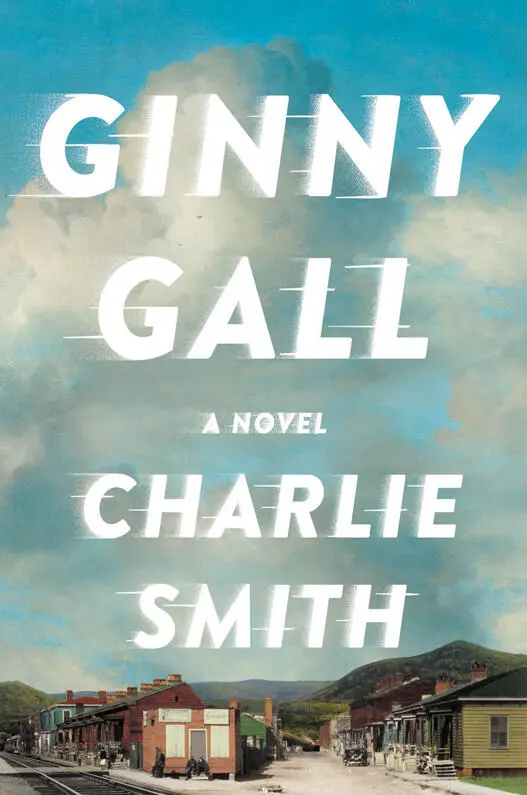
- Название:Ginny Gall
- Автор:
- Издательство:Harper
- Жанр:
- Год:2016
- ISBN:нет данных
- Рейтинг книги:5 / 5. Голосов: 1
-
Избранное:Добавить в избранное
- Отзывы:
-
Ваша оценка:
Ginny Gall: краткое содержание, описание и аннотация
Предлагаем к чтению аннотацию, описание, краткое содержание или предисловие (зависит от того, что написал сам автор книги «Ginny Gall»). Если вы не нашли необходимую информацию о книге — напишите в комментариях, мы постараемся отыскать её.
Delvin Walker is just a boy when his mother flees their home in the Red Row section of Chattanooga, accused of killing a white man. Taken in by Cornelius Oliver, proprietor of the town’s leading Negro funeral home, he discovers the art of caring for the aggrieved, the promise of transcendence in the written word, and a rare peace in a hostile world. Yet tragedy visits them near-daily, and after a series of devastating events — a lynching, a church burning — Delvin fears being accused of murdering a local white boy and leaves town.
Haunted by his mother’s disappearance, Delvin rides the rails, meets fellow travelers, falls in love, and sees an America sliding into the Great Depression. But before his hopes for life and love can be realized, he and a group of other young men are falsely charged with the rape of two white women, and shackled to a system of enslavement masquerading as justice. As he is pushed deeper into the darkness of imprisonment, his resolve to escape burns only more brightly, until in a last spasm of flight, in a white heat of terror, he is called to choose his fate.
In language both intimate and lyrical, novelist and poet Charlie Smith conjures a fresh and complex portrait of the South of the 1920s and ’30s in all its brutal humanity — and the astonishing endurance of one battered young man, his consciousness “an accumulation of breached and disordered living. . hopes packed hard into sprung joints,” who lives past and through it all.
Ginny Gall — читать онлайн бесплатно полную книгу (весь текст) целиком
Ниже представлен текст книги, разбитый по страницам. Система сохранения места последней прочитанной страницы, позволяет с удобством читать онлайн бесплатно книгу «Ginny Gall», без необходимости каждый раз заново искать на чём Вы остановились. Поставьте закладку, и сможете в любой момент перейти на страницу, на которой закончили чтение.
Интервал:
Закладка:
“I don’t know what you mean,” he said.
This was one of his stock courtroom responses.
“Well, you know how most of us when somebody says we did something we can say hey man I didn’t do that and then we can show how we didn’t and we get to turn around and go back the way we came? I mean not just legally, but say if we get involved with a woman and then want to quit it, we can—”
“Maybe you,” Davis, a twice-divorced man, said.
“Ah, yes,” Billy said and ducked his head. “Or we buy something down here at Cohen’s department store and old Mr. Cohen will take it back if we get home and decide it don’t suit us. Or you can turn away from your sins — that’s the big one, I guess — and become a sanctified man.”
“You always sniping at the church,” Davis said.
“Well, I know we can ask for forgiveness and start over and all. But I wonder.”
“What is it you wonder, for Christ’s sake?” Davis pressed his finger to a spot of mustard on the tabletop and touched his finger to his tongue, tapping his tongue with yellow.
“If life is shorter for those who can’t get the use of any of these means.”
“Means to what?”
“Oh, never mind. I was just daydreaming.”
“You need to learn to pay closer attention to the matters at hand, little Billy,” Davis said, grimacing and spitting into his soiled napkin.
They’d sat with Baco while he went over his findings. They were lucky those two women had talked so much. Or maybe not. Maybe the prosecutors wanted to make it clear how good a case they had. The colored boys denied the charges. It was clear, or almost clear, that half of them had never even seen those two white women. It was all about a fight, the lawyers knew that. Even Mr. Lopellier Harris from New York could see that. Harris wanted to make the trial about race, but nobody was going to win in Dixie building a defense on race. Nobody was going to win this trial anyway, nobody on the defense side.
Sitting in the window of the Red Rooster — PLUSH & TASTY, so the sign said — a new restaurant that boasted the largest coffeepot in town (HOME OF THE BOTTOMLESS CUP, according to the printed menu, another innovation), Billy looked out at maple leaves fluttering along in breeze like little redwing birds. Four of the boys didn’t even know what they were charged with. The other four knew, and three of them could read, but only one of them, that Delvin Walker, the one raised at a undertaker’s — always the richest householder in the colored community, the one who showed up at the mayor’s office asking for favors, the representative of his people, who, like some african chief, was supposed to be able to keep peace with the natives, as it were — that boy Walker. . he knew something was up.
Billy, looking out the window half dreaming of her, caught sight of Miss Ellen Bayride crossing the square, holding her flimsy blue hat on with one hand while trying to keep her armload of books from falling. “Just a minute,” he said to Davis, got up, dashed out to the square and caught up with her.
“Snatchy weather,” he said and suddenly almost forgot his own name. He had been waiting for days, ever since he saw her poking at a barking dog with her umbrella on the first day she got to town, to get a chance to speak to her. She worked for the big paper in the capital, brought in here because there were women involved. It was her job to get close to these women and pamper them and get them to give special admissions to her.
“Well, Mr. Gammon, you are a speedy fellow, aren’t you,” she said now.
“I was hoping I could help you out, here.”
“Do I look like I need helping?”
She spoke lightly, teasing him. Confusion overtook him, but he fought through this, thinking it’s this confusion and the going on anyway that makes these women so valuable to us — and us realizing we’re willing to do it — every man in the world knows that. And, smiling all the time, knowing how stupid he looked, flushed, about to tip over, reaching for the books she now had under control, the woman laughing at him, her little blue hat cocked in a delightful way over one gray eye, he delighted in everything about her.
“Goodness,” she said, stopping at the curb under one of the big oaks. The leaves in the crown of the oak shifted slowly, mightily, from the pressure of the slow breeze. “I think I have them now.”
“Shoot, I thought I was timely,” Billy said, smiling, almost laughing, he felt so lighthearted. “What are those books? Can I take them for you?”
“Like in school?’
“No, just a natural cordiality on my part, here on a windy summer day.”
“Fall day,” she said.
“Can’t tell the difference in these parts, not really. Not til the heat finally breaks.”
“And when is that?”
“Some years it seems like never.”
It was a dream — small, indistinct — to both of them just then, the words like dream words they were not so much making up as snatching from the air, a happiness overtaking them like a sweet scent riding on the warm dry wind. The breeze touched their faces and felt to each like the gentle fingers of the other. Ellen blushed. Billy saw the color filling her cheeks just under the smooth raised bone as a sign sent especially for him. Each sensed what the other experienced. The woman — usually private, unembellished, strict with herself — bent slightly toward him, and he slid slightly sideways as if angling for a quieter, more private spot, both of them understanding. They walked quietly along beside each other. At the door of the Shawl House, the only hotel in town and, like so many of the hotels in these rural county seats, a monumental affair, built in this case of rough granite, its windows recessed like the windows of a medieval castle, they stopped. The confederate battle flag billowed beside the state flag above the front entrance; no federal flag flew anywhere in this town, not even in front of the post office.
He smiled at her — calm, complicitous — and she smiled back, so faintly that she could have denied it in any court, and he caught it. Despite this, he felt at their parting a mournfulness like the fading of a fine day, but he knew too this was a parting that contained a promise. He put his hand over his heart. It was a gesture, a gimmick, but he could feel his heart knocking.
“Yes,” he said to the question both of them held in mind.
She smiled, a gentling smile, the way a girl would smile at a pony. “Yes,” she said, “I guess. .”
And turned and pushed through the big glass, brassfooted doors held open for her by an africano man in a forest-green embraided suit.
Crossing the square back to the little office they had rented in the Cotton Exchange building, his thoughts like birds returning crankily to the rookery of the trial, he considered that all they could do in this so-called legal case was present a clean recitation — that’s all it was really — of the events: a line of execution — sure, execution — for those boys to hold on to, all eight of them headed straight to the hangman’s noose. Most those boys could hope for was for Billy and crew to get them life sentences at Burning Mountain.
That evening in the jail with Harris and Pullen and all eight of the boys lined up on the long bench across from them, fielding questions, some of them without reason or any connection whatsoever to the situation at hand, Gammon experienced again the exhilaration of his afternoon walk. I need something to buoy me up, he thought, but she is better than something. Ellen. Don’t call the woman you love she. One of the boys was asking when he could go home. “I’m wore out sitting in this place,” he said, Arthur Bony Bates, a boy of fifteen with a pudgy, smooth-skinned dark face and slow, cloudy eyes.
Читать дальшеИнтервал:
Закладка:
Похожие книги на «Ginny Gall»
Представляем Вашему вниманию похожие книги на «Ginny Gall» списком для выбора. Мы отобрали схожую по названию и смыслу литературу в надежде предоставить читателям больше вариантов отыскать новые, интересные, ещё непрочитанные произведения.











Обсуждение, отзывы о книге «Ginny Gall» и просто собственные мнения читателей. Оставьте ваши комментарии, напишите, что Вы думаете о произведении, его смысле или главных героях. Укажите что конкретно понравилось, а что нет, и почему Вы так считаете.