Maylis de Kerangal - The Heart
Здесь есть возможность читать онлайн «Maylis de Kerangal - The Heart» весь текст электронной книги совершенно бесплатно (целиком полную версию без сокращений). В некоторых случаях можно слушать аудио, скачать через торрент в формате fb2 и присутствует краткое содержание. Год выпуска: 2016, ISBN: 2016, Издательство: Farrar, Straus and Giroux, Жанр: Современная проза, на английском языке. Описание произведения, (предисловие) а так же отзывы посетителей доступны на портале библиотеки ЛибКат.
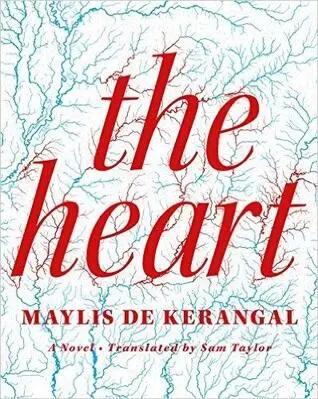
- Название:The Heart
- Автор:
- Издательство:Farrar, Straus and Giroux
- Жанр:
- Год:2016
- ISBN:9780374713287
- Рейтинг книги:5 / 5. Голосов: 1
-
Избранное:Добавить в избранное
- Отзывы:
-
Ваша оценка:
The Heart: краткое содержание, описание и аннотация
Предлагаем к чтению аннотацию, описание, краткое содержание или предисловие (зависит от того, что написал сам автор книги «The Heart»). Если вы не нашли необходимую информацию о книге — напишите в комментариях, мы постараемся отыскать её.
The Heart
The Heart
The Heart — читать онлайн бесплатно полную книгу (весь текст) целиком
Ниже представлен текст книги, разбитый по страницам. Система сохранения места последней прочитанной страницы, позволяет с удобством читать онлайн бесплатно книгу «The Heart», без необходимости каждый раз заново искать на чём Вы остановились. Поставьте закладку, и сможете в любой момент перейти на страницу, на которой закончили чтение.
Интервал:
Закладка:
Clamp!
* * *
The heart stops beating. The body is slowly purged of its blood, which is replaced by a refrigerated liquid that, injected in a fast flow, will rinse the internal organs, while in that instant ice packs are placed around them — and it is probably at this point that Virgilio will glance at Alice Harfang to make sure she’s not about to faint, because the blood that flows from the body is pouring into a plastic tray that amplifies the sounds like an echo chamber, and it is this noise, more than the sight of the open body, that tends to upset people. But no, the young woman is still standing, perfectly stoical, even if her forehead looks rather pale and beaded with sweat, and he goes back to work as the countdown begins.
And so the thorax becomes, once again, a ritual battleground where cardiac surgeons and thoracic surgeons fight over who will get what length of that stump of vein, where they scrap over a few extra millimeters of pulmonary arteries. Virgilio is a good and generous colleague, but he’s tense, and he ends up snapping at the man opposite him: Leave me something, will you? I don’t think a centimeter or two is too much to ask!
* * *
Thomas Rémige has slipped out of the operating theater to phone the several hospital departments where the transplants will take place: he has to inform them of the time when the aorta was clamped—11:50 p.m. — a figure that instantly sharpens the timeline for the coming operation: prepping the recipient, transporting the organ, transplanting the organ. On his return, the first organ is being removed, in absolute silence. Virgilio now begins the ablation of the heart: the two venae cavae, the four pulmonary veins, the aorta, and the pulmonary artery are severed — perfect caesurae. The heart is explanted from Simon Limbres’s body. It’s crazy, you can see it — there, in the air — for a brief moment you can apprehend its mass and its volume, attempt to grasp its symmetrical form, its dual bulge, its beautiful color (crimson or vermilion), seek to match it to the universal pictogram of love, the playing-card emblem, the T-shirt logo — I ♥ NY — the bas-relief carved on tombs and royal reliquaries, the symbol of Eros the charlatan, the figurative representation of the sacred heart of Jesus in pious imagery — the organ held in the hand and exhibited to the world, streaming with tears of blood but haloed with radiant light — or any text icon indicating the infinite variety of sentimental emotions. Virgilio picks it up and immediately plunges it in a jar filled with clear liquid, a cardioplegic solution that guarantees a temperature of 39 degrees — the organ has to be cooled down very quickly in order to conserve it — after which the whole thing is protected inside a sterile safety bag and then in another bag, which is buried in crushed ice within an isothermic box.
When the box has been sealed, Virgilio waves goodbye to everyone, but none of the people surrounding Simon Limbres’s body looks up, no one reacts at all apart from the thoracic surgeon angled over the lungs, who barks out you didn’t leave me much to work with, you bastard, with a jerky laugh, while the surgeon from Strasbourg prepares to cut out the liver, such a fragile organ, by concentrating like a gymnast about to leap onto the beam — for a second, you half-expect her to thrust her hands into a bowl of chalk and rub her palms — while the urologists wait patiently to appropriate the kidneys.
Alice hangs back. She is focused on the scene in front of her, staring at the people, one after another, gathered around the table and the inanimate body that is its dazzling center — Rembrandt’s Anatomy Lesson flashes through her mind and she remembers how her father, an oncologist with long, twisted fingernails, like claws, hung a reproduction of the painting in the entrance hall of the family apartment and would often exclaim, tapping it with an index finger: That is a man, that’s what we are! But, being a daydreamer as a child, she preferred to see in it a council of wizards rather than the doctors who made up her kin. She would stand for long moments in front of those strange figures, admirably arranged around the cadaver, dressed in deep-black tunics, their wise heads posed on immaculate ruffs, the abundance of folds as delicate as wafer-paper origami, the lace trimmings and precise beards, and in the middle of all this, that pale body, that mysterious mask, and the slit in the arm through which could be seen the bones and the ligaments, the blade held by the man in the black hat plunged into the flesh. More than admiring it, however, she listened to the canvas, fascinated by the discussion represented there, and ended up learning that piercing the peritoneal wall was for a long time considered an affront to the sacredness of the body of man, that divinely created being, and she understood that all forms of knowledge contain an element of transgression. So it was that she decided to “do medicine,” supposing that she actually had a choice in the matter, because she was, after all, the eldest of four daughters, the one her father took to the hospital on Wednesdays, the one he gave a professional stethoscope to on her thirteenth birthday, whispering into her ear: Harfangs are jerks, little Harfang girl, and you’re going to crush them all.
Alice withdraws gradually, and everything in her field of view becomes still and illuminated, like a diorama. Suddenly, what she sees in place of the stretched-out body is simply matter, a substance to be used and shared; no longer a stopped mechanism peeled open to have its best parts removed, but a material of infinite potential: a human body, its power and its end, its human end — and it is the emotion she feels at this, rather than any fountain of blood splashing into a plastic bucket, that might make her pass out. Virgilio’s voice, already far off, behind her back: Are you coming? What the hell are you doing? Get your ass in gear! She turns around and runs the length of the corridor to catch up.
* * *
A specialized medical transport takes them back to the airport. The vehicle speeds through darkness while they watch the movement of figures on the dashboard clock, following the dance of the luminescent hands that point down and then up again, while they are mesmerized by the digital numbers on their cell-phone screens. And then Virgilio’s phone lights up. It’s Harfang. How is it?
Perfect.
* * *
They bypass the city by the north and take the Fontaine-la-Mallet road, passing the compact, indeterminate shapes of suburban buildings, tower blocks planted in fields behind the city, swarms of apartment towers around an asphalt loop; they drive through a forest, still not a star in the sky, no flashing airplane lights or flying saucers, nothing at all. The driver speeds along this secondary road, well above the limit; he’s an experienced driver, accustomed to this type of mission; he stares straight ahead, forearms rigid and immobile, muttering into a tiny microphone attached to a high-tech earpiece, I’m on my way, don’t fall asleep, I’ll be there soon. The box is wedged in the compartment behind them, and Alice visualizes the several hermetic walls surrounding the heart, those membranes that protect it; she imagines that it is a rocket engine propelling them through space. Turning around and lifting herself up on one side, she is able to see past the headrest; squinting through the dimness, she deciphers the words on the label affixed to the side of the box and notices, among the information necessary for the traceability of the organ, a strange phrase: “element or product of human body for therapeutic use.” And, just below this, the donor’s Cristal number.
Virgilio leans back in his seat and breathes out. His eyes linger on Alice’s profile, a shadow puppet against the window, and, suddenly stirred by her presence, asks in a soft voice: Are you okay? The question is unexpected — this guy has been so unpleasant up to now — and Macy Gray’s voice on the radio sings shake your booty, boys and girls, there is beauty in the world , and out of nowhere Alice feels like crying — an emotion that grabs her from within and lifts her up, quivering — but she holds back her tears, grits her teeth as she turns her face away: Yup, I’m fine. So he takes his cell phone out of his pocket for the thousandth time, but instead of checking the time he taps at it, gradually becoming annoyed: It’s not loading, he hisses, fuck it, fuck it. Feeling bolder, Alice asks, something wrong? Virgilio answers her without looking up, it’s the game, I wanted to see the result of the game, and without turning around the driver announces coldly that Italy won, 1–0. Virgilio lets out a yell, raises a fist, then demands: Who scored? The driver signals and brakes: the whitish space of an illuminated intersection looms ahead. It was Pirlo. Alice, stupefied, watches as Virgilio rapidly types a couple of victory texts, muttering to himself yes, yes, yes, then he looks over at her, one eyebrow raised: Pirlo, eh? What a player! His smile overwhelms his face, and then they are at the airport, hearing the roar of the sea close by, at the foot of the cliffs, and rolling the box across the runway and up the gangway, hauling it into the plane, this Russian doll of a box which contains the transparent plastic safety bag which contains the receptacle which contains the special jar which contains Simon Limbres’s heart, which contains nothing less than life itself, the possibility of life, and which five minutes later is airborne.
Читать дальшеИнтервал:
Закладка:
Похожие книги на «The Heart»
Представляем Вашему вниманию похожие книги на «The Heart» списком для выбора. Мы отобрали схожую по названию и смыслу литературу в надежде предоставить читателям больше вариантов отыскать новые, интересные, ещё непрочитанные произведения.







Обсуждение, отзывы о книге «The Heart» и просто собственные мнения читателей. Оставьте ваши комментарии, напишите, что Вы думаете о произведении, его смысле или главных героях. Укажите что конкретно понравилось, а что нет, и почему Вы так считаете.