Maylis de Kerangal - The Heart
Здесь есть возможность читать онлайн «Maylis de Kerangal - The Heart» весь текст электронной книги совершенно бесплатно (целиком полную версию без сокращений). В некоторых случаях можно слушать аудио, скачать через торрент в формате fb2 и присутствует краткое содержание. Год выпуска: 2016, ISBN: 2016, Издательство: Farrar, Straus and Giroux, Жанр: Современная проза, на английском языке. Описание произведения, (предисловие) а так же отзывы посетителей доступны на портале библиотеки ЛибКат.
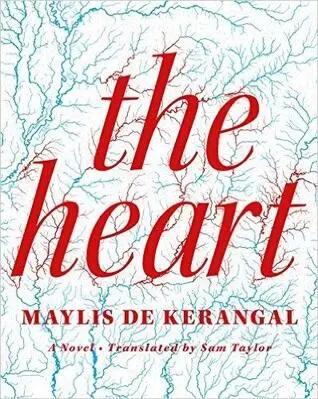
- Название:The Heart
- Автор:
- Издательство:Farrar, Straus and Giroux
- Жанр:
- Год:2016
- ISBN:9780374713287
- Рейтинг книги:5 / 5. Голосов: 1
-
Избранное:Добавить в избранное
- Отзывы:
-
Ваша оценка:
The Heart: краткое содержание, описание и аннотация
Предлагаем к чтению аннотацию, описание, краткое содержание или предисловие (зависит от того, что написал сам автор книги «The Heart»). Если вы не нашли необходимую информацию о книге — напишите в комментариях, мы постараемся отыскать её.
The Heart
The Heart
The Heart — читать онлайн бесплатно полную книгу (весь текст) целиком
Ниже представлен текст книги, разбитый по страницам. Система сохранения места последней прочитанной страницы, позволяет с удобством читать онлайн бесплатно книгу «The Heart», без необходимости каждый раз заново искать на чём Вы остановились. Поставьте закладку, и сможете в любой момент перейти на страницу, на которой закончили чтение.
Интервал:
Закладка:
The young man who’d rushed over to her, furious at having been fooled, reproached her for overacting: angina is not cardiac arrest, you know, the two things are not the same at all, it should have been more subtle and complex, you messed up the exercise. In order to make her understand, he listed the symptoms of angina one by one — constrictive thoracic pain, the feeling of being crushed all across your chest, of being squeezed in a vise, and sometimes other pains, typically in the lower jaw, one of the two forearms, or, more rarely, in the back, the throat, but anyway, you don’t collapse. Then he detailed the symptoms of cardiac arrest: massively accelerated pulse rate, sometimes to more than three hundred beats per minute, a ventricular fibrillation leading to respiratory arrest, which in turn causes the patient to faint, all this in less than a minute. He now began detailing the treatments, listing the medicines, the antiplatelet drugs that facilitate blood circulation and the nitroglycerin that relieves the pain by dilating the coronary arteries, he was captivated, no longer had any idea what he was saying but was unable to stop talking, throwing out sentences like lassos in order to catch her and keep her close to him. Soon his heart rate was racing, abnormally fast, a tachycardia close to two hundred beats per minute; he risked suffering the ventricular fibrillation he had just described to her, risked fainting, risked almost anything, frankly; Rose turned slowly toward him with starlike disdain, looked him up and down, and smilingly explained to him that a bear had just sat on her chest, didn’t he know? She then told him, slyly, that she was ready to go through it again, if he would agree to play the bear — he had the physique and the finesse, she would bet her life on it.
* * *
Virgilio Breva was indeed rather bearlike in his supple slowness, his explosiveness. He was a swarthy blond with a stubbly beard, his soft hair swept back, piling up in curls on the back of his neck. His nose was straight, and he had the fine features of a Friulian. He had the light-footed gait of a sardana dancer despite the fact that he was close to two hundred pounds, with the corpulence of a former fat kid, toned to the point where he was thick-chested, full-bodied, without any visible excrescences — no flab or lumps, in other words — a body that was just a little fleshy, enveloped in a layer of fat of equal compactness, thinning toward the extremities of his limbs, toward his very beautiful hands. Although transformed into this seductive and charismatic colossus — with a stature that matched the eloquence of his warm voice, his enthusiastic if occasionally excessive moods, his bulimic appetite for knowledge, his extraordinary capacity for hard work — his body was prey to painful fluctuations, an elasticity that haunted him with feelings of shame and fear (the trauma of having been mocked as pudgy, chubby, plump, or simply fat; the anger at having been looked down on for that, for the sexual difficulties it caused him; all kinds of apprehensions), his self-loathing gathered into a ball inside his stomach, like a torture device. This body was the great torment of Virgilio’s life — constantly monitored, examined for hours if he got a speck of dust in his eye, taken to the ER if he got a sunburn, questioned intensely over a sore throat, a stiff neck, a tired feeling — it was his obsession, but it was also his triumph, because women liked it now, that was indisputable: all you had to do was see Rose’s eyes as they wandered over it. Some spiteful people, jealous of his success, even said, with a snigger, that he had only become a doctor so he could learn to control that great body of his, balance his moods, tame his metabolism.
The best in his year at the internship entrance exam in Paris, he raced through his years of study, cramming everything — including spells as chief resident and surgical assistant — into twelve years, when most students in a similar situation would stretch it out to fifteen (but I also can’t afford it, he liked to tell people, with a charming smile, I’m not part of the establishment, and this outraged the wop inside him, the immigrant son, the industrious scholarship student, the boy who did not belong: he always blew things out of proportion). Creative on the theoretical side and prodigiously gifted on the practical side, flamboyant and proud, driven by vaulting ambition and inexhaustible energy, he often lost his temper, it’s true, and remained widely misunderstood: his mother, panicked by his success, connecting intellectual hierarchies to social hierarchies, ended up regarding him suspiciously, wondering how he had done it, what stuff he was made of, who he thought he was, this kid who went into a rage watching her wring her hands then wipe them on her apron, or hearing her moan, the day he defended his thesis, that her presence was completely pointless, that she wouldn’t understand anything, that it wasn’t her place, that she would rather stay home and cook a feast just for him, the pasta and the cakes that he loved.
So, he chose the heart, and then cardiac surgery. People were surprised, thinking that he could have made a fortune examining suspicious moles, injecting hyaluronic acid into frown lines and Botox into cheeks, remodeling the floppy, stretch-marked stomachs of multiparous women, X-raying bodies, developing vaccines in Swiss laboratories, giving speeches in Israel and the United States on iatrogenic diseases, becoming a high-flying nutritionist. Or he could have covered himself in glory by opting for neurosurgery, or even hepatic surgery — specialties that dazzle with their complexity, their use of cutting-edge technology — instead of which he chose the heart. The good old heart. The human engine. A creaking pump that gets clogged up, goes on the blink. I’m basically a plumber, he liked to tell people: I tap on the surface, listen to the echo, identify what’s gone wrong, replace the faulty piece, repair the machine, it’s perfect for me — hamming it up as he says this, hopping from one foot to the other, minimizing the prestige of the discipline when the truth was that all of this flattered his megalomania.
In fact, Virgilio chose the heart so he could exist at the highest level, reckoning on the idea that the organ’s kingly aura would reflect on him, just as it reflected on the cardiac surgeons rushing through the corridors of the hospital, plumbers and demigods. Because the heart is more than the heart, as he knew perfectly well. Even deposed from its former throne — the muscle continuing to pump no longer being enough to separate the living from the dead — it was, for him, the central organ of the body, the place where the most crucial operations, those most essential for life, took place, and to Virgilio its symbolic stratification was unaltered. More than that, as both a cutting-edge mechanism and the operator of mankind’s supercharged imagination, Virgilio envisaged it as the keystone to representations ordering man’s relationship with his body, with other humans, with Creation, with gods, and the young surgeon was awestruck by the idea that he would be a part of this, a recurrent presence at this magical point in language, permanently situated at the exact intersection of the literal and the figurative, of muscle and emotion; he was thrilled by the metaphors and figures of speech that made it appear as the very analogy of life and never tired of repeating the fact that, having been the first to appear, the heart would also be the last to disappear. One night at the Pitié, sitting at a table with some others in the duty room, in front of the huge mural painted by the interns — a spectacular tangle of sexual scenes and surgical operations, a sort of gory orgy, jokey and morbid, where a few representations of hospital bigwigs appeared between all the asses, breasts, and enormous erections, among them a Harfang or two, generally portrayed on the job, in obscene postures, doggy-style or missionary, scalpel in hand — he told the story of the death of Joan of Arc, his delivery theatrical, eyes sparkling like obsidian balls, slowly recounting how the captive was taken by cart from her prison to the Vieux-Marché, where a crowd had gathered to watch, describing the slim figure in the tunic that had been treated with sulfur so she would burn more quickly, the pyre built too high, Thérage the executioner climbing up to tie her to the stake — Virgilio, encouraged by his listeners’ captivated faces, mimed the scene, tying solid knots in the invisible ropes — before setting fire to the bundles of sticks with an experienced hand, lowering the torch to the coals and the oil-soaked wood, the smoke rising, the screams, Joan’s last words before she suffocated, then the scaffold blazing like a flare, and the heart that they discovered intact after the body had been consumed, red and whole in the ashes, so they were forced to rekindle the fire to be rid of it.
Читать дальшеИнтервал:
Закладка:
Похожие книги на «The Heart»
Представляем Вашему вниманию похожие книги на «The Heart» списком для выбора. Мы отобрали схожую по названию и смыслу литературу в надежде предоставить читателям больше вариантов отыскать новые, интересные, ещё непрочитанные произведения.





Обсуждение, отзывы о книге «The Heart» и просто собственные мнения читателей. Оставьте ваши комментарии, напишите, что Вы думаете о произведении, его смысле или главных героях. Укажите что конкретно понравилось, а что нет, и почему Вы так считаете.