A. Barrett - Blackass
Здесь есть возможность читать онлайн «A. Barrett - Blackass» весь текст электронной книги совершенно бесплатно (целиком полную версию без сокращений). В некоторых случаях можно слушать аудио, скачать через торрент в формате fb2 и присутствует краткое содержание. Год выпуска: 2016, ISBN: 2016, Издательство: Graywolf Press, Жанр: Современная проза, на английском языке. Описание произведения, (предисловие) а так же отзывы посетителей доступны на портале библиотеки ЛибКат.
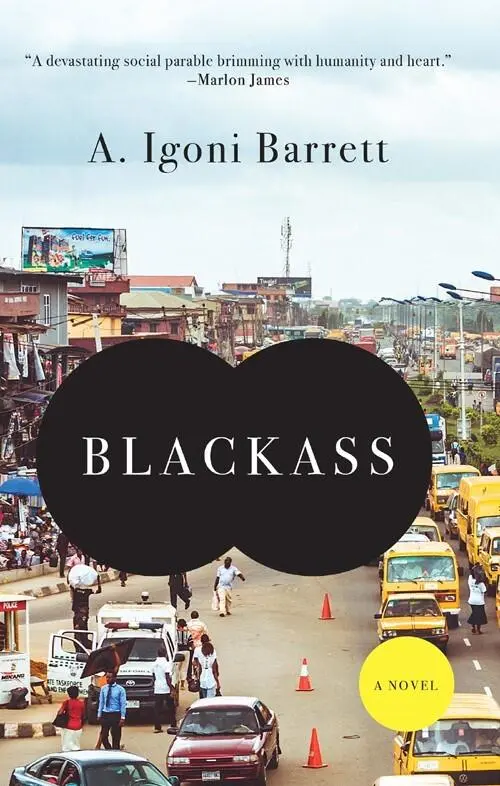
- Название:Blackass
- Автор:
- Издательство:Graywolf Press
- Жанр:
- Год:2016
- ISBN:9781555979263
- Рейтинг книги:4 / 5. Голосов: 1
-
Избранное:Добавить в избранное
- Отзывы:
-
Ваша оценка:
Blackass: краткое содержание, описание и аннотация
Предлагаем к чтению аннотацию, описание, краткое содержание или предисловие (зависит от того, что написал сам автор книги «Blackass»). Если вы не нашли необходимую информацию о книге — напишите в комментариях, мы постараемся отыскать её.
A. Igoni Barrett's
is a fierce comic satire that touches on everything from race to social media while at the same time questioning the values society places on us simply by virtue of the way we look. As he did in
, Barrett brilliantly depicts life in contemporary Nigeria and details the double-dealing and code-switching that are implicit in everyday business. But it's Furo's search for an identity-one deeper than skin-that leads to the final unraveling of his own carefully constructed story.
Blackass — читать онлайн бесплатно полную книгу (весь текст) целиком
Ниже представлен текст книги, разбитый по страницам. Система сохранения места последней прочитанной страницы, позволяет с удобством читать онлайн бесплатно книгу «Blackass», без необходимости каждый раз заново искать на чём Вы остановились. Поставьте закладку, и сможете в любой момент перейти на страницу, на которой закончили чтение.
Интервал:
Закладка:
So now he had to change his name.
Furo picked up the newspaper and gazed at the face bearing his name. Tired face, tired eyes, tired mouth, and black skin: that’s all he saw. That person wasn’t him. He had moved on beyond that. The only problem was, even as he’d forgotten how he used to look, he didn’t know what he now looked like. White skin, green eyes, red hair — black ass. Mere descriptions for what people saw, what others saw in him, and not who he was. He had to find out who he was.
It was time to see his face.
Furo ripped out the missing person announcement, and after burning it in the kitchen sink, he washed the ashes down the drain. He returned to parlour, folded the newspaper, replaced it on the table, and switched off the TV. Entering Syreeta’s bedroom, he shut the curtains before pulling off his boxers and singlet. And in this state of naked grace — stripped of the past, curious about the present, hopeful about the future — he strode to the tall mirror over the vanity table and stared into the face of his new self. A face whose features had altered less in dimension than character, and whose relation to the selfie in the newspaper was as close and yet as far apart as the resemblance between adolescence and adulthood. His face had sloughed off immaturity. Then again, the unexpectedness of his skin shade, eye colour, and hair texture was the octopus ink that would confuse his hunters, as even he wouldn’t have recognised himself in a photo of his new face, and so neither would his parents nor anyone who based their looking on his old image. He knew at last that he had nothing to fear. He was a different person, and right here, right now, right in his face, he could see he looked nothing like the former Furo.
Afterwards, Furo trotted off to his bedroom, spread his new clothes on the bed, and planned what he would wear on Monday. He couldn’t wait for many things. But most of all, he couldn’t wait to start work tomorrow. He was excited about his first real job. After he finished secondary school, he had worked for almost two years as a supervisor in his father’s chicken farm, but counting eggs didn’t count as a job. His next job had come after university, when he served the entire year of his national youth service teaching mathematics to junior secondary students in the sun-blasted and fly-plagued Kebbi State. That, too, wasn’t a real job. He hardly showed up for class as he spoke no Hausa and his students barely spoke English, and all he remembered of that wilderness were the fun and games he’d had with his fellow youth corpers. He was still hopeful then, full of big dreams, eager to succeed. He had prospects that many of his students, who were mostly sons of nomadic herdsmen and farmyard hirelings, could never hope for. He had received an education they could only dream of. Besides, he had his parents back home in Lagos, centre of excellence, to return to. But now he knew better, and in the period since he departed Kebbi he had many times wished he’d learned from his students how to milk cows and slaughter goats and plant onion bulbs, learned a handiwork to keep his mind off his own helplessness. That, at least, unlike his stinking stint at the chicken farm, would have been something to busy himself with until he found the job he deserved. Unlike his father, he would never stop fighting, never stop moving forwards, not now, not after he’d survived the hard long years of joblessness whose only purpose was to show him how easy it was for hope to shrivel. How disappointment became a hole with an endless bottom.
That was in the past. He had a job, a new life, and it was time to choose a new name. He had been trying out names as he chose his clothes for work, but none yet sounded right, none felt like his to keep. At first he considered taking Kalabari names, and then Itsekiri, Efik, Yoruba, but he soon gave up on Nigeria. In his new life he was American and his new name would confirm that. A new name from the new world for the new him — that sounded right. Yet he was still nameless and it was already night, and Syreeta would soon return. And so he arranged his Monday clothes on hangers and put them away in the wardrobe, then cleaned his shoes and set them by the bedroom door. After placing his passport, wallet and folded handkerchief on the bedside table, he left the bedroom. In the parlour he switched on the TV and tapped the remote control till he reached a music channel showing a 2pac and Biggie video. Reducing the volume to a murmur, he settled on the settee to make his decision.
‘Starting with names from A: Abe, Brad, Carl, Dave, Eddie, Frank …’
Frank felt right — easy to pronounce, easy to remember, and the same first letter as Furo. Good rule to apply for Wariboko. He needed a surname that would let him keep his initials.
‘Wayne, West, Williams, no … White … Whyte. ’
Whyte, too, felt right, felt like his, and, in a slow voice that burred in his ears, he said both as one: ‘Frank Whyte.’ His eyes watered as he stared at the flashing lights on the TV screen. ‘Frank Whyte, Frank Whyte,’ he repeated, blinking to clear his eyes.
He had found his name.
MORPHEUS
‘I am not done with my changes.’
— Stanley Kunitz, The LayersIt didn’t matter to me if I liked Tekena, but for the sake of what I wanted, I needed her to like me. And so, when I met her on that overcast Sunday afternoon, the first thing I said was, ‘You’re pretty.’ Even as I intended to win her over with flattery, I was surprised by my reflux of pleasure, the rush of gratefulness at her acknowledgement of my appearance when she responded, ‘You’re pretty too.’ Sunlight and water to a blossoming flower, likewise our sense of well-being is both nourished by the shine of other’s eyes and the gurgle of our self-regard. Who I was as a person was more than what I looked like, but then again, how people saw me was a part of who I was.
I soon found myself liking Tekena more than her brother, whose name I didn’t mention until she and I were eating ice cream at The Palms. You see, Furo had come across as a bit of a user. I know now that he was desperate, that on the day we met he was facing a predicament and had needed whatever help he could get, but something about his request to move in with me, the ease with which he asked such a thing of a stranger, had struck the wrong chord with me. His sister could be accused of taking advantage of a private mishap to build her popularity on social media, and in person I found her as chatty as I’d expected, and maybe too trusting of strangers bearing gifts, but at no point did she strike me as manipulative. Not in person, not towards me.
Thus I liked her. She was after all a recognisable Nigerian type, not much different from me in background and social standing. We were both members of that caste of young adults who grew up in the ruins of Nigeria’s middle class. We were born into the military dictatorships of the ’80s and ’90s; we attended the cheaper private schools or the better public ones; we read the same Pacesetter novels and watched the same NTA shows; we lived in cities. Unlike the majority of Nigerians in any age bracket, we spoke English as a first (and sometimes only) language, and our inbred accents were two to three generations old. Because of our parents, who were educated and devoted and fortunate enough to hold on to their salaried positions through all those decades of martial austerity; our private dictators, who beat their children with the same whips they used on the poorer relatives they took in as house helpers; our role models, who were so convinced of ‘what was what’ that they affirmed a preference for butter over margarine even when they could only afford Blue Band for our school lunchboxes; our protectors and providers, who were neither middle class nor working class, neither wealthy enough to jet overseas on vacation nor deprived enough to cease the Christmastime pilgrimages to our family hometowns; our lifelong teachers, who instilled in us their deep-seated humiliation over the failures of Nigeria as well as their bitter nostalgia for the administrative competence of colonial rule. That was it: in Tekena’s voice and gestures, in many things about her, I saw the same contradictions that had shaped me. Shame and arrogance. Pragmatism and sentimentality. Thoughtless violence and unthinking sacrifice. Red blusher and black skin …
Читать дальшеИнтервал:
Закладка:
Похожие книги на «Blackass»
Представляем Вашему вниманию похожие книги на «Blackass» списком для выбора. Мы отобрали схожую по названию и смыслу литературу в надежде предоставить читателям больше вариантов отыскать новые, интересные, ещё непрочитанные произведения.









Обсуждение, отзывы о книге «Blackass» и просто собственные мнения читателей. Оставьте ваши комментарии, напишите, что Вы думаете о произведении, его смысле или главных героях. Укажите что конкретно понравилось, а что нет, и почему Вы так считаете.