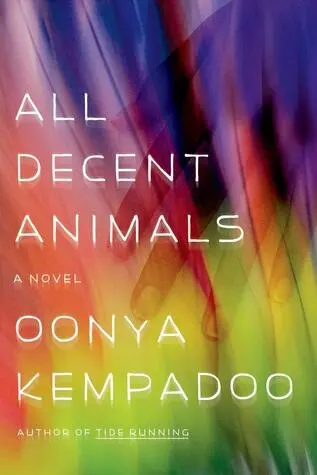
Oonya Kempadoo - All Decent Animals
Здесь есть возможность читать онлайн «Oonya Kempadoo - All Decent Animals» весь текст электронной книги совершенно бесплатно (целиком полную версию без сокращений). В некоторых случаях можно слушать аудио, скачать через торрент в формате fb2 и присутствует краткое содержание. Год выпуска: 2013, Издательство: Farrar, Straus and Giroux, Жанр: Современная проза, на английском языке. Описание произведения, (предисловие) а так же отзывы посетителей доступны на портале библиотеки ЛибКат.
- Название:All Decent Animals
- Автор:
- Издательство:Farrar, Straus and Giroux
- Жанр:
- Год:2013
- ISBN:нет данных
- Рейтинг книги:4 / 5. Голосов: 1
-
Избранное:Добавить в избранное
- Отзывы:
-
Ваша оценка:
All Decent Animals: краткое содержание, описание и аннотация
Предлагаем к чтению аннотацию, описание, краткое содержание или предисловие (зависит от того, что написал сам автор книги «All Decent Animals»). Если вы не нашли необходимую информацию о книге — напишите в комментариях, мы постараемся отыскать её.
, looks at the personal and aesthetic choices of a multifaceted cast of characters on the Caribbean island of Trinidad — a country still developing economically but rich culturally, aiming at "world-class" status amid its poor island cousins. It is a novel about relationships, examined through the distinct rhythms of the city of Port of Spain.
Loyalties, love, conflicting cultures, and creativity come into play as Ata, a young woman working in carnival design but curious about writing, and her European boyfriend, Pierre, negotiate the care of their friend Fraser, a closeted gay man dying from AIDS. The contradictory Trinidadian setting becomes a parallel character to Fraser's Cambridge-derived artistic sensibility and an antagonist to Ata's creative journey.
All Decent Animals
All Decent Animals — читать онлайн бесплатно полную книгу (весь текст) целиком
Ниже представлен текст книги, разбитый по страницам. Система сохранения места последней прочитанной страницы, позволяет с удобством читать онлайн бесплатно книгу «All Decent Animals», без необходимости каждый раз заново искать на чём Вы остановились. Поставьте закладку, и сможете в любой момент перейти на страницу, на которой закончили чтение.
Интервал:
Закладка:
Neighbors and friends advise his Queen that is a curse the family pundit put on Sammy — maybe something the girl herself had put in him — that’s why he had get totoolbay. The reason for the tragedy, the dead-blight zone now on the edge of Chase Village, wasn’t something anybody could figure out. The condolence-friends whisper, guessing that these things does always happen in Trinidad, and who knows who it go be next. Right in your neighborhood. Death by chopping and Indian-tonic. Just so — and the poor girl didn’t even do nothing wrong.
People finish off the little plates of food and cakes on the side table. Plenty cakes and cheese straws. Everybody loves cheese straws, they show a little class, and Sam’ Queen likes to make them whenever she get a chance.
* * *
“These statistics are real. And dark and ugly. Because each number is a woman who had no choice, no one to turn to. There is no protection, no hiding place — not for the magnitude of Violence Against Women that we face in Trinidad and in Tobago. And so, ladies and gentlemen, I for one can’t wait to see the policies changed, the measures put in place, and the actions taken to ensure that no more lives are lost at the hands of merciless and alcoholic men. The mothers and daughters of this land are bleeding and dying, they are under attack. And it is up to all of us to do something about it.”
The clapping around the U-formation of tables is genuine. The activist’s proud features suit her regal hairstyle, locks woven up into a stiff hive. A coffee break is announced and little savory plates snatched up. As usual there is too much food, but Pierre is always amazed to see how readily people stuff themselves. People who have fridges full of food at home and boast of trying to lose weight, ensuring they don’t miss a morsel. He has even seen some taking wrapped plates away in their handbags at the end of an event, filching cheese straws in napkins. Awful cakes fill the sweet table.
After the break, the community police give an awkward presentation on child-gang members moving arms across the country and the dons controlling government road-repair contracts in their territories. The final presentation, the cheap white flour and commercial cheese straw thing of the wasted morning for Pierre, is from the minister of Social Development. He proudly announces that at last they are getting close to the final draft of their Plan of Action. He doesn’t say it has taken five years so far. Soon, they will be able to give a date when it will be ready. When asked “What then?” the ministry will look into getting it printed, nicely — are there any suggestions for that, since the U.N. always has such nice-looking publications? And then, of course, it will be distributed and made available to the public. Then. And then, they will look into drafting the Implementation of the Plan of Action for Social Development in Trinidad and Tobago (PoASDTT).
* * *
Thomas steps into the kitchen, turns, and hustles back out when he sees Greek Goddess’s face. She is more upset than Ata, who’s measuring Helen’s worry-crease furrowed deep between her brows. Helen reads the recipes and timetable on the cupboard doors. She has seen them before , Ata thinks, she never took the time to read when I explained? Greek Goddess stares at Ata, as if seeing her for the first time too.
“Sometimes it’s really hard monitoring the foods people bring for him.”
Helen nods but still doesn’t uncrease her stare. “People?”
“Friends and family.” Ata doesn’t glance at the fruits resting on the counter that Helen has just brought, but opens the fridge to point out containers of macaroni pie, callaloo, pilau, Lucozade, Ribena. “Even Malta drinks — Lauren gave one to him directly, without even checking, and it’s loaded with sugar.”
“Maybe he asked for it, Ata.” Her voice rises at the end.
“Maybe, but you know it won’t help — to give him whatever he wants to eat. He hasn’t taken in everything about his diet yet.”
“I understand you stopped his mother from coming to see him.” Helen’s voice quiets to the pale cream of the countertops.
“I only asked her to put off her daily visit and said he wished to just sleep that day.”
“And who are you, to stop a mother from seeing her son, Ata? Who the hell do you think you are? ” The shouting jolts Ata to the kitchen door and she glances nervously to see if lawyer-friend and the others on the veranda have heard.
“You have any idea of the pain you may have caused that woman? You have no right—”
Ata cuts her off with the facts that Greek Goddess already knows but which create a conflict in her too — that Fraser still has not told his mother, nor accepted counseling, nor contacted anyone about HIV. And so where is the balance in respecting his wishes in some ways but not in others? “It’s not as easy as food. He never was close to his mother before this, was very upset after her last visit. They quarreled and she seemed relieved not to have to visit, too.”
“Yes, but what kind of person are you?” Caribbean Greek Goddess asks. “The most precious thing we have is family. If you were sick, wouldn’t you want to be back in your parents’ arms?”
“Not necessarily.” The answer jumps out before Ata can stop it and wipes the crease clean off Helen’s face.
“No?”
Ata finds herself explaining, almost to herself, that of course it’s not automatic. If it was still a close relationship, then yes. But she would want those who understand and love her for who she is, the ones actually closest, to be there with her — and that’s not always family. Ata reflects on her own points against Pierre’s cold view — being able to choose friends, but you can’t choose family. Tough. Helen’s shocked reaction makes her feel British and foreign, while her father’s voice reminds her of her free, green Caribbean childhood. Your children are not your children. They are the sons and daughters of life’s longing for itself. Her mother’s sisal-sweet spirit breath whispers “It’s okay” in her ear.
* * *
Ata had left Fraser’s room totally embarrassed for his father on one of his visits. Fraser had shrunk into his shell the minute his mother stepped out of the room and then slowly emerged again. His shuttered eyes took in his father’s discomfort and he extended his neck a little further. His shell looked rougher and duller than normal, skin folds and creases appearing. He licked a dry tongue over sharp beak and his father looked down nervously.
“You always thought this would happen, didn’t you? That I would die before you—”
“You not dying, son.”
“Pay for my sins, and all that, eh? Ata, when my mother would be lambasting me for my ‘nasty’ ways and before that, trying to straighten me as a child, locking me in my room, whatever — this man, this spineless father of mine, would stand by and say nothing. You never really agreed with her but what?”
Mr. Goodman was melting into the dusk-pink floor and Fraser swung his head and turtle eyes round to Ata. Why humiliate his father like this now instead of standing up to his mother himself? He was Mrs. Goodman’s pet rock a minute ago. When his neck levered back to his father like a compass, his eyes shrunk even smaller taking in Mr. Goodman’s apologetic slouch. Ata had excused herself then. And as she left, heard “Now you have a chance to say what you think and make amends, before I die. So what you have to say?” Silence followed.
* * *
Marriette, the Egyptian sphinx of a woman, slinks into the kitchen. She has seen that Fraser’s asleep, takes one look at Ata and Helen, and says, “Okay, I’ll let youall get on with it.” Goes to join the others on the veranda. A burst of laughter breaks the bright air out there. Helen’s pain is gathered all in her Carib and European features as she stares, incredulously. She, more than anyone else, knows of Fraser’s strange relationship with family. She has had many arguments with him about adopting too much from his oppressive education and about bullying his father like Fraser was bullied by his mother. But she has also seen the private torment, of him being himself in Trinidad.
Читать дальшеИнтервал:
Закладка:
Похожие книги на «All Decent Animals»
Представляем Вашему вниманию похожие книги на «All Decent Animals» списком для выбора. Мы отобрали схожую по названию и смыслу литературу в надежде предоставить читателям больше вариантов отыскать новые, интересные, ещё непрочитанные произведения.









Обсуждение, отзывы о книге «All Decent Animals» и просто собственные мнения читателей. Оставьте ваши комментарии, напишите, что Вы думаете о произведении, его смысле или главных героях. Укажите что конкретно понравилось, а что нет, и почему Вы так считаете.