Miroslav Penkov - Stork Mountain
Здесь есть возможность читать онлайн «Miroslav Penkov - Stork Mountain» весь текст электронной книги совершенно бесплатно (целиком полную версию без сокращений). В некоторых случаях можно слушать аудио, скачать через торрент в формате fb2 и присутствует краткое содержание. Год выпуска: 2016, Издательство: Farrar, Straus and Giroux, Жанр: Современная проза, на английском языке. Описание произведения, (предисловие) а так же отзывы посетителей доступны на портале библиотеки ЛибКат.
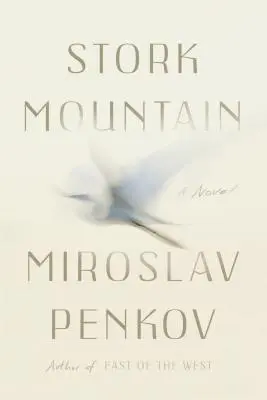
- Название:Stork Mountain
- Автор:
- Издательство:Farrar, Straus and Giroux
- Жанр:
- Год:2016
- ISBN:нет данных
- Рейтинг книги:4 / 5. Голосов: 1
-
Избранное:Добавить в избранное
- Отзывы:
-
Ваша оценка:
Stork Mountain: краткое содержание, описание и аннотация
Предлагаем к чтению аннотацию, описание, краткое содержание или предисловие (зависит от того, что написал сам автор книги «Stork Mountain»). Если вы не нашли необходимую информацию о книге — напишите в комментариях, мы постараемся отыскать её.
Stork Mountain — читать онлайн бесплатно полную книгу (весь текст) целиком
Ниже представлен текст книги, разбитый по страницам. Система сохранения места последней прочитанной страницы, позволяет с удобством читать онлайн бесплатно книгу «Stork Mountain», без необходимости каждый раз заново искать на чём Вы остановились. Поставьте закладку, и сможете в любой момент перейти на страницу, на которой закончили чтение.
Интервал:
Закладка:
According to Grandpa, the coals had been spread too thinly. According to him, those fire dancers were not true nestinari .
Walking to the bus, after the imam had driven away his women, I’d seen, or at least thought so, the chubby Russian who’d burned his feet in the fire. He had been chatting in Bulgarian with one of the men who’d spread the embers, helping him load the rakes in the bed of a pickup.
“A thin line divides them, my boy,” Grandpa said, “the miracle worker from the con artist. And that line, as it often happens, lies in the eye of the one who watches.”
The people we’d seen last night were not Klisurans. And the feast of Saints Constantine and Elena, it too hadn’t been last night. “Wait thirteen more days,” Grandpa said, “then go back to Byal Kamak.” For such things, it was the old calendar that held weight in Klisura, and in most other Bulgarian villages for that matter.
I felt my blood rise to the tips of my ears. Here was a detail I’d failed to consider: while the majority of Europe had switched to the Gregorian calendar in the Middle Ages, Bulgaria had waited until 1916. Even to this day many of our older people honored dates in their old, Julian style. So not May 21, but June 3 then was the proper feast of the nestinari saints.
“It only hurts that it happened this way. Not that it happened,” Grandpa said, and waved his big hand. “In your place, I might have done the same things. Hell, in your place, I did much worse.” And for a moment it seemed like he wanted to say more. He pulled out a cigarette and lit it, his eyes on the roofs and the stork nests.
“Baba Mina was never a fire dancer,” he said when a stork landed in one nest and began to feed its two babies. “Saint Kosta never took her. And after so many years, I see it still pains her. What happened, happened,” he said, and took a long drag. “It’s what happens next that I’m not too keen on braving. So man up. A storm’s coming.”
PART FOUR
ONE
THE NIGHT BEFORE the proper nestinari feast I dreamed of the girl again. She was in my bed, wrapped in a white sheet like a corpse, and when I peeled off the sheet she laughed, tickled. She had no face and her laughter was a lark’s song. The bed had turned into a nest, the earth was moving with a deep roar, and twig by twig the nest began to rot away. We started falling.
I opened my eyes to Grandpa’s face, blurry at first, so close to mine, then coming into focus. The roar from my dream had gotten louder. Deep and persistent, it rattled the windows in their frames and it was the glass that chirped birdlike.
For a moment I expected the Grandpa of my childhood to throw me a netted sack. Bread, cheese, and yogurt. Delivery in fifteen minutes. Instead, he hit me with a pair of jeans.
“Get dressed. We have to go.”
Go where? The sun was barely above the eastern hills. The yard lay half in shadow. By the time I was tangling in my T-shirt, a guillotine of light was touching the mouth of the well. The roar had grown so loud I made nothing of what Grandpa was saying — a curse, no doubt, at someone’s aunt or mother.
We glued our palms to the windows to cushion their buzz and it was then we saw it — trampling the road on its way past our house. Burning with sun in its armor — curved blade, yellow body, clawlike tail — it resembled a giant scorpion more than it did a tank and a tank significantly more than what it really was.
“A bulldozer?” I said.
“Make it two. You slept through the first one.”
The bulldozer had left behind a dry fog of its own — a cloud of dust and sand through which we marched. Once or twice Grandpa tripped in the ruts the tracks had dug, but after each falter his pace quickened. As did his breathing. “We wasted too much time,” he barked when I asked him to slow down; there was no need for him to say the rest—“all thanks to you.”
The roar of machines grew louder the closer we got to the ugly tower, the outermost houses, the dust bitter and stinking of exhaust. With the stench, a heaviness set in my stomach, and when the engines suddenly drowned in a different kind of boom — the rumble and roll of collapsing walls — the heaviness turned to panic. Grandpa sprinted grotesquely, like a thing wounded, and so I sprinted behind him. He shouted something and I too heard myself shouting.
Blades and rippers were cutting through the dust cloud — like shark fins and tails in waters boiling with the blood of prey; the kind of blood that stank of motor oil and of naphtha.
“The devil take me,” Grandpa cried again and again, and despite the boom I could hear his jaws clenching. Making fists, he paced, left, right, left. Once, he made to enter the thick of the cloud, but I held him back firmly. And after this, we watched, fully aware that we were late and there was nothing we could do but hope the wind would scatter some of the dust so we could at least see the damage.
We saw at last — rubble where only a heartbeat before there had been a house. Slowly, methodically, the bulldozers scraped aside walls and roof, cleaned the ground and made it level. Metal screeched, wood cracked, and somewhere beyond this chaos, we recognized the flapping of wings. Two black storks swam through the dissipating cloud — the shadows of the storks above us, white like bones in the morning sky.
I knew then, as if for the first time, that this was all my fault. And I was convinced that Grandpa too knew it. But seeing him as I saw him now — wrapped in a sheet of dust, like the girl from my dream, and only two muddy claw marks on his face, where the tears were rolling, I understood something else. The houses meant nothing to him. Sticks and mud, dried-up ruins. And the land meant nothing — level or razed with bulldozer ruts. It was not because of land or houses he’d come back to Klisura.
“They had two little chicks, I think,” he said.
And after this all I heard was wings beating, and all through Klisura the calling of storks.
TWO
FOR TWENTY DAYS in the summer of 1903 the Strandjan Republic stayed free under the revolutionary banner. Was it worth it, I wonder , Captain Kosta wrote in his journal, alone and broken by poverty and sickness, a few years after the big battles; a journal from which Grandpa copied in his own notes. To have known freedom for only a heartbeat and then to have spilled your blood under the sword and the fire? By God, I say, what does it matter, a lifetime or only a heartbeat? It matters we knew her. No. This too doesn’t matter. It matters we fought to know her. By God, I say, it was worth it.
The news that the imam’s little daughter had danced barefoot in the embers spread through the village like wildfire. And like all rumors, it spread badly distorted. In one version Aysha had crossed herself three times before leaping into the coals; in another she’d carried an icon of the Virgin Mary and even kissed it. According to one version, it was Baba Mina who’d held the girl’s hand and led her in circles; according to another, Grandpa had walked in the fire, without his shoes on. But all versions agreed on one detail — the imam’s older girl had run past her father and given the American grandson a smack on the lips.
From then on, Aysha and her mother were perfectly healthy. And so were all the other sick girls in Klisura. They all thought the feast of Saint Kosta over and that knowledge alone cured them. But things with Elif were not well. She too had been banned from the bus; her father had banned her. Her school, the exams that were coming — she’d found herself forced to fail them.
Watching the jacket she’d left to dry on my hanger pained me something vicious. At times, I shook with the urge to grab it, march down to her house, and return it in person. At times, I burned with the need to take it outside, set it on fire, and pound its ashes into the ground with my bare feet. But the thought that I would first have to touch it filled me with such terror I could only watch it, where it hung in the corner, and think of the girl who’d worn it.
Читать дальшеИнтервал:
Закладка:
Похожие книги на «Stork Mountain»
Представляем Вашему вниманию похожие книги на «Stork Mountain» списком для выбора. Мы отобрали схожую по названию и смыслу литературу в надежде предоставить читателям больше вариантов отыскать новые, интересные, ещё непрочитанные произведения.






Обсуждение, отзывы о книге «Stork Mountain» и просто собственные мнения читателей. Оставьте ваши комментарии, напишите, что Вы думаете о произведении, его смысле или главных героях. Укажите что конкретно понравилось, а что нет, и почему Вы так считаете.