Iain Sinclair - London Orbital
Здесь есть возможность читать онлайн «Iain Sinclair - London Orbital» весь текст электронной книги совершенно бесплатно (целиком полную версию без сокращений). В некоторых случаях можно слушать аудио, скачать через торрент в формате fb2 и присутствует краткое содержание. Год выпуска: 2003, Издательство: Penguin Books Ltd, Жанр: Современная проза, Путешествия и география, Публицистика, на английском языке. Описание произведения, (предисловие) а так же отзывы посетителей доступны на портале библиотеки ЛибКат.
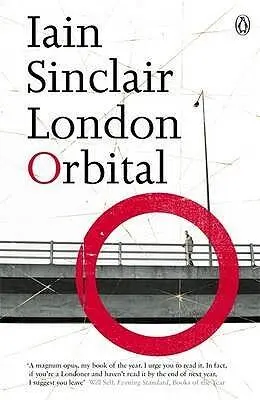
- Название:London Orbital
- Автор:
- Издательство:Penguin Books Ltd
- Жанр:
- Год:2003
- ISBN:нет данных
- Рейтинг книги:4 / 5. Голосов: 1
-
Избранное:Добавить в избранное
- Отзывы:
-
Ваша оценка:
London Orbital: краткое содержание, описание и аннотация
Предлагаем к чтению аннотацию, описание, краткое содержание или предисловие (зависит от того, что написал сам автор книги «London Orbital»). Если вы не нашли необходимую информацию о книге — напишите в комментариях, мы постараемся отыскать её.
Encircling London like a noose, the M25 is a road to nowhere, but when Iain Sinclair sets out to walk this asphalt loop — keeping within the 'acoustic footprints' — he is determined to find out where the journey will lead him. Stumbling upon converted asylums, industrial and retail parks, ring-fenced government institutions and lost villages, Sinclair discovers a Britain of the fringes, a landscape consumed by developers. London Orbital charts this extraordinary trek and round trip of the soul, revealing the country as you've never seen it before.
'My book of the year. Sentence for sentence, there is no more interesting writer at work in English'John Lanchester, 'A magnum opus, my book of the year. I urge you to read it. In fact, if you're a Londoner and haven't read it by the end of next year, I suggest you leave'Will Self, 'A journey into the heart of darkness and a fascinating snapshot of who we are, lit by Sinclair's vivid prose. I'm sure it will be read fifty years from now'J. G. Ballard, Iain Sinclair is the author of
(winner of the James Tait Black Memorial Prize and the Encore Award);
(with Rachel Lichtenstein);
and
. He is also the editor of
.
London Orbital — читать онлайн бесплатно полную книгу (весь текст) целиком
Ниже представлен текст книги, разбитый по страницам. Система сохранения места последней прочитанной страницы, позволяет с удобством читать онлайн бесплатно книгу «London Orbital», без необходимости каждый раз заново искать на чём Вы остановились. Поставьте закладку, и сможете в любой момент перейти на страницу, на которой закончили чтение.
Интервал:
Закладка:
Church and priory, dedicated to the flayed St Bartholomew, maintain a connection with the hospital. In 1609 William Harvey became a physician at St Bartholomew’s Hospital. In 1615 he was appointed to the Lumleian lectureship of the college. His first published work was An Anatomical Exercise Concerning the Motion of the Heart and Blood (1649). From the manuscript notes for Harvey’s lectures in 1615, it is clear that he had already decided that blood can pass from arteries to veins; that the heart was a muscle, its valves served to prevent flow in a reverse direction. While the heart beats there is ‘a perpetual motion of the blood in a circle’.
With the blood banks of Harefield, the distribution depot of Count Dracula at Carfax, the discoveries of William Harvey, our project was in imminent danger of cardiac arrest. Circulation: blood and the road. An orbital motorway contracting London’s hammered heart. It was time to get back to water, the Grand Union Canal.
Coming away from Harefield, we collected the car at Denham, drove back to Abbots Langley: a day’s walk undone in a few minutes of motorway transit. Trying to shake Renchi’s hand, on parting at the Leavesden Hospital, in the chill twilight, is like reaching out for a glove of air. We fade, the handshake remains: one of those Masonic symbols found on sooty gravestones in obscure London burial grounds.
3
In the south-west corner, I’m as far as I’m going to be from Hackney. By the end of the day there’ll be almost as much driving as walking. 3 March 1999: Staines station. Another of our two-car relays. The plan is to take the motorway back to Denham, leave one car there and begin the walk — which will carry us, along with the Colne, through an impossibly clotted landscape, to the green-brown barrier of the Thames.
It’s a 5.30 a.m. start in Albion Drive. And Marc Atkins doesn’t make it. Seduced by the promise of motorway junctions, Heathrow, reservoirs, the whole J.G. Ballard psycho-climate, Marc was about to rejoin the tour. He did a lot of book jackets but didn’t, so far as I know, read novels. He made a few exceptions: Ballard’s Crash was one of them. If he mentioned Crash it was by way of a hint that I might learn to fashion shorter, crisper sentences. I might experiment for once and try for narrative, pages that could be turned without a forklift truck. Night roads. Sex. Driving. He was fed up with pedestrianism: of concept, prose, action.
I hung on as long as I could. I tried Marc’s mobile. It was off. Always protective of his private space, mysterious in his shifting alliances, Marc had gone to ground. Self-tagged (cellphone, fax, video), the system only worked when it was switched on. I had to make the rendezvous with Renchi, who swam through currents of plural time, but was never late for a meet at the start of one of our walks.
The thing that pissed me off about Marc’s failure to show was that he would have captured some great images of this drive through the Heathrow hinterlands. There was a full moon. A morning of high, wild clouds, fast changes. Planes skimmed the road. You couldn’t help being drawn into the tremble, the jet roar, the throb of traffic streaming in every direction. M4, M25, A4, A30; slip roads, link roads, trunk roads, deleted coach roads. Two hundred thousand vehicles a day used the section of the M25 between Junctions 13 and 14. Ballard was absolutely right: if you set aside human interference (aka life), London was a mausoleum. Kensal Green Cemetery with the walls knocked down. Pompous monuments, redundant public buildings, trash commerce, heritage tags. Oxford Street was a souk. Charing Cross Road a gutter.
The city, in its Victorian overcoat, the muck of centuries on its waistcoat, bored Ballard. He promoted this new place, the rim. The ‘local’ was finished as a concept. Go with the drift, with detachment. The watcher on the balcony. Areas around airports were ecumenical. They were the same everywhere: storage units, hangars, satellite hotels, car hire companies, apologetic farmland as a mop-up apron for Concorde disasters. If you see the soul of the city as existing in its architecture, its transport systems, its commerce and media hot spots, then Ballard’s championship of the suburbs is justified. But they’re not really suburbs if they don’t feed on the centre. The Heathrow corridor has declared its unilateral independence, that’s what makes it exciting. The abdication of responsibility and duty; glossy goods, ennui, scratched light.
London for Michael Moorcock, Ballard’s New Worlds editor and colleague, lived in memory and human traffic. That was the heart of the argument between two veteran writers. However dim and dirty the buildings, however sleazy the political games, Moorcock would identify a special spirit: the London mob. The outsider, the dope fiend, the alien. Sentiment, delivered with such gusto, such knowledge of the streets and moves, coheres and remains a powerful motor for fiction. But Moorcock, despite the many licences he inherited over the years, doesn’t drive. Doesn’t want to drive. This early morning spin down the Colnbrook Bypass is not for him. In earlier times, well insured (for the sake of the kids), he dealt with car-cramps and the dullness of the suburbs, by climbing on to the roof, feeling the wind in his hair; riding out of London like one of his Viking champions.
Staines railway station was a country affair — with too much action, too many parked cars. A decorous brick building with uncertainly heritaged globe lights, corporate logos, warnings, prohibitions, ticketing machines.
Renchi, muddy boots in hand, is waiting alongside a wide-screen hoarding: ULTRA EFFECTIVE/SMOKING KILLS. In his stocking cap and libertarian red scarf, he’s a Digger, a travelling saint of the 1640s. The Silk Cut illustration is a beauty: a turnip-head archer, a scarecrow shaman in a ploughed field. The scarecrow is nailed to a spindly cross, straw feet don’t touch the ground. Gloved hand on drawstring. Slit-eyes watchful. A crow killer guarding the painted landscape that Renchi is about to enter. Archer as straw man. Archer crucified. The prophecy of Staines: don’t make them breathe your smoke.
We drive back to Denham, another station, deeper countryside. DENHAM TWINNED WITH SHARK BAY WESTERN AUSTRALIA. In 1939 J. Arthur Rank (the Yorkshire Methodist who leased his name as a rhyming slang term for the act of self-pleasuring) bought Denham Studios, the largest in Britain, from Alexander Korda, after Korda failed to duplicate the international success of The Private Life of Henry VIII (1933). The Prudential Assurance Company had lent him the money to build Denham Studios. A none too prudent investment. Korda folded.
Rank (dim product, sharp management) developed a production and distribution base. They went global, acquiring a quarter share in the US company Universal, which gave them the distribution rights to glitzy Hollywood product. They purchased off-highway real estate, Pinewood, Denham. They took over the Odeon chain of suburban cinemas and the Gaumont British circuit (which included, as part of the package, Michael Balcon’s Ealing Studios). Rank, a late flowering of the Dissenter tradition that had once flourished in the Chiltern and Hertfordshire villages, was also a forerunner of coming multinational capitalism. The old tracks and paths that, for a few years during and after the English Civil War, allowed tinkers, visionary herdsmen, disaffected mechanics to roam, preach, discuss, debate became the super highways of petrol/burger culture.
In the Denham bun shop, Renchi can hardly keep his eyes open, far less make a decision on what kind of cake or biscuit to munch. He was working until eleven o’clock on the previous evening, drinking too much coffee, plotting the day’s walk. The bun shop has a kind of Christmas shrine to the Death of Cinema; red paper spotted with snow, green plastic garlands, framed photos of Patrick Mower and ‘the girl who used to do high kicks on The Generation Game ’. White suits. Pink flesh burnt by the shock of flash photography at some long forgotten premiere. Teeth for the camera. Twinned with Shark Bay. ‘I’m still me. I’m still here.’ The immortality of non-recognition on the wall of an early-morning bakery near a suburban railway station.
Читать дальшеИнтервал:
Закладка:
Похожие книги на «London Orbital»
Представляем Вашему вниманию похожие книги на «London Orbital» списком для выбора. Мы отобрали схожую по названию и смыслу литературу в надежде предоставить читателям больше вариантов отыскать новые, интересные, ещё непрочитанные произведения.






Обсуждение, отзывы о книге «London Orbital» и просто собственные мнения читателей. Оставьте ваши комментарии, напишите, что Вы думаете о произведении, его смысле или главных героях. Укажите что конкретно понравилось, а что нет, и почему Вы так считаете.