Iain Sinclair - London Orbital
Здесь есть возможность читать онлайн «Iain Sinclair - London Orbital» весь текст электронной книги совершенно бесплатно (целиком полную версию без сокращений). В некоторых случаях можно слушать аудио, скачать через торрент в формате fb2 и присутствует краткое содержание. Год выпуска: 2003, Издательство: Penguin Books Ltd, Жанр: Современная проза, Путешествия и география, Публицистика, на английском языке. Описание произведения, (предисловие) а так же отзывы посетителей доступны на портале библиотеки ЛибКат.
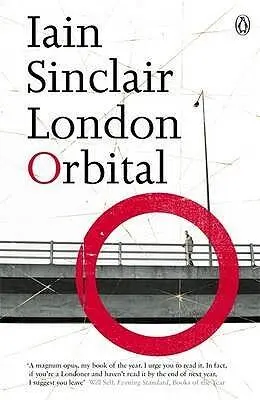
- Название:London Orbital
- Автор:
- Издательство:Penguin Books Ltd
- Жанр:
- Год:2003
- ISBN:нет данных
- Рейтинг книги:4 / 5. Голосов: 1
-
Избранное:Добавить в избранное
- Отзывы:
-
Ваша оценка:
London Orbital: краткое содержание, описание и аннотация
Предлагаем к чтению аннотацию, описание, краткое содержание или предисловие (зависит от того, что написал сам автор книги «London Orbital»). Если вы не нашли необходимую информацию о книге — напишите в комментариях, мы постараемся отыскать её.
Encircling London like a noose, the M25 is a road to nowhere, but when Iain Sinclair sets out to walk this asphalt loop — keeping within the 'acoustic footprints' — he is determined to find out where the journey will lead him. Stumbling upon converted asylums, industrial and retail parks, ring-fenced government institutions and lost villages, Sinclair discovers a Britain of the fringes, a landscape consumed by developers. London Orbital charts this extraordinary trek and round trip of the soul, revealing the country as you've never seen it before.
'My book of the year. Sentence for sentence, there is no more interesting writer at work in English'John Lanchester, 'A magnum opus, my book of the year. I urge you to read it. In fact, if you're a Londoner and haven't read it by the end of next year, I suggest you leave'Will Self, 'A journey into the heart of darkness and a fascinating snapshot of who we are, lit by Sinclair's vivid prose. I'm sure it will be read fifty years from now'J. G. Ballard, Iain Sinclair is the author of
(winner of the James Tait Black Memorial Prize and the Encore Award);
(with Rachel Lichtenstein);
and
. He is also the editor of
.
London Orbital — читать онлайн бесплатно полную книгу (весь текст) целиком
Ниже представлен текст книги, разбитый по страницам. Система сохранения места последней прочитанной страницы, позволяет с удобством читать онлайн бесплатно книгу «London Orbital», без необходимости каждый раз заново искать на чём Вы остановились. Поставьте закладку, и сможете в любой момент перейти на страницу, на которой закончили чтение.
Интервал:
Закладка:
The drift through these woods, jolting over rough tracks, induces reverie: angular shapes among the dense branches, sites that are still forbidden. Elements of the megalithic, primitive mounds and encirclements, disguise Crimean War technology. Ziggurat walls, slanted, necrophile, guard a woodland clearing; a village green, known as ‘The Burning Ground’, on which discarded explosives were destroyed. It would be impossible, from this catalogue of post-industrial relics, to work your way back to any culture. This is all that’s left, monuments returned to nature, photographs in a reclaimed shed.
We breakfasted in an Italian place that looked out on Waltham Cross. There is a cross, a nibbled Gaudí pillar, a monument marking the funeral procession of Queen Eleanor of Castile, wife of Edward I. Her body (she died while travelling to Scotland to join the king) was brought back from Harby, Nottinghamshire, for burial at Westminster Abbey. Crosses were erected to witness every stage of this journey.
Webbed-in with protective nets, restored, cleaned to an ivory sheen, the Eleanor Cross is more like a radio mast than an item of funerary sculpture. It’s the focal point of this prolapsed market town: red litter bins, benches for drunks, a pedestrianised precinct (that repels walkers). The original effigies from the Cross, the work of Alexander Abyndome, are now housed in Cheshunt Public Library.
Renchi likes it. He whips out a sketchbook and settles, cross-legged, on a white stone bollard. GOLDSTEIN (FINANCIAL ADVISERS), COFFEE HOUSE: DOLCI, CAFFE, PASTA, FISHPONDS BUDGET SHOWROOMS.
There’s a background buzz of barely suppressed aggression underwriting Renchi’s Ruskinian seizure: civic architecture has got it badly wrong. A semi-circle of scarlet metal benches attracts other transients, strong lager fanciers who have made contact with some of the local barechest boys. A breakfast brew. A bit of a domestic is in progress; raised voices, repetitive insults escalating towards resolution. You can see the coffee-shop women pausing mid-sip, cappuccino moustaches. There’s quite a clique of these ladies in Waltham Cross, with the Italian place as their obvious hangout. Walnut-coloured leisure wives, still steaming from tanning beds. Metallic blondes with vivid nails. Very trim in fiercely pressed jeans.
A doppelganger manifests at Renchi’s shoulder. It’s Renchi himself, ten years older, ten years frostier in the beard. A messenger from the future steps up, loaded plastic bags in hand, nautical cap on head, to adjudicate the drawing. Renchi talks about going beyond preservation (the photograph); he wants more of an exchange with the recorded object. Sketching frees the hand. We listen, sympathetically, to our Ancient Mariner: another paroled artist who has wandered abroad and found his place.
He sets us on our way: charity shops, post-mortem clothes, financial services, stalls stacked with cheap tat. Waltham Cross has a boutique favoured by Victoria Adams (Mrs Beckham, Posh Spice). Tarty with class (the price tag grants respectability to the diamanté thong). Victoria is a local. Visit Waltham Cross and her otherness comes into focus. All the women in the coffee-bar have that hard sheen, the laminate of non-specific celebrity. Interspecies. They look as good as the photographs in the magazines. Their faces are stiff, moving like heavy paper. You can acquire, if you concentrate, follow the regime, a toxicology of fame. A fame cosmetic. Like whacking up the colour balance. Achieving alien status: part ennui, part peevishness, part camera flirtation.
Posh Spice, an odd label for a person, suits this location. It reminds me of the Indian restaurant at Waltham Abbey on millennial eve: exotic, dusky, dangerously perfumed. Victoria Beckham is the future Eleanor Cross. The name of a dumpy, longlived Germanic royal inherited by a whippet-ribbed starveling. Who shops. Who is famous for shopping. Who arrives, incognito, at a modest boutique on the Essex/Herts border: and makes sure that her visit is widely reported.
We don’t spend much time in Cedars Park, or at Temple Bar, we want to get back to the road; to attempt the north side of the M25, a network of paths and rides that go west towards Potters Bar. This area, just outside the motorway, is a blank: woods, stables, kennels.
The gates of the Western Jewish Cemetery are locked, even though we have arrived within the advertised opening hours. WHEN GATES/ARE CLOSED/ALSATIANS/ARE ON PATROL. What I’m pursuing is the burial place of the Spitalfields scholar and hermit, David Rodinsky. A long quest has been resolved by artist and archivist Rachel Lichtenstein. The haunting story of a locked room, a vanished man, has been grounded. Rachel found a death certificate, the suburban hospital where Rodinsky died, a grave with a metal name-plate. The grave, Rachel said, was near Waltham Abbey. I guessed, since I had passed this place so many times, that the beginning of my new project, the M25 walk, might overlap with my previous one, the Rodinsky story. Time after time, urban obsessions would be resolved at the very point where London lost heat, lost heart, gave up its clotted identity.
The lodge-keeper, skull covered, put us right. This had been an insensitive blunder on my part, the intrusion at the cemetery gates. Today was Yom Kippur, the Day of Atonement; a time for abstinence and prayers of repentance. (Rachel told me that she finished work on her part of the Rodinsky book at 2.30 a.m., on the morning before Yom Kippur.)
The structure of our walk is elegiac: discontinued rituals, closed shrines. The funeral service, the emptied pond. The horse-trough near Theobalds Grove station filled with flower petals. Fenced off monuments and gates that are not gates.
We sit for a time under the Bulls Cross Bridge, watching the tide of traffic, the hallucinatory rush. Listening to the shift in the tyre sounds as the road surface changes, the thunderous amplification of the bridge. Renchi sprawls on hexagonal tiles, white road-dirt in the grooves of his boots.
I read him a quotation from Paul Devereux that seems pertinent: ‘One of the key entoptics is the spiral-tunnel-vortex, which heralds a shift from merely observing the entoptic and iconic imagery to participating in it. There is a sense of the self’s becoming mobile, leaving the body, and rushing down a tunnel or being sucked into the eye of the spiral or vortex… It is with this specific entoptic that the out-of-body or spirit-flight is associated. This entoptic tunnel could be the neurological blueprint for the straight line on the shamanic landscapes.’
The markings on the motorway are shamanic. Noise takes us out of ourselves into a dispersing landscape. Giddy, we enter movement. We could do the whole thing here, on the ramp. We could dream it.
Renchi has his own tale to tell. His father, Peter Bicknell, a Cambridge architect and academic, accumulated a notable collection of travel journals, records of walks and alpine excursions. Limited editions, rarities, manuscripts. When Renchi visited his mother, he would rummage through the library, searching out topographical information relevant to our orbital pilgrimage. Our shambling progress around the M25 could be seen as a parodic reprise of the material that interested Peter Bicknell. Welfare State ghosts on the tramp, in the footsteps of gentleman botanists, muscular Christians.
A Hampshire psychic told Renchi that his father’s library held a great clue. She described a room she had never seen. He should search the stacks, second shelf down, third book from the left, such and such a page.
He left at once for Cambridge. He found the volume. It was just as she had pictured it. A handwritten journal, a journey.
‘What did it reveal?’ I asked.
‘Nothing,’ Renchi said. ‘Absolutely nothing.’ A trek through the North of England, in search of nothing in particular. And not locating it. A record kept for the sake of keeping a record. A singularity that awaited a singular readership.
Читать дальшеИнтервал:
Закладка:
Похожие книги на «London Orbital»
Представляем Вашему вниманию похожие книги на «London Orbital» списком для выбора. Мы отобрали схожую по названию и смыслу литературу в надежде предоставить читателям больше вариантов отыскать новые, интересные, ещё непрочитанные произведения.




Обсуждение, отзывы о книге «London Orbital» и просто собственные мнения читателей. Оставьте ваши комментарии, напишите, что Вы думаете о произведении, его смысле или главных героях. Укажите что конкретно понравилось, а что нет, и почему Вы так считаете.