Curt Leviant - Kafka's Son
Здесь есть возможность читать онлайн «Curt Leviant - Kafka's Son» весь текст электронной книги совершенно бесплатно (целиком полную версию без сокращений). В некоторых случаях можно слушать аудио, скачать через торрент в формате fb2 и присутствует краткое содержание. Год выпуска: 2016, Издательство: Dzanc Books, Жанр: Современная проза, на английском языке. Описание произведения, (предисловие) а так же отзывы посетителей доступны на портале библиотеки ЛибКат.
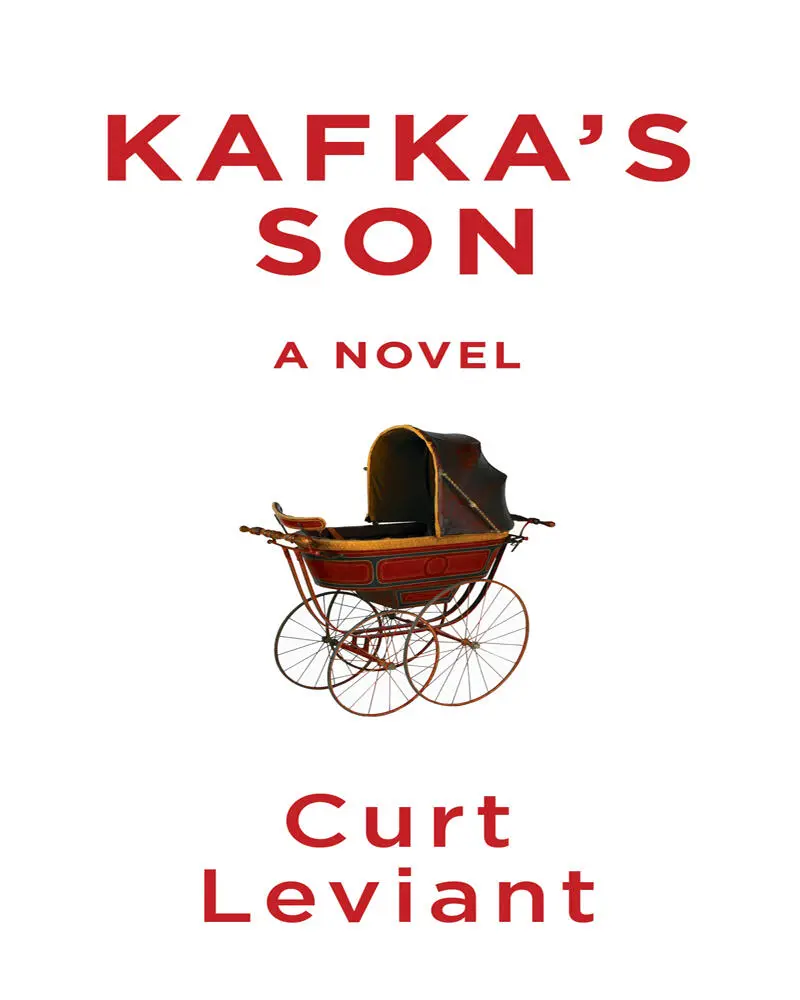
- Название:Kafka's Son
- Автор:
- Издательство:Dzanc Books
- Жанр:
- Год:2016
- ISBN:нет данных
- Рейтинг книги:5 / 5. Голосов: 1
-
Избранное:Добавить в избранное
- Отзывы:
-
Ваша оценка:
Kafka's Son: краткое содержание, описание и аннотация
Предлагаем к чтению аннотацию, описание, краткое содержание или предисловие (зависит от того, что написал сам автор книги «Kafka's Son»). Если вы не нашли необходимую информацию о книге — напишите в комментариях, мы постараемся отыскать её.
follows a first-person narrator who is a documentary filmmaker. In a New York synagogue, he meets an elderly Czech Jew named Jiri, once the head of the famous Jewish Museum in Prague, with whom he discovers a shared love of Kafka. Inspired by this friendship, the narrator travels to Prague to make a film about Jewish life in the city and its Kafka connections.
In his search for answers, he crosses paths with the beadle of the famous 900-year-old Altneushul synagogue, the rumored home to a legendary golem hidden away in a secret attic — which may or may not exist; a mysterious man who may or may not be Kafka’s son — and who may or may not exist; Mr. Klein, who although several years younger than Jiri may or may not be his father; and an enigmatic young woman in a blue beret — who is almost certainly real.
Maybe.
As Prague itself becomes as perplexing and unpredictable as its transient inhabitants, Curt Leviant unfolds a labyrinthine tale that is both detective novel and love story, captivating maze and realistic fantasy, and a one hundred percent stunning tribute to Kafka and his city.
Kafka's Son — читать онлайн бесплатно полную книгу (весь текст) целиком
Ниже представлен текст книги, разбитый по страницам. Система сохранения места последней прочитанной страницы, позволяет с удобством читать онлайн бесплатно книгу «Kafka's Son», без необходимости каждый раз заново искать на чём Вы остановились. Поставьте закладку, и сможете в любой момент перейти на страницу, на которой закончили чтение.
Интервал:
Закладка:
I saw the man in profile. His right eye seemed lifeless. He looked a little slow, like a golem. But what wasn’t golemic in Prague? Even the uncooperative policeman looked like a golem. As the man took four steps forward to get a Siddur, I noticed his deliberate, awkward movements. His dull, expressionless eye and lumbering gait made him seem retarded. I immediately nicknamed him golem. The phlegmatic way he wound the tefillin straps around his arm and the largo recitation of blessings confirmed my judgment. Was this the man Jiri had sent me to? The man who supposedly would be so helpful to me? He, the key? Still, I couldn’t take my eyes off him. Why did I stare at him so incessantly? Did I think this would help reveal his name to me?
His big face and slow movements somehow indicated strength. I imagined how powerful he must be, the golem. I fantasized that if the ceiling were to collapse, he would lift his powerful arms like the golem did in the silent film classic, The Golem , when the ceiling of the emperor’s palace began to crumble. The Rabbi of Prague, the Maharal, had warned the courtiers not to laugh when he magically showed them scenes from the Exodus from Egypt or there would be serious consequences. But laugh they did, and the vaulted stone ceiling began to descend and the golem stretched his hands up and the ceiling bent around his arms and you can see the striated lines in the stone straining, lines like wrinkles in an old woman’s face. And I imagined from my stone seat by the doorway, about twenty-five or thirty feet from the modern golem, that with his powerful arms he could enact the same feat.
Then I rose and walked toward him.
“Shalom,” I said. “I have regards for you from—”
He turned slightly.
Just then, without excusing himself, another man interrupted. He stood in front of the golem and began to speak. I was about to protest this rudeness, as I would usually do when peeved, but I restrained myself. I was a visitor. I had just arrived. I wouldn’t want to alienate anyone here.
Their lively conversation in Czech made me realize the man I had nicknamed Golem wasn’t dimwitted at all. Not with that crackling, assertive burst of Czech.
The other man went back to his seat.
I introduced myself. “Do you speak English?”
“Yes. Welcome to the Al-tnigh-shul.” He used the alternative pronunciation.
We shook hands. I was surprised by the gentleness of his handclasp, rather soft and meek.
Just like with Jiri, I couldn’t quite make out where his accent came from.
“I bring you regards from a family friend, Dr. Jiri Krupka-Weisz.”
Now I saw the golem full face. No wonder I thought his face was expressionless. His right eye was glass. His right cheek seemed stiffer than the left, as if the nerves had been damaged. But the left side was quite animated.
“I didn’t know dead men can send regards,” he said drily.
It was too late for foreboding. At once the pain of sadness swept over me. Oh, my God, I thought. So it is true. If a friend says it, it must be true.
Still, I said, “Who is dead?” One always hopes, even when there is little reason to hope. After all, I had heard the news in rather oblique fashion, from Patient Information and from the super in Jiri’s apartment.
“You mean you convey regards and don’t know the fate of the man?”
I let his prickly remark brush by me.
“Here’s the story. We met in shul in New York two Sabbaths in a row. Then I saw him one day at the hospital. Then the hospital refused to give me any information, citing the new privacy laws. It’s so frustrating. Oh, my God! Poor Jiri. I’m so sorry to hear this. I liked him so much. I can’t tell you how sad I am to hear that he died. What a mentch . I only knew him a short while but we established a kinship. He even called me bruderl , little brother.”
“I know what bruderl means.”
His third sarcastic remark. Well, at least he wasn’t a moron.
“Sorry, I just wanted to make myself clear. I felt I had found a long-lost relative in Jiri. All this in three meetings.”
“So you liked him.”
If I were combative, I would have said, Isn’t it obvious? I just told you I liked him. But I toned it down to:
“As you can see.”
I sat down next to the golem.
Wait a minute. What happened to my scenario? He still hadn’t told me his name.
“You see,” I said, “when they stonewalled me at the…”
“Excuse me, what is this stonewalled?”
“At the hospital, no matter how hard I tried, they refused to give me any information. They wouldn’t tell me if he was a patient, if he was well, if he was discharged, if he died. Like a stone wall was put up in front of me.”
“Stonewalled,” he said, closing his good eye and staring at me, golem-like, with his glass.
“Stonewalled. Good word. Excellent word. I like that word, ‘stonewalled.’”
“Exactly. I even went to his apartment afterward to see his wife.”
“Wife?”
“Well, it looked like a wife. It sure talked like a wife.”
“Jiri was not married. His wife and son were killed by the Germans. He never remarried.”
“All right, then. A housekeeper.”
“Ah, yes. Keeper of the house. Keeper of the keys.”
Then he winked, not with the good eye but with the bad. An eerie, empty wink. But perhaps it was just the lid moving, a mechanical flaw.
“But when I arrived at his apartment the next day,” I continued, “the house manager told me the apartment was empty. His housekeeper had moved out.”
“And his books, his signed copy of Meditation?”
“I know nothing about that.” I wanted to tell him about Jiri’s and Betty’s secret language but I held back.
“And… and…” The golem wanted me to continue. He dangled a word magnet right in front of me and waited. His face conveyed two messages, both contradictory. Puppet stiffness and animation. But on one thing both sides of his face agreed: talk some more. Reveal.
Broke then my resistance, especially when he said:
“Did he tell you any special word?”
“You mean like a password, or, like in banking, a personal identification number?”
The golem didn’t answer.
What special word did Jiri give me? None that I could recall. Or should I tell the golem about “nepa tara glos”?
But he had inserted the magic key, turned it, and now the words tumbled, bubbled, out of me, oozing the pleasure of juicy gossip.
“All right, I might as well tell you. Sometimes, in my presence, especially at the hospital at our last meeting, they spoke a secret language I could not penetrate. Well, maybe I did get a word or two.”
The golem laughed. “That means they liked you.”
What kind of nonsense is that? I thought. If they liked me they would have spoken a language I could understand. Then I considered my relationship with Jiri. There was a difference between he liking me and they liking me. On his own, it was love. Conjoined with Betty, the affection underwent a chemical change.
“I never thought discourtesy was synonymous with affection.”
“You are very philosophical. But wrong. I said they liked you. I didn’t say they trusted you.”
“Another misalliance. Another moyshe-kapoyr —yes, I know you know it means upside down — another strange coupling… About what didn’t they trust me? Inheritance? Bank accounts? I hardly knew them, for goodness’ sake.”
“I don’t know either. But when people use a secret language…” But he didn’t finish his thought.
“And how does a woman who isn’t a wife get to know such an arcane language?”
The golem shrugged. “Yes,” he said.
“It must have been a made-up language, because it had no affinity to any language grouping I know.”
Читать дальшеИнтервал:
Закладка:
Похожие книги на «Kafka's Son»
Представляем Вашему вниманию похожие книги на «Kafka's Son» списком для выбора. Мы отобрали схожую по названию и смыслу литературу в надежде предоставить читателям больше вариантов отыскать новые, интересные, ещё непрочитанные произведения.





Обсуждение, отзывы о книге «Kafka's Son» и просто собственные мнения читателей. Оставьте ваши комментарии, напишите, что Вы думаете о произведении, его смысле или главных героях. Укажите что конкретно понравилось, а что нет, и почему Вы так считаете.