Benyamin - Goat Days
Здесь есть возможность читать онлайн «Benyamin - Goat Days» весь текст электронной книги совершенно бесплатно (целиком полную версию без сокращений). В некоторых случаях можно слушать аудио, скачать через торрент в формате fb2 и присутствует краткое содержание. Год выпуска: 2012, Издательство: Penguin Books, Жанр: Современная проза, на английском языке. Описание произведения, (предисловие) а так же отзывы посетителей доступны на портале библиотеки ЛибКат.
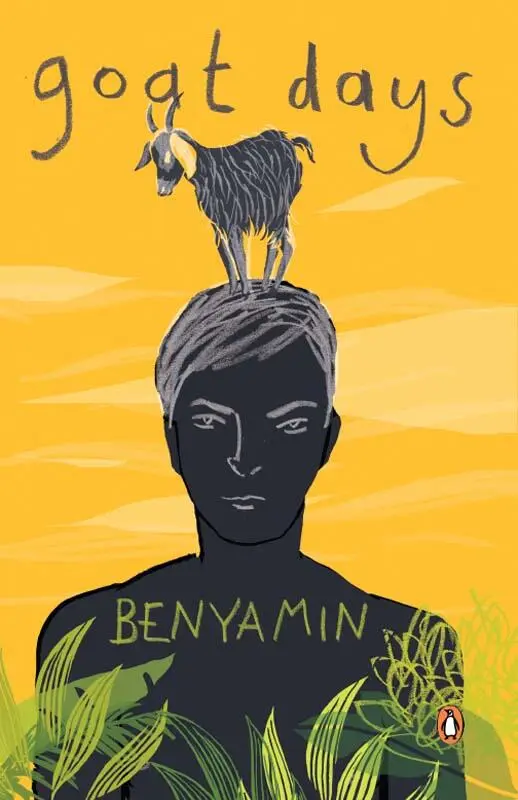
- Название:Goat Days
- Автор:
- Издательство:Penguin Books
- Жанр:
- Год:2012
- ISBN:нет данных
- Рейтинг книги:5 / 5. Голосов: 1
-
Избранное:Добавить в избранное
- Отзывы:
-
Ваша оценка:
Goat Days: краткое содержание, описание и аннотация
Предлагаем к чтению аннотацию, описание, краткое содержание или предисловие (зависит от того, что написал сам автор книги «Goat Days»). Если вы не нашли необходимую информацию о книге — напишите в комментариях, мы постараемся отыскать её.
Goat Days was published to acclaim in Malayalam and became a bestseller. One of the brilliant new talents of Malayalam literature, Benyamin’s wry and tender telling transforms this strange and bitter comedy of Najeeb’s life in the desert into a universal tale of loneliness and alienation.
Goat Days — читать онлайн бесплатно полную книгу (весь текст) целиком
Ниже представлен текст книги, разбитый по страницам. Система сохранения места последней прочитанной страницы, позволяет с удобством читать онлайн бесплатно книгу «Goat Days», без необходимости каждый раз заново искать на чём Вы остановились. Поставьте закладку, и сможете в любой момент перейти на страницу, на которой закончили чтение.
Интервал:
Закладка:
I bolted towards the masara, leaving the goats there. I went and fell at the feet of the arbab. ‘I don’t want to go anywhere. I am not going to abscond from this place. It is enough if you don’t kill me. I don’t even mind living like this. I am afraid of death.’ I kept crying. The arbab was bemused. He couldn’t figure out the reason for my sudden outburst!
Twenty-eight
Every experience in life has a climax, whether it be happiness, sorrow, sickness or hunger. When we reach the end, there are only two paths left for us: either we learn to live with our lives or protest and struggle in a final attempt to escape. If we choose the second path, we are safe if we win; if not, we end up in a mental asylum or kill ourselves.
So far I had not tried to escape. The first few times were amateurish attempts. I had not reached the end of my tether then. Actually, I had learnt to live with my circumstances. My experience taught me that no matter how severe our pain or how harsh the difficulties we face, we come to terms with our miseries in the course of time. I became used to my life over the course of a year. I no longer found it burdensome. In the past I used to wonder how beggars, the very poor, the permanently sick, the blind and the handicapped went on with their lives, how happy smiles broke out on their faces. Now I had my answer — from life itself. I didn’t feel like my life had any difficulties any more. What did I have to do? Wake up in the morning, milk the goats, give fodder to the animals, take the goats for a walk, come back, eat khubus, go to bed in daylight and moonshine. No thoughts, no worries, no desires. What else did I need? I didn’t know anything about what was happening in the outside world. I had forgotten my family, my home, my homeland. They had become to me people who had lived with me in some other life or time. I was not at all affected by their sorrows or their miseries. My life was happy. Happy.
Thus, in my life, summer came, winter came, wind came, dust storm came, rain came now and then, trucks came once a week. Everything came. Everything left. Only my goats and I stayed in the masara without leaving. And Hakeem and his goats in the neighbouring masara. It was then that an unfortunate third came into our midst. He was brought to Hakeem’s masara. Hakeem and he were together all the time. That was the first time I envied another human being so deeply. In fact, I was morose. Hakeem had someone to talk to, to communicate with. I remained a goat in the masara of goats. I began to hate myself even more.
Twenty-nine
The changes in Hakeem were visible. I didn’t know anything about the new arrival, who he was or where he came from. But he brought great changes in Hakeem’s life. Large smiles broke out on his face. His words were joyful. I shrank into a shell out of sheer envy. I felt anger and animosity towards the whole world. I gave vent to my bitterness by taking it out on the goats in the masara — by squashing the balls of the newborn males, jabbing at the udders of the milk-goats with my staff, and shoving sticks up the ass of the sheep.
Initially Hakeem was timid about coming to the place where I herded the goats. But after he got a companion, he began to come there quite often. Although he didn’t come very near, he came within shouting distance. Though his arbab hit him for making these forays, the boldness Hakeem acquired from his new companion made it possible to for him to keep coming. I really wanted to see his friend. But he didn’t come out of the masara too often. While Hakeem took the goats outside, he did the chores inside the masara.
However, one day Hakeem brought him to meet me. He was a gigantic figure. Very tall. My first impression was that he seemed like a character from Prophet Musa’s time. From a distance I was convinced that he was a Pathan from Pakistan. They came close and Hakeem introduced him to me: Ibrahim Khadiri from Somalia. A banyan tree that had grown in an African desert! Hakeem and I looked like wilting plants in front of that banyan tree. (Because of that meeting both saplings got enough beatings!)
Some time after that meeting, when we spotted each other in the desert, Hakeem climbed up a sand dune and shouted to me: ‘I have left a note for you. Read it.’ And he went away. After a while, I went with my goats towards the sand dune where he had stood. There, under a stone was a piece of paper. I read it.
Ibrahim Khadiri has been in this country before this. Knows all places and roads. Plans to abscond. Will take us too. Will let you know if anything materializes. Trust in Allah the merciful.
The joy that fizzed inside me! I cannot describe it in words! I was like a flower that was forced to blossom in the desert. It was a lie when I said I had not been thinking about my homeland and home. An outright lie. My every thought was occupied by fantasies of my homeland. I had only buried them underneath the cinders of my circumstances. I could see them come ablaze as soon as the wind of a chance blew. I felt my heart ache. A draining heartache. I cried. I hugged and gave Marymaimuna who was nearby a kiss. I am leaving, girl, leaving you. I am going. Don’t you have many Aravu Ravuthars and Moori Vasus here to keep you company? I don’t have anyone. My Sainu and I don’t have anyone. I need her. And she needs me.
I prostrated myself on the ground. I thanked Allah the merciful for remembering me. For having heard my cries. For sending the prophet Ibrahim Khadiri to release me. Allahu Akbar! Allahu Akbar!
How joyful my day had become. How enthusiastically I completed every chore. The arbab must have wondered about the sudden change in me. Arbab, beware. Only a few more days. It’s all going to be over. I will leave. Then let us see who you will spit at and beat with the belt. You will be alone. Then you will realize the value of this Najeeb.
I hoped my freedom would come soon. But nothing happened that day. I waited eagerly the next day. My anticipation was stronger on that day than the first. But nothing happened. There was expectation the day after that. But its intensity had diminished. Then, with every passing day, the tide of hope slowly began to ebb. It finally ended in terrible frustration. I despised myself and hated Ibrahim Khadiri and Hakeem for cheating me.
The hatred continued for two days. Then apprehension sneaked in. Had they escaped, deserting me? I couldn’t even imagine such a thing. If that was the case, I even resolved to take revenge on them by committing suicide. It was with anxiety that I looked out for Hakeem every morning when I took the goats out. And I experienced an unexplainable tenderness towards them when I learned that they were still there. It was the tenderness arising from the acknowledgement that I was not alone.
Gradually, I began to blame my fate. It was sport for Allah to play with me, have people lie to me, torment me. There is Najeeb to undergo everything you can throw at him. Allah, you didn’t have to do this to me.
In the next few days I began to lose all hope. There is no Khadiri-Podiri to redeem me. My fate is to live here and die here. My days went back to how they had been. With nothing to hope for. Nothing to dream about. A goat’s life.
Thirty
It happened when I was least expecting it. Hakeem came to me driving a goat. ‘Something’s happening day after tomorrow. Be prepared!’ He ran back after saying that. It was as if he had dropped burning embers in my mind. Something . What could it be? Still, he had asked me to be prepared. It was a good omen. But the fear that I experienced then! I suddenly lost all urge to escape. Even when it is set free, a goat reared in a cage will return to the cage. I had become like that. I can’t go anywhere in this figure and form. I am a goat. My life is in this masara. Till I end my life or die of some disease, I don’t want to show anyone this scruffy shape, this scruffy face, this scruffy life. Mine is a goat’s life.
Читать дальшеИнтервал:
Закладка:
Похожие книги на «Goat Days»
Представляем Вашему вниманию похожие книги на «Goat Days» списком для выбора. Мы отобрали схожую по названию и смыслу литературу в надежде предоставить читателям больше вариантов отыскать новые, интересные, ещё непрочитанные произведения.

![Джон Харгрейв - Mind Hacking [How to Change Your Mind for Good in 21 Days]](/books/404192/dzhon-hargrejv-mind-hacking-how-to-change-your-min-thumb.webp)






Обсуждение, отзывы о книге «Goat Days» и просто собственные мнения читателей. Оставьте ваши комментарии, напишите, что Вы думаете о произведении, его смысле или главных героях. Укажите что конкретно понравилось, а что нет, и почему Вы так считаете.