Irenosen Okojie - Butterfly Fish
Здесь есть возможность читать онлайн «Irenosen Okojie - Butterfly Fish» весь текст электронной книги совершенно бесплатно (целиком полную версию без сокращений). В некоторых случаях можно слушать аудио, скачать через торрент в формате fb2 и присутствует краткое содержание. Год выпуска: 2015, Издательство: Jacaranda Books Art Music, Жанр: Современная проза, на английском языке. Описание произведения, (предисловие) а так же отзывы посетителей доступны на портале библиотеки ЛибКат.
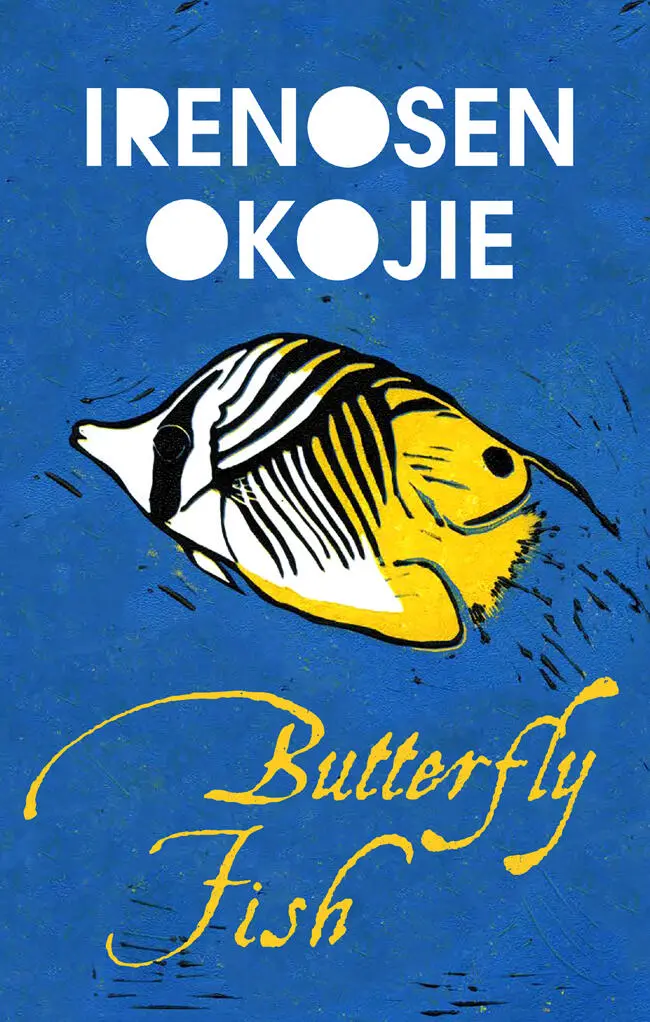
- Название:Butterfly Fish
- Автор:
- Издательство:Jacaranda Books Art Music
- Жанр:
- Год:2015
- ISBN:нет данных
- Рейтинг книги:4 / 5. Голосов: 1
-
Избранное:Добавить в избранное
- Отзывы:
-
Ваша оценка:
Butterfly Fish: краткое содержание, описание и аннотация
Предлагаем к чтению аннотацию, описание, краткое содержание или предисловие (зависит от того, что написал сам автор книги «Butterfly Fish»). Если вы не нашли необходимую информацию о книге — напишите в комментариях, мы постараемся отыскать её.
Butterfly Fish — читать онлайн бесплатно полную книгу (весь текст) целиком
Ниже представлен текст книги, разбитый по страницам. Система сохранения места последней прочитанной страницы, позволяет с удобством читать онлайн бесплатно книгу «Butterfly Fish», без необходимости каждый раз заново искать на чём Вы остановились. Поставьте закладку, и сможете в любой момент перейти на страницу, на которой закончили чтение.
Интервал:
Закладка:
Consider this: a proposition from a General, a soldier dead forever, and a brass head. If I offered these bare bones to a thousand people, there would be a thousand different stories and a thousand different attempts to make skin cover these bones. Two days ago Mr Caretaker man finally found something worth discovering. A soldier named Mohamed Fahim’s dead body was found in the small, cramped outhouse toilet with his hands behind his back and his head crushed in the throat of the toilet. As deaths go, it was an undignified one, since when the traces of life left him, his last breaths must have smelt of a shit and piss. I can say this. I can also say that there will be no real investigation; his death will be ruled as an accident. Although how a man can accidentally kill himself in a toilet is highly suspicious. This is what the army do, they protect themselves and ironically there is no sense of injustice.
I do not know about Emmanuel and Obi but I have been stashing the guilt I feel in my uniform pockets, inside the soles of my boots and under my bed in my squashed green bag with its sturdy, reliable strap. We are good actors and didn’t even know it; we were appropriately shocked like every one else, enquiring if anybody had seen anything or how come no-one had come upon his body for most of the day. This act in itself is normal; people ask questions they know the answers to all the time, like you are eating egussi soup and pretending not to know that in fact what it tastes like is what lies taste of. Mr Caretaker man looks sad but unruffled. He has been reeling off questions to soldiers left, right and centre. Somebody should remind him he is only a caretaker!
Three nights ago, on a calm, balmy evening at the barracks when most of the officers were wandering about, and anybody could have been anywhere, I, Obi and Emmanuel were playing cards in the common room and drinking beer and stout, poisons that were good for us. Looking back, I think I must have been drunk, I did not feel like myself and I was laughing a lot even when something wasn’t funny. I was choking a little on my laughter when General Akhatar walked in. Initially it surprised me that he was unaccompanied. He was out of uniform and is a big, imposing man with neatly cut hair and cold black eyes. The left side of his face sinks in on itself, as though someone had repeatedly punched him there. It is a hazy picture but a picture still. He was jovial, he laughed with us, cracked a couple of jokes, even stopped to sip from a can of beer. Then came his request, although it seemed more like an order because of his no nonsense tone. Would we be willing to kill a fellow officer who had not only disgraced himself and the army by propositioning the General in a shameful way but had also put the General’s life in danger? He would pay us of course, he said. Plenty money! Easy money. Obi, Emmanuel and I looked at each other, at the General’s smiling face and easy manner. We communicated in the short silence that followed. I squeezed the glass bottom of my Guinness, Obi tapped his knee, Emmanuel leaned forward. Say yes or no to the promise of rewards and advancement through the army. In time, I cannot say if I had been sober whether I would have walked away. I would like to think so. In the few nights since, when I lie with the little conscience I have, I tell myself this. But that night when we walked away from that room we were high and ambitious.
Mohamed Fahim was alone in the quarters he shared with other officers. He was in the hard, familiar bed when we got there, not quite asleep but his chest was rising and falling. I wished I had thought to ask him what he knew that was worth killing for but I could barely breathe, my hands shook. My heart raced. The fear in Mohamed’s eyes made me panic, made me feel sick. I could sense his confusion, his shock but we had come too far. There are witnesses who saw what we did, but they are things and not people. They cannot speak. If it could, the doorframe of the dormitory would say that we plied his fingers off when he held it, desperately. The dark, long corridor just outside it would state that Emmanuel covered his mouth as we dragged him through and that he kicked and fought all the way. Emmanuel had one red eye from drinking earlier and sweat covered his forehead. The toilet bowl with its shaky black seat would say that Obi held his head down and that he turned his face away as if he couldn’t bear looking. That he slumped to the ground and held his head just after Mohamed took his last breath. I vomited a little on myself, I am ashamed to say this but I remember thinking, even after what had happened, that I hoped I could get the stains out of my uniform. It is a miracle nobody saw us, we disappeared out of there like magic, the tensions between us pulling our bodies along. Immediately afterwards, I felt disconnected, like there had been two of me, one fleeing the scene and one watching as I did so. Following a heated exchange, Obi and Emmanuel went off to be seen, to blend in. They seemed surprisingly more sober, but I suppose murder can do that people. For sure I was a sinner now, and no amount of praying about the blood of Jesus would wash this sin away. I saw the blue-eyed Jesus falling to his knees in the prayer room, floored by the weight of what we had done. In the corridor I walked over my last steps, wishing someone could pull my elbow and yank me out of the night, the scenes beforehand, the meeting with the General. My mouth became dry like sandpaper, I found myself in the bunkroom I shared with eight other officers including Obi and Emmanuel. Suddenly, each identically made bed became a pit you fell into, no matter how cautiously you climbed. I sat at the end of my bed and began to take my uniform off. I washed my shirt at the sink round the back. My fingers trembled. As I undid the buttons, my right leg seemed to spasm uncontrollably. I will never forget the sound of a man pleading for his life, begging us to stop. And how his voice sounded thin and shriller the more he must have realised that there would be no return for him that night. Inside my bed, in my white singlet and shorts, my body felt hot as if I would burn through the sheets. A couple of soldiers began to drip in. “British gentleman, you dey sleep already? He’s a funny one that guy, my friend get up. Should we leave him?” I recognised the voice and didn’t move a muscle. I closed my eyes and longed for the chaos of the following day to come.
The next morning, things were fairly normal, because surprisingly, no-one had discovered him yet. I arose to the familiar, musty smell of sleep sweat-coated male bodies. When the whistle, the usual morning wake up call, tore through our eardrums for a moment I felt that the night before hadn’t happened. But I was born too knowing and the sand dry mouth, the humming in my temples told me otherwise. Soldiers padded about barefoot, nicking their rough feet on stories from the previous night. My uniform shirt had dried and there were no incriminating stains on the brown khaki. I did my best to avoid Emmanuel and Obi, despite us sharing sleeping quarters. We did not look at each other, as if we knew the thing we did would be mirrored in our faces.
I went to breakfast. The cook was in his usual dirty green vest serving hot akamoo, stale bread and butter.
“Oya, oya, don’t waste time,” he said shoving our plates into our hands as we formed winding queues.
By afternoon, it felt like only a matter of time, and so it was. I had already picked up on officers querying soldier Mohamed’s absence. I noticed the buttons on my uniform jacket looked red, or maybe they were always red and somehow I had missed it. My uniform felt too tight. During our training drill, the sergeant had to shout an order to me four times because I didn’t hear the first three despite standing nose to nose. A confusion settled in my brain. And then late afternoon, the news of a dead soldier came from a sergeant and with it, the order of the day scattered. A hum rippled through the barracks, and the soldiers separated into packs, only to be assembled before higher-ranking sergeants who poked and prodded us for more information. We were told in a wide, dark room, our bodies crammed in like sardines in a can, that we were our brothers’ keeper. To have our eyes and ears open, report anything unusual. Standing there, in the room, the continuous drone of a large grey portable fan was the backing track to the senior officer’s voice. He stood lecturing us at the front with his dirty collar and rumpled uniform. How he expected anybody to take him seriously looking that shabby is a miracle. The men were coiled strings attempting to stand still, but shifting from one foot to another, their unease obvious in their tight shoulders, low grumblings and weary looks. I caught the tail end of rushed conversations. How could this happen right under everybody’s noses? One of us? Was he made an example of? How was it nobody had seen anything? Or did somebody just look away? We were warned that whoever was responsible would be caught and punished severely. A shudder ran through me. I spotted Obi and Emmanuel near the front row, their backs straight. If backs could be read, you would never be able to tell what they were guilty of. In that moment, I felt reassured; maybe they knew something I didn’t. By this point, most of the soldiers began to get even more restless; you could see it in their glances towards the doorway. Eventually we were dismissed with the reassurance anybody holding information could go and see a higher-ranking officer privately.
Читать дальшеИнтервал:
Закладка:
Похожие книги на «Butterfly Fish»
Представляем Вашему вниманию похожие книги на «Butterfly Fish» списком для выбора. Мы отобрали схожую по названию и смыслу литературу в надежде предоставить читателям больше вариантов отыскать новые, интересные, ещё непрочитанные произведения.











Обсуждение, отзывы о книге «Butterfly Fish» и просто собственные мнения читателей. Оставьте ваши комментарии, напишите, что Вы думаете о произведении, его смысле или главных героях. Укажите что конкретно понравилось, а что нет, и почему Вы так считаете.