Irenosen Okojie - Butterfly Fish
Здесь есть возможность читать онлайн «Irenosen Okojie - Butterfly Fish» весь текст электронной книги совершенно бесплатно (целиком полную версию без сокращений). В некоторых случаях можно слушать аудио, скачать через торрент в формате fb2 и присутствует краткое содержание. Год выпуска: 2015, Издательство: Jacaranda Books Art Music, Жанр: Современная проза, на английском языке. Описание произведения, (предисловие) а так же отзывы посетителей доступны на портале библиотеки ЛибКат.
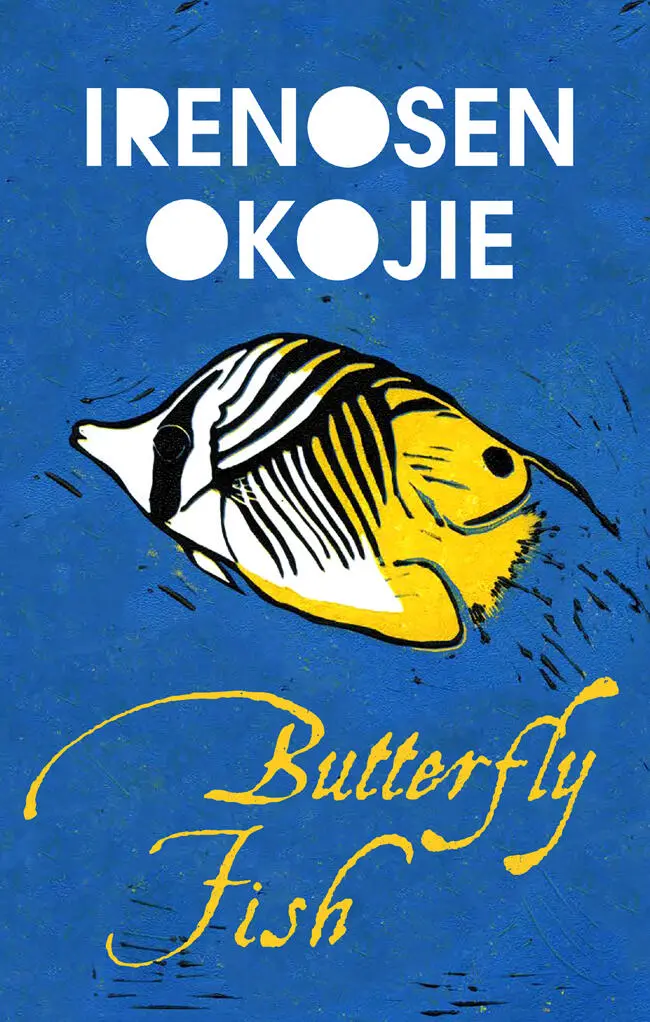
- Название:Butterfly Fish
- Автор:
- Издательство:Jacaranda Books Art Music
- Жанр:
- Год:2015
- ISBN:нет данных
- Рейтинг книги:4 / 5. Голосов: 1
-
Избранное:Добавить в избранное
- Отзывы:
-
Ваша оценка:
Butterfly Fish: краткое содержание, описание и аннотация
Предлагаем к чтению аннотацию, описание, краткое содержание или предисловие (зависит от того, что написал сам автор книги «Butterfly Fish»). Если вы не нашли необходимую информацию о книге — напишите в комментариях, мы постараемся отыскать её.
Butterfly Fish — читать онлайн бесплатно полную книгу (весь текст) целиком
Ниже представлен текст книги, разбитый по страницам. Система сохранения места последней прочитанной страницы, позволяет с удобством читать онлайн бесплатно книгу «Butterfly Fish», без необходимости каждый раз заново искать на чём Вы остановились. Поставьте закладку, и сможете в любой момент перейти на страницу, на которой закончили чтение.
Интервал:
Закладка:
Trouble was coming. So when Sully heard the whimpering of snapped branches behind his quarters, he sat up in attention. If it had just been the scurry of a monkey or some other animal, he would have ignored it, allowing the thought to melt away like a drop of water into a river. These movements were tentative, deliberate in their attempt to attract as little attention as possible. He had always had an ear for picking up even the most secretive of sounds; he had even heard the tiny wings of baby’s heartbeats fluttering in their chests. He crept out of the back window silently, landing in an unkempt yard flanked on either side by thick shrubbery and scattered sticks. He crouched low on the ground, spotting a woman’s back arched down way ahead. Her head was bent, fingers rummaging through dirt, so intent on what she was doing that only his hand grabbing her shoulder broke the spell and she gasped.
“Are you stupid?” Sully asked, thinking he had happened upon one of the servant girls. “Running around at this time?”
She jerked her body back alarmed. “I lost my beaded bracelet!” Then, “How dare you open your mouth to speak to me like that?”
Sully took in the thick, full hair jutting out of her head in tight springs. The long ripe body with her breasts looking like globes of fruit pressed against her wrapper while her black eyes spat embers.
“Do you know who I am?” she asked slowly, as though speaking to a child.
“No.”
“I am Oba Odion’s wife.”
“Hmm,” he said. “Which one are you?”
“My friend, do not ask me questions as if your father owns this land! Who are you?”
“You will find out soon enough.” He looked at her knowingly and said, “You will never make a good queen.”
“Insult upon insult!” she fumed “I will shame you and report you to the Oba first thing, you will be thrown out.”
He nodded then, almost amused. “Before you tell him, I will escort you back.” He took her arm gently and knew then that she would never sit still. He knew without understanding how he did, that she was a curious woman and recognised an adventurous spirit when he saw one. The scratches on her neck, the restless eyes all spoke of this.
On the walk back they both ignored the thing between them that had come alive and breathing, through the long, winding curves of the servants area, past the compact, terracotta apartment blocks where some councilmen resided and the empty, gutted courtyards and settled deep within them. Later, Sully would remember details; the glimpse of her naked ankles, the sound of laughter carried in the air, beads of sweat on her long neck that sat like jewels waiting to be plucked. At the entrance to her quarters she still glowered. Even if she had bathed then, she would not have been able to wash away the imprint of his hand on her arm. She did not thank him and he had expected nothing less but her haughty back disappearing into her haven.
Out of her sight he ran, thought it funny how you travelled to a place to find one thing only to discover something else, because it had truly begun now. He ran till his knees ached and he felt his feet take off the ground, careening forward till he couldn’t separate the expanse between the sky and the solid earth. And he thought he could grab stars out of the firmament, shards of silver light glittering in his palms.
Pupa: Stage 2
As a child butterflies fascinated me. One of my earliest memories is of catching one, placing it in a tall, empty hot dog jar and watching its purple wings skim the glass. And scraping my knee in our garden from a fall aged twelve, only for a blue butterfly to land on the bleeding wound that momentarily became its respite. Since then, I’ve never forgotten how a butterfly could flutter down and change the shape of a moment or the line of a body.
As Mrs Harris and I trudged up the steep London Road in Forest Hill, I thought I heard the butterflies in the museum breathing, waiting. Rain had washed our earlier expressions away. A bitter wind argued with clothes that flapped back and umbrellas were led astray from firm grips.
“Did you bring it along?” Mrs Harris asked, referring to the brass head tucked out of sight in my rucksack. She stopped, stuck her tongue out to catch drops of water. Her grey raincoat was soaked, beneath the hood at the front exposed shocks of white hair were damp.
“Yes I did.” I tugged her forward. “What are you doing?”
“I used to do that sometimes as a kid. Rainwater makes me see possibilities!” She answered, picking up the pace. Her eyes were alert and there was a spring in her step. I began to think maybe it wasn’t such a good idea to have asked her along. You never knew what she was going to say or do.
“I hope this is productive and creepy.” She said, wiping her brow.
I moved a fat, wet twist of hair from my cheek. “Why creepy?”
“Every now and then it’s good to experience uncomfortable things.”
From the corner of my eye, I spotted the green man leave a set of traffic lights to rescue a broken beam of light landed outside a betting shop. A frail woman stood beside the cinema handing leaflets to people. I tried to recall the last time someone disguised as somebody ordinary handed me a leaflet.
Finally we entered the large grounds of the Horniman Museum. A concrete path snaked its way through the middle, separating spotless areas of grass that bore a wet sheen. Wooden benches were sparsely dotted around. The gardens had been sectioned off due to renovations. Threading our way through mothers pushing prams, lovers casually meandering and the odd group of school children bunking off, we eyed the distant, sprawling green longingly. The air was cool and crisp. A white Victorian cast iron conservatory perched resplendently, accustomed to the gasps of appreciation coating its windows. Magical, it looked, as if a breath over the blueprint had instantly brought it to life. At the main entrance a rush of heat hit us, sweeping our grateful bodies. A flash of white wall greeted us inside as other bodies dripped back and forth to the reception area, where a woman in her late twenties took enquiries. The wooden floors gleamed so brilliantly you could pet reflections in them. In my mind’s eye I saw a scrawny immigrant woman flitting about efficiently at the crack of dawn, only to be rendered invisible by the time the harsh glare of the morning light had arrived.
Mrs Harris unzipped her raincoat, slung it over her left arm and blew a breath out slowly. “Do you want to ask for your acquaintance now?”
“Naw,” I answered, rocking restlessly from one foot to the other and swallowing a feeling of anxiety, a stone in my throat. “Let’s take a look around first.”
I’d been carrying the brass head around a lot, torn between wanting the option of getting rid of it at a moment’s notice and a fear that doing so would mean some terrible thing would happen.
We headed downstairs and wandered through rooms with subdued lighting housing different exhibitions. One held odd, foreign instruments made out of things like a can, strings and part of a saddle, as well as ancient harps, flutes, and guitars. Another was a photographic exhibition on birth and death. Images of new born babies held up to the camera’s eye and those of the sick who were fading, the tired lines on their faces plotting to sink into the taut skin of other bodies. In one I saw my own mother holding me up as a baby in one frame. Her Afro hair dented unevenly from leaning back against a pillow. I had barely any hair and my eyes were unfocused as though trying to adapt to seeing.
I edged forward hypnotised, tugged Mrs Harris along.
“Did you see that?” I asked, pointing at the black-framed picture on the wall.
“No. What am I supposed to have seen?” She answered, curiosity etched on her features.
Читать дальшеИнтервал:
Закладка:
Похожие книги на «Butterfly Fish»
Представляем Вашему вниманию похожие книги на «Butterfly Fish» списком для выбора. Мы отобрали схожую по названию и смыслу литературу в надежде предоставить читателям больше вариантов отыскать новые, интересные, ещё непрочитанные произведения.




Обсуждение, отзывы о книге «Butterfly Fish» и просто собственные мнения читателей. Оставьте ваши комментарии, напишите, что Вы думаете о произведении, его смысле или главных героях. Укажите что конкретно понравилось, а что нет, и почему Вы так считаете.