Whitney Terrell - The Good Lieutenant
Здесь есть возможность читать онлайн «Whitney Terrell - The Good Lieutenant» весь текст электронной книги совершенно бесплатно (целиком полную версию без сокращений). В некоторых случаях можно слушать аудио, скачать через торрент в формате fb2 и присутствует краткое содержание. Год выпуска: 2016, Издательство: Farrar, Straus and Giroux, Жанр: Современная проза, на английском языке. Описание произведения, (предисловие) а так же отзывы посетителей доступны на портале библиотеки ЛибКат.
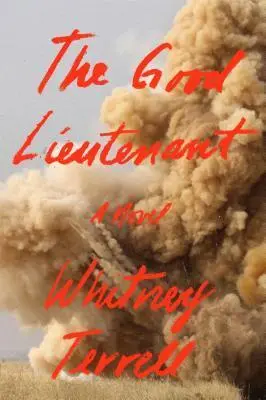
- Название:The Good Lieutenant
- Автор:
- Издательство:Farrar, Straus and Giroux
- Жанр:
- Год:2016
- ISBN:нет данных
- Рейтинг книги:4 / 5. Голосов: 1
-
Избранное:Добавить в избранное
- Отзывы:
-
Ваша оценка:
The Good Lieutenant: краткое содержание, описание и аннотация
Предлагаем к чтению аннотацию, описание, краткое содержание или предисловие (зависит от того, что написал сам автор книги «The Good Lieutenant»). Если вы не нашли необходимую информацию о книге — напишите в комментариях, мы постараемся отыскать её.
The Good Lieutenant literally starts with a bang as an operation led by Lieutenant Emma Fowler of the Twenty-seventh Infantry Battalion goes spectacularly wrong. Men are dead-one, a young Iraqi, by her hand. Others were soldiers in her platoon. And the signals officer, Dixon Pulowski. Pulowski is another story entirely-Fowler and Pulowski had been lovers since they met at Fort Riley in Kansas.
From this conflagration, The Good Lieutenant unspools backward in time as Fowler and her platoon are guided into disaster by suspicious informants and questionable intelligence, their very mission the result of a previous snafu in which a soldier had been kidnapped by insurgents. And then even further back, before things began to go so wrong, we see the backstory unfold from points of view that usually are not shown in war coverage-a female frontline officer, for one, but also jaded career soldiers and Iraqis both innocent and not so innocent. Ultimately, as all these stories unravel, what is revealed is what happens when good intentions destroy, experience distorts, and survival becomes everything.
Brilliantly told and expertly captured by a terrific writer at the top of his form, Whitney Terrell's The Good Lieutenant is a gripping, insightful, necessary novel about a war that is proving to be the defining tragedy of our time.
The Good Lieutenant — читать онлайн бесплатно полную книгу (весь текст) целиком
Ниже представлен текст книги, разбитый по страницам. Система сохранения места последней прочитанной страницы, позволяет с удобством читать онлайн бесплатно книгу «The Good Lieutenant», без необходимости каждый раз заново искать на чём Вы остановились. Поставьте закладку, и сможете в любой момент перейти на страницу, на которой закончили чтение.
Интервал:
Закладка:
She’d done the same thing with her younger brother, Harris. She could remember it perfectly, as if that moment had been permanently encoded in her memory, waiting to reflower now in this version of her worst self. Meaning she’d found out that Harris had boosted a car — it had been a Mazda, owned by the Ryersons, who’d had a daughter in her class at school. She might be a schlub lieutenant now, who was overweight, who ran a half-assed recovery team — who was fucking scared and terrified, who’d been fucking scared and terrified every second out there in that intersection — but back then she’d been tougher, lean, and she’d had plans for Harris. So she’d been terrifying in her righteousness, ambushing him in the parking lot where he’d hidden it, forcing him to admit where it had come from, rubbing his nose in it. She didn’t want to use anger now — she knew better, or she ought to have known better. Not against Pulowski, especially.
“No,” she said. “Hold on, hold on — let me walk that back.”
“Fuck you, Fowler!” Pulowski said. He was crying then, which was the last thing that she’d intended, the last thing she wanted to see. “You think you’re going to be able to walk this back? What are you, some kind of idiot? Don’t you know what happened out there? What are you, fucking blind?”
The last words had been a howl. It had been the same way with Harris when she’d confronted him about the car: sarcasm, anger, contempt — goading, which she’d never been that good at handling. And then when she pushed back — which she did way too hard, she knew that — there was nothing there when you broke the shell. “Know?” she said. “Know? Fuck, yes, I know what happened. I was in command and I lost a soldier. Do you have some kind of different take on this, Pulowski? What the hell else happens when somebody disappears? You try to get them back.”
“Aha!” Pulowski said, jabbing a finger at her. “We’re going to start in on this. Fowler’s sad story of her brother.”
“Because I’ll tell you what happens when you lose somebody and don’t try to get them back. You end up lost too. That’s it.”
“I am not going to sit here and discuss your family.”
“It’s not my family,” Fowler said. “It’s me . That’s me, okay? If that had been you out there, wouldn’t you want me to get you back? You don’t think your fucking mom would expect me to make an effort?”
Something had shifted ever so slightly in the conversation. “Yeah, well, good for you,” Pulowski said, his angular face becalmed, as it usually was when he’d won an argument. “But I was there. I was with Beale in the alley. He wanted to go in the building and find the shooter and I wouldn’t. I bailed on him and lied about it and I’m not sorry about it and I’d fucking do it again. That’s it. Okay? That’s me.”
The feeling was like stepping into an air shaft that had been gaping there in the middle of the conversation from the beginning. On the way down, in the loose, falling sensation that accompanied the drop, she did the math. Not only had Pulowski failed to help Beale. But if he had tried to help, she’d probably be looking for him. That was all there, present in his face — and had been, probably, from the minute they’d come into the trailer. Instead, she’d fucked it up, exactly as she had with Harris. She could never back off, never shut up. “I’m an ass,” she said. “I’m sorry, Pulowski. I didn’t see.”
There was a deliberation in his movements that she recognized, as if some decision had been made whose terms she hadn’t been informed of. He gave a shaky laugh. “Yeah, well, at least his mom’ll know who to blame, huh? You can write that to her: Your son Carl is dead because Lieutenant Pulowski sat on his fucking ass. I guess they can write that on my epitaph.”
“Dixon.” She propped herself up on her elbow and gave him her best version of her father’s icy glare, wanting to contradict him in some way. “No.”
Pulowski paled and began waving his hand as if to wipe out any further sentiment. He’d reached down into his pocket and produced a folded scrap of beige paper. “I get it, okay? I am not saying that you’re wrong. You got to look for Beale. I understand. It’s just that I’m out. But before I get out, you’re gonna want to see this, okay? I don’t know if it means anything—”
He unfolded the paper and handed it to her. There were two sketches, one of the Iraqi, another of an unknown man with wings. The one who looked like Beale.
“An Iraqi gave this to me at the schoolhouse,” he said. “I think you should go to Masterson’s patrol base, find his interpreter, ask him about it. If you get a bite, if there’s something there, you don’t walk it back.”
5
It was nearly June when Faisal Amar stood on the roof of Ayad al-Tayyib’s house and offered Ayad twenty dollars a week American for the use of his property and the fields surrounding it. The offer was not completely insane, not completely unexpected. Previous to that spring, it had been possible to switch on the Al-Iraqiya network, watch the jarring, bumpy footage of a bombing’s aftermath, mangled bodies being carted off on stretchers, or the wailing crush around a casket, and then walk outside and feel none of the same tension in the surrounding air. Breathe in eucalyptus, watch a flock of crows dance in unison over the date palm trees. But since the bombing of the Al-Askari Shrine in Samarra that winter, Ayad had begun to feel a constriction reaching out from the city, tightening the air of the surrounding fields. There were rumors now. Mysterious flyers in the markets in Bini Ziad. Gunfire occasionally at night. He did not frequently agree with his mother’s assessment of local politics, particularly when it came to the Shi’ites. (Seeing televised footage of the shrine’s exploded golden dome, his mother, dressed in the brocaded jacket she had once worn for trips into the city, had texted his phone crisply from across the living room, Now they’ll have an excuse to do anything. ) And yet, recently, from this spot here on his roof — shielded by the spaceship that he and Faisal had built — he’d seen headlights out across the fields, winking, disappearing, with no practical explanation for their presence except that, following their visits, their old Sunni neighbors tended to move away. Even he might define those convoys as a they .
The money, which Faisal flourished now from his suit pocket, would’ve been useful. If it had come from Faisal himself, he would’ve been less concerned, since he viewed Faisal as a we . But instead, it came from Raheem al-Najafi, the Shi’ite mechanic who worked in town, whose identity, once fixed and stable, beneath Ayad’s mother’s notice, had been mutated and altered by the invasion, until nobody knew what, exactly, he should be named. Ayad’s mother would’ve called him takfiri , or unbeliever (which really meant uppity Shi’ite). The word in Bini Ziad was that he was a member of the Grand Brotherhood of the Golden Dome, whose angry flyers papered the marketplace. But Ayad’s main concern was with how the Americans defined Raheem. Insurgent being the worst case. Explain this to me again , Ayad wrote in his notebook, jabbing it back at Faisal. Why would Raheem al-Najafi want to use my house? When did he get so rich?
Raheem’s objective is not an issue. You will not be involved in it.
You’re involved in it.
I know you, so Raheem has asked me to make the contact.
What does he want to use the house for?
It would be better if you did not ask.
I thought you were working with the Americans? Can’t they protect you?
Читать дальшеИнтервал:
Закладка:
Похожие книги на «The Good Lieutenant»
Представляем Вашему вниманию похожие книги на «The Good Lieutenant» списком для выбора. Мы отобрали схожую по названию и смыслу литературу в надежде предоставить читателям больше вариантов отыскать новые, интересные, ещё непрочитанные произведения.









Обсуждение, отзывы о книге «The Good Lieutenant» и просто собственные мнения читателей. Оставьте ваши комментарии, напишите, что Вы думаете о произведении, его смысле или главных героях. Укажите что конкретно понравилось, а что нет, и почему Вы так считаете.