Carlos Gamerro - The Islands
Здесь есть возможность читать онлайн «Carlos Gamerro - The Islands» весь текст электронной книги совершенно бесплатно (целиком полную версию без сокращений). В некоторых случаях можно слушать аудио, скачать через торрент в формате fb2 и присутствует краткое содержание. Год выпуска: 2012, Издательство: And Other Stories, Жанр: Современная проза, на английском языке. Описание произведения, (предисловие) а так же отзывы посетителей доступны на портале библиотеки ЛибКат.
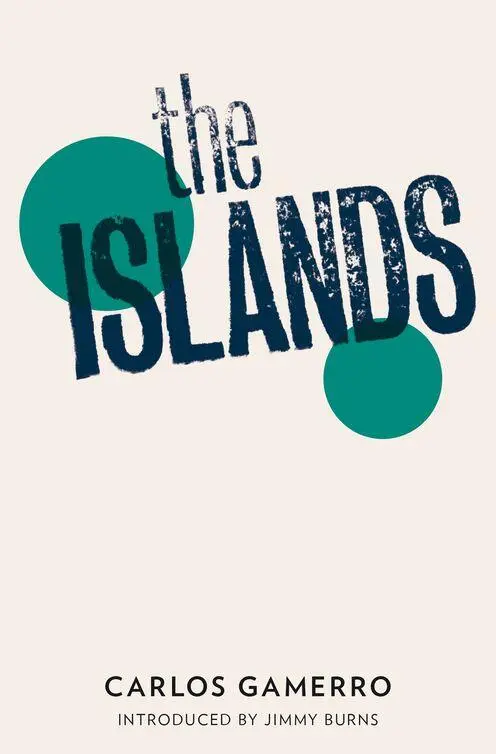
- Название:The Islands
- Автор:
- Издательство:And Other Stories
- Жанр:
- Год:2012
- ISBN:нет данных
- Рейтинг книги:3 / 5. Голосов: 1
-
Избранное:Добавить в избранное
- Отзывы:
-
Ваша оценка:
The Islands: краткое содержание, описание и аннотация
Предлагаем к чтению аннотацию, описание, краткое содержание или предисловие (зависит от того, что написал сам автор книги «The Islands»). Если вы не нашли необходимую информацию о книге — напишите в комментариях, мы постараемся отыскать её.
A detective novel, a cyber-thriller, an inner-city road trip and a war memoir,
is a hilarious, devastating and dizzyingly surreal account of a history that remains all too raw.
The Islands — читать онлайн бесплатно полную книгу (весь текст) целиком
Ниже представлен текст книги, разбитый по страницам. Система сохранения места последней прочитанной страницы, позволяет с удобством читать онлайн бесплатно книгу «The Islands», без необходимости каждый раз заново искать на чём Вы остановились. Поставьте закладку, и сможете в любой момент перейти на страницу, на которой закончили чтение.
Интервал:
Закладка:
‘What’s this Surprise thing? Tell me about it.’
The beam on his face showed that he’d clearly been dying to, fearing I might not give him the chance. It’s been a long day, I thought.
‘Surprise is the company of the future,’ he began, pausing dramatically. My eyes must have reflected as much emotion as those of a deep-frozen cod. He smiled to show he understood my scepticism and went on: ‘Surprise isn’t bound to any physical space: its headquarters can be your house, your favourite bar or, as in my case, your private office.’
‘Street vendors’ processed the chips in my brain.
‘Surprise doesn’t force you to stick to a rigid, unnatural timetable, or to adjust your own and your family’s lives to a set salary that’s never enough to make ends meet. In Surprise you choose the salary you want to collect every month. It’s the salary that adapts to you and not the other way around. A Copernican revolution, what!’
‘I’ve worked on a commission basis as well,’ I muttered with displeasure.
He raised a plump finger of admonition in the air and wagged it like a metronome, his lips pursed:
‘In Surprise nobody works for anybody: there are no employees, only partners. In Surprise, for the first time, the golden dream and the president’s promise to the Argentinian people have been realised: to turn the proletariat into the proprietariat. You’ll have understood immediately, as someone so clearly intelligent, that such an achievement fully fulfils the utopian aspirations we hold most dear, and which we pursued in the wrong direction when we were young. We wanted to turn the proprietariat into the proletariat, when it was the other way round. Our president stood reality on its feet, the way Columbus did with his egg. That’s why we’ve christened our new line of cosmetics “Christopher”. Hard to find a better name to symbolise our ideal: Christopher Columbus, the gravedigger of feudalism, the discoverer of new worlds. Surprise has successfully dismantled the antiquated hierarchy that had stuck like a suckerfish to the plainly egalitarian and democratic dynamic of the marketplace. There are no more relics of feudalism in Surprise: no lords and vassals, no masters and servants, no bosses and employees. Only partners. Friends,’ he finished, invitingly modulating the last word. I didn’t say anything.
‘Explain to me how it works, this “friends” thing.’
‘You only need to invest one thousand dollars to join our chain of friendship, a tiny sum when you think of your returns. Minimum earnings of ten thousand dollars guaranteed in your first year alone! Friends! Well-being for you and your family! Self-confidence! In exchange for that initial sum you receive your first batch of products from our exclusive line.’
Like someone displaying the crown jewels, he opened one of the cardboard boxes to demonstrate the Christopher product line to me. My expectations weren’t high, but I still found it hard to believe that such an edifice (at least a hundred people turned up on the top floor of the most exclusive tower block in Buenos Aires for every meeting) was built on just a few pots of face cream and other cheap cosmetics packed in little pastel-coloured boxes with gold lettering, and a line of chains, bracelets, earrings and watches, barely more presentable than the one Fatty was wearing for lack of contact with human skin. There must be something more to it, I thought to myself. All that cash has to come from somewhere.
‘That will make you a retail partner of our company,’ Fatty was saying in the meantime. ‘You’ll be entitled to discounts and purchase orders in restaurants and shops throughout the country. Once you’ve sold four lots, with a twenty-five per cent mark-up on your sales, and recruited four new friends to Surprise, or by investing two thousand up front, you’ll be promoted to wholesale partner, and can charge a forty-five per cent mark-up, plus fifteen per cent of your friends’ sales. By improving your sales, bringing in more friends or paying four thousand dollars at the start, you gain access to the category of business partner, and can charge fifty per cent on your sales, ten per cent on those of your wholesaler friends, twenty-five per cent on your retailer …’
I started doing the sums. The levels of the pyramid grew in a geometric sequence: one, two, four, eight, sixteen … With percentages like those, the first one made his money when the sixteen members on the fifth level paid up, the two guys on the next level with the thirty-two members of the sixth … If, for example, I entered with those thirty-two, I’d only collect what was mine once 1,024 partners had joined. Of course, I wasn’t counting the percentage on sales, because the idea that anyone could buy those knick-knacks in the numbers needed to rack up a profit was more sad than funny. So that was the secret: the ones higher up took the money from the stooges below, and the stooges below only stood a chance of getting back what they’d lost (and, in exceptional circumstances, of making a profit) if they found more mugs — a lot more — willing to lose money further down the line. I suppose the majority joined in good faith, and only once they were on the inside did they realise their so-called friends had shafted them to save their own skin. At that moment you had two options: get out and stick the bracelets and pendants up your arse (lubricated with the face cream), or stay in and hang on tooth and nail, praying the pyramid wouldn’t collapse before it was your turn to collect. And if you wanted to stay in, you had to invest more cash (which you didn’t have) or recruit more friends, because you sure as hell weren’t going to sell anything: or to put it another way, shaft them the way you ’d been shafted. At any rate, you only stood a chance if you came in at the highest levels; after the sixth or seventh, practically speaking, you didn’t stand a chance, and any further down all the adults in the country would have to join Surprise to bail you out. So this was the secret of the enormous profits: what was being traded at Surprise wasn’t costume jewellery and cheap cosmetics; it was people.
‘One meeting, once a week,’ I said, thinking aloud. ‘Same time, same place,’ I went on, waiting for him to corroborate. ‘How long have they been held in this tower?’
‘Four months. I made the arrangements with Tamerlán & Sons …’
It is possible, I thought to myself, mentally muting Fatty to think properly, that Tamerlán’s right: that his son did commit the crime that night, at that time, at that window, precisely because he knew there’d be witnesses. What the fuck’s going on here, I thought. What am I getting myself into?
‘Tell me about that night.’
He’d obviously been expecting the question since we met, and most of his verbal incontinence had been meant to delay it.
‘What night?’
I put my feet on his desk and reclined as far as the chair would let me. It groaned when it reached full stretch.
‘Exactly one week ago at the Surprise meeting, you all saw a man being murdered by Sr Tamerlán’s son.’
‘Not me,’ Fatty hastily covered his wide back. Tamerlán was right, I thought. This is going to be cheap and easy.
‘Listen to me. I know everything. I work for Sr Tamerlán.’
‘You can tell him what I told the police then. I didn’t see anything. Nobody saw anything. People think they see things. Always think the worst. A man fell, true. An unfortunate accident. Cleaning firms will sometimes send temps, people with no references. While cleaning, the man finds a bottle of imported Scotch. He’s tempted. He tries a sip. He’s never tasted anything like it. Nectar of the gods. He puts the bottle down in amazement. Was that taste real? He decides to take another sip to check. You finish the story. And yet, what’s the first thing people deduce when they see him fall? He was pushed. And all because a man stretched an arm out to him through a broken window. How do they know he wasn’t trying to help him? A man with everything going for him risked his precious life to save a perfectly worthless life. And that’s how they repay him. The mean-minded never acknowledge altruism in others. They bring everything down to their level, the only one they can understand.’
Читать дальшеИнтервал:
Закладка:
Похожие книги на «The Islands»
Представляем Вашему вниманию похожие книги на «The Islands» списком для выбора. Мы отобрали схожую по названию и смыслу литературу в надежде предоставить читателям больше вариантов отыскать новые, интересные, ещё непрочитанные произведения.





Обсуждение, отзывы о книге «The Islands» и просто собственные мнения читателей. Оставьте ваши комментарии, напишите, что Вы думаете о произведении, его смысле или главных героях. Укажите что конкретно понравилось, а что нет, и почему Вы так считаете.