Esmé Wang - The Border of Paradise
Здесь есть возможность читать онлайн «Esmé Wang - The Border of Paradise» весь текст электронной книги совершенно бесплатно (целиком полную версию без сокращений). В некоторых случаях можно слушать аудио, скачать через торрент в формате fb2 и присутствует краткое содержание. Год выпуска: 2016, Издательство: The Unnamed Press, Жанр: Современная проза, на английском языке. Описание произведения, (предисловие) а так же отзывы посетителей доступны на портале библиотеки ЛибКат.
- Название:The Border of Paradise
- Автор:
- Издательство:The Unnamed Press
- Жанр:
- Год:2016
- ISBN:нет данных
- Рейтинг книги:3 / 5. Голосов: 1
-
Избранное:Добавить в избранное
- Отзывы:
-
Ваша оценка:
The Border of Paradise: краткое содержание, описание и аннотация
Предлагаем к чтению аннотацию, описание, краткое содержание или предисловие (зависит от того, что написал сам автор книги «The Border of Paradise»). Если вы не нашли необходимую информацию о книге — напишите в комментариях, мы постараемся отыскать её.
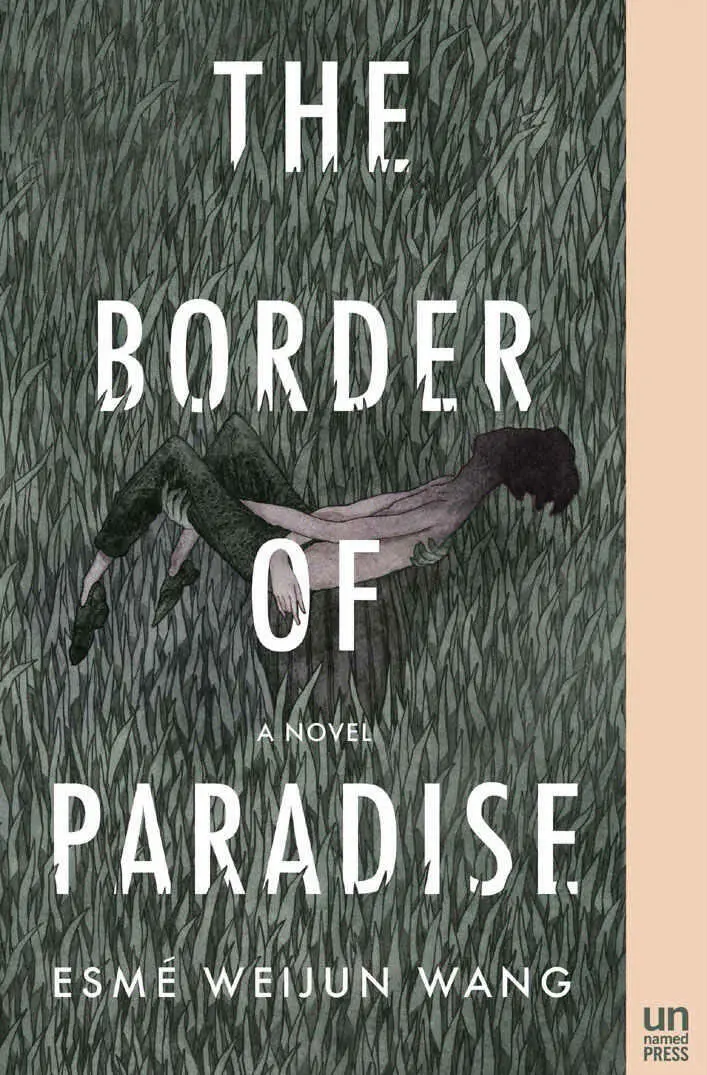
transports readers into the world of an iconoclastic midcentury family.
In booming postwar Brooklyn, the Nowak Piano Company is an American success story. There is just one problem: the Nowak’s only son, David. A handsome kid and shy like his mother, David struggles with neuroses. If not for his only friend, Marianne, David’s life would be intolerable. When David inherits the piano company at just 18 and Marianne breaks things off, David sells the company and travels around the world. In Taiwan, his life changes when he meets the daughter of a local madame — beautiful, sharp-tongued Daisy. Returning to the United States, the couple (and newborn son) buy an isolated country house in Northern California’s Polk Valley.
As David's mental health deteriorates, he has a brief affair with Marianne, producing a daughter. When Marianne appears at their doorstep, the couple's fateful decision to take the child as their own determines a tragic course of events for the entire family. Told from multiple perspectives,
culminates in heartrending fashion, as the young heirs to the Nowak fortune must confront their past and the tragic reality of their future.
The Border of Paradise — читать онлайн бесплатно полную книгу (весь текст) целиком
Ниже представлен текст книги, разбитый по страницам. Система сохранения места последней прочитанной страницы, позволяет с удобством читать онлайн бесплатно книгу «The Border of Paradise», без необходимости каждый раз заново искать на чём Вы остановились. Поставьте закладку, и сможете в любой момент перейти на страницу, на которой закончили чтение.
Интервал:
Закладка:
“I’m very nervous,” she says, and swats at her arm. She says we ought to go inside. I squeeze her knee. For a few seconds, I hold on tight.

Morning. In the kitchen she’s standing at the counter and sink in a sleeveless red dress. The window on the far wall is open and a bright breeze filters through the yellow curtains, letting the light cut across the table to the floor.
“Why’d you stop playing?” she asks. She looks up. “It was an excellent background for omelet-making.”
“I thought I’d come help,” I say.
“Chop, then,” she says, “and I’ll put something on the turntable.”
Ma has left us with a week’s worth of groceries, including two tomatoes the color of poppies, ham from the deli that’s swaddled in paper and sweating, six eggs, a hunk of yellow cheddar. I assist as Gillian rubs her long fingers across the tomatoes, as though screwing open a jar, in the faucet’s stream, and passes them to me. We two are extra careful with knives, forcing whoever is in the role of assistant to slowly slice. Gillian wipes her hands on her dress and crosses the room to operate the record player. Soon the opening notes of the Hammerklavier spin and crackle. The hem of Gillian’s dress reaches midthigh, exposing the delicate line of vastus lateralis, which appears and disappears as she backs away from the side table and raises herself on tiptoe. She has always had strong legs, which I suppose is from a lifetime of running barefoot, though at the moment her feet are abnormally clean. “Pay attention,” she scolds, “you’ll lose a finger.” Next I peel back the ham’s paper and withdraw four slices. Chop-chop. Beat the eggs. She takes the bowl from me and pours the milky-yellow liquid into the pan, surrounding the omelet’s insides. We form one omelet, then a second.
Moments later I see a wadded thread hanging off the back of her dress, swinging against her skin. With trembling fingers I try to snap it off. She shrieks as I touch her, a plated omelet in her hands. “That’s cold !” she cries, jerking away.
We sit at the wide wooden table. Two kids, two omelets. Gillian cuts her omelet with a fork, spears it, and then moves head and hand toward each other for feeding. Her glasses are hazy with grease.
“ Mei , your glasses are filthy,” I say.
“Oh? I suppose they are.”
My enigmatic sister, at once crude and delicate, has betrayed only the mildest flirtations since Ma departed.
“I’ll clean them for you. Here, hand them over.”
Gillian pauses, fork in one hand, glasses in the other. She hands the golden spectacles to me, revealing her naked, open face. I take the glasses and I walk to the sink and turn on the water. I rinse them in the manner of Gillian rubbing a ripe tomato.
All at once I hear a clatter, and then her arms are wrapping around my waist, a cue taken from the days of David and Ma. When I turn, Gillian’s mouth is on mine. She kisses me — I think I hear the sound of sucking and smacking — and then she sinks her head into the space between my head and shoulder, emitting a whimper, snatching her glasses from my limp hand. Her height creates an awkward stooping effect, but I am lost in the hard swell of my groin, the scalp-tingle, and trying to recall what her mouth reminds me of.
“So there’s that ,” she says, putting her glasses back on. I move my hand up to her breast, feeling the ghost-sensation of her nipple before she whirls around and returns to the kitchen table.
I laugh, a bit crazily. “It was… amazing,” I say.
She eats. I pour myself a second cup of coffee and drink it at the counter, invigorating my senses and burning my tongue in the process. So it will be this simple, this wonderful, this easy.
“Save your flattery, and finish your food,” she says.
“Of course, of course…” I reply, and return to the table, vibrating with excitement.
“Kisses for fishes,” Gillian says. She brings her plate to the sink to rinse.
“Hugs for bugs.”
“Are you finished? I’ll wash your plate,” she says. “Or you can come wash these dishes, and I’ll eat the breakfast that you abandoned in order to kiss me. Hao ba? Okay? ”
Though I abandoned my omelet to clean her glasses, and she was the one to deliver the smooch, I don’t argue. I eat the omelet. She washes my plate, kicking her legs from side to side to the music.
I want to kiss. She wants to read. I ask if I can read in bed beside her, and she is amenable to this. Gillian’s room is slightly larger than mine even though our beds are the same size, which grants her more space — a bearskin rug, one of David’s creations, spreads out like a blot of ink; her wardrobe of delicate dresses and lingerie stands in the northeast corner, with clothing leaking onto the floor toward an open trunk filled with taxidermied animals, including a snarling bobcat. Gillian lies faceup on her mattress amid a nest of gauzy gray sheets. She is reading the Bible. (My grandfather’s feminine inscription, in sepia ink: For unto every one that hath shall be given, and he shall have abundance: but from him that hath not shall be taken away even that which he hath. And cast ye the unprofitable servant into outer darkness: there shall be weeping and gnashing of teeth. — Peter J. Nowak, 1949. ) I settle next to her. She moves to turn a page. Her arm touches mine, and I grow warm all over. I turn to kiss her gentle elbow. She laughs and returns to reading.
“Do you remember,” she asks, “that this was one of the first things Dad had us read after he got out of Wellbrook? When we really started to learn? I was fascinated with any part that had to do with animals — Jonah’s fish, fowls, swine. You were obsessed with the Crucifixion. I think that says a lot about us, don’t you?”
“Mmm,” I mutter, stroking her hair. “You know, I’ve loved you for years.”
She says, “I love you, too.”
I move my face so close to hers that I can smell, faintly, the sweet scent of food emanating from her mouth before she turns away. The book swings to the bed. “Agh,” she says, sitting up, the sheets falling all at once from her body, “ please let me read for a bit. There’s this passage that I’ve had on the brain all morning—‘before Abraham was, I am’—and it’s driving me nuts to not be able to get it down—”
“Of course,” I say, “go ahead, read.” And I settle back down, inches away.
A few minutes later, in the middle of our silence, she says, “Bunchability. A bouquet of tissue flowers.”
“Good one, fishlet.”
“Thank you.”
The fourth day. I sidle to my piano, and in a booming forte, I start Mozart’s Fantasy and Fugue in C Major, K. 394. As predicted, Gillian appears in the entryway a page in, itching at the insides of her elbows with both hands as she watches — Gillian, my Constanze! But though I’m sure that she understands my desirous cipher, she doesn’t touch or so much as move toward me, and before the fugue is over, she turns and returns to her room without saying a word: she is the cipher.
Later she outlines the shapes of shadows onto a sheet on the kitchen table, drawing new lines every time the shadows change. Every so often she nudges the bridge of her glasses with two fingers. Adorable! Despite growing up together, there’s still a sour mystery there, a tangle of thoughts and wants that keeps her separate from myself. In the last few days it seems that the natural wall between us, splitting two souls into two bodies, has become harder to see over.
Читать дальшеИнтервал:
Закладка:
Похожие книги на «The Border of Paradise»
Представляем Вашему вниманию похожие книги на «The Border of Paradise» списком для выбора. Мы отобрали схожую по названию и смыслу литературу в надежде предоставить читателям больше вариантов отыскать новые, интересные, ещё непрочитанные произведения.








Обсуждение, отзывы о книге «The Border of Paradise» и просто собственные мнения читателей. Оставьте ваши комментарии, напишите, что Вы думаете о произведении, его смысле или главных героях. Укажите что конкретно понравилось, а что нет, и почему Вы так считаете.