Hannah Pittard - Listen to Me
Здесь есть возможность читать онлайн «Hannah Pittard - Listen to Me» весь текст электронной книги совершенно бесплатно (целиком полную версию без сокращений). В некоторых случаях можно слушать аудио, скачать через торрент в формате fb2 и присутствует краткое содержание. Год выпуска: 2016, Издательство: Houghton Mifflin Harcourt, Жанр: Современная проза, Триллер, на английском языке. Описание произведения, (предисловие) а так же отзывы посетителей доступны на портале библиотеки ЛибКат.
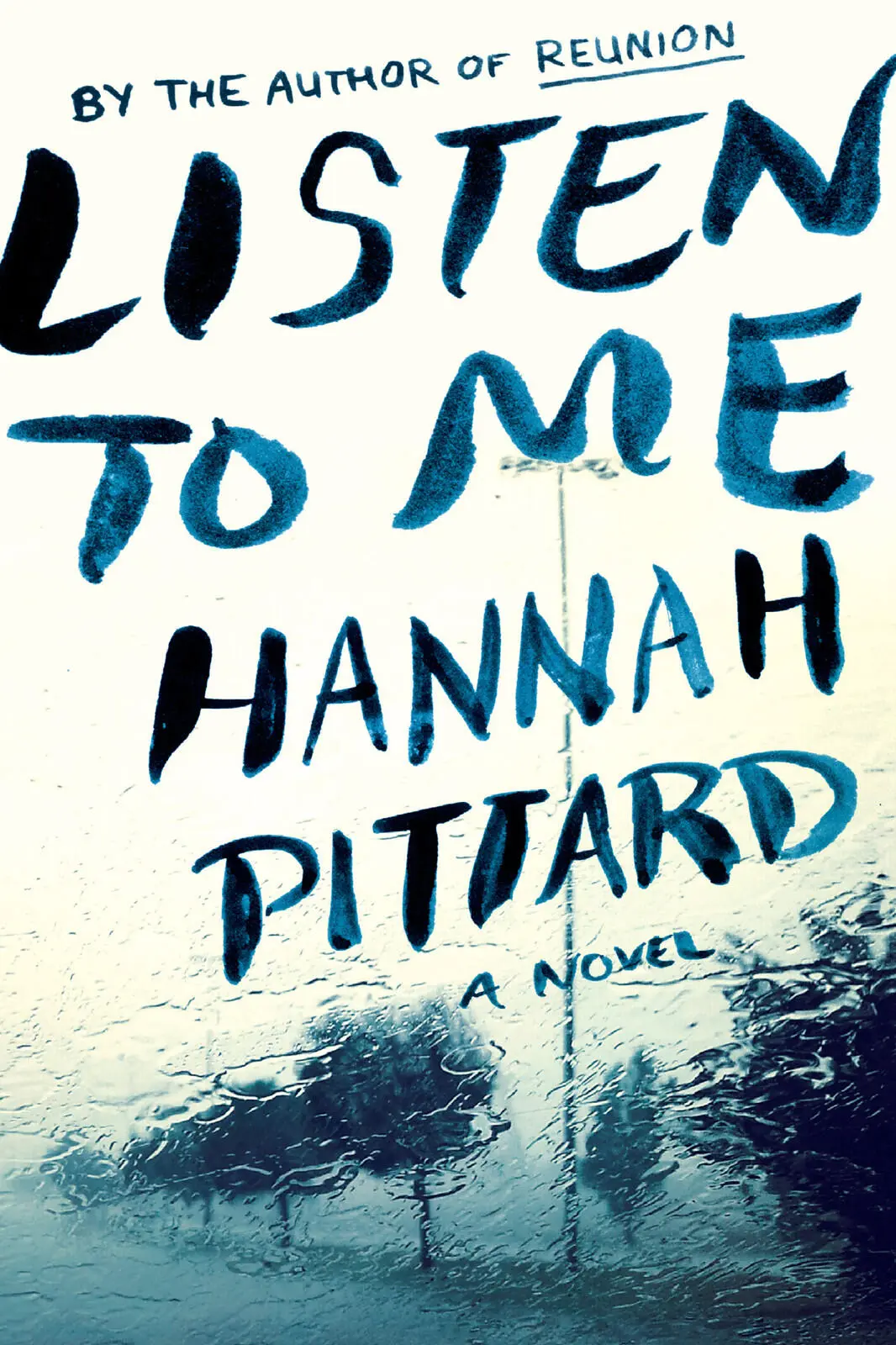
- Название:Listen to Me
- Автор:
- Издательство:Houghton Mifflin Harcourt
- Жанр:
- Год:2016
- ISBN:нет данных
- Рейтинг книги:5 / 5. Голосов: 1
-
Избранное:Добавить в избранное
- Отзывы:
-
Ваша оценка:
Listen to Me: краткое содержание, описание и аннотация
Предлагаем к чтению аннотацию, описание, краткое содержание или предисловие (зависит от того, что написал сам автор книги «Listen to Me»). Если вы не нашли необходимую информацию о книге — напишите в комментариях, мы постараемся отыскать её.
Listen to Me — читать онлайн бесплатно полную книгу (весь текст) целиком
Ниже представлен текст книги, разбитый по страницам. Система сохранения места последней прочитанной страницы, позволяет с удобством читать онлайн бесплатно книгу «Listen to Me», без необходимости каждый раз заново искать на чём Вы остановились. Поставьте закладку, и сможете в любой момент перейти на страницу, на которой закончили чтение.
Интервал:
Закладка:
Just recently a pal at Penn had conducted a study about violence in movies and the tenuous nature of the MPAA’s rating system. In only fifteen minutes, during which time hundreds of bloody clips out of context were shown, parents had gone from being outraged by the cruelty to being irked to being indifferent. Fifteen minutes.
Humans — every single one of them — would become more and more immune to the news. Soon they would be able to watch a beheading without flinching. Mark could see the future clear as day. The world, and Maggie, and one day even he would lose the ability to be horrified.
Evil — sometimes anonymous, sometimes known — not only existed, it thrived. It was in their neighborhood in Chicago, and it was at the gas station outside Indianapolis, and according to that family in the parking lot, it was there inside him too, which meant it was everywhere. The Internet would continue and technology would advance. It was just a matter of time. They were all headed in the same downward direction. There was no generosity of spirit. It had been bred out. Just look at Mark. The slap he’d supposedly heard, those words—“stop,” “no”—they had existed without context. It was Mark who’d filled in the dirty explanation as it suited him. Where was his generosity? Gone. He’d used his biased imagination to color in the missing pieces: they were poor; they were inbred, so necessarily there was abuse, neglect.
Do you think, Maggie had asked not twenty-four hours earlier, that you willfully see the worst in people?
His honest answer: Not willfully. But accidentally — perhaps intuitively — yes, he did. He understood that now.
Take away technology, and evil would still be there because goodness had evaporated. Mark and Maggie could recite poetry all they wanted, but the shepherd boy was dead. Elizabeth’s egoism — her privilege, her cockiness — it wasn’t valiant. It was churlish. And he’d been naïve to be attracted to it in the first place. This was the true condition of man— nasty, brutish, and short .
At least he had Maggie. That’s one thing he felt sure of. Another? That she’d been right all along: People were shit, including him. They were all on the decline, a steep and fast decline. But they — he and Maggie — were on it together, battling the storm in the same defenseless boat. They had no chance of defeating it, of course. But they could try. From Maggie, he could learn to be better. Realizing his complacency was the first step.
Except…
If nothing was permanent…
If everything ended…
Then mightn’t this current trend end as well? Wasn’t there the possibility that they could wait it out? Noah waited out the flood, didn’t he? Or so the story went, which was all that mattered — the stories people told, because it was from the stories that they learned; it was in the past that they saw the future. Wasn’t there the very likely prospect that people would one day — perhaps even soon — tire of the constant noise, the tell-all blogs, the endless media rotations?
They passed a sign for Beckley. Soon, their car would cross the state line. They were less than two hundred miles from Charlottesville. They would be able to bury Gerome before rigor mortis set in. In an hour or so, when they stopped for gas, Mark would get out his phone and call his mother. He’d do it while Maggie was in the bathroom so that she wouldn’t have to hear the banal specifics of the conversation. He’d tell her the gist of what had happened. He’d keep it brief, straightforward. He’d have Gwen instruct Robert to get to work on a grave; they’d probably need to get the backhoe out in order for the hole to be deep enough. He’d tell her to have him dig it in the shade garden, under the rope swing, where Gerome preferred to spend his afternoons. They’d bury him with a few of his favorite toys — his grasshopper, his rabbit. But he’d caution Gwen and Robert from being overly maudlin. Maggie wouldn’t like it. They’d give her space, as much space as she needed.
He leaned his head back against the leather. Only a few hours earlier, they’d made love. He and his wife. He and his Maggie. They hadn’t used a condom. Normally they were so careful. Had she forgotten intentionally? Had he? He sat up a little. Good god, he thought. What if? He couldn’t remember the last time he’d entertained a new idea so cleanly. Like a pebble in his mouth, he moved the idea around, getting to know its unfamiliar edges and lines, its bends and curves.
He tried to imagine the next few weeks. He tried to imagine not the imminent burial but the days afterward: meals he’d cook with his mother; the inevitable talks with his father about the state of the university; drives through the country he’d take with Maggie. He’d fill a cooler with a six-pack of Mexican beer and a sliced-up lime, and they’d drink and drive on the private roads the way Maggie always liked.
And maybe — who knows? — he’d go ahead and broach the subject, the possibility. He’d say, “Even if it doesn’t happen now, accidentally, maybe we should think about doing it deliberately. What do you think?”
He imagined all the ways — so many, so easily — he could become ( and would! ) a better husband, a better son, and, perhaps, a better person. There would be fewer things to regret in the future, because there would be fewer mistakes.
He looked at Maggie, at her fine tight skin, her patrician jaw. They weren’t too old. They really weren’t. Not yet. He glanced down at her shirt, just below her breasts. Maybe ( Ludicrous! But maybe! ) there was a little human in there — well, a microscopic egg, not yet a human — but maybe there was an egg, and maybe that egg had been fertilized by a sperm and morphed into a zygote. Maybe even now her body was transforming. Goddamn! Everything really could serve a purpose. It could: the world could right itself; the decline could plateau then twist and rise; and Mark could believe: inside, somewhere hidden in Maggie’s womb, waiting, not yet known, not yet knowable, there was a baby and a change and a chance for a different future. It was possible.
Anything is possible.
NOTES
The offered definition of auto is an amalgamation of entries culled from the Oxford English Dictionary, Merriam-Webster , and Apple’s Dashboard Dictionary application.
The translation of Homer in the epigraph is my own. (Thanks, St. John’s College!)
The following is a list of endlessly useful articles and books on which I relied to learn about everything from cloud factories to tornadoes:
“Auditory Brain Development in Premature Infants: The Importance of Early Experience,” by Erin McMahon, Pia Wintermark, and Amir Lahav, published in Annals of the New York Academy of Sciences , April 2012.
“Into the Tornado,” one of Discovery Channel’s Storm Chasers videos, featuring Reed Timmer.
“The Cloud Factories: Power, Pollution and the Internet,” by James Glanz, published in the New York Times , September 22, 2012.
Freaks of the Storm: From Flying Cows to Stealing Thunder: The World’s Strangest True Weather Stories , by Randy Cerveny (New York: Basic Books, 2005).
The Riso-Hudson Enneagram Type Indicator, http://www.enneagraminstitute.com/.
“Parental Desensitization to Violence and Sex in Movies,” a study conducted by the Annenberg Center for Public Policy at the University of Pennsylvania, Pediatrics 134, no. 5 (2014).
Handbook to Life in Ancient Mesopotamia, by Stephen Bertman (Oxford: Oxford University Press, 2005).
Maggie and Mark take liberties throughout, quoting (and misquoting) the following writers:
Читать дальшеИнтервал:
Закладка:
Похожие книги на «Listen to Me»
Представляем Вашему вниманию похожие книги на «Listen to Me» списком для выбора. Мы отобрали схожую по названию и смыслу литературу в надежде предоставить читателям больше вариантов отыскать новые, интересные, ещё непрочитанные произведения.







Обсуждение, отзывы о книге «Listen to Me» и просто собственные мнения читателей. Оставьте ваши комментарии, напишите, что Вы думаете о произведении, его смысле или главных героях. Укажите что конкретно понравилось, а что нет, и почему Вы так считаете.