Hannah Pittard - Listen to Me
Здесь есть возможность читать онлайн «Hannah Pittard - Listen to Me» весь текст электронной книги совершенно бесплатно (целиком полную версию без сокращений). В некоторых случаях можно слушать аудио, скачать через торрент в формате fb2 и присутствует краткое содержание. Год выпуска: 2016, Издательство: Houghton Mifflin Harcourt, Жанр: Современная проза, Триллер, на английском языке. Описание произведения, (предисловие) а так же отзывы посетителей доступны на портале библиотеки ЛибКат.
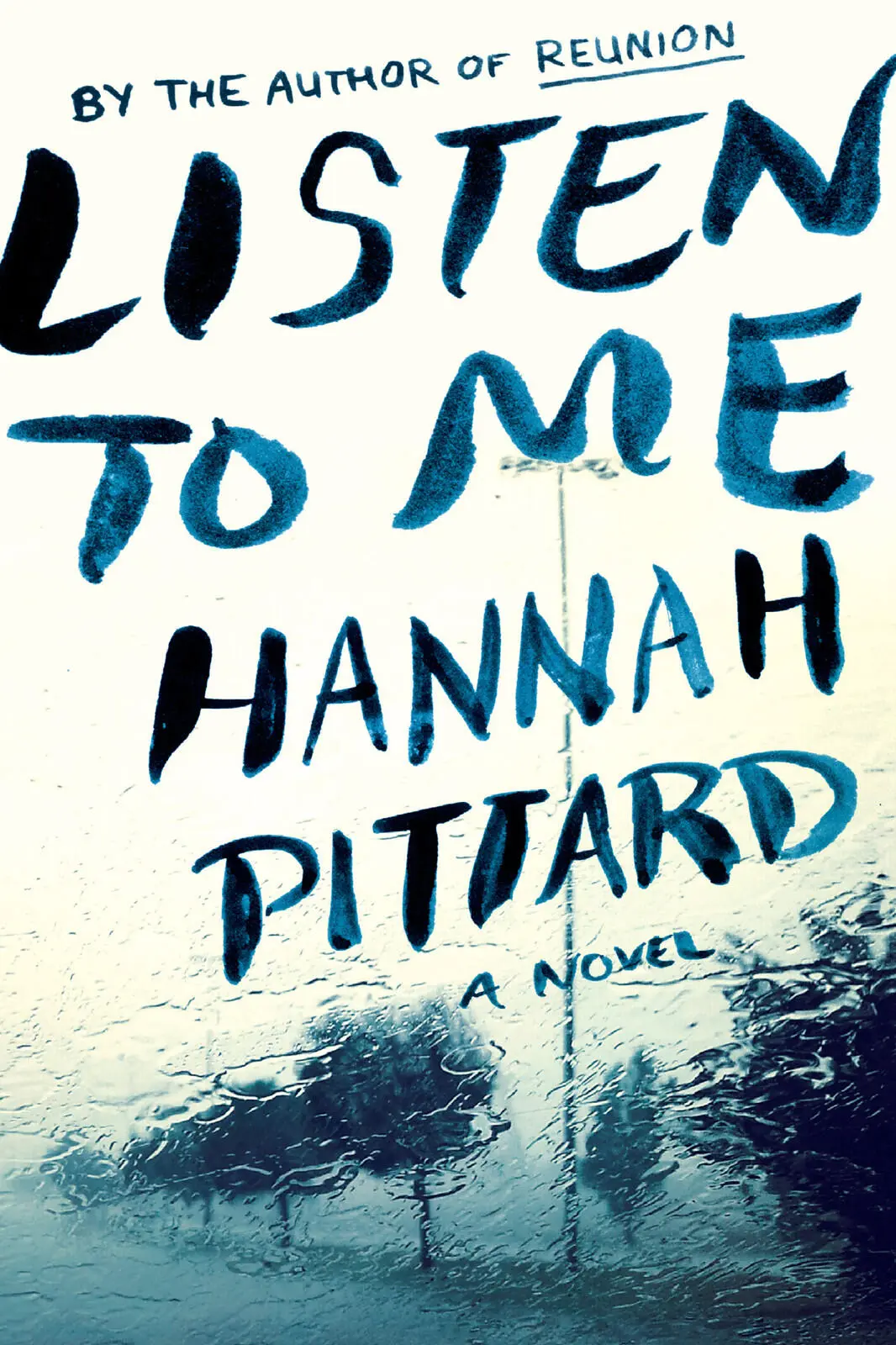
- Название:Listen to Me
- Автор:
- Издательство:Houghton Mifflin Harcourt
- Жанр:
- Год:2016
- ISBN:нет данных
- Рейтинг книги:5 / 5. Голосов: 1
-
Избранное:Добавить в избранное
- Отзывы:
-
Ваша оценка:
Listen to Me: краткое содержание, описание и аннотация
Предлагаем к чтению аннотацию, описание, краткое содержание или предисловие (зависит от того, что написал сам автор книги «Listen to Me»). Если вы не нашли необходимую информацию о книге — напишите в комментариях, мы постараемся отыскать её.
Listen to Me — читать онлайн бесплатно полную книгу (весь текст) целиком
Ниже представлен текст книги, разбитый по страницам. Система сохранения места последней прочитанной страницы, позволяет с удобством читать онлайн бесплатно книгу «Listen to Me», без необходимости каждый раз заново искать на чём Вы остановились. Поставьте закладку, и сможете в любой момент перейти на страницу, на которой закончили чтение.
Интервал:
Закладка:
Mark slid out of the booth with the tab in his hand and walked away. A moment later he was back.
“Do you have any cash?” he said.
“I have a couple hundreds in the car,” she said.
“Nothing smaller?”
“No,” she said. “Sorry. Just use the card.”
He shook his head. “No can do.”
“Why?”
He was avoiding eye contact. Never a good sign with Mark.
“Why?” she said again. She kept her voice steady, her gaze easy.
“The system is down,” he said.
“The system?”
“They’ve been running on a generator for the last fifteen minutes.”
Maggie looked out the window. She couldn’t see Gerome, which meant either he’d been taken — which of course he hadn’t, she wasn’t a complete nitwit — or he was conked out. She looked back up at Mark, who was still standing there, looking down at the bill.
“What does that mean?” she said. “There’s power. We have power here.”
“No,” he said. “They’re offline. Everything is offline. The entire town is dark.”
“But—” Maggie looked again out the window. She looked this time past the car, past the parking lot. She looked into the deep expanse of darkness where golden bulbs at various heights and of incalculable degrees of intensity should have been twinkling and blinking and bright. What she realized was that the entirety of 35 was black. Not a single streetlamp was illuminated.
12
They’d been back on the road for maybe ten minutes. Twenty max. They’d passed two hotels, both with their NO VACANCY signs lit up. Maggie thought there was power, but Mark explained it only meant more generators. Anyway, these were piece-of-shit places. Tiny holes-in-the-wall right on the highway like the Piney Inn Motel, or whatever it was. And neither Mark nor Maggie had even suggested they stop and make sure there wasn’t a room. Maggie had offered to keep driving when they left the restaurant. She’d made a little show of it in fact: “Just give me the keys. I’ve had fewer than you.” But Mark insisted he take over. She wouldn’t admit it, not to him, but the beer had gotten her tipsy. Her tolerance was essentially nonexistent. She said she was acting funny only because she was tired, but Mark knew better.
He glanced over at her, thinking she’d be passed out. But her eyes were open and she was looking down at her lap.
“What are you doing?”
“Reading,” she said. She waved her phone at him.
“What about?”
“Do you really want to know?”
Gerome was snoring. When they got back in the car, he didn’t even wake up. It could have been anybody up there in the front seats and Gerome wouldn’t have known the difference.
“It’s hard to concentrate with you over there reading,” he said.
“Does the light bother you?”
The light didn’t bother him. There was hardly any light at all coming from her little device. She’d turned the screen glow down. She was considerate like that.
“Fine,” he said. “Sure. Hit me. Read me something.”
Maggie turned the radio off. They’d been listening to modern country by default.
“Okay,” she said. “A group of teenagers — high school students — kidnap a college kid and torture him to death.”
“No,” he said. “Not that. Try again.”
“Okay,” said Maggie. She was quiet for a minute. “This is the story of a young woman who discovers her father has been videotaping her every time he rapes her, and it turns out she’s essentially famous in the world of Internet pedophilia. Like, the most famous molested girl in the world.”
“Jesus,” he said. “No.” Where was she getting this stuff? He read the same papers she did. But he never came across articles like those. Or, if he did, he had enough sense to skip over them. “I don’t want to hear about children getting hurt. Anything other than children getting hurt.”
“Okey-doke.” Maggie poked at her screen. “How about this? Google has issued a statement.”
They were always issuing statements — the big companies — and always about the smallest things. They were afraid they’d be forgotten if they didn’t constantly update or reload.
“What kind of statement?”
“Their maps department is going to stop removing dead bodies from satellite images.”
Mark had no idea what she was talking about.
“I can read you the article,” she said.
“Maybe just a summary?” he said. “Maybe just the bare bones?”
Maggie was quiet a moment. He could see from the corner of his eye that she was looking at her lap again. Her index finger flicked vertically at her phone.
“Okay,” she said. “It’s an apology-slash-statement.”
Of course it was.
“They set a precedent several years ago by removing that boy’s body in Texas, and they’re saying now that it was the wrong precedent to have set. They’re saying now that it’s impossible to remove all the bodies because there are too many.”
“What boy’s body in Texas?”
“They’re saying that the last hurricane makes it a precedent they can no longer live up to and — this is verbatim— nor do we wish to continue to erase the realities of our planet’s surface. Can you believe that?”
No. He couldn’t believe it.
He couldn’t believe that such a thing existed. Why were there photos at all? Why was there a maps department at Google that had any authority to issue statements in the first place? Hadn’t the world gotten along perfectly fine before satellite imaging? Did your everyday housewife really require access to professional-grade topological views of the earth? To the Internet at all? Jesus, just look at Maggie since the mugging, since the college girl. Look how quickly she’d gone from simple browser to consummate addict.
“Burglaries are up on the North Side,” Maggie said. “Want to hear about that?”
“Go for it.”
“And sexual assaults.”
It was exhausting — not Maggie, but the news itself. Lately — and this was something that didn’t make him happy, didn’t secretly fill him with joy — the two felt fused together. Maggie was the news and the news was Maggie. He missed his wife.
“A decade ago,” she was saying, “the theory was that men who raped were motivated differently from men who mugged. So you could get mugged and not worry about getting raped.”
“Are you reading this?” said Mark. “Or is this you talking?” He didn’t like to take his eyes off the road, especially with it being so late and the weather being so unpredictable, but he was fairly certain she was going off book with all this.
A commercial truck came into view on the near side of the westbound lanes. Mark flashed his brights. The truck responded by turning on its high beams.
“Christ,” said Mark, squinting.
Maggie didn’t say anything.
“I thought his brights were on,” he said.
Maggie still didn’t say anything.
The truck passed. Mark rubbed his eyes, and again it was just them and their own headlights and the occasional streetlamp.
“Anyway,” said Maggie. “Now muggers are rapists, and rapists are muggers. There’s no distinction. Terrorists are mass murderers, and school shooters are terrorists. Et cetera. Et cetera.” She was definitely off book. This was her brain. This was unfiltered Maggie trying to sew together bits and pieces of millions of different articles. This was Maggie hoping to make sense of a world in which she could be mugged by one man and then, nine months later, a neighbor could be raped and murdered by another. Two women. Two men. Two entirely different outcomes but somehow — improbably, unfairly — they both, Maggie and the college girl, wound up with nearly identical bruises on the backs of their necks. Only Maggie was still alive and her bruise had healed. Whereas now the college girl was dead and her bruise… had done whatever bruises did when people died. “If you can steal a wallet,” Maggie was saying, “why not also steal a fuck?”
Читать дальшеИнтервал:
Закладка:
Похожие книги на «Listen to Me»
Представляем Вашему вниманию похожие книги на «Listen to Me» списком для выбора. Мы отобрали схожую по названию и смыслу литературу в надежде предоставить читателям больше вариантов отыскать новые, интересные, ещё непрочитанные произведения.










Обсуждение, отзывы о книге «Listen to Me» и просто собственные мнения читателей. Оставьте ваши комментарии, напишите, что Вы думаете о произведении, его смысле или главных героях. Укажите что конкретно понравилось, а что нет, и почему Вы так считаете.