Abbas Khider - The Village Indian
Здесь есть возможность читать онлайн «Abbas Khider - The Village Indian» весь текст электронной книги совершенно бесплатно (целиком полную версию без сокращений). В некоторых случаях можно слушать аудио, скачать через торрент в формате fb2 и присутствует краткое содержание. Год выпуска: 2013, Издательство: Seagull Books, Жанр: Современная проза, на английском языке. Описание произведения, (предисловие) а так же отзывы посетителей доступны на портале библиотеки ЛибКат.
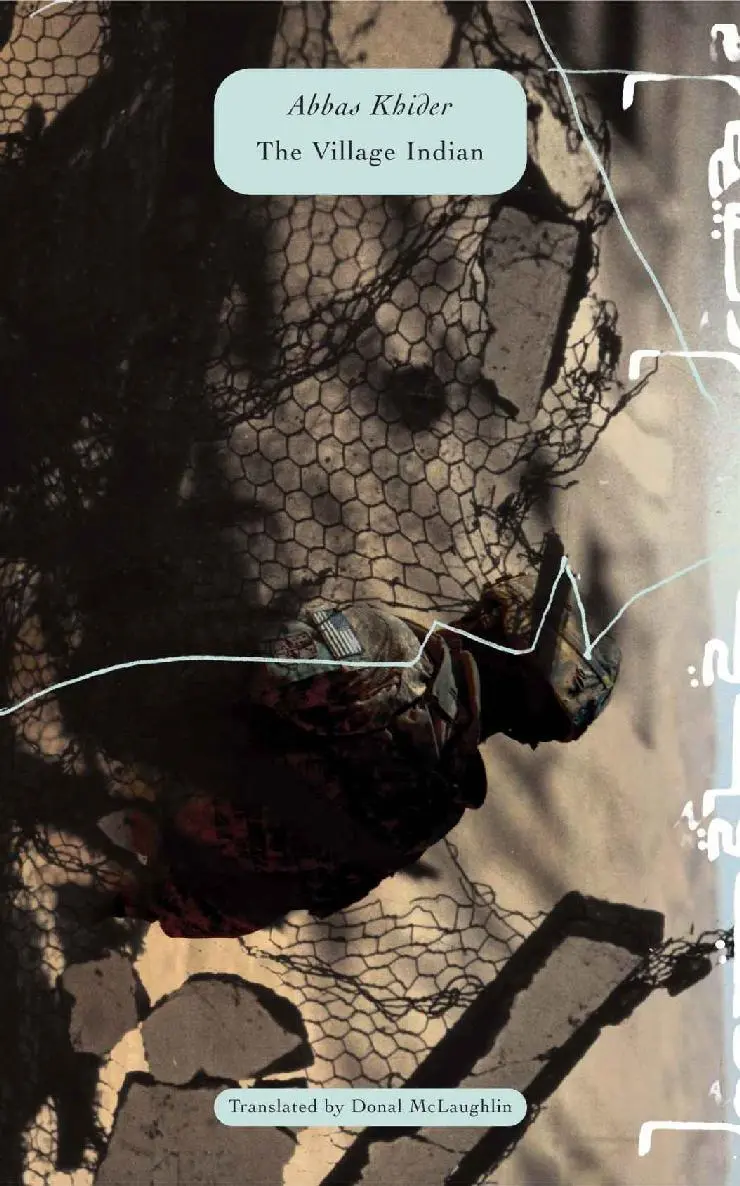
- Название:The Village Indian
- Автор:
- Издательство:Seagull Books
- Жанр:
- Год:2013
- ISBN:нет данных
- Рейтинг книги:3 / 5. Голосов: 1
-
Избранное:Добавить в избранное
- Отзывы:
-
Ваша оценка:
The Village Indian: краткое содержание, описание и аннотация
Предлагаем к чтению аннотацию, описание, краткое содержание или предисловие (зависит от того, что написал сам автор книги «The Village Indian»). Если вы не нашли необходимую информацию о книге — напишите в комментариях, мы постараемся отыскать её.
of the Persian Gulf and part
in Europe, this debut novel is drawn from the author’s experiences as a political prisoner and years as a refugee. Our hero Rasul Hamid describes the eight different ways that he fled his home in Iraq and the eight different ways he has failed to find himself a new way home.
From Iraq via Northern Africa through Europe and back again, Abbas Khider deftly blends the tragic with the comic, and the grotesque with the ordinary, in order to tell the story of suffering the real and brutal dangers of life as a refugee — and to remember the haunting faces of those who did not survive the journey. This is a stunning piece of storytelling, a novel of unusual scope that brings to life the endless cycle of illegal entry and deportation that defines life for a vulnerable population living on the margins of legitimate society. Translated by Donal McLaughlin,
provides what every good translation should: a literary looking glass between two cultures, between two places, between East and West.
The Village Indian — читать онлайн бесплатно полную книгу (весь текст) целиком
Ниже представлен текст книги, разбитый по страницам. Система сохранения места последней прочитанной страницы, позволяет с удобством читать онлайн бесплатно книгу «The Village Indian», без необходимости каждый раз заново искать на чём Вы остановились. Поставьте закладку, и сможете в любой момент перейти на страницу, на которой закончили чтение.
Интервал:
Закладка:
‘Yes, why not?’
‘But, my son! Believe in God — not in fortune-telling!’
I thought he was joking. ‘But I want you to!’
He waited a while, looked to his left and right and then said softly, ‘Listen. This is your fate. You won’t ever have peace. You’ll go to jail. Then you’ll flee — far away. You’ll always be on the run. You’ll see the walls of many jails on this earth. You’ll travel and travel. You’ll live far away, in another country. You’ll marry and have a child. Then you’ll leave your family and go away. You’ll travel some more. You’re a hard-working person, my son, but that won’t help you because your star in the sky doesn’t shine. So you’ll always remain a loser. In the end, when you’re thirty-five, you’ll live in the street with down-and-outs and then die alone in a foreign country on a bleak platform. That is your fate.’
Nowadays, Mohammed is a successful electrical engineer in Baghdad. Galil too. And I? At first, I wasted no time thinking about these predictions. But the first time I landed in jail, I remembered the old man and his words. Meanwhile, I’ve reached the year of my death. To quote my brother Mohammed, ‘You haven’t too long to go!’ My problem with his prediction is that everything he predicted has actually come true. Everything, that is, except the child. But who knows that for sure. Maybe, there’s a woman somewhere who hasn’t told me everything. .
Actually, I’ve always wanted a child. But I was also always scared that it would kill me. Yes, I have to admit, I am afraid of dying soon. I always imagine sitting at home, in the year of my death, with the windows and doors barricaded, doing nothing special. I do have one tiny piece of hope, though — the fortune-teller forgot something important. The faces in my life. And that includes the new ones. He didn’t know everything after all, even if he made out that he did. My new story is also the story of the faces that go with my fate.
It began when I wasn’t even twenty. In 1991, after the Second Gulf War, a new chapter in Iraqi history began — Shi’ites in the south and Kurds in the north took to the streets, protesting against the government. This kindled resistance that spread like wildfire. Many Iraqi towns fell into the hands of the opposition. Only Baghdad and a few other places remained — places that belonged to the family or, rather, tribe of the dictator. In Baghdad, everyone was waiting for the Kurds from the north and the Shi’ites from the south to come marching. Rumours were circulating that they were already on their way. They were taking their time, though. Too long. And so the people in Baghdad, especially the Shi’ites from our part of town, al-Thawra, and from the district of al-Shala, tried to put up resistance like the Shi’ites in the south and the Kurds in the north. All they reaped in return, though, was death, grief and poverty.
A short time later, Iraqi troops attacked the country, turning the towns in the north and in the south into sad landscapes — nothing but ruins. The whole world watched as if the Iraqis were chickens that could be butchered without any sense of guilt or morals getting in the way. Corpses, everywhere you looked in the streets. Mourning in every destroyed home. And why? This interrogative particle was enough to make my youth go to hell. Why? And again, why? At school, I ended up in circles that collaborated with secret and banned parties, communists, religious people and patriots. They talked about being betrayed by the tolerant world powers who had allowed Saddam to crush the uprising using rockets and bombs. Actually, it wasn’t hard to understand that Ba’ath Party and its leader Saddam were the ravens that brought ill luck to the Iraqis.
Since the appearance of Saddam, the new president, everything in Baghdad had changed. The bazaar, just a few metres from our house, was practically empty in the days in which the former president had been removed. Pictures and photos of the new president were suddenly all over the district — the president with a big moustache and in uniform; the president wearing a turban and a dishdasha; the president with a cigarette; the president with his daughter; the president with builders; the president with a group of embarrassingly clean schoolchildren. My father, too, dragged home a huge portrait with a golden frame in which the great dictator could be seen sitting, holding a sword, also golden.
‘What’s that?’ my mother asked.
‘Shut up,’ my father snapped. ‘Just hang it up. I don’t want to hear a word!’
The same portrait was hung by the head teacher above the entrance of Sinai Primary School for Boys and Girls, so that all those who entered could see it. In every classroom, too, a picture was put up above the blackboard. In it, the president, dressed in a milk-coloured dishdasha, a red-and-white spotted scarf and a turban on his head, smiled paternally.
Through the streets walked the demon that stole little children. Though no one could see her, everyone knew she was there. Everyone stared at her from the windows, especially the mothers. Prayers and incense flowed through the streets as if we were entering a new life in which everything was to be questioned. My mother was in no doubt that the demon could come up through sinks or taps. Which was why, in those days, she always carried the Koran with her. Even to the toilet. She put any number of amulets round the house. Above the television in the guest room, she put a hand made of plaster, decorated with tiny pieces of green glass and painted eyes and Koranic verses. A green sandal, also made of plaster, decorated the wall above the front door so that anyone who approached the house would be shooed away. Above the door to the guest room on the other side of the yard, she fixed a black — blue metal eye. Back then, incense was lit at least four times a day and the Koran read frequently. My sisters Karima and Farah sat with my mother every evening, reciting the ‘Throne Verse’ countless times: ‘Allah! There is no God but He, the Living, the Eternal! No slumber can seize Him, nor sleep. All things in Heaven and Earth are His. Who could intercede in His presence without His permission? He knows what appears in front of and behind His creatures. Nor can they encompass any knowledge of Him except what He wills. His throne extends over the heavens and the Earth, and He feels no fatigue in guarding and preserving them, for He is the Highest and Most Exalted.’
I was given a new amulet too, to go with the old one I’d been wearing round my neck since my childhood. The new one, like the old one, was woven from green material. I don’t know what the muezzin had written on it, nor where I lost both on the same day.
The local boys left home in the morning, wearing khaki-coloured clothes. Sometimes, they carried weapons or drove past in khaki-coloured cars. Men with big moustaches and white, hard, rosy-cheeked faces — the likes of whom the residents had never seen — drove by. They always stood around outside the school, then went away with my father or other men from the local Ba’ath Party whom I didn’t know. They sat for hours in a classroom in the Sinai School that had been placed at their disposal as an office, before driving off in their beautiful, new white cars. My father and his friends waved after them, endless joy in their eyes.
Odd things began to occur. Many policemen patrolled the streets at night and it was rumoured that a few boys from the neighbouring districts had suddenly disappeared. Other strange stories were told too. My mother, though, feared only the demon.
‘She now has children!’
‘Who?’
‘The demon!’
‘If it was only the demon we had to worry about, everything would be fine!’ my sister Karima sighed.
Читать дальшеИнтервал:
Закладка:
Похожие книги на «The Village Indian»
Представляем Вашему вниманию похожие книги на «The Village Indian» списком для выбора. Мы отобрали схожую по названию и смыслу литературу в надежде предоставить читателям больше вариантов отыскать новые, интересные, ещё непрочитанные произведения.










Обсуждение, отзывы о книге «The Village Indian» и просто собственные мнения читателей. Оставьте ваши комментарии, напишите, что Вы думаете о произведении, его смысле или главных героях. Укажите что конкретно понравилось, а что нет, и почему Вы так считаете.