Abbas Khider - The Village Indian
Здесь есть возможность читать онлайн «Abbas Khider - The Village Indian» весь текст электронной книги совершенно бесплатно (целиком полную версию без сокращений). В некоторых случаях можно слушать аудио, скачать через торрент в формате fb2 и присутствует краткое содержание. Год выпуска: 2013, Издательство: Seagull Books, Жанр: Современная проза, на английском языке. Описание произведения, (предисловие) а так же отзывы посетителей доступны на портале библиотеки ЛибКат.
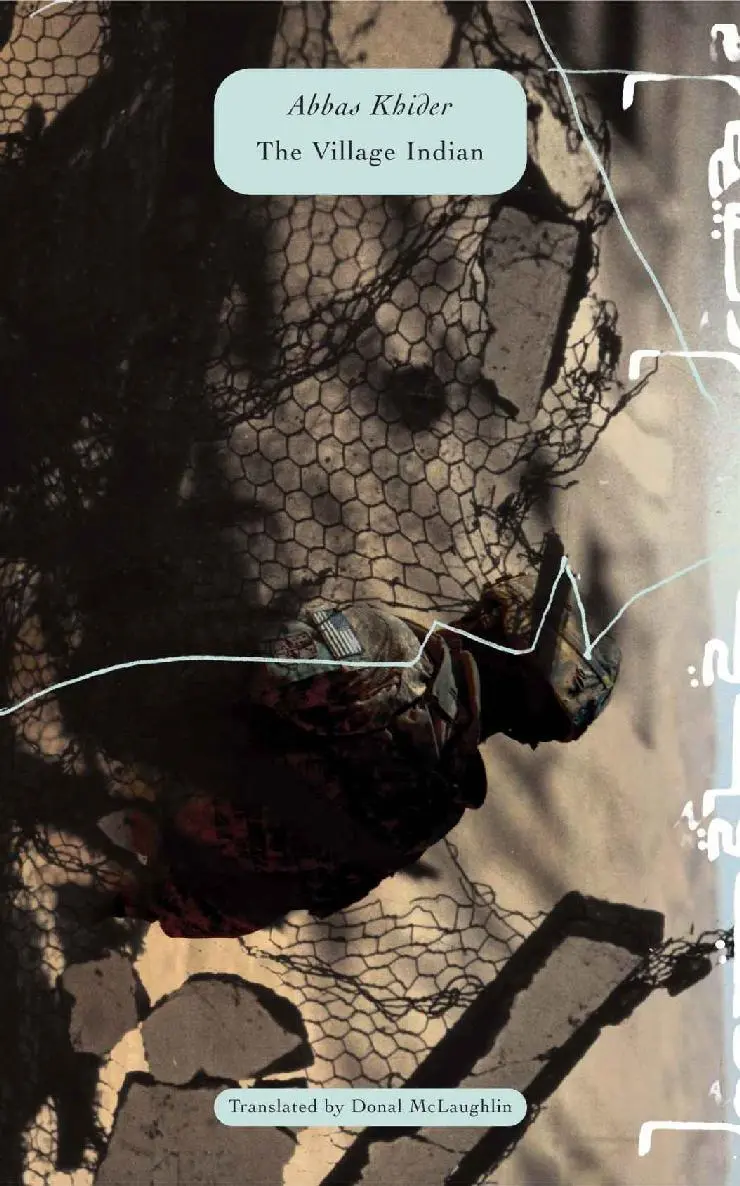
- Название:The Village Indian
- Автор:
- Издательство:Seagull Books
- Жанр:
- Год:2013
- ISBN:нет данных
- Рейтинг книги:3 / 5. Голосов: 1
-
Избранное:Добавить в избранное
- Отзывы:
-
Ваша оценка:
The Village Indian: краткое содержание, описание и аннотация
Предлагаем к чтению аннотацию, описание, краткое содержание или предисловие (зависит от того, что написал сам автор книги «The Village Indian»). Если вы не нашли необходимую информацию о книге — напишите в комментариях, мы постараемся отыскать её.
of the Persian Gulf and part
in Europe, this debut novel is drawn from the author’s experiences as a political prisoner and years as a refugee. Our hero Rasul Hamid describes the eight different ways that he fled his home in Iraq and the eight different ways he has failed to find himself a new way home.
From Iraq via Northern Africa through Europe and back again, Abbas Khider deftly blends the tragic with the comic, and the grotesque with the ordinary, in order to tell the story of suffering the real and brutal dangers of life as a refugee — and to remember the haunting faces of those who did not survive the journey. This is a stunning piece of storytelling, a novel of unusual scope that brings to life the endless cycle of illegal entry and deportation that defines life for a vulnerable population living on the margins of legitimate society. Translated by Donal McLaughlin,
provides what every good translation should: a literary looking glass between two cultures, between two places, between East and West.
The Village Indian — читать онлайн бесплатно полную книгу (весь текст) целиком
Ниже представлен текст книги, разбитый по страницам. Система сохранения места последней прочитанной страницы, позволяет с удобством читать онлайн бесплатно книгу «The Village Indian», без необходимости каждый раз заново искать на чём Вы остановились. Поставьте закладку, и сможете в любой момент перейти на страницу, на которой закончили чтение.
Интервал:
Закладка:
I reached the fifth building. There was now a side street between me and the next set of houses. I had no chance! I stopped and turned round. Behind me was Ahmed. And behind him, one of the policemen watching us through the window. The terrace of the final building had no door. I looked down. Three floors below there was another. I looked to the left and to the right. Pipes, only. And several windowsills. I jumped and landed with one foot on the gutter. Then hopped onto a windowsill. Ahmed was right behind me. The windowsill gave way beneath our weight. We plummeted onto the terrace. By the time I picked myself up, Ahmed was already at the door to the building. It was locked — damn! We looked at each other, helplessly.
‘Fucking shit.’
Suddenly, we heard a voice, an old man. ‘ Gelmek !’—Come! He was leaning out of a window. He waved us over, signalled that we should climb in through the window. Ahmed climbed in first. The man offered us a seat and began to question us. Ahmed spoke good Turkish, like all Iraqi Turkmens. He translated for me. Once we’d made it clear we weren’t thieves but Iraqis trying to get to Greece, the man asked, ‘Are you Shi’ites?’
‘I’m not,’ said Ahmed, ‘but my friend Rasul is.’
The old man smiled. ‘My name’s Ali and I’m an Alevi. We Alevis are very like the Shi’ites. The Turkish government makes our life hell too.’
He got up, offered me his hand, then hugged and kissed me, calling me ‘Brother Rasul’.
He gave us food and drink and talked to Ahmed about Iraq. From time to time, Ahmed would ask me something or translate a certain bit for me. About two hours later, Ali said he’d go down to the street and see if the police were still there. A few minutes later, he was back again. ‘The air is clear, not a policeman to be seen.’ The old man said we could spend the night there but we decided to leave. We thanked him warmly and took our leave. I never saw Ali again.
Ahmed knew other people-smugglers. He found a Kurd for me, a Turkmen for himself. I ran into him again, later, on Omonia Square in Athens. He didn’t recognize me. He was standing next to a smuggler, one with several thuggish bodyguards. I greeted Ahmed. He looked at me. But his blue eyes seemed lost, failed to focus. Each had a huge black circle at the centre. He wasn’t as handsome as he had been in Turkey. Looked semi-derelict. Some refugees told me he’d become this smuggler’s sex slave. ‘Your man’s got Ahmed hooked on drugs. Ahmed has to accompany him everywhere — as his “wife”.’
I swear on Ali and all the Alevis — I didn’t want to have to count on any more miracles. Of course not — what kind of fate would that be? But I had no choice. The next miracle hit me completely unexpectedly too. This time, I was with a smuggler and twenty-three refugees and already on the Greek side of the Ebrus. We’d been walking for almost three weeks, from the Turkish border near Edirne, past Komotini, to Xanthi, our final stop. During the day, we slept in the forest or in the mountains. From six in the evening until five in the morning, we walked, or ran. Along hidden paths through Greece. From Xanthi, it was impossible to walk any further. As the smuggler explained, there were only impassable mountains or the sea. We had to wait for a lorry to take us to Thessaloniki or Athens. We camped for a week behind a hill, near an old, deserted factory. Round us were small fields and dusty earth. The lorry didn’t come. The bandits did instead. Late afternoon, just before sunset. We heard nothing but the shots. The smuggler jumped up. Six of us fled with him. Ran as fast as we could, without stopping to look. But we heard the bullets whistle past, on either side. I fell several times but picked myself up and ran on. We headed straight for the factory, hid inside. No one followed us.
The smuggler peered at me. ‘Are you injured?’
‘What?’
‘Fuck, you’re bleeding! They got you.’
I hadn’t noticed, nor could I feel any pain. But I had been hit — twice. One bullet through my right hand. The other deep in my left calf.
The smuggler examined me more closely. ‘These aren’t real bullets. They’re for animals. That means those guys weren’t policemen!’
We waited another two hours before returning to our camp. That’s what all smugglers did — after two or three hours, they went back to the starting point. When we arrived, our whole group was already there. They told us the men wanted money. And they got it. There were seven of them, all armed and masked. No one knew if they were policemen or bandits. The smuggler decided to stay with us and sleep here. He hoped to find a solution the next day. That night, though, my leg began to hurt. An intense throbbing pain. In the morning, the smuggler turned to me, ‘You’ll have to travel on your own by train. It will take the lorries another three to five days to arrive. And you won’t last that long. Three days from now, at the latest, you’ll be dead. I’ll buy you a ticket. You can take the train to Athens. If you make it there, you’ll be saved. You’ll also be saved if the police arrest you — they’ll make sure you get to a hospital.’
I agreed. A Kurd called Imad said he’d had enough and wanted to accompany me. Shortly after midday, our smuggler arrived with a car driven by a Greek. The smuggler gave us tickets and said the Greek would take us to the station.
We shaved and put on the clean clothes that every refugee has in his rucksack for such occasions. Then we got into the car. The Greek didn’t say a word. Drove us through a small town before stopping outside a low building with a sign that read, ‘Xanthi Station’. He went off right away. Two minutes later, he was back — to accompany us to the platform. Five minutes later, we boarded the train and he said goodbye with a curt, ‘ Yassu !’
The train pulled off. After a while, the ticket inspector came to check our tickets.
‘Passport.’
‘No.’
He took us right up to the front of the train, near the engine, and tried to tell us to wait there for him. He went into the driver’s cab and reached for the phone. Imad and I looked at each other but said nothing. Of course, we knew what this meant for us. The train began to slow down. Not far off, there seemed to be a small town. The ticket inspector came back out of the driver’s compartment and passed us on his way to the middle of the train. The train stopped, the doors opened and passengers got off. Imad looked at me and whispered, ‘No police!’ We jumped out of the train and ran down the street. It was dark. No one followed us.
We ran towards a big park. Lots of people were sitting around, eating or chatting.
‘Man, that was just like an action film!’ Imad grinned.
‘You’re right — one based on a true story.’ Fortunately, I was in no pain at all. You wouldn’t have thought there was a bullet in my body. In the park, we spent our time watching people in the street, marvelling at the gorgeous Greek women. Time was passing quickly and we didn’t really know what to do with ourselves. I spoke to a young lad. He had a beer and some peanuts on the ground beside him.
‘Hello, can you help me?’ I asked in English. ‘I’d like a ticket to Athens. I have money. Will you buy it for me?’
Where we were, exactly — the name of the town — interested us very little, if at all, at this point. I’d always thought it was Kavala. Kavala, though, has no trains and, so, no station, as I’d learn years later. We were, in fact, in Drama. A more appropriate name you couldn’t have asked for, given our predicament.
My English was nothing special but the young Greek’s English was no better. He nonetheless gave the impression that he was enjoying our conversation. And so, it seemed that our tragic drama in Drama had been resolved. I told the Greek we were Iraqis and didn’t want to buy the tickets ourselves. He took us to a small park outside the station. Then went into the station alone. A short while later, he returned to explain that a ticket to Athens cost twenty dollars and the train left at one in the morning. Imad gave him fifty. The boy bought the tickets. He’d changed the rest of the dollars into drachma. Imad said he could keep it. He looked at us, smiled and put the money in his pocket. Finally, he pointed at the clock above the main entrance. ‘You have only thirty minutes.’ He took his leave and we thanked him.
Читать дальшеИнтервал:
Закладка:
Похожие книги на «The Village Indian»
Представляем Вашему вниманию похожие книги на «The Village Indian» списком для выбора. Мы отобрали схожую по названию и смыслу литературу в надежде предоставить читателям больше вариантов отыскать новые, интересные, ещё непрочитанные произведения.








Обсуждение, отзывы о книге «The Village Indian» и просто собственные мнения читателей. Оставьте ваши комментарии, напишите, что Вы думаете о произведении, его смысле или главных героях. Укажите что конкретно понравилось, а что нет, и почему Вы так считаете.