Abbas Khider - The Village Indian
Здесь есть возможность читать онлайн «Abbas Khider - The Village Indian» весь текст электронной книги совершенно бесплатно (целиком полную версию без сокращений). В некоторых случаях можно слушать аудио, скачать через торрент в формате fb2 и присутствует краткое содержание. Год выпуска: 2013, Издательство: Seagull Books, Жанр: Современная проза, на английском языке. Описание произведения, (предисловие) а так же отзывы посетителей доступны на портале библиотеки ЛибКат.
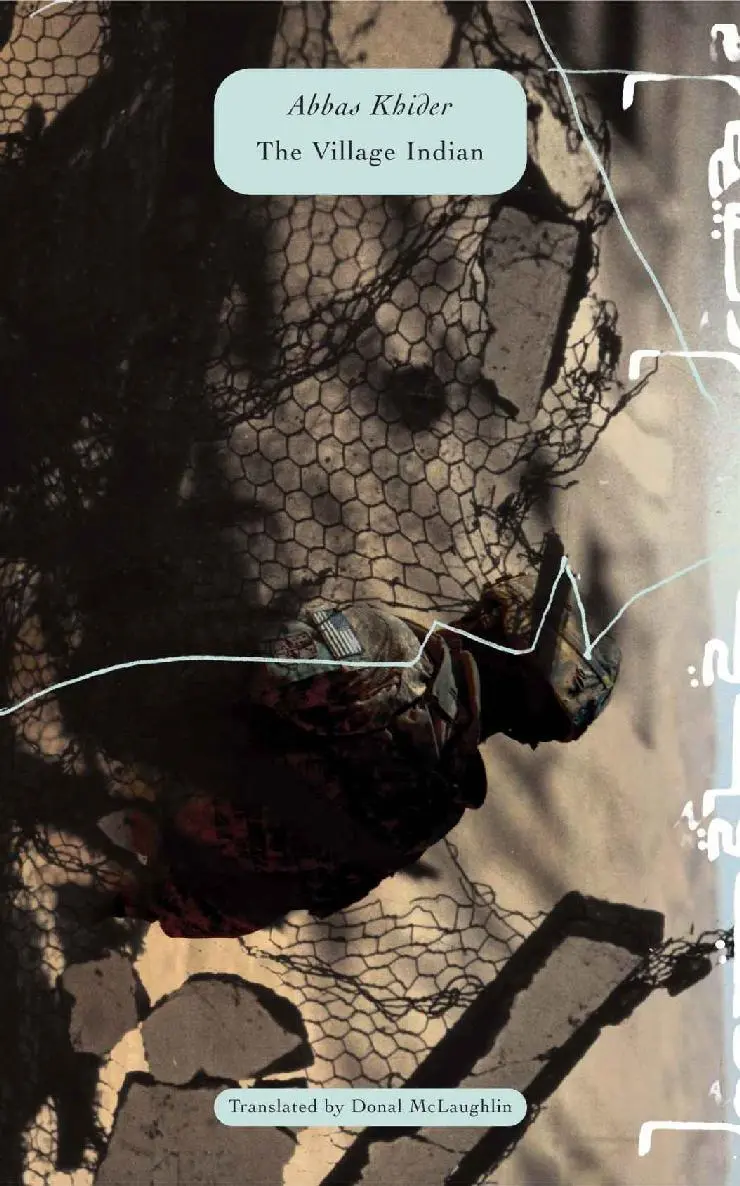
- Название:The Village Indian
- Автор:
- Издательство:Seagull Books
- Жанр:
- Год:2013
- ISBN:нет данных
- Рейтинг книги:3 / 5. Голосов: 1
-
Избранное:Добавить в избранное
- Отзывы:
-
Ваша оценка:
The Village Indian: краткое содержание, описание и аннотация
Предлагаем к чтению аннотацию, описание, краткое содержание или предисловие (зависит от того, что написал сам автор книги «The Village Indian»). Если вы не нашли необходимую информацию о книге — напишите в комментариях, мы постараемся отыскать её.
of the Persian Gulf and part
in Europe, this debut novel is drawn from the author’s experiences as a political prisoner and years as a refugee. Our hero Rasul Hamid describes the eight different ways that he fled his home in Iraq and the eight different ways he has failed to find himself a new way home.
From Iraq via Northern Africa through Europe and back again, Abbas Khider deftly blends the tragic with the comic, and the grotesque with the ordinary, in order to tell the story of suffering the real and brutal dangers of life as a refugee — and to remember the haunting faces of those who did not survive the journey. This is a stunning piece of storytelling, a novel of unusual scope that brings to life the endless cycle of illegal entry and deportation that defines life for a vulnerable population living on the margins of legitimate society. Translated by Donal McLaughlin,
provides what every good translation should: a literary looking glass between two cultures, between two places, between East and West.
The Village Indian — читать онлайн бесплатно полную книгу (весь текст) целиком
Ниже представлен текст книги, разбитый по страницам. Система сохранения места последней прочитанной страницы, позволяет с удобством читать онлайн бесплатно книгу «The Village Indian», без необходимости каждый раз заново искать на чём Вы остановились. Поставьте закладку, и сможете в любой момент перейти на страницу, на которой закончили чтение.
Интервал:
Закладка:
The attack lasted half the night. It was over in the morning. Apart from isolated rifle fire, here and there. Many families used the light of day to flee Baghdad. My father felt we should too. That same day we left for Karbala. One of my brothers, Ilyas, worked and lived there with his wife and children. He’d said on the phone that there were no important military facilities in Karbala. When we arrived, the war was, of course, there too but it was not as noticeable as in Baghdad. My brother didn’t live in the town centre but outside, in a district called al-Alaskari. It was huge and at the edge of the Karbala desert. There was no electricity, but we could listen to the terrible news on a battery-operated radio. We were relieved to be outside Baghdad.
In the town centre were the mosques of the holy Shi’ite imam al-Hussein and his brother al-Abbas. Countless pigeons lived in their courtyards. They’d even built their nests beneath the golden domes. It gave me all kinds of pleasure to visit the mosques daily and watch the pigeons, though my family thought I’d become religious. At the time, I did indeed go through what you could call a religious phase. On the way to the mosques, I often sat in the inner courtyard, at the grave of al-Hussein, listening to the prayers, especially of the women: ‘May God end this war!’, ‘Save us, O Merciful One!’, ‘O God, in the name of your holy imam al-Hussein, bring my children safely back from war!’ They cried and then grew calm after their prayers, as if their problems had gone away.
A short time later, the war ended. Kuwait liberated, the Iraqi army returned to Iraq. My family, to Baghdad.
The war was followed by the embargo on Iraq by the victorious powers. The Iraqis therefore went hungry. There was a lack of medicine and many other things. The dictatorship got worse. Resistance seemed impossible. I was arrested for political reasons and later released. There was no path left open for me after that. Just a great nothingness — all over the country.
A kind of illness began to take hold of me. I don’t know what to call it, exactly. An unknown poet in the Middle Ages wrote: ‘I opened my eyes and when I opened them, I saw many people and yet I saw no one.’ I fell into this no-one state, plunged into a great emptiness. And I couldn’t get out of it. Only two choices lay before me — to fight this emptiness or to put an end to my life. Heaven and earth were bleak, empty. I decided to leave Iraq. I could no longer bear — in the emptiness of my homeland — to watch life in its sad streets.
My last day in Iraq I spent with Abba and Abd, my childhood friends. I told them of my plans to leave Iraq. Abba and Abd took me by the hand and led me to a square called al-Sade, not far from where we lived. Where there was nothing but yellow soil and where the bin lorries of Baghdad used to be emptied. Once we’d arrived at the square, they said, ‘God is certainly in Heaven! Now let’s dance for Him!’ We danced like madmen. I screamed. Afterwards, I felt as free as a pigeon that had just learnt to fly.
Thereafter, I always repeated the prayer I’d once heard an old man say in al-Hussein mosque. It has remained deep in my heart. The old man claimed it came from Ali Ibn al-Hussein. Ali is the fourth great imam of the Shi’ites. After Caliph Yazid murdered his father and his family and friends in 680, in Karbala, he’d spent the rest of his life sitting in a room and doing nothing but pray. He’d also written a book, al-Sahifa al-Sajjadiyya —‘the pages of the prostrate one’—containing nothing but prayers. That is why they finally called him ‘al-Sajjad’—the prostrate one. I have Ali al-Sajjad and his pages to thank for the one prayer I’ve uttered in my life: ‘God, save me from emptiness!’
The first stop on my long journey was Amman. But heavenly paths weren’t to be found there either; only others that I can’t describe so easily. Paths of a particular kind. One of them I call ‘access to exile’. The first days you spend in exile are very dangerous. You no longer think with your head but with your heart or, to be precise, with your imagination. Your head is forgotten. You often think of your mother’s face or those of your brothers and sisters and your friends. They appear all over the place — in a book, at your work, in the sky. You begin to listen to songs from your native land. At home, under no circumstances would you have behaved like this. The songs you would have dismissed as banal. Food, books, clothes and people from your native land suddenly gain in significance. Exile enhances your view of the place you’ve left behind.
I think my problem was that I hadn’t travelled voluntarily. I wasn’t a tourist. Only a refugee. A fleeing pigeon that was completely blind. It was able to fly but it didn’t know where to go. I was forced to leave my homeland for ever, that much was certain. But I still didn’t know what I would do elsewhere! I had to survive and that was all. My ‘access to exile’ path was a long path through the emptiness that I had to fight all my life. The longing for your homeland grows fainter with time. The more you penetrate the emptiness of exile in your new life, the more the touched-up past fades. Emptiness, though, is the one thing that remains, your constant companion.
‘God, save me from emptiness!’
In Amman, in a bid to battle the emptiness, I tried to make contact with members of the Iraqi opposition. A group of Iraqi politicians and writers in exile met in a cafe in Amman every afternoon. When I came to know them better, I couldn’t believe it — more than half had been generals, poets and writers who’d supported the Iraqi dictatorship in the eighties. I’d even seen some of them on TV, reading poems or making speeches in praise of the dictator. On one occasion, a poet who saw himself as an important representative of contemporary Iraqi literature, proudly read a poem he’d published for the king of Jordan in a Jordanian newspaper. He’d previously published several volumes of poetry dedicated exclusively to the Iraqi ‘leader’ and his wars. I immediately recalled the old Arabic poet: ‘And yet I saw no one.’ These people had sold out, completely. But what were they up to, in exile? A poet called Akram — with sad black eyes and a loud, deep, broken voice — explained: ‘Following the war of 1991, Saddam and his government have grown weak. The Iraqi dinar hasn’t been worth a damn since the embargo. That’s why, suddenly, many high-ranking military men and intellectuals have gone abroad and joined the opposition. The writers now write for other dictators in other Arab countries and earn a lot of money. They also write for Iraqi opposition parties and earn a second lot of money. The generals receive money from the Americans and other countries that have a problem with Saddam — to ensure that they support the countries in question in their own way, especially against their own opposition, and so on and so forth. .’
‘I don’t believe that!’
‘Just look at Syria. The dictatorship in Damascus is murdering the communists in its own country but is supporting the communists in Iraq. It’s all one big game!’
It’s easy to understand that, in such circumstances, I felt no great desire to remain with these people, to be part of this big game. Akram said it was best to go away — to where there were no lies.
‘Where?’
‘No man’s land. .’
‘Where’s that?’
‘Perhaps in the Bermuda Triangle!’
Akram stayed for a while with his high-ranking ‘friends’, then he fled, not to the Bermuda Triangle, of course, but to Lebanon. A few years later, I heard that he’d killed himself. He probably couldn’t free himself from emptiness, nor fight it. And so he chose the oldest and easiest way out.
Читать дальшеИнтервал:
Закладка:
Похожие книги на «The Village Indian»
Представляем Вашему вниманию похожие книги на «The Village Indian» списком для выбора. Мы отобрали схожую по названию и смыслу литературу в надежде предоставить читателям больше вариантов отыскать новые, интересные, ещё непрочитанные произведения.








Обсуждение, отзывы о книге «The Village Indian» и просто собственные мнения читателей. Оставьте ваши комментарии, напишите, что Вы думаете о произведении, его смысле или главных героях. Укажите что конкретно понравилось, а что нет, и почему Вы так считаете.