Kit de Waal - My Name Is Leon
Здесь есть возможность читать онлайн «Kit de Waal - My Name Is Leon» весь текст электронной книги совершенно бесплатно (целиком полную версию без сокращений). В некоторых случаях можно слушать аудио, скачать через торрент в формате fb2 и присутствует краткое содержание. Год выпуска: 2016, Издательство: Simon & Schuster, Жанр: Современная проза, на английском языке. Описание произведения, (предисловие) а так же отзывы посетителей доступны на портале библиотеки ЛибКат.
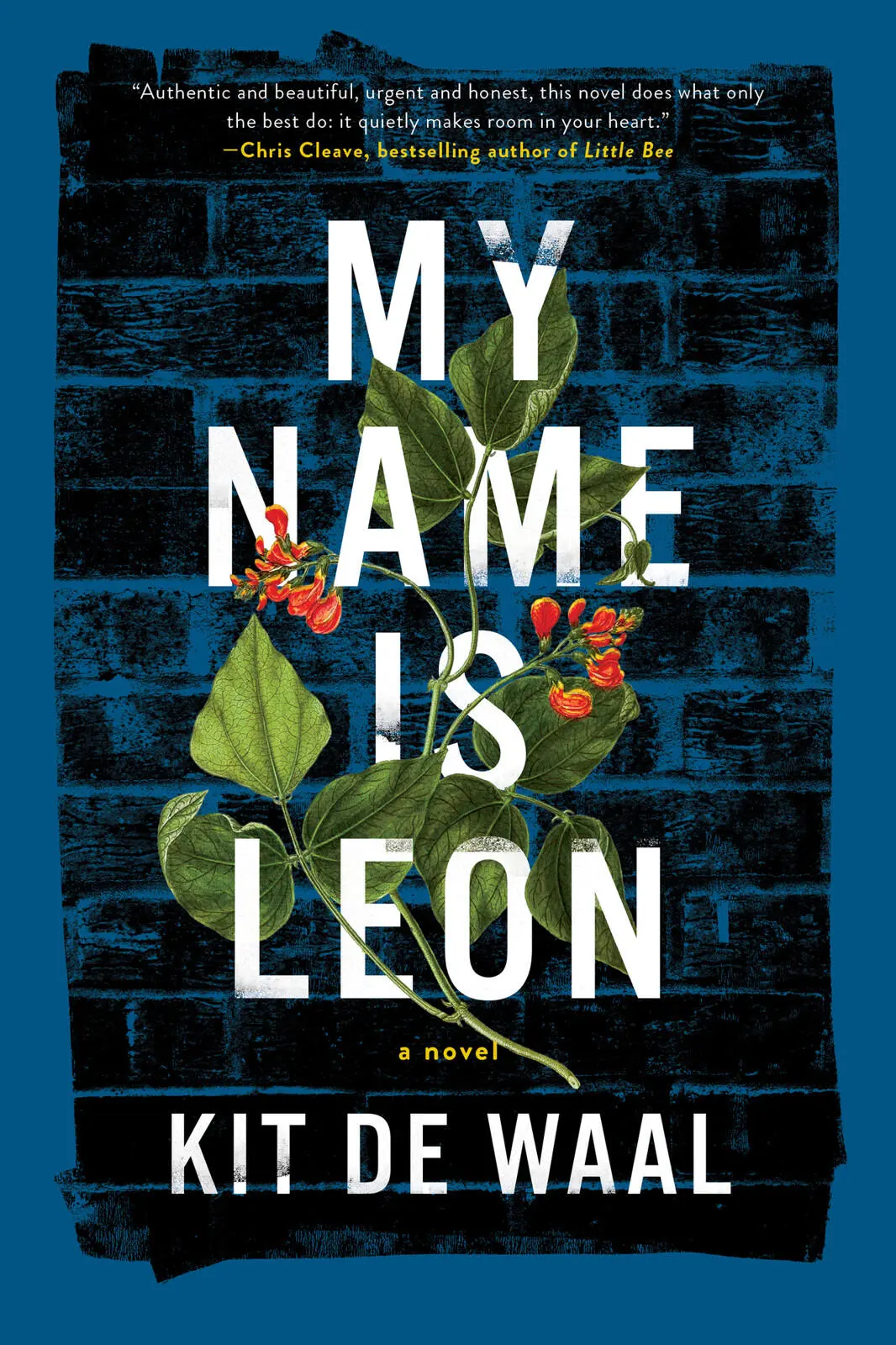
- Название:My Name Is Leon
- Автор:
- Издательство:Simon & Schuster
- Жанр:
- Год:2016
- ISBN:нет данных
- Рейтинг книги:3 / 5. Голосов: 1
-
Избранное:Добавить в избранное
- Отзывы:
-
Ваша оценка:
My Name Is Leon: краткое содержание, описание и аннотация
Предлагаем к чтению аннотацию, описание, краткое содержание или предисловие (зависит от того, что написал сам автор книги «My Name Is Leon»). Если вы не нашли необходимую информацию о книге — напишите в комментариях, мы постараемся отыскать её.
, a sparkling, big-hearted, page-turning debut set in the 1970s about a young black boy’s quest to reunite with his beloved white half-brother after they are separated in foster care.
Leon loves chocolate bars, Saturday morning cartoons, and his beautiful, golden-haired baby brother. When Jake is born, Leon pokes his head in the crib and says, “I’m your brother. Big brother. My. Name. Is. Leon. I am eight and three quarters. I am a boy.” Jake will play with no one but Leon, and Leon is determined to save him from any pain and earn that sparkling baby laugh every chance he can.
But Leon isn’t in control of this world where adults say one thing and mean another, and try as he might he can’t protect his little family from everything. When their mother falls victim to her inner demons, strangers suddenly take Jake away; after all, a white baby is easy to adopt, while a half-black nine-year-old faces a less certain fate. Vowing to get Jake back by any means necessary, Leon’s own journey — on his brand-new BMX bike — will carry him through the lives of a doting but ailing foster mother, Maureen; Maureen’s cranky and hilarious sister, Sylvia; a social worker Leon knows only as “The Zebra”; and a colorful community of local gardeners and West Indian political activists.
Told through the perspective of nine-year-old Leon, too innocent to entirely understand what has happened to him and baby Jake, but determined to do what he can to make things right, he stubbornly, endearingly struggles his way through a system much larger than he can tackle on his own.
is a vivid, gorgeous, and uplifting story about the power of love, the unbreakable bond between brothers, and the truth about what, in the end, ultimately makes a family.
My Name Is Leon — читать онлайн бесплатно полную книгу (весь текст) целиком
Ниже представлен текст книги, разбитый по страницам. Система сохранения места последней прочитанной страницы, позволяет с удобством читать онлайн бесплатно книгу «My Name Is Leon», без необходимости каждый раз заново искать на чём Вы остановились. Поставьте закладку, и сможете в любой момент перейти на страницу, на которой закончили чтение.
Интервал:
Закладка:
“Easy, easy,” says Mr. Burrows and he leans down to look at what Leon has done.
“You see these?” he says. “Zucchini. I don’t even like them but they grow good and strong. Yellow flowers.”
He points to another tray.
“And these? Mangetout. Say it.”
“Mange tout.”
“Means ‘eat all.’ You can eat the whole pod, seeds and everything.”
“What’s in there?”
“Nothing yet. That tray is waiting for runner beans. Come.”
Leon follows Mr. Burrows back outside.
“Cream soda,” he says to Leon. “Kids love cream soda. Cool you down.”
Leon pulls the ring off the can and glugs it back.
“You needed that, eh?”
Leon nods. “What’s your name?” he asks.
“They call me Tufty because of my thick hair,” says Mr. Burrows and he waits until Leon starts to smile.
“Yeah, lost my hair when I was your age. Never grew back. Linwood is what my mother named me but everyone calls me Tufty except that man over there. He thinks he’s the boss. The general in a one-man army.”
While Tufty drinks, he kicks at the stony soil.
“I got watering to do, weeding, seeds to plant, hoeing. Day like today,” he says, “ain’t really no digging day, Star, but you got to work with the seasons. Wait.”
Tufty goes into his shed and comes back with two folding chairs that he sets in the shade.
“Come.”
Leon sits next to Tufty and kicks the dry, stony soil like Tufty did. The pebbles roll under his feet and a bloom of gray dust settles on his sneakers.
Tufty’s body covers the whole seat; he looks like he’s sitting on nothing. He unlaces his special cycling sneakers and takes off his socks. He places his naked foot on top of the shoe and wiggles his toes.
“The sun,” he says, closing his eyes and turning his face to the sky, “is a healer. When the sun comes out everybody smiles. World looks different. You can manage in the sun what you can’t manage in the rain. That’s what my father says. That’s why he don’t live here no more.”
Leon looks up and closes his eyes as well. He remembers a day when his mom was pushing the stroller in the rain and Leon was holding on to the handle. She forgot the plastic cover and Jake was getting wet and she was rushing, bouncing the wheels in the puddles and splashing everywhere. By the time they got home they were all upset. His mom made a bottle for Jake and then when he was asleep she kissed Leon over and over and said she was sorry. She let him stay up late and watch TV with her under a blanket on the sofa. Then when he was in bed, she kissed him again.
“You’re such a good boy, Leon. I’m sorry if I’m not the best mom. I love you, you know.”
That’s what the sunshine feels like.
Leon opens his eyes and looks around. There are no fences between the gardens, just straight edges in the soil or grassy paths. There are other people gardening apart from Mr. Devlin. There’s a woman in a pink sari in the next garden with her husband in a black turban. They’re bending over, pulling weeds, talking to each other all the time in their own language. The woman keeps standing up and holding her back, so her husband points to a chair. She laughs and shakes her head, waves at a white woman wearing a vest who’s digging her garden with a heavy iron fork that she stabs in and kicks, then turns over. She’s the same age as Maureen and the vest is very tight on her chest. She’s wearing a long, flowery skirt and a yellow bandana around her hair. She sees Leon looking and she waves.
“All help welcome!” she shouts.
The more Leon looks, the more people he sees and he realizes how huge the allotments are; they go on and on as far as he can see.
Tufty suddenly picks up a big iron fork and marches off to one end of his plot.
“Work to do,” he says. “You take care, Star.”
Leon watches him for a while and cycles away. He trundles between the little gardens, taking his time to see what people are doing. Some people have only flowers and a little lawn like Sylvia with deck chairs and parasols. Other people have long, straight rows of plants, bushy and neat. There are lots of plots like Tufty’s, made into sections with a different plant in each section and some sections with nothing but dusty brown soil. There are no swings or slides but it’s better than a park because everybody has their own bit of land to look after and they can do what they like with it. If Leon had his own patch he would make it into a soccer field or he would make a secret den with an underground tunnel.
Eventually Leon cycles back past Tufty toward the entrance and sees the man with the knife, Mr. Devlin. He is piling the branches and leaves into a wheelbarrow with the knife lying at his feet. Leon gets off his bike and goes a bit closer.
“Stay off that bike,” says Mr. Devlin.
“What’s that?” asks Leon, pointing at the knife.
The man turns his head slowly.
“Kanetsune,” he says.
“Can I touch it?” asks Leon.
“No,” says the man. “And if you remain here much longer you’ll be trespassing.”
“Are you from the army?” Leon says, making his bike balance on its two wheels.
The man picks up the wheelbarrow and marches away. Leon follows him down a little gravel path and sees him park the wheelbarrow and go inside a hut, except this hut is made of bricks with a proper roof and a chimney. It has two windows with iron bars across and a wooden door with three steel locks. All around the hut is a strip of grass with flowers and wooden barrels. There’s stuff everywhere: a rusty wheel, a pile of pots stacked inside each other, the twisted branch of a dead tree, an old armchair with the seat missing, and a clothesline with a blue shirt hanging on it. Leon wonders if Mr. Devlin lives in a halfway house. He waits and waits but the man doesn’t come back, so Leon pedals away, back to the corner, through the busy street with the vegetables on the pavements, over the traffic lights and down the hill to Sylvia’s house.
18
Sometimes, on Saturday mornings, Leon can have the television all to himself to watch Tiswas and Swap Shop . If the cartoons are on, Sylvia will watch them with him but she talks all the time or paints her toenails, making a horrible smell. Everything Sylvia likes is purple because she wants it to match her hair. Afterward they have to go to the shop where Sylvia works part-time, to collect her money.
She always spends ages talking to the man who gives her the brown packet. He holds on to it until she tugs it away with a fake smile and when they get outside she calls him a bastard. On the way back she always gets her magazine and some cakes and Leon gets a comic. Sylvia sits at the kitchen table and licks her fingers and turns the pages and eats the cakes and licks her fingers again. She always buys Leon a doughnut but he can’t have it until after lunch. Once Sylvia bought herself a bunch of flowers wrapped in a crinkly pink paper with a ribbon round it. She looked angry when she was putting them in the vase but when she saw Leon looking she smiled and said, “If I don’t, who will?”
“My mom and dad have a massive garden,” he tells Sylvia when she puts him to bed. “With lots of trees and grass and flowers and a shed. I used to grow everything with seeds that I planted myself. Zucchini and mangetout. I used to chop down trees if they got too big and dig the weeds out. My dad gave me a sharp knife and I used to help him. It’s hard work but I don’t mind. There’s no one to look after it now if I’m not there.”
Sylvia turns out the light.
“Well, why don’t you go straight to sleep and have nice dreams about your garden? Night, night.”
Leon hates it when the curtains move in the breeze but he’s too scared to get out of bed and close the window. He turns over and tries to think of nice things like when Carol had a special bouquet for her birthday. It was wrapped in plastic with a bow made of white satin but because she didn’t have a vase she had to prop the flowers up in the sink and then in the bath. Every time she looked at the bouquet she would say, “Must have cost a fortune.” Later on that night, when his dad came, Leon heard her saying, “Byron, stop it!” but she was laughing, so he didn’t have to worry.
Читать дальшеИнтервал:
Закладка:
Похожие книги на «My Name Is Leon»
Представляем Вашему вниманию похожие книги на «My Name Is Leon» списком для выбора. Мы отобрали схожую по названию и смыслу литературу в надежде предоставить читателям больше вариантов отыскать новые, интересные, ещё непрочитанные произведения.










Обсуждение, отзывы о книге «My Name Is Leon» и просто собственные мнения читателей. Оставьте ваши комментарии, напишите, что Вы думаете о произведении, его смысле или главных героях. Укажите что конкретно понравилось, а что нет, и почему Вы так считаете.