Brad Watson - The Heaven of Mercury
Здесь есть возможность читать онлайн «Brad Watson - The Heaven of Mercury» весь текст электронной книги совершенно бесплатно (целиком полную версию без сокращений). В некоторых случаях можно слушать аудио, скачать через торрент в формате fb2 и присутствует краткое содержание. Год выпуска: 2003, Издательство: W. W. Norton & Company, Жанр: Современная проза, на английском языке. Описание произведения, (предисловие) а так же отзывы посетителей доступны на портале библиотеки ЛибКат.
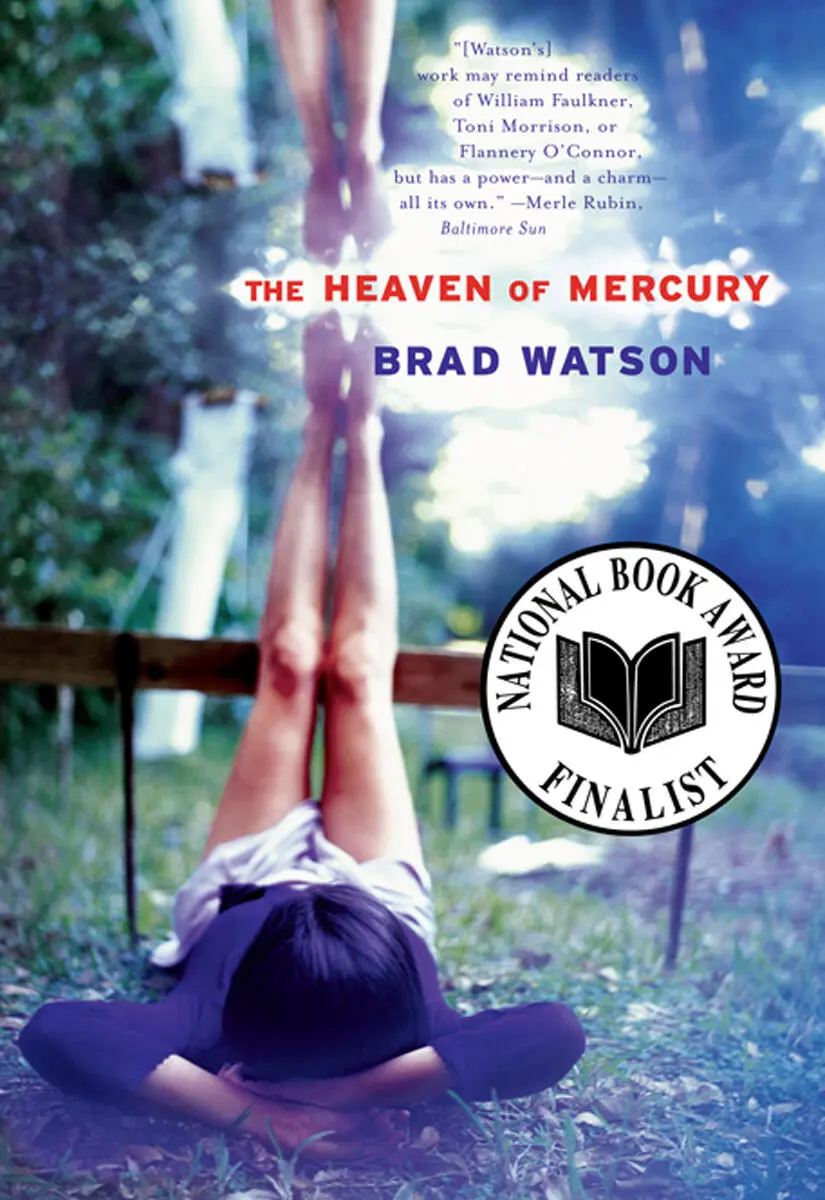
- Название:The Heaven of Mercury
- Автор:
- Издательство:W. W. Norton & Company
- Жанр:
- Год:2003
- ISBN:нет данных
- Рейтинг книги:5 / 5. Голосов: 1
-
Избранное:Добавить в избранное
- Отзывы:
-
Ваша оценка:
The Heaven of Mercury: краткое содержание, описание и аннотация
Предлагаем к чтению аннотацию, описание, краткое содержание или предисловие (зависит от того, что написал сам автор книги «The Heaven of Mercury»). Если вы не нашли необходимую информацию о книге — напишите в комментариях, мы постараемся отыскать её.
starred review). "His work may remind readers of William Faulkner, Toni Morrison, or Flannery O'Connor, but has a power — and a charm — all its own, more pellucid than the first, gentler than the second, and kinder than the third" (
).
The Heaven of Mercury — читать онлайн бесплатно полную книгу (весь текст) целиком
Ниже представлен текст книги, разбитый по страницам. Система сохранения места последней прочитанной страницы, позволяет с удобством читать онлайн бесплатно книгу «The Heaven of Mercury», без необходимости каждый раз заново искать на чём Вы остановились. Поставьте закладку, и сможете в любой момент перейти на страницу, на которой закончили чтение.
Интервал:
Закладка:
— No, hon, Creasie’s got some peas and greens and we’ll just eat vegetables. I don’t have an appetite, anyway. She coughed dryly into a tissue. -I got some cream in the freezer, maybe I’ll just eat some of that later, to settle my stomach.
— Okay, her granddaughter said with another sigh, and kind of, it seemed to Birdie, huffed in a tired way out of the room.
ONE LATE AFTERNOON at Pappy and Mamaw’s house, she was just about seven years old, she and Lucy’d been sent over to stay with them, and Pappy took her out into his garden. Gardening was his passion, then, and his garden was lush and beautiful. It was dusk. The light faintly blue, and graying. Pappy had taught her the names of the flowering bushes, the pink camellias and wild azaleas with their yellow blooms, his roses and on down the little slope in back the tall sunflowers like Uncle Will would grow himself one day. Pappy knelt down beside her. Little Lucy was in the house asleep. And in the light becoming so faint she was afraid they were disappearing into it, like with the lessening vision they would both just sift into the gray and disappear, so she gripped his empty coat sleeve with her small hand, the thin wool fabric weightless between her fingers where he’d lost his arm in the war. His long white beard and hair looked silver and luminous in the spare light. He covered her hand with his own and said softly, — Listen, Birdie, can you tell it’s something special? She looked at him, afraid. He whispered, — Something has happened. Can you tell?
— Yes, she whispered.
If she held on tight to Pappy she would not disappear without him, he would be with her there, where they went.
Pappy said, — It’s a miracle has happened, Birdie.
She looked at him. In the disappearing light he was becoming darker, a shade lingering here on the earth. Within the soft glow of his beard and hair she could barely see his pale eyes.
Pappy said, — Your mama has given us a new little girl. When you get back to your house you’ll see. And then, as her eyes became used to the darkening light, she could see him, like a child himself, somehow changed.
And that was when Pud had been born. In the last wisp of light from behind the trees they had walked holding hands back into the lamplit house and stood over little Lucy asleep in the middle of Pappy and Mamaw’s bed and looked at her sleeping face.
— Another beautiful child in the world, like little Lucy here, but just a tiny baby, brand-new, Pappy said, and he stroked Birdie’s hair. -In the morning, we’ll all go see her.
She was so happy he had not gone away, the world had not ended in the beautiful moment in the garden, that she began to cry. He held her in his arms, shushing her, and took her into the kitchen, where Mamaw fussed over her and fussed at Pappy for telling her stories and scaring her so. The way he’d point to a plant and say, This here’s hemlock, what they used to do away with their enemies in Shakespeare’s day and so on. I ever get sick and out of my mind, you bring it to me, in a little tea.
Rrraaack! Mockingbird squawking at her again.
— Sing like the songbirds, that’s what you’re supposed to do.
The bird cocked his head.
— Go on!
Ooodle oo! Mocking her again.
Pud was so funny, when they was little girls, once learned the f-word and went around saying it when the grown-ups weren’t there, till one morning when she’d waked up at dawn and was all by herself in the wide-awake world she heard this old crow cawing outside the window, sounded like he was saying fuck! fuck! , and it scared her so she ran into Mama and Papa’s room crying, — I’ll never say it again!
PEOPLE DIDN’T KNOW what she’d lived through in her life — if Finus Bates was to write the truth in her obituary it’d be an outrage. She told him once, said, I have suffered pain, insult, treachery, I guess nothing’ll kill you till the Lord gets set to take you. Finus said, Well some say you’re left here for a purpose, and she said, Well I wish He’d let me know just what that is so I can do it and hurry up and go. And Finus just laughed and said, Well you know I don’t believe such junk anyway. Well I do, she said, or I did, anyway. I don’t know why I’m still here, anymore, I feel so bad.
That Levi. The night Earl had the attack, before he died, Levi was to pick up some five hundred dollars in shoes in Memphis and bring them down to the Mercury store, and they never did get delivered. Already paid for. Birdie was at the Auxiliary weeks later, saw Hettie Martin wearing a pair of their shoes and said, Oh, you’re wearing some of our shoes, and she says, Yes, Levi sold them to me, said he was helping y’all out. But they never saw any of that money, Levi just took advantage of all the confusion and stole them. Then turned around to the executor and said, I know Earl! I know Birdie! Lawyer said I don’t care what you say, Levi, Earl had a son, you are not named in this will. Then the cut-out letters start, they’re going to dig Earl up and do an autopsy, on and on. Oh, it was terrible.
Merry was the worst of the lot in a way but she never really expected any money out of Earl after he’d died. Levi was greedy but with Merry it was more about mischief and mean practical jokes. She got mad at Earl one time and went down to the florist and sent bunches of flowers to this friend and that, in the hospital and here and there, and said just send the bill to Earl Urquhart, my brother. Earl said Goddamn, R.W., I’m not going to pay for that! And R.W. said I know it Earl, I’ll pay for it.
He was the sweetest man, R.W was, and Merry did him so wrong. That time he was laid up in the hospital, and said, Well, one thing I know, Merry’d never cheat on me. Well. He was a good man, and made good money selling insurance, made the million-dollar club every year. But didn’t have a clue. He never did know about the time Mr. Grant who had the appliance store downtown come by one day when Earl was out of town, said to Birdie, — Mrs. Urquhart I hate to talk to you about this but I got to talk to somebody, and I thought it might be better if you told Earl about it. I figure he might know how to handle it, but if I tell him he’d just get mad.
Well she, Merry, had been running around with his partner, Mr. Ethridge, and Mr. Grant says, Mrs. Urquhart, he’s leaving money underneath the carpet there at the store for her, where she can come in and act like she’s browsing — browsing washing machines, now! — and reach down like to scratch her heel and get that money. She’s said if he don’t, she said, I’ll go to your front door and tell your wife what you done.
Not to mention what she did to Finus, all that mess.
— Now, I’m telling you, Birdie told Claudevelyn Peacock, who’d come by early that morning with a chicken and rice casserole and given it to Creasie in the kitchen and come on back to her bedroom, I’m telling you, you may not remember but now Merry was a beautiful woman. She could’ve been a movie star, I mean she really could.
— Oh, I know it, I remember her, she used to scare me the way she’d just look at you, Claudevelyn said, leaning forward with her hands on her flabby knees. She’d done something to her hair, Birdie thought, or maybe hadn’t done anything, or tried and couldn’t, anyway it was standing up like she’d put a little box on her head and slept in it. Had a good color, though, strong salt-and-pepper, her own hadn’t been anything but pure gray since her sixties.
— That’s right, like old Jane Russell, kind of, just a sexpot.
— Oh, yeah, honey, Claudevelyn said. She leaned back in the chair beside the bed and sucked her teeth and looked off like her mind was wandering to something. -Land, yes, she said.
She woke up at some point, Claudevelyn gone.
Читать дальшеИнтервал:
Закладка:
Похожие книги на «The Heaven of Mercury»
Представляем Вашему вниманию похожие книги на «The Heaven of Mercury» списком для выбора. Мы отобрали схожую по названию и смыслу литературу в надежде предоставить читателям больше вариантов отыскать новые, интересные, ещё непрочитанные произведения.





Обсуждение, отзывы о книге «The Heaven of Mercury» и просто собственные мнения читателей. Оставьте ваши комментарии, напишите, что Вы думаете о произведении, его смысле или главных героях. Укажите что конкретно понравилось, а что нет, и почему Вы так считаете.