Jay McInerney - Bright, Precious Days
Здесь есть возможность читать онлайн «Jay McInerney - Bright, Precious Days» весь текст электронной книги совершенно бесплатно (целиком полную версию без сокращений). В некоторых случаях можно слушать аудио, скачать через торрент в формате fb2 и присутствует краткое содержание. Год выпуска: 2016, Издательство: Knopf, Жанр: Современная проза, на английском языке. Описание произведения, (предисловие) а так же отзывы посетителей доступны на портале библиотеки ЛибКат.
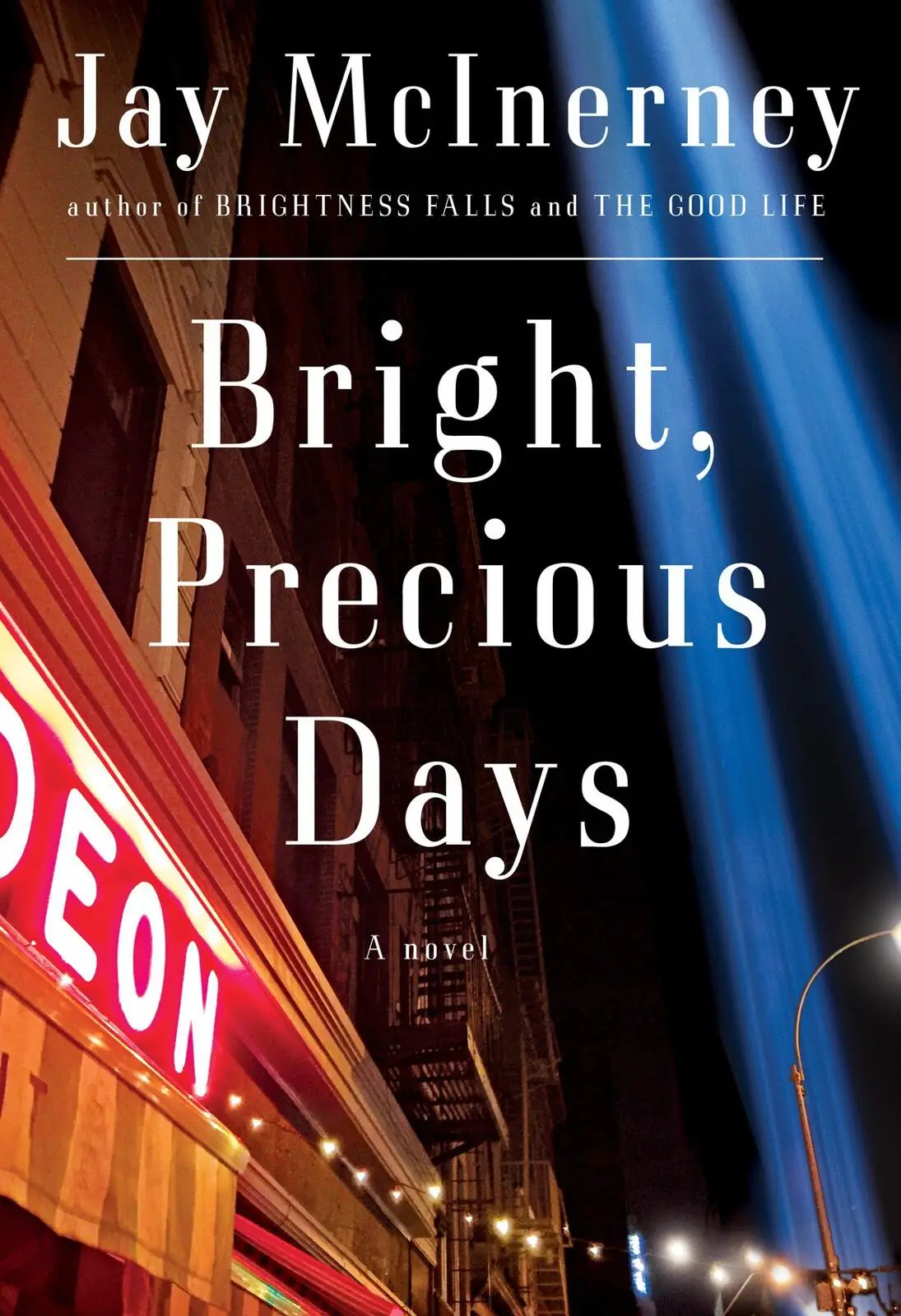
- Название:Bright, Precious Days
- Автор:
- Издательство:Knopf
- Жанр:
- Год:2016
- ISBN:нет данных
- Рейтинг книги:5 / 5. Голосов: 1
-
Избранное:Добавить в избранное
- Отзывы:
-
Ваша оценка:
Bright, Precious Days: краткое содержание, описание и аннотация
Предлагаем к чтению аннотацию, описание, краткое содержание или предисловие (зависит от того, что написал сам автор книги «Bright, Precious Days»). Если вы не нашли необходимую информацию о книге — напишите в комментариях, мы постараемся отыскать её.
a sexy, vibrant, cross-generational New York story — a literary and commercial read of the highest order.
Russell and Corrine Calloway seem to be living the New York dream: book parties one night and high-society charity events the next; jobs they care about (and actually enjoy); twin children, a boy and a girl whose birth was truly miraculous; a loft in TriBeCa and summers in the Hamptons. But all of this comes at a high cost. Russell, an independent publisher, has cultural clout but minimal cash; as he navigates an industry that requires, beyond astute literary taste, constant financial improvisation, he encounters an audacious, expensive and potentially ruinous opportunity. Meanwhile, instead of seeking personal profit in this incredibly wealthy city, Corrine is devoted to feeding its hungry poor, and they soon discover they're being priced out of their now fashionable neighborhood.
Then Corrine's world is turned upside down when the man with whom she'd had an ill-fated affair in the wake of 9/11 suddenly reappears. As the novel unfolds across a period of stupendous change-including Obama's historic election and the global economic collapse he inherited — the Calloways will find themselves and their marriage tested more severely than they ever could have anticipated.
Bright, Precious Days — читать онлайн бесплатно полную книгу (весь текст) целиком
Ниже представлен текст книги, разбитый по страницам. Система сохранения места последней прочитанной страницы, позволяет с удобством читать онлайн бесплатно книгу «Bright, Precious Days», без необходимости каждый раз заново искать на чём Вы остановились. Поставьте закладку, и сможете в любой момент перейти на страницу, на которой закончили чтение.
Интервал:
Закладка:
“She flies back on Wednesday. On Saturday, Ashley’s coming down from Poughkeepsie to join me in the city.”
“Call me,” Corrine said, not at all certain whether she wished to encourage or dismiss him, their conference punctuated by the arrival of a waiter looking for more ice.
As they stepped outside, she spotted her husband engaged in what looked like a heated discussion with a pale, chubby stranger, who seemed to be cowering.
She hurried over as the guests, increasingly, turned to observe the scene.
“It’s my job to express an opinion,” the man was saying.
“It’s your job to attract attention to yourself by doing hatchet jobs on your betters, you fucking troll.”
“Who’s being ad hominem now?”
“Damn right I am. You just turn around on your Birkenstocks and get your fat ass off my lawn.”
Steve Sanders, who looked like a young Trotsky and wrote for the Times, had been hovering at the edge of the battle. “Russell,” he said, “let’s be reasonable.”
“Fuck you, Steve,” he said. “There’s nothing reasonable about his bitchy little tirades. I can’t stop him from writing them, but I sure as hell don’t have to put up with his company at my own party.” The man in question was retreating with tattered dignity under the gaze of half the partygoers.
“I didn’t know he’d attacked one of your authors, or I never would’ve brought him.”
“I’m sure you wouldn’t have,” Russell said, his rage dissipating as its object retreated.
“What was all that about, my love?” she asked a few minutes later, drawing him away from the party, toward the potato barn.
“That was Toby Barnes.”
“Who?”
“The little twat who wrote that nasty review of Youth and Beauty in Details. ”
“For God’s sake, Russell, that had to be fifteen years ago. It was another lifetime.”
“I remember it like it was yesterday. The headline was ‘Uncouth and Snooty.’ ”
She thought it was kind of magnificent that Russell was still defending Jeff after all these years, if not very politic. “Is it wise to humiliate him like that? Now you’ve made a real enemy.”
“Fuck him, he was already my enemy.”
“Well, don’t forget that you publish a lot of authors who might not want to be on Barnes’s shit list.”
“They’d be glad to know that I’d fight for them just like I fought for Jeff.”
“Well, let’s see if we can salvage this party, slugger. Smile and laugh and show them that all’s well,” she said, taking his arm and leading him back into the crowd.
—
Russell’s outburst, far from dampening spirits, seemed to give the party a new source of energy. He was congratulated by half a dozen of the guests, most of them artists or writers, all of them at one time or another the recipients of nasty reviews. The drama provided grist for dozens of conversations about art and criticism and hospitality, and was reported the following Tuesday in a gossip item on Page Six.
The party continued on for several hours, until finally the guests melted away and Corrine found herself sitting alone on the front porch, smelling the primal brine of the invisible ocean, listening to the waves rolling in beyond the dunes and the brittle song of the crickets, who seemed to be eulogizing the summer, the chill in the air a melancholy premonition of fall. Far away, from somewhere inside the house, she could intermittently hear Russell’s muffled baritone as he regaled some straggler. Farther away, Luke was doing who knew what. Maybe she’d had too much to drink, but she suddenly felt terribly sad. Instead of being reassured by the familiarity of these sensations, she was depressed by them. The first time she’d felt the autumn approach across the dunes from this very spot, she’d been a young woman. Summer was over and she was fifty years old, her life going by so fast that the fog drifting in over the grass seemed like an omen.
14
NO LESS THAN THE FARM, the city is attuned to the rhythms of the seasons, although here the autumn, rather than the spring, is the season of rebirth and renewal — the start of a new year for Gentiles no less than for those who celebrate Rosh Hashanah, the time to shake off the torpor and idleness of August and send the children back to school, where they will start fresh, make new and interesting friends and perform even better than last year; a season of restaurant and gallery openings; the time when the fashions of the following year are unveiled on the runways as the gingko leaves turn yellow, Fashion Week giving way to the New York Film Festival, the opening of the Metropolitan Opera and the Philharmonic and City Ballet, the big charity galas and later the art auctions at Christie’s and Sotheby’s and Phillips de Pury, which will tell us how rich the rich are feeling this year. It’s also, less profitably, the season when publishers roll out their biggest and most promising titles.
Before leaving for lunch, Russell stopped in to see Jonathan, who was just across the hall. “When do we see the Times ?”
“Any minute now.”
Jonathan’s office was sparsely decorated, the walls bare except for the poster advertising Carson’s book and another for Arcade Fire.
“You heard anything?”
“My source tells me we’ll be happy.”
They were waiting for their advance copy of the following Sunday’s New York Times Book Review, which reportedly featured a review of Jack’s book. The fact that they’d sent a photographer to take his picture in Tennessee two weeks ago was a positive sign, and Jonathan had been told the reviewer was a novelist of stature, which was also a good sign, although Russell wasn’t entirely thrilled that he was a southerner; it was like the way the Times almost inevitably assigned women to review other women.
“In the meantime, he’s missed his last two interviews.”
“Did you call the hotel?”
Jonathan nodded. “Not picking up.”
“I probably should’ve seen this coming.”
“Maybe this could work for us,” Jonathan said. “The whole bad-boy, poète maudit angle.”
“We’re trying to get people to write about the work,” Russell said. “About what’s on the page. We’re trying to sell literature here.” He realized even as he said it how pretentious this sounded, but he believed it. He just wasn’t sure if he could convey the concept to this twenty-eight-year-old, who was wearing a vintage Naked Lunch T-shirt under an open flannel shirt. “I don’t want Jack branded as some meth-addled cracker right out of the gate. He’s already susceptible to the inevitable stereotyping: Southern writers are almost always relegated to their own ghetto of exotic decadence.”
In a more general sense, Russell objected to the cult of personality, to the fake idea of authenticity, to the notion that the intensity of the life somehow certified the work, all the holy drunk/genius junkie bullshit that equated excess with wisdom, cirrhosis with genius. Blake had a lot to answer for, in his opinion. The road of excess leads to rehab, or the boneyard, more often than it leads to the palace of wisdom. He believed that literature was accomplished in spite of excessive behavior, not because of it.
“I’m fucking tired of this idea that getting drunk and/or doing smack turns an MFA candidate into a genius.”
“But you’ve got to admit, chief, a lot of writers and artists are drunks and junkies.”
“I don’t admit that at all. I don’t think the proportion of literary alcoholics runs any higher than that of alcoholic plumbers.” Not for the first time he wondered where Jonathan found such tight jeans — were they sold like that, or did he have them taken in? And how did you get into the damn things?
Читать дальшеИнтервал:
Закладка:
Похожие книги на «Bright, Precious Days»
Представляем Вашему вниманию похожие книги на «Bright, Precious Days» списком для выбора. Мы отобрали схожую по названию и смыслу литературу в надежде предоставить читателям больше вариантов отыскать новые, интересные, ещё непрочитанные произведения.


Обсуждение, отзывы о книге «Bright, Precious Days» и просто собственные мнения читателей. Оставьте ваши комментарии, напишите, что Вы думаете о произведении, его смысле или главных героях. Укажите что конкретно понравилось, а что нет, и почему Вы так считаете.