Anne Korkeakivi - Shining Sea
Здесь есть возможность читать онлайн «Anne Korkeakivi - Shining Sea» весь текст электронной книги совершенно бесплатно (целиком полную версию без сокращений). В некоторых случаях можно слушать аудио, скачать через торрент в формате fb2 и присутствует краткое содержание. Год выпуска: 2016, Издательство: Little, Brown and Company, Жанр: Современная проза, на английском языке. Описание произведения, (предисловие) а так же отзывы посетителей доступны на портале библиотеки ЛибКат.
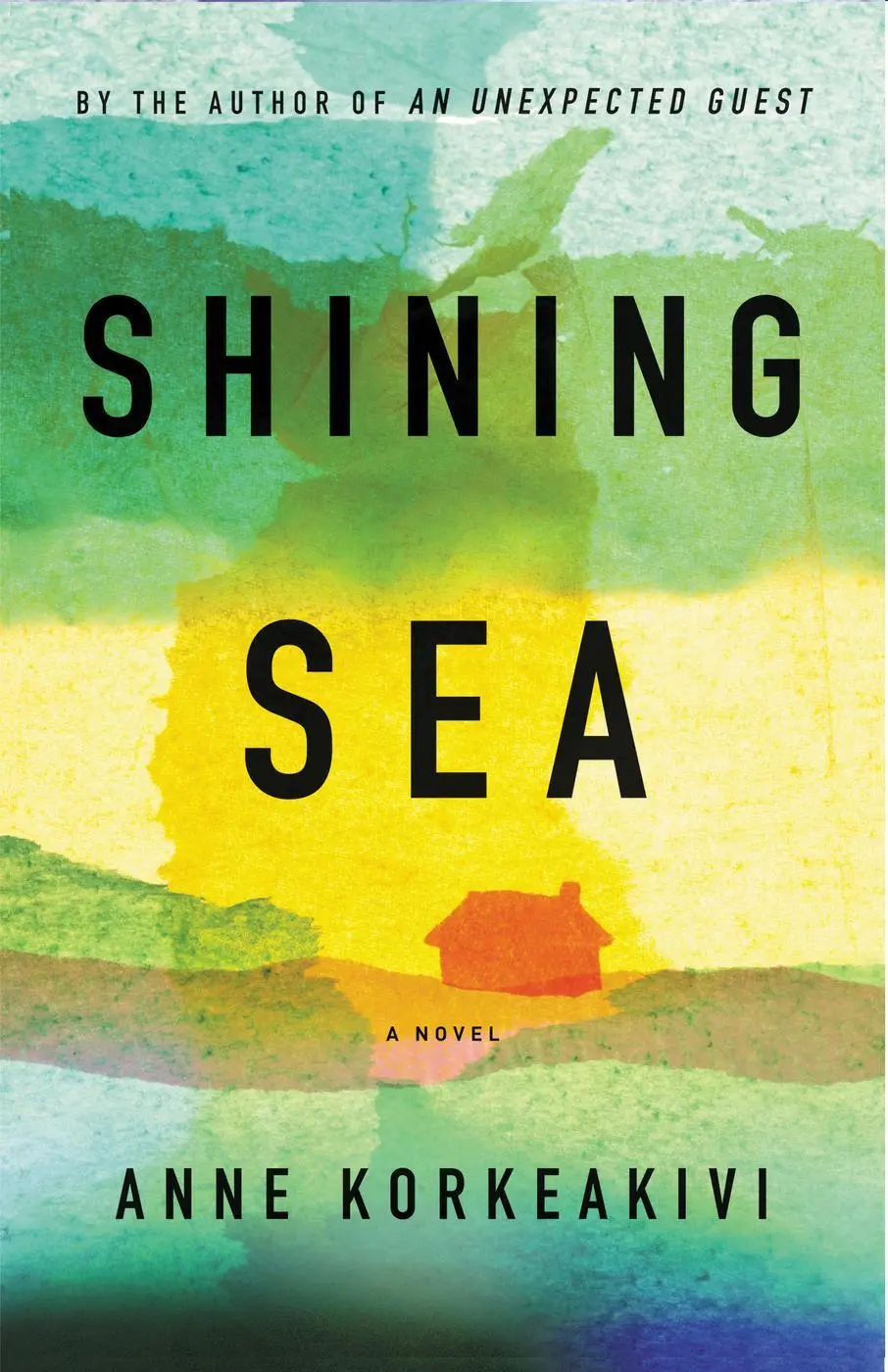
- Название:Shining Sea
- Автор:
- Издательство:Little, Brown and Company
- Жанр:
- Год:2016
- ISBN:нет данных
- Рейтинг книги:5 / 5. Голосов: 1
-
Избранное:Добавить в избранное
- Отзывы:
-
Ваша оценка:
Shining Sea: краткое содержание, описание и аннотация
Предлагаем к чтению аннотацию, описание, краткое содержание или предисловие (зависит от того, что написал сам автор книги «Shining Sea»). Если вы не нашли необходимую информацию о книге — напишите в комментариях, мы постараемся отыскать её.
Shining Sea — читать онлайн бесплатно полную книгу (весь текст) целиком
Ниже представлен текст книги, разбитый по страницам. Система сохранения места последней прочитанной страницы, позволяет с удобством читать онлайн бесплатно книгу «Shining Sea», без необходимости каждый раз заново искать на чём Вы остановились. Поставьте закладку, и сможете в любой момент перейти на страницу, на которой закончили чтение.
Интервал:
Закладка:
Jennifer has thick dark hair that hangs almost to her waist. Her flowery, thin-strapped sundress does nothing to minimize a massive bosom. There’s something different about her, something unlike girls back in Arizona. Not uncomely, just different. Kenny’s been in New York seven years now, studying in Columbia’s joint MD-PhD program.
“I am very happy to meet you, Jennifer,” she says. A group of students brushes past, jostling her new purse. Not only does it go with her trim peach-colored pantsuit, it also has a secure closure so no unwanted hands can slip into it. Nonetheless, she tucks it in under her arm.
“And I you, Mrs. McCloskey. You’re just how Kenny described you, except even prettier!”
She laughs. “Flattery will get you everywhere with me, dear. Kenny, shouldn’t you be in there already? With your classmates? Lord, look at all these people! What a mess. How am I ever going to get a seat?”
“Stay cool, Grandma. Jennifer will take care of you. Did you bring binoculars like I told you?”
“Don’t tell me to stay cool,” she says. “You may be a doctor now, but I am still your boss.”
Kenny laughs. He bends down and kisses her cheek.
She and Jennifer have to walk around the block and enter the campus via the gates on West 114th Street, pressing their way through the hordes of people.
“Did you sleep all right? Is your room okay?” Jennifer asks.
Her room is nice enough, with a view of the steep blue-green rooftops of the American Museum of Natural History and a cushion of leafy trees. But so small! No wonder New Yorkers are always busting their personalities out all over, living in such small spaces. “It’s dandy,” she says, skirting around two girls tearfully hugging, then skipping a little to keep from falling over a stroller. “Everything is dandy.”
Inside the 114th Street gates, the campus stretches as long as a football field. A podium has been set up on the stone steps in front of a beige-colored dome-topped library, and rows of folding chairs line the lawns and walks facing it. There seem to be thousands of them.
“You have one more year, Jennifer?” she says.
“Yes! One more year and, fingers crossed, I’ll be here wearing my own cap and gown.”
“In social work? You’ll be a doctor of social work?”
Jennifer nods. “A PhD from the School of Social Work.”
They’ve walked up to the middle of the sea of chairs now, toward the division between visitor seating and the seating for the day’s graduates. The world around them is a flurry of excitement. People taking seats, taking pictures, taking stock of where they are on this May morning in 1996 that means so much to them.
“Kenny told me you met working with some of the same patients. But social work — you’re not a medical doctor. I didn’t quite understand that.”
“We were both volunteers at the Gay Health Advocacy Project. I also want to focus on AIDS work. So no, not a medical doctor, but I do work with medical patients.” Jennifer pauses, then adds, “I’m particularly interested in working with the families of HIV-positive patients, though.”
Well. Kenny never told her that.
“That’s nice,” she says and turns away before Jennifer can say anything further. This is a great day, a happy day! Nothing can spoil it. There are two side-by-side chairs toward the very front of the visitor seating that seem to be empty. She points. “Come on.”
When Kenny called to say he’d be returning to Arizona for his residency, she almost jumped for joy. When he specified that the residency would be in infectious diseases down at U of A in Tucson, and that he was going to pursue clinical AIDS research, it was like the wind being knocked out of her. Tucson, not Phoenix? And after all these years of study, after earning both an MD and a PhD, he wasn’t going to be a medical doctor, like his grandfather, his great-grandfather, his uncle? Instead, HIV research? Of all medical ailments, did he have to choose that one? That’s nice, she said. There’s that nice outdoor museum in Tucson . She’s avoided the subject since.
“I don’t believe those are free,” Jennifer says. “You see those—”
She pushes her way forward again. New Yorkers aren’t the only ones who know how to hustle. “Oh, thank heavens!” she says to the middle-aged man seated beside the two empty seats. There’s a little sweater on one and a doll on the other. “I was just about giving up on catching so much as a glimpse of my grandson’s graduation.”
“I’m sorry,” he says. He gestures to a third empty chair on the other side of him. “My wife is just letting the girls run around a bit until the ceremony begins.”
“Lucky you!” she says, “Getting to sit back and relax while your wife does all the running after the children. Well!” She picks up the tiny sweater. “They must be little, too. Two years? Three years?”
“Olivia’s going to be three in July,” he says. “And—”
“Three in July! So she didn’t have a ticket.” She hands him the sweater and sits down, reaching next for the doll. “Don’t worry. They’ll be happier on your laps anyhow. They’ll see better and squirm less. I know. I raised five of them. Six, if you count my grandson.” She places the doll in his arms. “He’s the one graduating today.”
By the time the wife is back, she and the guy are regular old friends. Small and sharp-faced, with a sleek dark ponytail, the wife looks set to kick up a fuss, but the husband stops her: “Dina, this is Barbara. She’s flown all the way here from Arizona on her own—”
“Twice widowed,” she says, shaking her head.
“—to see her grandson graduate from the medical school.”
“His mother couldn’t come,” she explains. “No one else in the family could come. One of my sons is with the army, and another has a farm and couldn’t leave it. My third son — or, actually my second son — isn’t with us anymore.”
“I’m sorry,” the woman says, looking suspicious, as though something more is about to be asked from her than is possible to give.
“I miss him every day,” she says. Because what else is there to say? “And then my youngest daughter is over somewhere in Africa. Working. So she couldn’t come, either. My grandson has a few younger brothers, but he didn’t grow up with them — because he grew up with me, see. And his brothers couldn’t come all the way from California, anyhow. That’s where they live. Which means I’m on my own. But I wouldn’t have missed this day for anything.”
“Well, congratulations.” Looking overwhelmed by all this information, the woman takes one of the kids onto her lap and extracts a box of cinnamon Teddy Grahams from her bag. The other kid clambers around her knees until the man thinks to pick her up also.
“Second wife,” she whispers to Jennifer. “Kid from first wife graduating today.” Not all stepparents show the kind of love and interest Ronnie did for her children. It was a blessing, and she’s aware of it. In a way, Kenny was the kid they had together. Whatever people may now want to say about her and Ronnie, they can’t say he wasn’t a good stepfather and step-grandfather.
“Here’s the program, Mrs. McCloskey,” Jennifer says, handing her a thick piece of white paper.
The crowd is beginning to still. She settles in her seat. The ivy-covered stone buildings rise up around them, so handsome, so stately, so solid. Here she is at an Ivy League graduation — could her parents have ever imagined this? And Michael! A fourth Gannon doctor. How would it be if, instead of Jennifer, Michael were here beside her? White-haired, but still tall and blue-eyed and handsome? Because Michael would have never stopped being handsome — the first thing she thought the first time she lay eyes on him was he was the handsomest man she’d ever seen, even propped up in his hospital bed and so underweight, his skin yellow from the jaundice, spotted with red dry patches from the malnutrition.
Читать дальшеИнтервал:
Закладка:
Похожие книги на «Shining Sea»
Представляем Вашему вниманию похожие книги на «Shining Sea» списком для выбора. Мы отобрали схожую по названию и смыслу литературу в надежде предоставить читателям больше вариантов отыскать новые, интересные, ещё непрочитанные произведения.











Обсуждение, отзывы о книге «Shining Sea» и просто собственные мнения читателей. Оставьте ваши комментарии, напишите, что Вы думаете о произведении, его смысле или главных героях. Укажите что конкретно понравилось, а что нет, и почему Вы так считаете.