Anne Korkeakivi - Shining Sea
Здесь есть возможность читать онлайн «Anne Korkeakivi - Shining Sea» весь текст электронной книги совершенно бесплатно (целиком полную версию без сокращений). В некоторых случаях можно слушать аудио, скачать через торрент в формате fb2 и присутствует краткое содержание. Год выпуска: 2016, Издательство: Little, Brown and Company, Жанр: Современная проза, на английском языке. Описание произведения, (предисловие) а так же отзывы посетителей доступны на портале библиотеки ЛибКат.
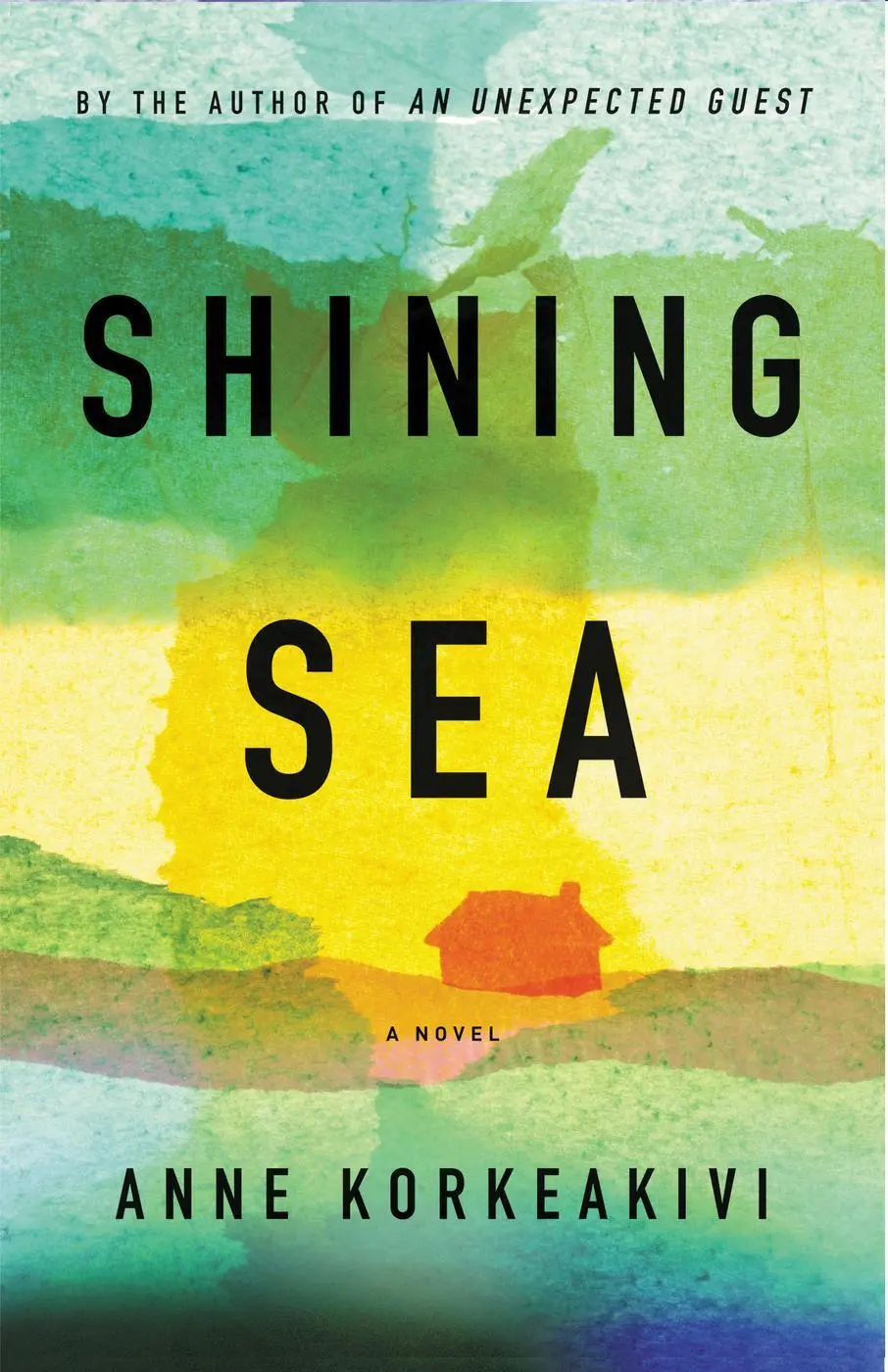
- Название:Shining Sea
- Автор:
- Издательство:Little, Brown and Company
- Жанр:
- Год:2016
- ISBN:нет данных
- Рейтинг книги:5 / 5. Голосов: 1
-
Избранное:Добавить в избранное
- Отзывы:
-
Ваша оценка:
Shining Sea: краткое содержание, описание и аннотация
Предлагаем к чтению аннотацию, описание, краткое содержание или предисловие (зависит от того, что написал сам автор книги «Shining Sea»). Если вы не нашли необходимую информацию о книге — напишите в комментариях, мы постараемся отыскать её.
Shining Sea — читать онлайн бесплатно полную книгу (весь текст) целиком
Ниже представлен текст книги, разбитый по страницам. Система сохранения места последней прочитанной страницы, позволяет с удобством читать онлайн бесплатно книгу «Shining Sea», без необходимости каждый раз заново искать на чём Вы остановились. Поставьте закладку, и сможете в любой момент перейти на страницу, на которой закончили чтение.
Интервал:
Закладка:
“Shall we order a bottle of Champagne?” Ronnie says.
Again, that silvery laugh. “Always,” says Georgina.
Patty Ann raises her glass. “We should go out after dinner to some places I know, Georgina. I’ll show you Los Angeles.”
“No,” Francis says swiftly.
Patty Ann takes a slug of her wine and sets it down heavily on the table. “What do you mean ‘no’? I wasn’t talking to you, Francis, anyhow. I was talking to your bride. My new sister .”
“No,” Francis says again, quietly. He puts his arm around Georgina. “Hello, Sean. You’ve become a man since I last saw you.”
“What do you mean, no? ” Patty Ann stands up and throws her napkin down on the table. “I’m going out for a smoke.”
“She’s excited to see you,” Glenn says to Francis, shrugging. “She’s excited to have you here in Los Angeles. Family is everything to Patty Ann.”
“Waiter?” Ronnie says, lifting a hand, looking around to find one.
“Never mind us,” she tells Georgina. “We’re all mixed up because of the earthquake this morning. I’m sorry you had to experience that.”
Georgina claps her slim pale hands together. Yes, there’s the wedding band. A single band, but studded with diamonds. Where would Francis get the money for something like that? He couldn’t have gotten it from the record company; he’s signing a contract this visit. In Ireland, he said he was supporting himself by working in construction. “The earthquake? Oh, that was so fabulous!”
“Georgina, some people died,” Francis says. “There was a lot of damage.”
“Oh, darling. Of course, it’s awful people were hurt. But it’s good to be reminded about the power of the earth, isn’t it?”
“That’s what sunrises and sunsets are for.”
“No, darling, that’s the power of the sun .”
“Okay. Then gravity.”
“Speaking of which, ” Georgina says, frowning. “ Someone is acting a little heavy.”
“Speaking of which,” Glenn says, setting his glass of Coca-Cola down. “The David fell over again.”
She and Ronnie look at him, grateful. “Who’s that?” Ronnie asks.
“The David in Forest Lawn cemetery. The replica of Michelangelo’s statue. It fell over during the 1971 earthquake also, smashed to pieces. Or maybe that was in a different Forest Lawn cemetery. Anyhow, this one fell on grass, which cushioned the fall, so just a few pieces. It’s made from Carrara marble, brought from Italy.”
“Glenn is training to be a stonemason,” she tells Francis and Georgina.
“I’m a sculptor,” Glenn says, smiling.
“And he’s a sculptor,” she says.
“This quake wasn’t like other ones, you know? It felt like being on a boat in a terrible storm,” Glenn says. “I used to go out fishing with my abuelo in Tecuala? It felt like that. Not a rocking back and forth, like most earthquakes. More like a bouncing up and down.”
Patty Ann apparently hasn’t told Glenn much about Francis, or else Glenn has forgotten. One night during her and Patty Ann’s stay in Dublin, a bunch of locals in a pub started singing a sea ballad, and Francis said something about writing a few of his own, about an experience he had had on the sea between Ireland and Scotland. There was something in his face when he said it, something that stuck with her. After she got back to Scottsdale, she searched through the news microfilm at the central library and found the whole terrible story.
“Oh,” she says quickly, “let’s—”
“Yes,” Francis says evenly. “It felt like that.”
Ronnie lays his hand on hers under the table. “Did you know,” he says, “some biblical scholars argue that David wasn’t really the one who slew Goliath? I read all about it in National Geographic . Or maybe it was USA Today .”
“David now?” Patty Ann says, plopping down in her seat again, bringing the scent of cigarette smoke to the table. “Can’t we have any heroes?”
“That doesn’t take any hero away. It just means we called one by the wrong name. And anyhow, David was still a hero. You know what for first?” Ronnie smiles. He’s looking better since their walk this afternoon. “As a musician.”
“I thought he was a shepherd. Remember catechism class?” Patty Ann says, turning to Francis. “What was that awful woman’s name? I’m sure you had her also. Everyone had her.”
Francis makes a face. “I remember.”
“Mrs. Dawson,” Patty Ann says. “Her name was Mrs. Dawson.”
“David could soothe King Saul with his lyre,” Ronnie says. “That’s how he got his start. It was an important talent.”
“Well, here’s to all of us,” she says, lifting her glass, trying not to watch Patty Ann refilling hers again. “Musicians and not. Here’s to being together. My cup runneth over.”
Everyone looks at her. Georgina starts to laugh, that tinkling laugh, then Patty Ann starts to laugh, and then they all are laughing.
“Good grief,” she says. “Let’s order.”
After their food comes, things improve. It turns out Georgina is funny and, despite the accent, not nearly as snobby as first impressions suggested. And it’s nice to see how comfortable Francis is with her. It’s hard to remember Francis ever seeming so at ease with anyone outside the family or even in the family, other than maybe Molly. Anyone, of course, other than Eugene.
And then it hits her. There’s something about Georgina that reminds her of Eugene. Not just the way Georgina doesn’t seem in thrall to Francis’s beauty. Georgina has the same odd combination of optimism and cynicism as that funny, wiry kid always had.
She won’t say so, though. Eugene might belong on the list of topics that can’t be mentioned, and things are going so well — she doesn’t want to say or do anything that might scare Francis away again. After dinner, he even agrees to come over to Patty Ann’s house to meet Lucas, who, Patty Ann says, should be home now.
“Plus you can tell Mom to stop worrying that the house might fall down around my ears,” Patty Ann says to Francis once they’re all outside the restaurant. “You worked in construction, right? You can tell us whether it’s solid.”
Francis laughs. “Am I getting in between something?”
Patty Ann makes an innocent face. “Not at all, not at all…”
“You kids,” she says, and for a second it almost feels like years ago.
“Want to come with me, Georgina?” Ronnie jangles the keys to his car. “Let Francis go with his mother?”
Georgina slips her arm into his. “Delighted.”
Francis’s rental car is parked a block away, a yellow convertible with the top rolled down. “She’s nice. Your Georgina,” she says, sliding into the passenger seat.
Francis fits the key in the ignition. “Do you want me to put the top up? Georgina saw it in the rental lot. She insisted.”
“No. I’m all right.”
They pull onto the street. The evening air feels warm and thick. It’s odd sitting next to her youngest son while he drives — last time they sat like this he was still a kid, probably not even twenty-one. Now he’s a man. His cheekbones are sharper now, his skin no longer so fine. His blond hair has darkened. He still looks like his father, but mostly he looks like himself.
“Did you have your meeting after all? About the record?”
“We did.”
She cups her hand over her hair against the wind, looks out over the streets of Santa Monica. “You always loved that guitar of yours. I remember when you went out and bought it with Eugene.” When he doesn’t say anything, she adds. “Well, I think it’s great. Good for you, Francis.”
Читать дальшеИнтервал:
Закладка:
Похожие книги на «Shining Sea»
Представляем Вашему вниманию похожие книги на «Shining Sea» списком для выбора. Мы отобрали схожую по названию и смыслу литературу в надежде предоставить читателям больше вариантов отыскать новые, интересные, ещё непрочитанные произведения.









Обсуждение, отзывы о книге «Shining Sea» и просто собственные мнения читателей. Оставьте ваши комментарии, напишите, что Вы думаете о произведении, его смысле или главных героях. Укажите что конкретно понравилось, а что нет, и почему Вы так считаете.