Anne Korkeakivi - Shining Sea
Здесь есть возможность читать онлайн «Anne Korkeakivi - Shining Sea» весь текст электронной книги совершенно бесплатно (целиком полную версию без сокращений). В некоторых случаях можно слушать аудио, скачать через торрент в формате fb2 и присутствует краткое содержание. Год выпуска: 2016, Издательство: Little, Brown and Company, Жанр: Современная проза, на английском языке. Описание произведения, (предисловие) а так же отзывы посетителей доступны на портале библиотеки ЛибКат.
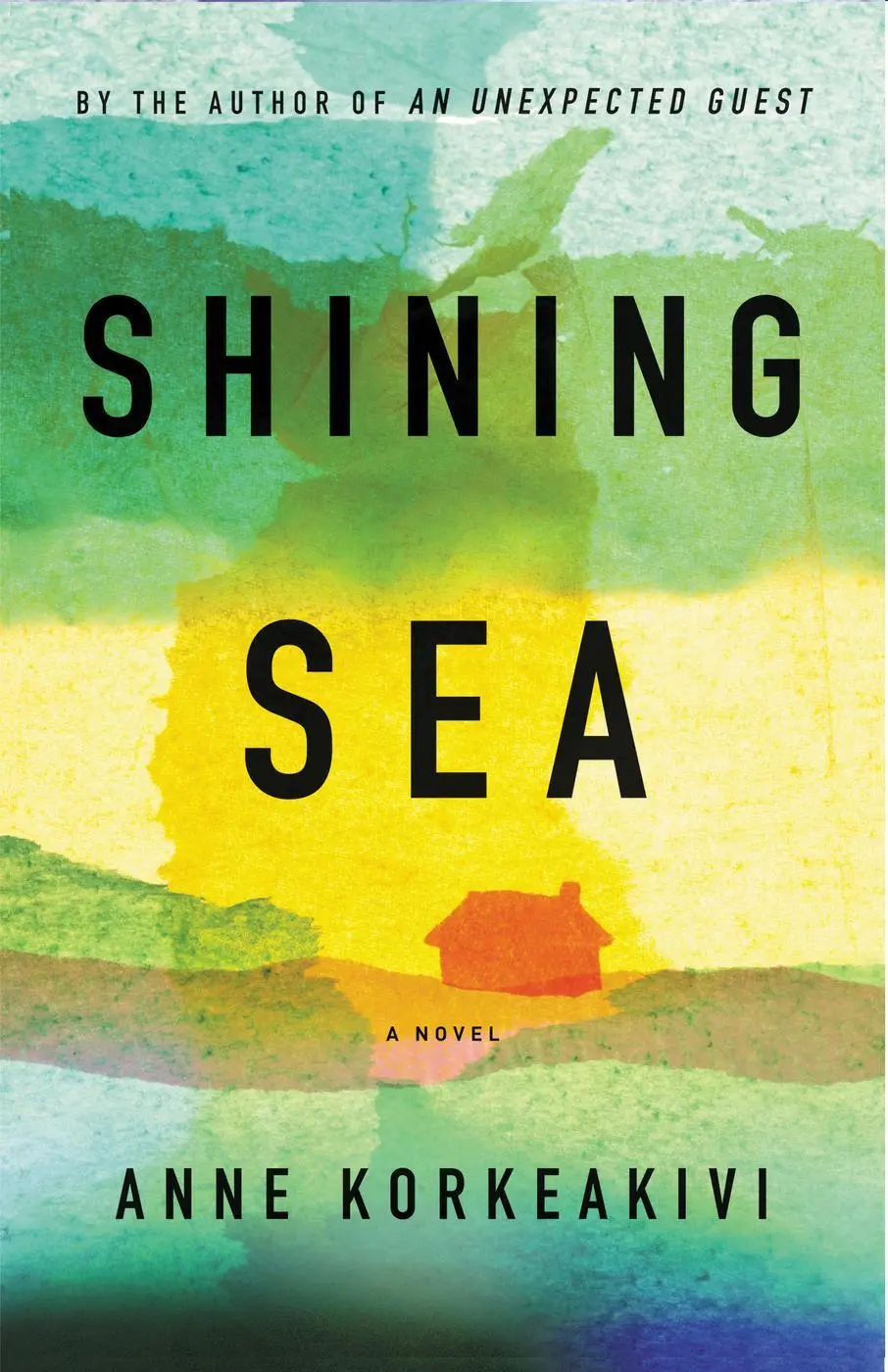
- Название:Shining Sea
- Автор:
- Издательство:Little, Brown and Company
- Жанр:
- Год:2016
- ISBN:нет данных
- Рейтинг книги:5 / 5. Голосов: 1
-
Избранное:Добавить в избранное
- Отзывы:
-
Ваша оценка:
Shining Sea: краткое содержание, описание и аннотация
Предлагаем к чтению аннотацию, описание, краткое содержание или предисловие (зависит от того, что написал сам автор книги «Shining Sea»). Если вы не нашли необходимую информацию о книге — напишите в комментариях, мы постараемся отыскать её.
Shining Sea — читать онлайн бесплатно полную книгу (весь текст) целиком
Ниже представлен текст книги, разбитый по страницам. Система сохранения места последней прочитанной страницы, позволяет с удобством читать онлайн бесплатно книгу «Shining Sea», без необходимости каждый раз заново искать на чём Вы остановились. Поставьте закладку, и сможете в любой момент перейти на страницу, на которой закончили чтение.
Интервал:
Закладка:
Book Four 1987–1996
You will not fear the terror of night,
nor the arrow that flies by day,
nor the pestilence that stalks in the darkness,
nor the plague that destroys at midday.
— Psalm 91:5–6Los Angeles / September 30–October 1, 1987 Barbara
THEY REACH THE OUTSKIRTS of Los Angeles after midnight, the sky darkened, the city a hum of disembodied lights ahead of them. Lit highway signs, a garish green and white, appear with increasing frequency.
Soon the signs are coming every few yards.
ALAMEDA ST. CENTRAL AVE.
Her heart pumps a little harder.
In the ghoulish light of the dashboard, the silhouette of Ronnie’s face looks sharper than usual, his hair even whiter. “Hanging in there?” she asks.
“I’m okay.” He snaps the door locks down and adds gently, “But next time we really should fly.”
It was she who insisted they drive. But it was Ronnie who said they had to wait until 4:00 p.m. to leave Scottsdale, not so he could get a full day’s work in but because the desert can still be broiling hot in autumn.
Somehow the drive across the desert seems to have gotten longer.
“I offered to drive after we stopped for dinner.”
“I’m okay,” Ronnie repeats. “Anyhow, we’re almost there now.”
“Yes,” she says. “We’re almost there.”
When they get to Santa Monica, they’ll tumble into bed. She’ll close her eyes, and next thing it will be tomorrow.
NORMANDIE AVE. WESTERN AVE.
“I feel silly,” she says. “I feel like a kid the day before her birthday.”
Ronnie laughs. He reaches over and pats her shoulder.
ROBERTSON BLVD.
“I called the hotel this morning,” she says. “I told them we wouldn’t be checking in until very late.”
Of course, she told him this already: before they left, when they stopped for dinner. It’s just something to say.
“It’s supposed to be a very nice restaurant, where we’re meeting them for lunch tomorrow. It’s hard even to get a reservation there.”
She’s probably said that twice already also.
The cars on the highway have thinned out. Nearly all the trucks are gone. The brightest lights are gone, too. They are nearing Santa Monica. She rolls down her window. Warm, moist air whooshes in.
“Smelling the ocean?” Ronnie says.
“More like asphalt and car exhaust.” She rolls her window up. “I swear, Los Angeles just gets more and more polluted. When we first moved here, it was different. After San Francisco, it felt like one long beach vacation.”
“It was different when I first moved here, too,” Ronnie says.
“ We were different,” she says.
CALIFORNIA 1. LINCOLN BLVD.
Ronnie puts his blinker on. “We sure were,” he says. “What’s the number of the hotel again? It’s at Ocean Avenue and Wilshire? Or California?”
* * *
She’s startled awake. A strange room, a strange bed. Morning — there’s light behind the drawn curtains. The hotel in Santa Monica.
That’s it: the sound of sirens is rolling in toward the hotel, scores of successive car alarms. And then the deep rumbling, soon more like a roar.
“Ronnie!” she says, throwing back the top sheet on their hotel bed, grabbing her bathrobe. “Get up! It’s an earthquake!”
Ronnie turns his sleepy face toward her, and the pallor under his tanned skin stops her for a half second. But only a half second. The floor has begun to move. “Come on,” she says, grabbing one of his hands and tugging. “Come on!”
He stumbles out of bed after her, fumbling with the front of his pajama shirt, almost falling as a land wave knocks him against a chair. The glass of water on the night table by his side of the bed topples and crashes onto the carpeting. She struggles with the door; he slides the lock and pushes it open. They huddle under the doorjamb while the earth shudders beneath their feet.
Ronnie draws her to him. “We should get out of the building.”
“Too far,” she says, glancing down the hallway toward the fire stairs.
Along the corridor, other hotel guests, some dressed and some also in their nightclothes, crowd together in their own doorways. Many, by the looks on their faces, have never been in an earthquake before. Somewhere someone is screaming. Others grit their teeth and grab on to their companions or whatever is closest to them, like the lap bar on a roller-coaster ride.
A woman one room down throws up her hands in front of her face, says something in a foreign language, and starts to weep.
“Shh, shh,” she says. “We’ll be fine. This is a good building.”
And then it stops. The noise of the alarms is still there, but the earth is silent.
“What do we do now?” one of the hotel guests asks, running a hand through uncombed hair. “Is it over?”
The woman one door down has dropped to her knees. Whether to pray or be sick is unclear.
“You’re supposed to go outside,” Ronnie says. “In case there’s structural damage. Or a gas main has broken. Just a precaution.”
A guest takes the arm of the kneeling woman, helps her to her feet. The floor’s occupants troop toward the fire stairs, a parade of jittery half-clad strangers. “This is why I brought my bathrobe,” she whispers to Ronnie, attempting a smile. This isn’t the first quake she’s been through. No one lives forty-three years in California without getting bounced around some. Still, she’s shaken. Maybe because she’s grown out of the habit, living in Arizona for so long now.
Or maybe because her heart has peeled back its skin already in making this trip to LA. Just a few hours now, and she’ll see Francis and meet his girlfriend.
“Do you want to slip some clothes on quickly before we go downstairs?”
“No. I’m okay.”
“I’m just going to grab my pants.” Ronnie pops back into the room, shutting the door behind him. In a few seconds he emerges still in his pajama top but wearing slacks. “Sorry about that, sweetheart. Let’s go down.”
They join the hotel guests filing down the stairs and through the lobby. A few paintings are askew; some lamps seem to have fallen. In general, the hotel looks pretty good. On the lawn out front, the Pacific Ocean stretching wide before them, a hotel employee is wandering among the guests, assuring them that everything is fine and that they will be able to go back to their rooms momentarily. Another is handing out blankets. Although it’s already a hot and muggy day, a number of guests accept, swaddling themselves for comfort.
“That was a big one,” Ronnie says, rubbing his lower back.
“Is your back hurting again?”
Ronnie shrugs. “The driving. I’m sure it’ll go away.”
There always seems to be some reason. Really, he should get that checked out. But she told him so already weeks ago.
“That place where Patty Ann is living now,” she says. “It looks like the big bad wolf would have an easy time blowing it down.”
Ronnie shakes his head. “It’s made of wood. It’s brick you have to look out for during an earthquake. Or adobe. Wood is flexible.”
With the morning sun on his face, Ronnie looks unusually tired, still handsome but older than his sixty-four years. When did that happen? He’s made plans to retire on his next birthday, to hand the day-to-day management of the company over to his vice president. Not a moment too soon, in her opinion. He’s become thinner also. His collarbones jut out under his twisted pajama top.
She straightens his collar. “I hope there hasn’t been too much damage anywhere.”
“It was a big one,” he says again. He sniffs the air. “Smog but no gas. I’m sure we can go back in soon. I’ll get us cups of coffee.” The hotel has set up a little station on a folding table.
Читать дальшеИнтервал:
Закладка:
Похожие книги на «Shining Sea»
Представляем Вашему вниманию похожие книги на «Shining Sea» списком для выбора. Мы отобрали схожую по названию и смыслу литературу в надежде предоставить читателям больше вариантов отыскать новые, интересные, ещё непрочитанные произведения.










Обсуждение, отзывы о книге «Shining Sea» и просто собственные мнения читателей. Оставьте ваши комментарии, напишите, что Вы думаете о произведении, его смысле или главных героях. Укажите что конкретно понравилось, а что нет, и почему Вы так считаете.