Anne Korkeakivi - Shining Sea
Здесь есть возможность читать онлайн «Anne Korkeakivi - Shining Sea» весь текст электронной книги совершенно бесплатно (целиком полную версию без сокращений). В некоторых случаях можно слушать аудио, скачать через торрент в формате fb2 и присутствует краткое содержание. Год выпуска: 2016, Издательство: Little, Brown and Company, Жанр: Современная проза, на английском языке. Описание произведения, (предисловие) а так же отзывы посетителей доступны на портале библиотеки ЛибКат.
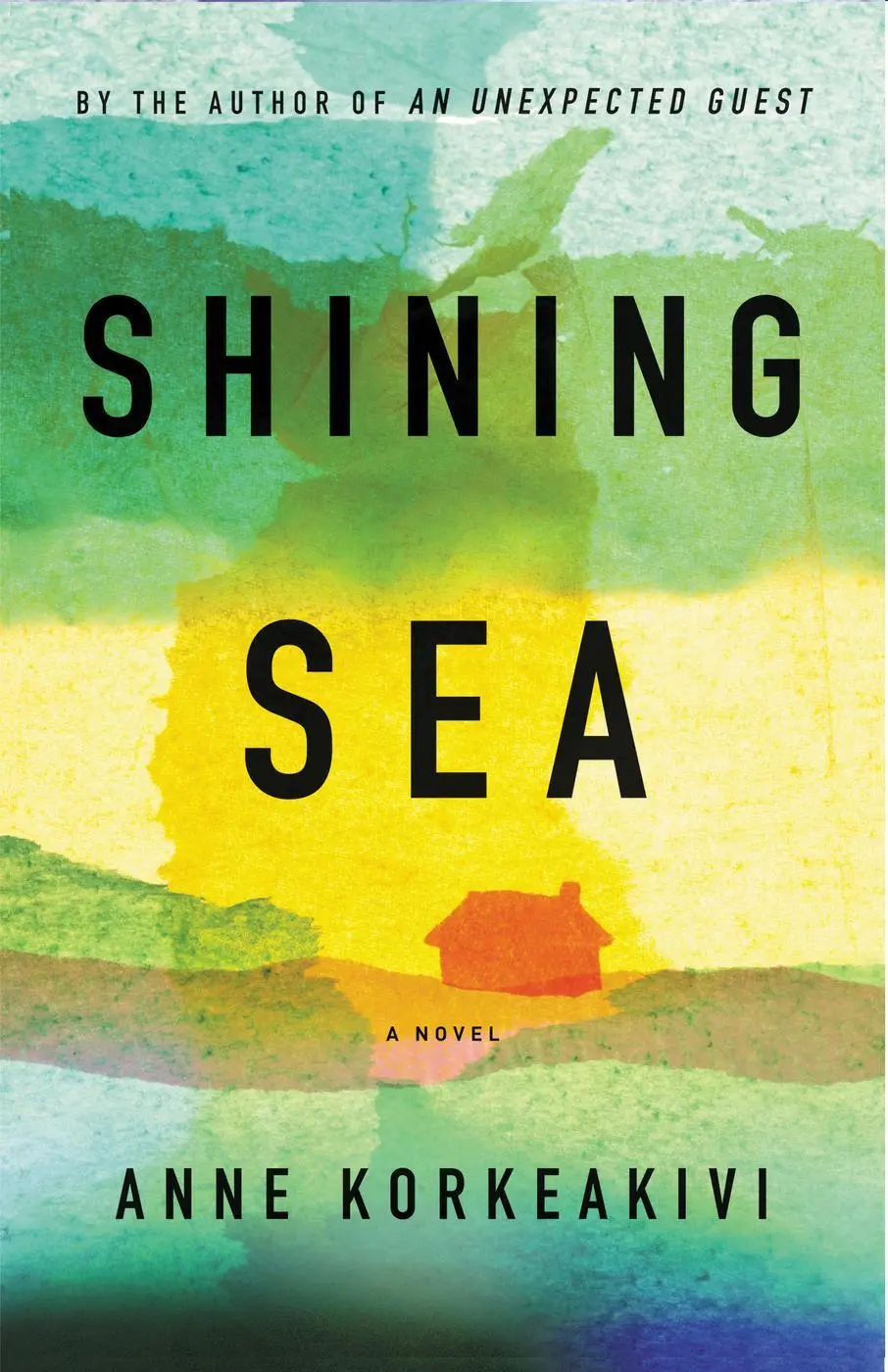
- Название:Shining Sea
- Автор:
- Издательство:Little, Brown and Company
- Жанр:
- Год:2016
- ISBN:нет данных
- Рейтинг книги:5 / 5. Голосов: 1
-
Избранное:Добавить в избранное
- Отзывы:
-
Ваша оценка:
Shining Sea: краткое содержание, описание и аннотация
Предлагаем к чтению аннотацию, описание, краткое содержание или предисловие (зависит от того, что написал сам автор книги «Shining Sea»). Если вы не нашли необходимую информацию о книге — напишите в комментариях, мы постараемся отыскать её.
Shining Sea — читать онлайн бесплатно полную книгу (весь текст) целиком
Ниже представлен текст книги, разбитый по страницам. Система сохранения места последней прочитанной страницы, позволяет с удобством читать онлайн бесплатно книгу «Shining Sea», без необходимости каждый раз заново искать на чём Вы остановились. Поставьте закладку, и сможете в любой момент перейти на страницу, на которой закончили чтение.
Интервал:
Закладка:
“John McCurdy will ferry you over to Ballycastle soon as tide’s in,” the captain says over coffee, eggs, and brown bread with black currant preserves.
He shakes his head. “We’re going to do it in the currach.”
The captain shakes his head also. “No.”
“Yes.”
If there’s one thing he knows, it is that nothing will keep him from completing Rufus’s journey.
Katie and Ghislaine are already down by the currach. All that is left inside are the benches, the sail, and his guitar, still lashed in its plastic barrel behind Katie’s bench. The other barrels and the oars are gone. Still, there’s nothing to make the currach unseaworthy. A few dents is all.
They’re in Northern Ireland now. Some suitable oars should be easy enough to find.
“It’s only six miles from here to the mainland,” he says. “Remember? Rufus said so. I checked the captain’s charts this morning. If we hug the coast of Rathlin until we get to the end of its southernmost peninsula, we’ll avoid most of the Slough-na-more tidal race, and what we do catch will shoot us right into Ballycastle.”
“You sound like Rufus,” Ghislaine says, looking away.
“He was an excellent teacher.”
“He was.”
They have moved into the past tense now. When they arrive in Ballycastle, there will be forms to fill out, police reports to complete. Rufus’s family, or some emissary from it, will probably be waiting to speak with them.
“How about Eamon?” Katie says.
He thinks. “You’re going to row, Katie?”
“Of course. What do you think?”
“Well, he can sit in your seat, in the back of the boat.”
No one is going to sit in Rufus’s seat.
They find Eamon awake and dressed.
“How fucked up are you?” he asks Eamon.
“Pretty fecked,” Eamon says. “They gave me some painkillers…but I won’t fall out the boat.”
“Okay, then.”
They set out under a perfect sky, the sun burning through the thick, long, low-lying clouds ringing its edges. The sea is a royal blue, as still as he has seen it since arriving in this part of the world. Harbor seals with mottled, prehistoric faces flop in the sun; eiders laze on the stone walls edging the marina. Auks and gannets and gulls fly overhead, filling the air with a flurry of white and black and shrill cries. The light wind ruffles his hair. They glide past a long beach, then a stretch of high cliffs, the sea crashing against their base, the water becoming a turbulent green-and-white fluff.
“What happened yesterday?” Katie says, looking around at the calm.
“I think a wave,” he says. “Or maybe a whale under us.”
“I think we hit something,” Ghislaine says. “A rock sticking up.”
“Then why wasn’t the boat shattered?” Katie says.
“I don’t know. Maybe the bitumen,” Ghislaine says.
Eamon leans to look at him over Katie’s and Ghislaine’s shoulders. “Ye thought he was using the journey to sell the bitumen. But he was using the bitumen to sell the journey.”
He dips his oars into the sea, watching the sun turn the drops of water into diamonds. So beautiful, the sea. How different it looks to him from the way it did a week ago. How different everything looks to him. “I know that.”
“I think Francis is right. It was a wave,” Katie says. “A big, huge wave.”
“We had just hit the tidal race,” Eamon says. “It can do strange things to ye. Toss ye up, play with ye like a beach ball. And at the same time the storm hit. It was a million-in-one chance. Of bad luck.”
Everyone is quiet, probably — as he is — remembering that moment when the currach suddenly evaporated from under them, replaced by walls of moving sea, the confusion, the shouting.
“I don’t even know whether the boat rolled three hundred and sixty degrees or just flew up in the air,” he says. “But something knocked every one of us out of it.”
“I went flying,” Katie says. “It was like being a bird.”
“You weren’t facing the same way as we were, with your feet against the foot braces. You weren’t even sitting when it happened, were you?”
Katie shakes her head. “I went far.”
They lapse back into silence, rowing.
After a while, Ghislaine asks, “Are you okay, Katie? Not getting tired?”
Katie doesn’t answer this. Instead she says, “I think he wouldn’t have felt anything. If the force of the boat didn’t get him instantly, he would have drowned before he woke up.”
Ghislaine stops rowing. “How can you know that? How could he have just disappeared, anyhow? He couldn’t have sunk. He had his life jacket.”
“Katie’s right,” he says.
“Ye, she is,” Eamon says.
They reach the end of the Rathlin peninsula. The water, still calm on its surface, tugs slightly on the boat, propelling them forward.
“You’re a prostitute, aren’t you?” Katie says to him. “That’s what you do. We all saw how it was with you on the island. I knew how you paid for your coffee.”
The word is so ugly, so harsh, a slashing. He thinks about her mother, or the woman who he thinks is her mother, unless it was the other. The hearty laughter, the quiet mornings. He thinks about Georgina, too, and his panic when she tried to elevate their time together into something more than partying and pulling down his zipper. When he had to face whether he had it in him to stay and help someone he could love. How he ran, the farthest distance he could find. How he ran to Iona.
But that was before. I am someone else now. I will be someone else now.
“Yes,” he says softly. “I suppose you could call me that.”
They enter the sound between Rathlin and the northern tip of the Irish mainland. In the distance, large tankers plow the sea between Northern Ireland and Scotland. The sun shines off their railings and sterns and smokestacks. A converted fishing boat trails not far behind them; this must be the so-called ferry they’d declined passage on. His father’s canteen must be floating somewhere out in the ocean, or maybe sunk to the bottom. It feels oddly freeing to be rid of it. Once he needed it. He won’t need it anymore.
“Did Rufus know?” he says.
“Yes,” Ghislaine says. “Rufus knew everything.”
A school of porpoises swims up beside them. They jump through the air, creating graceful half circles. How easy they look in that deep, unknowable water.
“I hope he knew everything,” Ghislaine adds.
“He did,” he says.
Tears fall freely down her cheeks. “Do you think he would have loved me?”
“He already loved you.”
Katie nods, shaking her brilliant curls. “Of course, he did. I’d already decided you’d be the godparents of my kid one day.”
Ghislaine gives a short laugh, more like a hiccup. She stops rowing for a second and wipes her face. “I was just cozying up to you, Francis, so you wouldn’t leave the expedition. I knew it would keep you.”
He pulls on his oars, guiding the boat through the water. “Okay.”
She picks up her oars again.
The porpoises gather, then divide, then regather, disappearing under the water only to pop up again. Eamon uses his good hand to touch the plastic mound tied to the bottom of the boat behind him. “Yer guitar all right?”
“I haven’t looked,” he says. “But Rufus said the plastic would protect it, even if it were dunked directly into the water.”
“It was dunked.”
“It sure was. But it’ll be okay.”
“Are you going to use it to write a song for him?”
“Yes,” he says. The shore of Northern Ireland is directly ahead of them now. Soon they’ll pull the currach up onto land for one last time. “I’m going to write a song for all of us.”
Читать дальшеИнтервал:
Закладка:
Похожие книги на «Shining Sea»
Представляем Вашему вниманию похожие книги на «Shining Sea» списком для выбора. Мы отобрали схожую по названию и смыслу литературу в надежде предоставить читателям больше вариантов отыскать новые, интересные, ещё непрочитанные произведения.







Обсуждение, отзывы о книге «Shining Sea» и просто собственные мнения читателей. Оставьте ваши комментарии, напишите, что Вы думаете о произведении, его смысле или главных героях. Укажите что конкретно понравилось, а что нет, и почему Вы так считаете.