Edward Jones - All Aunt Hagar's Children
Здесь есть возможность читать онлайн «Edward Jones - All Aunt Hagar's Children» весь текст электронной книги совершенно бесплатно (целиком полную версию без сокращений). В некоторых случаях можно слушать аудио, скачать через торрент в формате fb2 и присутствует краткое содержание. Год выпуска: 2006, Издательство: Amistad, Жанр: Современная проза, на английском языке. Описание произведения, (предисловие) а так же отзывы посетителей доступны на портале библиотеки ЛибКат.
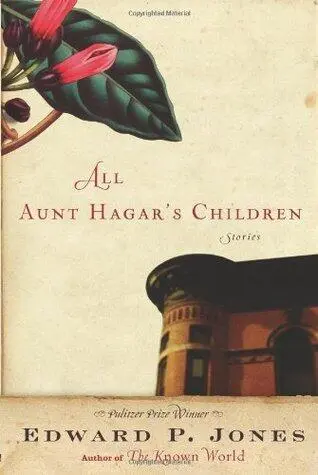
- Название:All Aunt Hagar's Children
- Автор:
- Издательство:Amistad
- Жанр:
- Год:2006
- ISBN:нет данных
- Рейтинг книги:4 / 5. Голосов: 1
-
Избранное:Добавить в избранное
- Отзывы:
-
Ваша оценка:
All Aunt Hagar's Children: краткое содержание, описание и аннотация
Предлагаем к чтению аннотацию, описание, краткое содержание или предисловие (зависит от того, что написал сам автор книги «All Aunt Hagar's Children»). Если вы не нашли необходимую информацию о книге — напишите в комментариях, мы постараемся отыскать её.
, the bestselling and Pulitzer Prize-winning author of
shows that his grasp of the human condition is firmer than ever.
Returning to the city that inspired his first prizewinning book,
, Jones has filled this new collection with people who call Washington, D.C., home. Yet it is not the city's power brokers that most concern him but rather its ordinary citizens.
turns an unflinching eye to the men, women, and children caught between the old ways of the South and the temptations that await them further north, people who in Jones's masterful hands, emerge as fully human and morally complex, whether they are country folk used to getting up with the chickens or people with centuries of education behind them.
In the title story, in which Jones employs the first-person rhythms of a classic detective story, a Korean War veteran investigates the death of a family friend whose sorry destiny seems inextricable from his mother's own violent Southern childhood. In "In the Blink of God's Eye" and "Tapestry" newly married couples leave behind the familiarity of rural life to pursue lives of urban promise only to be challenged and disappointed.
With the legacy of slavery just a stone's throw away and the future uncertain, Jones's cornucopia of characters will haunt readers for years to come.
All Aunt Hagar's Children — читать онлайн бесплатно полную книгу (весь текст) целиком
Ниже представлен текст книги, разбитый по страницам. Система сохранения места последней прочитанной страницы, позволяет с удобством читать онлайн бесплатно книгу «All Aunt Hagar's Children», без необходимости каждый раз заново искать на чём Вы остановились. Поставьте закладку, и сможете в любой момент перейти на страницу, на которой закончили чтение.
Интервал:
Закладка:
“Yeah?” Her father stopped two feet beyond the kitchen.
“Want me to fix you somethin to eat?”
“No, baby,” he said without turning around, “I done had all my meals for today.”
The rains did not let up and the train to take the cousin and George to Jackson could not make its way to Picayune. Anne saw him every day that week, the two sitting on the porch in the late afternoon and evening. By Tuesday he knew his way on his own to her place, and by Thursday, unlike the other days, a tad of her was looking forward to seeing him in the borrowed field work clothes, coming along the road from the left full of purpose and then stepping over the dog and his two duck companions lying in the mud at the entrance to her place. She didn’t stand on the porch with her arms around the post, the way she had months and months ago, before Lucas Turner told her she was not as beautiful as she thought she was. More than anything, being with George gave her something to do with her afternoon and evening time. “The heart can be cruel, the heart can be wicked, the heart can give joy,” Anne was to tell her grandson and the recording machine years later, “but it is always an instrument we can never understand.” Neddy had already wandered over to Clarice’s way. Lucas Turner’s mother had asked him that Wednesday why he wasn’t putting down time with Anne, and he told her what his heart had told him that morning when he woke at four: “We ain’t twirlin like that anymore.”
The rains eased to drizzle on Friday and George woke on Saturday morning in the guest bed several miles from Anne and knew the train was coming. All that metal, all that motion, the power of a million mules just to sweep him up and take him away. Even before he got out of bed he wondered if he would be happy as a farmer, for he had supped with her family the evening before and had felt her father’s eyes peering into him the whole time. The eyes had not been charitable to a man who might take Anne away. So maybe he could live on with her as a farmer, for he knew now, less than a week of being in Mississippi, that he was capable of loving her that much. His grandfather had been a farmer, so perhaps farming was in his blood, a dormant something waiting for the soil to shake and awaken it. Could the blood that allowed farming in North Carolina permit him to make a life in Mississippi, with a woman who at that very moment did not even care if he came or went? But as he trembled to put on the work clothes and then looked out the window at the land that seemed to breathe as it went on forever, he knew how homesick he would be for Washington, where there was someone he knew around every corner. He looked down at his friend, Anne’s sleeping cousin, and George knew that that homesickness might have the power to kill him in Mississippi.
The train came for them that Wednesday and he told Anne on Tuesday that he would be back to see her as soon as he could. “I will write,” he added. Already, in that short time, she was not the young woman who had been talking to herself while standing before the mirror, but she was also not a woman who felt very much for him. “I won’t expect any letter from you till I got it in my hands,” she said. That hurt him somewhat, because it told him that she was capable of life without him, and clinging women were all he had ever known. He wanted her standing on the porch each day, waiting for the letter, dying just a little bit when it didn’t arrive. “I will write, and you can count on it,” he said. She said, “I’ll write you back. Soon as I get your letter in my hands. But not before.” They were again on the porch, and as if to emphasize what she had said, she raised her hands in front of her and looked at them. He reached to take them but she only took one of his and shook it, like two strangers meeting on a downtown street as the world flowed on about them. When sufficient time had passed, she withdrew her hand. They were alone on the porch. They had, of course, never kissed and they would not kiss for the first time until three weeks before they married more than a year later. In 1933. There were to be five more visits, including the month he took time off from the railroad and helped in her father’s fields. The railroad people telegraphed him two days before that month was up: “Remember: Our calendar has but 30 days in Sept.”
The wedding was held in late October, when George and the cousin managed to get one week off. It was a large ceremony, held just to the right of the church, Everlasting Light. After the harvest, after the homecoming. Neddy and Clarice, doomed to marry, stood together on the steps that led up into the side of the church. Lucas was in Jackson that day. A young woman, Mona, sat in the crowd witnessing the wedding and thinking of Lucas, even as he, sitting in a lawyer’s office three blocks from the Capitol with his father, was thinking of her. “Our babies may not be able to hear or speak,” Lucas had told her earlier that month. “You got more to worry about,” Mona said in reply. “We all crazy in my family. Cut your throat cause you burnt the biscuits crazy. You any good with the cookin, Lucas?” The first thing Anne and George did as newlyweds was go around to the other side of the church and stand for a few seconds at the graves of her people, ending at last at the place where her grandmother Clemie was sleeping. The tapestry teacher. Each night of the next few days, as they waited for the first train on their long journey to Washington, George slept downstairs, and she slept upstairs in the bed she had been in since she was seven years old. The rings on Anne’s and George’s fingers did not matter to her father, and they did not matter to her mother. When she returned a year and a half later with her first child in her arms, only then did her parents make a new place, one bed, for her and the husband.
In all the excitement of her new life, she had not worked on the new tapestry very much, and in packing for Washington, she was to forget it because it had been in a corner of the house she did not visit very much anymore. She completed two others in Washington in those first years, including a scene of Corcoran Street covered with snow and the children of that street village on sleds and throwing snowballs and her mother and father standing and watching it all, though they were never to see Washington in winter. The snow tapestry in Mississippi with the diving hawk ended up on a shelf in a closet on the second floor until one day her father came upon it six years after her marriage. He mailed it to her, noting in a letter he had his youngest son write, “You forgot this a long time ago.” She would have by then grown into something else in Washington and had barely enough left of Mississippi in her to finish the snow scene. It took three more years, but it looked nothing like the world she had first imagined in Picayune. She unstitched it until the brown bunny was gone, though the hawk stayed, still dominant, still glorious. Not diving, not intent this time on ending the life of something, but just sailing past. A tourist. None of her descendants were ever to become tapestry women.
Just before the train with the newly married couple left Mississippi, it stopped at a patch of a place so small no one had bothered to give it a name. The entire train was full, and that first cabin, which got most of the smoke and soot from the engine, had only colored people. George, the sleeping car porter, would work most of the trip to Washington. Anne, settling into being Mrs. Carter, got to know many of her neighbors in her cabin. No one in that first leg of the trip, save her and George, was destined for lives in Washington; the other future Washingtonians would be picked up along the way—farther north in Mississippi and then in places east, especially St. Louis.
Читать дальшеИнтервал:
Закладка:
Похожие книги на «All Aunt Hagar's Children»
Представляем Вашему вниманию похожие книги на «All Aunt Hagar's Children» списком для выбора. Мы отобрали схожую по названию и смыслу литературу в надежде предоставить читателям больше вариантов отыскать новые, интересные, ещё непрочитанные произведения.











Обсуждение, отзывы о книге «All Aunt Hagar's Children» и просто собственные мнения читателей. Оставьте ваши комментарии, напишите, что Вы думаете о произведении, его смысле или главных героях. Укажите что конкретно понравилось, а что нет, и почему Вы так считаете.