Edward Jones - All Aunt Hagar's Children
Здесь есть возможность читать онлайн «Edward Jones - All Aunt Hagar's Children» весь текст электронной книги совершенно бесплатно (целиком полную версию без сокращений). В некоторых случаях можно слушать аудио, скачать через торрент в формате fb2 и присутствует краткое содержание. Год выпуска: 2006, Издательство: Amistad, Жанр: Современная проза, на английском языке. Описание произведения, (предисловие) а так же отзывы посетителей доступны на портале библиотеки ЛибКат.
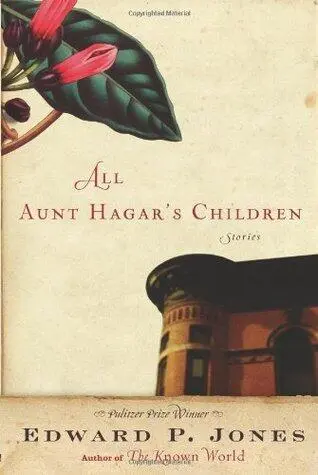
- Название:All Aunt Hagar's Children
- Автор:
- Издательство:Amistad
- Жанр:
- Год:2006
- ISBN:нет данных
- Рейтинг книги:4 / 5. Голосов: 1
-
Избранное:Добавить в избранное
- Отзывы:
-
Ваша оценка:
All Aunt Hagar's Children: краткое содержание, описание и аннотация
Предлагаем к чтению аннотацию, описание, краткое содержание или предисловие (зависит от того, что написал сам автор книги «All Aunt Hagar's Children»). Если вы не нашли необходимую информацию о книге — напишите в комментариях, мы постараемся отыскать её.
, the bestselling and Pulitzer Prize-winning author of
shows that his grasp of the human condition is firmer than ever.
Returning to the city that inspired his first prizewinning book,
, Jones has filled this new collection with people who call Washington, D.C., home. Yet it is not the city's power brokers that most concern him but rather its ordinary citizens.
turns an unflinching eye to the men, women, and children caught between the old ways of the South and the temptations that await them further north, people who in Jones's masterful hands, emerge as fully human and morally complex, whether they are country folk used to getting up with the chickens or people with centuries of education behind them.
In the title story, in which Jones employs the first-person rhythms of a classic detective story, a Korean War veteran investigates the death of a family friend whose sorry destiny seems inextricable from his mother's own violent Southern childhood. In "In the Blink of God's Eye" and "Tapestry" newly married couples leave behind the familiarity of rural life to pursue lives of urban promise only to be challenged and disappointed.
With the legacy of slavery just a stone's throw away and the future uncertain, Jones's cornucopia of characters will haunt readers for years to come.
All Aunt Hagar's Children — читать онлайн бесплатно полную книгу (весь текст) целиком
Ниже представлен текст книги, разбитый по страницам. Система сохранения места последней прочитанной страницы, позволяет с удобством читать онлайн бесплатно книгу «All Aunt Hagar's Children», без необходимости каждый раз заново искать на чём Вы остановились. Поставьте закладку, и сможете в любой момент перейти на страницу, на которой закончили чтение.
Интервал:
Закладка:
“I useta think I was, honey,” Roxanne said. “I really useta think so.”
Weeks before this, in March, after the city government people had officially declared her “a blind entity with no feeblemindedness,” the social worker at Howard and some D.C. government people got Roxanne into a program aimed at teaching the handicapped, especially the blind, how to live like everyone else. Someone, for three days, came to the homes of the five blind students then in the program to show them how to maneuver around their “habitable space.” Then Roxanne and the four other blind people began to learn the basics of accounting and how to operate tiny stores that were in various federal government office buildings around the city. The stores sold snacks and cigarettes and newspapers and small packets of Kleenex that could be tucked into a woman’s pocketbook. The instructor, an accountant with a blind husband who ran his own little store at the Justice Department, told her students at the end of the first day that the federal government employed people who would be mostly honest customers but that there were some who did not have the fear of God. “They will give you a dollar and swear to their thieving and useless god it was five dollars,” she said. “But our all-seeing God is a money God and knows money backwards and forwards. He will guide you.”
The store they ultimately gave Roxanne was on the sixth floor of a ten-story building at Thomas Circle, with a large window that faced Vermont Avenue. On the building’s seventh floor was an outpost of the Atomic Energy Commission with people who did nothing but read reports only from scientists based in Nevada and Utah and the southeastern portion of North Dakota. In time, as these people came to know her, they would come into the store and joke with Roxanne that if her doughnuts weren’t fresh enough, they would “atomize” her and her stale doughnuts. On the fifth floor and on her own sixth floor there were outposts of the Internal Revenue Service and the Department of Commerce. These were primarily silent people, except for the Negroes who laughed with Roxanne as they complained that the federal government had outlawed soul food. A good part of the rest of the building were D.C. government employees, and though they came and went all day and were as friendly as any of the federal people, few of the federal people knew exactly what their jobs were.
It became not such a bad life, the life of a small store operator, and by the beginning of August Roxanne had assured herself that she could conquer “this blindness thing,” or at least learn to live side by side with it. She had worried that she would become a next to nothing, floating out in the universe alone and penniless. She could see herself becoming like the blind man with his milky gray eyes she used to see sitting on a wooden folding chair on the corner of 9th and F Streets, N.W., his quart-sized mason jar of donated bills and coins on a green handkerchief on the ground in front of him. Blowing on a silver harmonica when he wasn’t mumbling to himself. “Blind man here, blind man here, blind man here just tryin to get by,” he sang to passersby.
On the Monday evening of that second week in August, the accountant instructor took Roxanne to dinner at Scholl’s Cafeteria just down the street from her job on Vermont Avenue and then saw her home. “I’m so proud of you, Roxanne,” the woman said. “You and me both,” Roxanne said before she got out of the car and unfolded her white cane. Once in her room, after she had turned on the fan, she banged on the ceiling with a pole—a device to open high windows—for Agnes to come down to her. The pole had been given to her by Melvin, back when the blindness was such a new thing to them all. Roxanne hit the ceiling five times and waited, but Agnes did not come down. She waited several minutes more and hit the ceiling again. She thought she had heard footsteps above her, but she knew by now that blindness played tricks with the rest of her senses. She got a beer from the icebox and sat in her easy chair in shorts and an old Dr. Ben Casey shirt from Melvin. The oscillating fan blew on her and then blew to the nothing on either side of her.
Upstairs, Agnes sat on her bed. She also had one room but, unlike Roxanne, there was a small kitchen attached to hers. After Agnes had heard the first banging, she had immediately stopped walking across the floor, and then, as quiet as an old thief, she had gone lightly to the bed and sat as she listened to the second round of banging. “I want you to write a letter to my parents when I get home tonight,” Roxanne had told her that morning. Now, Agnes looked down at the red fingernail polish she had applied two evenings before. It had taken her more than an hour. She had long ago seen Roxanne paint her own nails in less than ten minutes. Agnes touched the nails, the redness, the smoothness. They were cut short to suit a functional life. “Is this not pride before a fall?” she said of the polish and waited for the pole to hit her floor again. She had tried putting on lipstick that morning, but the face she saw in the mirror with the lipstick was such an alien one that she was forced to wipe it off. The three of them, Agnes, Roxanne, and Melvin, had been sitting on the porch two evenings before, enjoying the sight and sound of children playing along 10th Street. Roxanne had gotten up and made her way upstairs to the building’s only bathroom. Agnes and Melvin could, despite the sounds of the street, hear Roxanne’s hands along the wall behind them as she made her way. No sooner was she on the stairs going to the second floor than Melvin looked at Agnes for a long time without words. She blushed and took her eyes to her lap. “I think I’ll go for a walk. Please tell Roxanne,” Melvin said as he stood. He went down two steps to the sidewalk and turned and looked up at her. Less than fifteen minutes before, Roxanne had said to Agnes, “Go get me another beer.” “I’ll get it,” Melvin had said. “No, I told Agnes, honey.” On the sidewalk, Melvin looked up the two steps at Agnes and said, “Why you scared to even put lipstick on?” He seemed more hurt than anything else. He left without an answer. And as she heard Roxanne making her way back down, Agnes picked up the beer that was still cold even with the crushing heat about them and asked herself who would know if she spit in the can. She had had confession that Saturday and had escaped from the confessional with a penance of only two Our Fathers and two Hail Marys. “Go in peace,” the priest had told her. She put the can back down in the same place.
Agnes now got up from the bed and went into the kitchen, not caring what sounds she made along the floor. A third round of banging began, but she ignored it and prepared her dinner. Across the city, on North Capitol Street, Melvin sat in a booth in Mojo’s and thought how nice it would be to have another beer. He had told Roxanne that he needed to visit a sick relative in Arlington for a few days, but she did not know that all his kin there had died out a long time ago. He took his time with two more beers, and then, a little before midnight, he got in his car and traveled to S Street, N.W., between 10th and 11th. He parked and the time went on and on until it was nearly one thirty in the morning. He had a job to go to in a few hours, but he was lovesick and no job in the universe could matter now. The beer had taken him there, but as he sat in the car and smoked cigarettes, the beer lost its hold and he gradually became just a man thinking about a skinny woman, not altogether attractive with her eyeglasses and her unpainted lips and the habit of crossing herself whenever a dead person’s name was mentioned.
Melvin got out of the car and went around the corner and up 10th Street to where Roxanne and Agnes lived. He took the outside stairs slowly, one at a time, and walked by Roxanne’s door. Agnes opened her door after the third knock and stood with her robe tightly around her nightgown, one hand holding the bunched cloth at the neck. It would be like you, Melvin thought, to have on a nightgown in this weather. She squinted without her eyeglasses. She had a life that burrowed through the world with few surprises, and there was no surprise on her face now. It was as if, every day over years and years, he had said to her, “On such and such a night, I will knock at your door and I want you to answer without giving it any thought.”
Читать дальшеИнтервал:
Закладка:
Похожие книги на «All Aunt Hagar's Children»
Представляем Вашему вниманию похожие книги на «All Aunt Hagar's Children» списком для выбора. Мы отобрали схожую по названию и смыслу литературу в надежде предоставить читателям больше вариантов отыскать новые, интересные, ещё непрочитанные произведения.










Обсуждение, отзывы о книге «All Aunt Hagar's Children» и просто собственные мнения читателей. Оставьте ваши комментарии, напишите, что Вы думаете о произведении, его смысле или главных героях. Укажите что конкретно понравилось, а что нет, и почему Вы так считаете.