Tim Murphy - Christodora
Здесь есть возможность читать онлайн «Tim Murphy - Christodora» весь текст электронной книги совершенно бесплатно (целиком полную версию без сокращений). В некоторых случаях можно слушать аудио, скачать через торрент в формате fb2 и присутствует краткое содержание. Год выпуска: 2016, Издательство: Grove Press, Жанр: Современная проза, на английском языке. Описание произведения, (предисловие) а так же отзывы посетителей доступны на портале библиотеки ЛибКат.
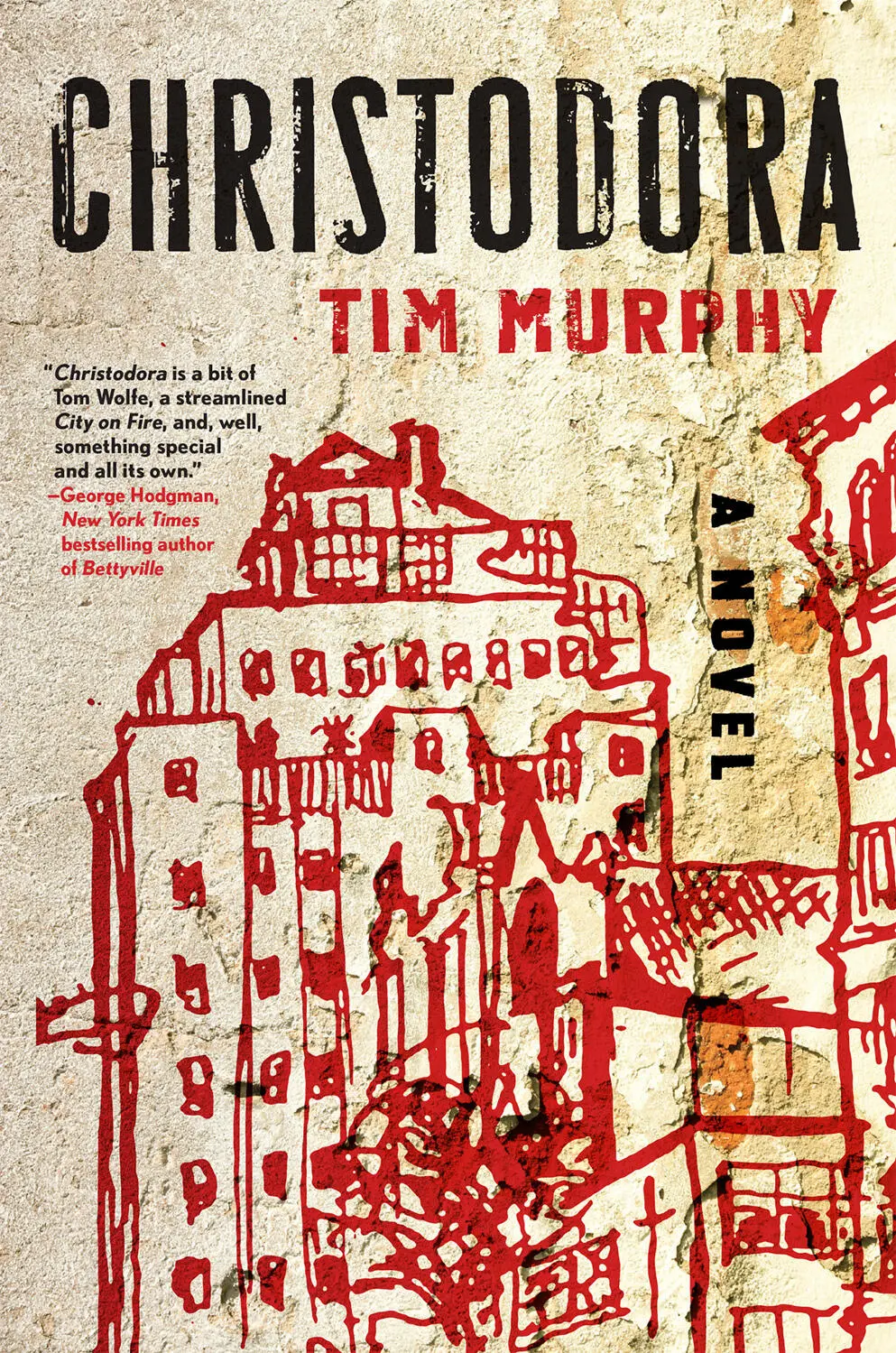
- Название:Christodora
- Автор:
- Издательство:Grove Press
- Жанр:
- Год:2016
- ISBN:нет данных
- Рейтинг книги:4 / 5. Голосов: 1
-
Избранное:Добавить в избранное
- Отзывы:
-
Ваша оценка:
Christodora: краткое содержание, описание и аннотация
Предлагаем к чтению аннотацию, описание, краткое содержание или предисловие (зависит от того, что написал сам автор книги «Christodora»). Если вы не нашли необходимую информацию о книге — напишите в комментариях, мы постараемся отыскать её.
recounts the heartbreak wrought by AIDS, illustrates the allure and destructive power of hard drugs, and brings to life the ever-changing city itself.
Christodora — читать онлайн бесплатно полную книгу (весь текст) целиком
Ниже представлен текст книги, разбитый по страницам. Система сохранения места последней прочитанной страницы, позволяет с удобством читать онлайн бесплатно книгу «Christodora», без необходимости каждый раз заново искать на чём Вы остановились. Поставьте закладку, и сможете в любой момент перейти на страницу, на которой закончили чтение.
Интервал:
Закладка:
“I didn’t mean to gross you out,” she blurted out. “I just want you to understand.”
The deputy nodded indulgently. “You have been heard,” he said. “Very much heard.”
Outside, in the hallway, the GMHC staffer grabbed her arm. “Issy, you were amazing! That’s exactly what he needed to hear.”
“But he’s right,” she was surprised to hear herself saying, with a realization that was both a strange relief and also cause for a deeper despair. “We think this is everything, but to the government it’s just one out of a million things. It’s a grain of sand.”
“It’s more than just a grain of sand,” insisted the young man from GMHC.
Remarkably, though, they’d won. Later that year, 1991, the government had earmarked money to start a very large national study of women with HIV, tracking problems and issues that were specific to women. Even though the study would not formally start for another two years, the mere fact that the feds had funded it was a triumph. Wonderfully for Issy, many people in the movement pointed to her as someone who’d been brave enough to put her own story out there in D.C. to make this happen, and she’d received a shrieking ovation at the weekly meeting, everyone chanting “Issy! Issy!” Hector and Esther, standing on either side of her, held her arms aloft as though she were Rocky Balboa. She’d beamed with elation and felt a sense of belonging and acceptance she’d never known. There was more work to do — the government still didn’t include women’s problems in its official definition of AIDS — but they’d scored a victory. She’d scored a victory.
And then, of course, there was the fun she’d had the past few years, the friends she’d made. Had she ever thought she’d go to big summertime drag-queen festivals in this very park, Tompkins Square, where she’d wildly cheer on boys from the movement when they got up on stage in wigs and dresses and crazy makeup and did high kicks while lip-synching “Rip Her to Shreds”? Had she ever thought, after Tavi died, that she’d have such great, funny, gay guy friends again? She’d done the right thing showing up at that meeting one night three years ago. She’d had a pretty good three years.
On the other hand, though, there was the sickness. The missed periods and the fatigue and the winter colds that never seemed to go away and the chronic yeast infections and the antibiotics and the supplements — and, worst of all, the waiting for it just to get worse. And the rejection from her family. And the loneliness. Being surrounded by handsome boys who were having sex with each other like rabbits and her getting none of it. Even the other women were having sex all the time. She’d decided she wished she were a lesbian. If she were, a woman might love her and make a home with her and not care that she was no bombshell or that she had AIDS — women were just more like that, she’d realized, especially lesbians.
There had even been this dyke, a morena named Tiffany who looked like a tough little fourteen-year-old boy in a twisted baseball cap, who’d asked her on a date. She’d come right up to her after a meeting and said, “Let’s go to Nanny’s and get a beer and talk about this situation.”
“We got a situation?” Issy had replied, smiling.
“If you want one,” Tiffany had said, chucking her chin. “You look like you need one, sexy.”
Issy had exploded laughing, uncomfortable. “Tiffany, I’m not into women, right? But I think you’re really sweet.”
Tiffany had just sort of made a sad face and shrugged and twisted her cap around and swaggered away. Maybe she should have given Tiffany a chance. Maybe that wouldn’t have happened, because she wouldn’t have been so lonely.
In the bed across from hers at Judith House, Shirley, her roommate, was waking up.
“How long you been up, girl?” Shirley asked her through a yawn.
“Like an hour,” Issy said. “I couldn’t sleep. My back hurts.”
“You feel him kickin’ this morning?”
Issy ran a hand over what she felt was her horrifyingly huge belly. “A little bit.”
“Two more months, girl,” Shirley said. Issy nodded slowly. Shirley had an air of sullen indifference about everything, but, Issy had noted, she was obviously following her pregnancy keenly because she was always counting down to Issy’s due date. “There gonna be three babies up in this house.”
“I know, right around Christmas,” Issy added. She looked down on the street and watched a junkie crouching and rocking in a phone booth. Did she know him? Living here going on six months now, she was starting to recognize the neighborhood’s junkie network by face, or by where each one liked to nod. She was pretty sure the one down in the phone booth was Ronny, who once told her, in one of his more sentient moments, that he used to work in a quarry upstate.
Shirley sat up with a start. “I gotta make breakfast today. Damn! I gotta peel potatoes.”
“I’ll help you.”
“No, you can rest, baby.”
“No, no, it’ll be good for me to walk. I can’t sleep any more anyway. Go use the bathroom, I’ll go after you.”
“Aw, thanks, baby.” Shirley creaked and groaned her way out of bed, wearing a Yankees T-shirt that came down to her knees and sweatpants. Shirley was a tall girl, but damn, was she a reed. You could put your thumb and index finger all the way around her biceps. But Shirley insisted she had always been skinny, that it wasn’t just the virus. She’d run track in high school in the Bronx, sometime back in the early 1960s. Shirley wasn’t political about the epidemic. She spent most of her day going to Narcotics Anonymous meetings and the rest of it playing cards in the park with a bunch of old guys. She also liked to cook for the house and was proud of her hash browns.
“I’ll meet you down in the kitchen, babe,” Shirley said. She grabbed her towel and her bag of toiletries and padded down the hall. Issy folded her hands over her belly. Another day at Judith House, she thought. It was Sunday — the one day that Ava didn’t come in. The girls would have a quiet day. Maybe they’d go for a walk, buy some magazines and cosmetics for themselves at a ninety-nine-cent store.
Issy would have to take her AZT soon. She’d have to take it right in the middle of breakfast to “bury” it as best she could, then after breakfast she would feel disgusting, nauseated, and strange in the head and have to lie down for an hour. She sat there and thought about the funny permutations and implications of things: if she had never gone to that first meeting of the movement, hadn’t met Ava and Hector and Chris and the rest, she would never have learned what inside researchers suspected — what, in fact, had just become a major scientific trial in order to confirm the suspicion — that a pregnant woman taking AZT could all but eliminate the chances of passing HIV to her baby. This had been documented the past two years, anecdotally, in hospitals in New York and elsewhere. She probably wouldn’t even be taking AZT otherwise, it was so disgusting, and by this point most doctors and activists believed that, in the long run, it didn’t stop HIV anyway.
But then again, she thought, if she hadn’t gone to that first meeting, she wouldn’t be pregnant now. Well, maybe she would be, but she wouldn’t be pregnant with — oh God, she thought. Was she crazy to have this child?
Ava was supporting her. It was tough for Ava, but at least she stood by her conviction that a woman could do what she wanted with her pregnancy, even if she was HIV-positive.
“But whose baby is it, Issy?” Ava would ask her.
“I don’t know,” Issy had lied. “I’ve — I haven’t been careful with a lot of guys lately.” If only that had been the case! she thought, laughing to herself. That might have been fun!
Читать дальшеИнтервал:
Закладка:
Похожие книги на «Christodora»
Представляем Вашему вниманию похожие книги на «Christodora» списком для выбора. Мы отобрали схожую по названию и смыслу литературу в надежде предоставить читателям больше вариантов отыскать новые, интересные, ещё непрочитанные произведения.










Обсуждение, отзывы о книге «Christodora» и просто собственные мнения читателей. Оставьте ваши комментарии, напишите, что Вы думаете о произведении, его смысле или главных героях. Укажите что конкретно понравилось, а что нет, и почему Вы так считаете.