Tim Murphy - Christodora
Здесь есть возможность читать онлайн «Tim Murphy - Christodora» весь текст электронной книги совершенно бесплатно (целиком полную версию без сокращений). В некоторых случаях можно слушать аудио, скачать через торрент в формате fb2 и присутствует краткое содержание. Год выпуска: 2016, Издательство: Grove Press, Жанр: Современная проза, на английском языке. Описание произведения, (предисловие) а так же отзывы посетителей доступны на портале библиотеки ЛибКат.
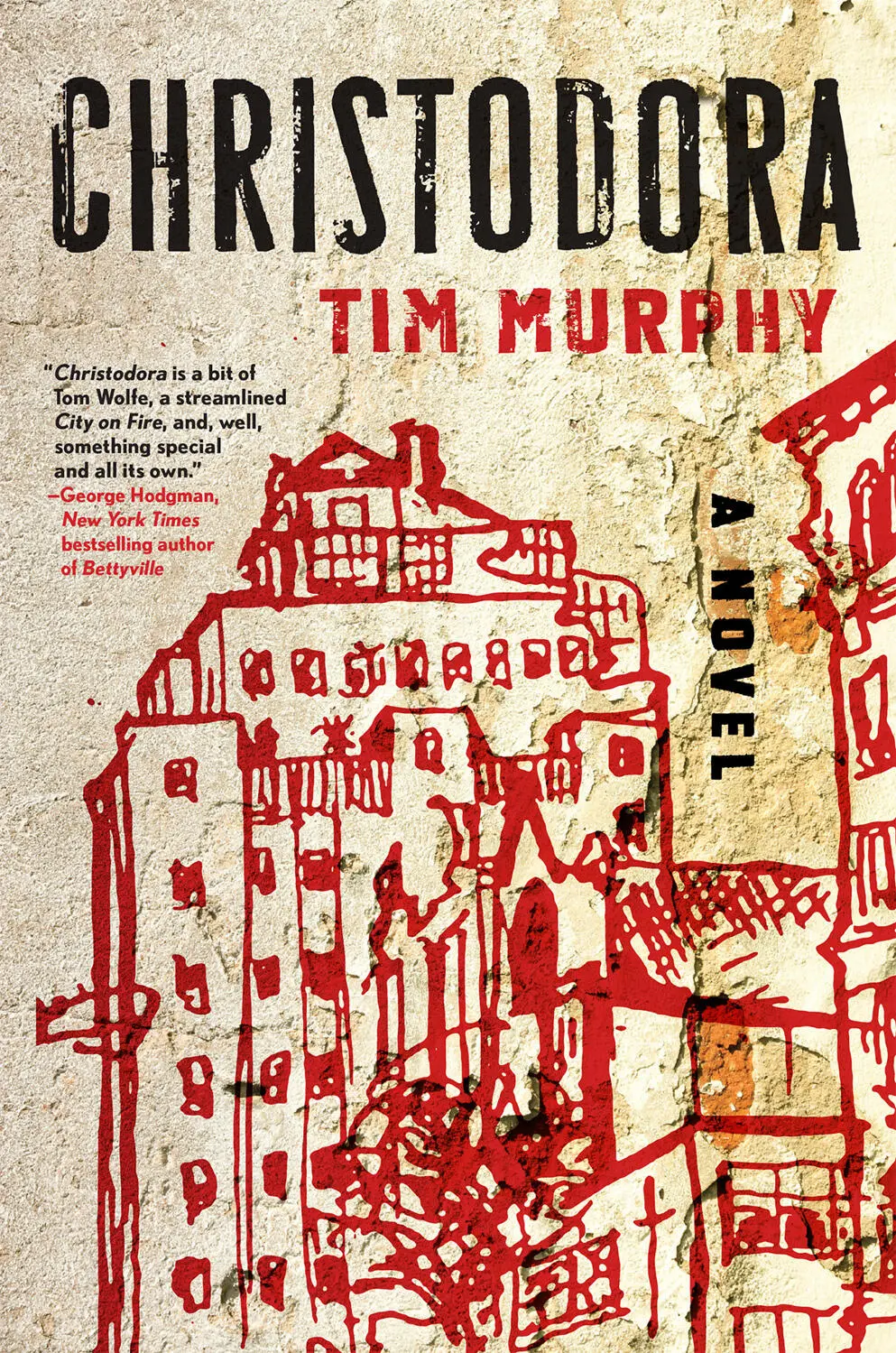
- Название:Christodora
- Автор:
- Издательство:Grove Press
- Жанр:
- Год:2016
- ISBN:нет данных
- Рейтинг книги:4 / 5. Голосов: 1
-
Избранное:Добавить в избранное
- Отзывы:
-
Ваша оценка:
Christodora: краткое содержание, описание и аннотация
Предлагаем к чтению аннотацию, описание, краткое содержание или предисловие (зависит от того, что написал сам автор книги «Christodora»). Если вы не нашли необходимую информацию о книге — напишите в комментариях, мы постараемся отыскать её.
recounts the heartbreak wrought by AIDS, illustrates the allure and destructive power of hard drugs, and brings to life the ever-changing city itself.
Christodora — читать онлайн бесплатно полную книгу (весь текст) целиком
Ниже представлен текст книги, разбитый по страницам. Система сохранения места последней прочитанной страницы, позволяет с удобством читать онлайн бесплатно книгу «Christodora», без необходимости каждый раз заново искать на чём Вы остановились. Поставьте закладку, и сможете в любой момент перейти на страницу, на которой закончили чтение.
Интервал:
Закладка:
“Just take your time,” Chris said.
“No, you don’t get it, I’m freaking out.” He lunged off the bed and returned with the bottle of Valium, chewing one to hasten its effects.
Chris looked at him, bug-eyed. “What, you’re gonna bring down your high?”
“If you wanna go get high with somebody else and have them fuck you raw, then go!”
Chris looked him, jaw wide open, and laughed. “Okay, fine,” he said. “Give me a Valium, too.”
“Just fucking go! I don’t feel like fucking you, okay?”
“Hey,” Chris said slowly. He put up both hands gently, placatingly. “Give me a Valium, too. I’ll come down with you.” Chris reached for the bottle.
Hector yanked it away. “I’m not wasting my Valium on you.”
Chris rolled his eyes. “I’ll get you more.” He reached for the bottle. Instead, Hector pulled out one pill and handed it to him. Chris put it in his mouth, walked naked into the bathroom, where Hector could see him wiping the lube off his butt with toilet paper, then walked to the kitchen, then back into the bedroom with two glasses of water.
“Drink,” he commanded. Hector drank the water.
“Now, come here.” Chris pulled him back onto the bed, lay him down, pulled the sheet over them, and put his arms around him. “No fucking, okay? Just snuggling. Two friends snuggling.”
Hector put his hand over Chris’s arm running across his chest. He was trembling, his heart cannonballing out of his chest from the coke. He lay there, looking straight ahead, terrorized, until the slow, blissful Valium ooze started to leak in. Once it did, he realized that, no longer panicked, he was still coke-horny, an erection growing. He turned around in bed on his side, did the same thing to Chris and fucked him silently, his mouth mashed into the back of Chris’s neck the whole time. He came inside Chris, just what pushy little Chris had wanted, then he stayed inside him and started crying again.
When he finally had settled down, when he was wondering absently how to get rid of Chris but falling asleep at the same time, Chris said, “So now that you’ve made your deposit, can I propose something?”
Hector mumbled his assent.
“Rich and Maira and I want you to leave the movement with us and start a new treatment group. So we can do really close work with the feds and not be held back by all the crazies and the rules of order and the side issues.”
Amid his semi-stupor, Hector was irked. He’d barely been to a meeting the past six months, watching Ricky die. He’d told himself he’d checked out, that he’d done his part, that maybe when this whole thing was over he was going to move back to Puerto Rico and do some kind of public-health work there. He couldn’t take any more of the movement’s bitterness and the bitchiness and the immovable slab of grief and sadness that lay beneath it all, the profound disappointment over the breakthroughs that hadn’t happen and the finger-pointing that the disappointments provoked.
“I think I’m done with treatment work,” he mumbled to Chris.
Chris turned around, propped himself up on his elbow, and faced Hector, who remained with his eyes closed, his head smashed in a pillow. Chris smelled funny, Hector noted — some mix of putty and dirt. Not necessarily a bad smell, but a weird one.
“I think having this to focus on over the next year or two will be really good for you,” Chris said. “We already have a lot of funding promised up front from different private groups. But we also need someone to communicate back to the big movement, and you know you’re the only non-asshole of the four of us to do it. The only one people really like.”
“That’s true,” Hector mumbled.
“Clinton’s probably coming in in January. We need to be on the protease trials all day, every day for the next few years if they’re going to be structured right.”
“Protease,” Hector sneered out the term. “Fucking protease. I hate that word.”
“Oh, Hec,” Chris clucked. He brushed Hector’s hair off his forehead. “I’m so sorry, honey.”
Finally, Hector looked up at Chris. “If only you fucking knew how to say that a little bit more to people,” he said.
Chris smiled coyly. “That’s why we need you, Hector. We’re all major cunts but you.”
“I’ll give you an answer in a few days.”
Chris brushed Hector’s bangs again. “I’ll let you sleep now.”
Chris took a shower, pulled on his clothes, did a bump of coke, and then clattered down the stairwell and stepped out into the cool October quiet of a Greenwich Village side street at 5:30 A.M. He barreled down the street, his fists thrust in the pockets of his denim jacket. He realized he was still high, so instead of going home, he speed-walked toward the East Village, to an unmarked dive between Avenues C and D, where he knew he could find more drugs and probably somebody to fuck him again. Times like this, he could feel himself, almost on a cellular level, masochistically putting more stress on his stressed-out immune system, perversely, pleasurably, pushing it to its limits. How much strain, how much toxicity and decay, could it withstand before his body really turned against him? The guys who got all into the macrobiotic natural juices and the yoga and the Marianne Williamson lectures and the positive visualization — well, how much sadder were they when they finally got sick anyway? At least this way he had some say in the matter. He pulled out a cigarette and sucked on it furiously as he walked.
And yet he only had to think of a term like pathogenesis or prophylaxis or cytokine— or, now most beautiful to him, protease inhibitor , because it contained the same shiny promise of future redemption that the term ddI had contained a few years ago — and some channel would switch in his brain and self-obliteration was the last thing he desired. The complex words, which put him in a circle of conversation populated only by doctors and a few other lay elites, girded him, gave him the comforting feeling that he could find his way out of the microscopic labyrinth of his own disease. And of course that special knowledge came with prestige, earning him respect from the people with medical degrees and a certain amount of awe from everyone else. All this buoyed Chris and made him hungry to see the future. Then he’d vaguely wonder why he wanted to live so badly on one hand yet behaved as though he wanted to die, bingeing on alcohol, cigarettes, and cocaine. He chalked it up to “taking breaks,” rewarding himself by letting off steam between long periods of work — preparing for and then attending a conference, for example — but he had a harder time understanding the visceral and gritty satisfaction he took in his drug runs, how it felt cathartic to tax his body to the point where he could barely get out of bed for three days. When he was finally able to get up, shower, eat, and continue with his important work, he’d feel strangely as though he’d earned back his purpose.
As he walked, he passed a brownstone on East Seventh Street between First Avenue and Avenue A — a building with a discreet plaque near the door reading JUDITH HOUSE. A woman who had not slept well was sitting in the front window on the third floor in a little room she shared with another woman. She looked down and saw him and thought, with an inner giggle because she knew exactly the kind of place he was going to at this hour, sucking on his cigarette, hands thrust into the pockets of his denim jacket, Oh, that’s Chris! She thought about all the boys and how she had barely seen them in months, not going to meetings or rallies, which was how she wanted it, but it didn’t mean that she didn’t miss them.
A few girls from the movement — the dykes and the handful of straight ones — she’d let come see her. Esther Hurwitz, whose frowning bluntness had terrified her initially, but who then became one of her best friends, came by faithfully nearly every day, usually with some wheatgrass or wheat-germ or lemongrass — what was it? — drink she’d make for her at her own apartment a few blocks away. Esther sat with her in the sitting room downstairs, or, when the other ladies got too loud and crazy in there, they’d walk around the neighborhood, and Esther would unload on Issy every single story of stress and contention from the movement, from the last meeting or affinity group. The through line was always that people — the boys, mostly, but some women, too — were trying to “undermine” and “marginalize” Esther because they were annoyed by her message of radical change and social justice, one that went far beyond the epidemic.
Читать дальшеИнтервал:
Закладка:
Похожие книги на «Christodora»
Представляем Вашему вниманию похожие книги на «Christodora» списком для выбора. Мы отобрали схожую по названию и смыслу литературу в надежде предоставить читателям больше вариантов отыскать новые, интересные, ещё непрочитанные произведения.








Обсуждение, отзывы о книге «Christodora» и просто собственные мнения читателей. Оставьте ваши комментарии, напишите, что Вы думаете о произведении, его смысле или главных героях. Укажите что конкретно понравилось, а что нет, и почему Вы так считаете.