Tim Murphy - Christodora
Здесь есть возможность читать онлайн «Tim Murphy - Christodora» весь текст электронной книги совершенно бесплатно (целиком полную версию без сокращений). В некоторых случаях можно слушать аудио, скачать через торрент в формате fb2 и присутствует краткое содержание. Год выпуска: 2016, Издательство: Grove Press, Жанр: Современная проза, на английском языке. Описание произведения, (предисловие) а так же отзывы посетителей доступны на портале библиотеки ЛибКат.
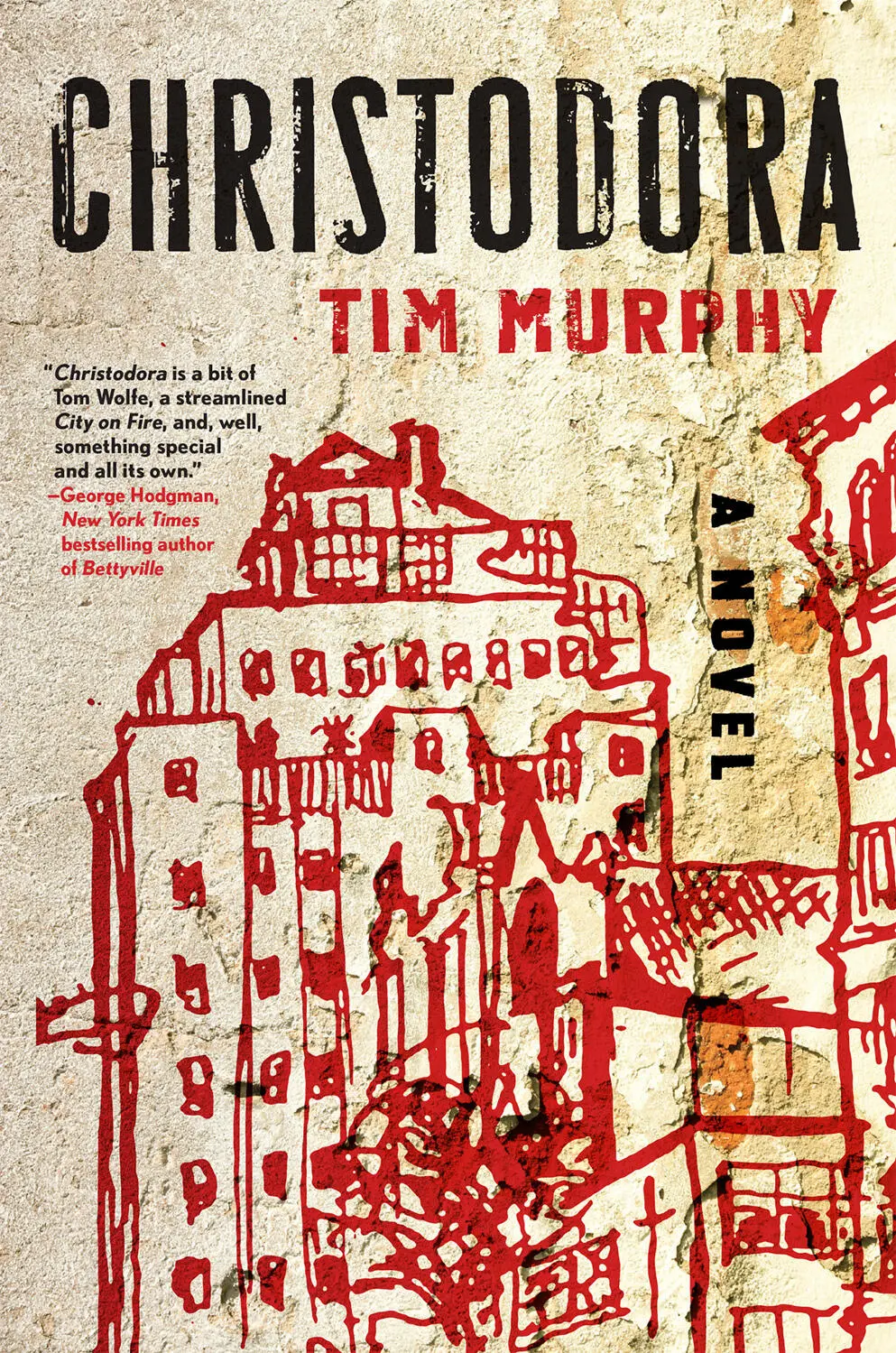
- Название:Christodora
- Автор:
- Издательство:Grove Press
- Жанр:
- Год:2016
- ISBN:нет данных
- Рейтинг книги:4 / 5. Голосов: 1
-
Избранное:Добавить в избранное
- Отзывы:
-
Ваша оценка:
Christodora: краткое содержание, описание и аннотация
Предлагаем к чтению аннотацию, описание, краткое содержание или предисловие (зависит от того, что написал сам автор книги «Christodora»). Если вы не нашли необходимую информацию о книге — напишите в комментариях, мы постараемся отыскать её.
recounts the heartbreak wrought by AIDS, illustrates the allure and destructive power of hard drugs, and brings to life the ever-changing city itself.
Christodora — читать онлайн бесплатно полную книгу (весь текст) целиком
Ниже представлен текст книги, разбитый по страницам. Система сохранения места последней прочитанной страницы, позволяет с удобством читать онлайн бесплатно книгу «Christodora», без необходимости каждый раз заново искать на чём Вы остановились. Поставьте закладку, и сможете в любой момент перейти на страницу, на которой закончили чтение.
Интервал:
Закладка:
“Did she consider”—Milly paused a moment—“having an abortion?”
“She couldn’t,” Ava said — then, portentously, “Catholicism. Even though her family mostly cut her off when they found out she had AIDS and didn’t want to see her. She couldn’t bear asking them to raise him, so she asked me to sign papers to be his legal standby guardian until he found the right home.”
“Who was the dad?”
Ava laughed bitterly. “She didn’t know. She disappeared and went sexually cuckoo for a while. She was gussying herself up and going to clubs and not even telling guys she was positive. A few months after that, she got sick enough to qualify to come live in the house when a bed opened. And a few weeks after that , she finds out she’s pregnant. So that’s when we got her on AZT and — well, voilà,” Ava said, gesturing back in the direction of the group home and meaning Mateo. “That’s why the kid was born HIV-negative.”
“Mmm,” Milly said, still thinking about the little boy they’d just left behind with his crayons. “Why don’t you just adopt him? You have room.”
“Me?” Ava hooted. “With my schedule? Why don’t you?”
After lunch, Ava went back to the East Village and Milly got on the LIRR in Brooklyn and took the train out to Jared’s family’s house in Montauk. This was a yearly Labor Day — weekend ritual.
“Are you okay from your day with Ava?” Jared asked her, kissing her, when he picked her up at the train station. Jared looked handsome, she thought, with his fresh flush of tan. He’d come out here the previous day.
“It was fine,” Milly said. She didn’t want to bore Jared with a recitation of all the usual feelings she had after seeing her mother. “She took me to a foster home in Fort Greene. Oh my God, Jared!” She put a hand on his arm as he drove. “I wish you could see this little boy who was there, Mateo. He’s four and he’s such a talented drawer. He was drawing these really scary, mean-looking monsters, so I got down on the floor with him and drew him a friendly monster, and when I told him that, he just gave me this heartbreaking, deadpan look and said, ‘Monsters aren’t friendly.’”
Jared chuckled distractedly, negotiating a curve. “The kid’s right. Monsters aren’t friendly. They wouldn’t be monsters if they were, and we’re just doing kids a disservice telling them that there are friendly monsters, like the Cookie Monster.”
“That’s exactly what Ava told him! She was indignant that the nun who runs the house — who, by the way, is a total butch lesbian — that she wouldn’t let the kids watch TV, even Sesame Street .”
“Well, you know something?” Jared said, slightly cutting her off. “Monsters are monsters. AIDS and mental illness are AIDS and mental illness. They’re not cuddly.”
This took Milly aback. “Mental illness? What’s that supposed to mean?”
He glanced at her. Milly sensed he was dismayed by what he’d just said.
“I’m just saying,” he said, “any disease — AIDS, mental illness, cancer, Parkinson’s, Lyme like my sister has — we’re better off just calling them what they are and dealing with them and not putting a cuddly name on them.”
Milly was silent. She really didn’t know what to make of that. Instead, she wondered what Mateo was doing at that moment. Did he ever play with the other boys?
“Well, I have something to tell you,” she at last said to Jared. “Sister Ellen — that’s the butch nun who runs the boys’ home — she kind of strong-armed me into saying that you and I would come out weekend afternoons and make art with the boys.”
“Oh, she did?” Jared laughed. “To Brooklyn?”
“It’s not that far out in Brooklyn. Just the Q to Atlantic/Pacific.”
“We go to the studio on weekends and make our own art.”
“I only go Sundays anyway.”
Jared glanced at her sidelong but said no more.
Twenty minutes later, they were on the big porch overlooking the beach with Jared’s family, drinking rosé, while Jared’s dad put burgers on the grill for them. They put on sweatshirts and jeans for the annual beach bonfire with the same group of neighbors Jared had spent Labor Day with since he was eleven, then came back up to the house around midnight and had sex for the first time in two weeks in the twin bed Jared had spent childhood summers in. The room smelled and sounded like the ocean, and Milly was blessed to feel safe and protected in Jared’s honey-fur arms as he fell asleep and, moreover, to acknowledge she felt that way for once.
In the morning, when she woke alone in the bed, she pulled herself together and went downstairs for coffee, to find Jared and his family watching CNN.
“Princess Di died,” Jared’s mother, a good-looking woman with a silver-blond bob who’d run the same hunger nonprofit the last twelve years, said as Milly came in. “Last night in a horrible car crash in a tunnel in Paris.”
“Oh, that’s horrible!” Milly exclaimed. “Her poor sons!”
They ate breakfast in a disjointed way in front of the TV, each of them retreating to the kitchen to get coffee or a bowl of cereal, then coming back to the drama on CNN. Eventually they pulled towels and umbrellas together and went down to the beach. But the death, and the allegations swirling around it that it might have been murder, followed them down there like a strange pall. It was strange in that Diana may as well have been a fictional character to them; no one among them could think of anyone who knew anyone who knew anyone who’d known her, or even once met her. Milly kept thinking of the two sweet boys being left with their horrible, cold father and their grandmother, the Queen. And this merged back into thoughts of Mateo and what he might be doing at any given hour of the many long hours in the boys’ home.
In the late afternoon, when the sunlight spilled a fantastic golden liquid light into every corner of Montauk, Milly and Jared did what they’d done the past several years and grabbed their sketchbooks and a blanket and retreated into some remote dunes and sketched each other. Then they had sex again on the blanket and, after, lay there naked and talked for a long time.
“The year we broke up was the worst year of my life,” Jared told her. “I ached through every day of that year. Never a year apart again, okay? Never, never, never.”
“Never,” Milly murmured. But her own recollections of that year were different. Certainly she remembered the loneliness of those solitary nights in her new apartment without Jared. But she also remembered the clean, open clarity of those days and nights, the feeling that her life, for the first time, was a wide, blank canvas before her. For the first time she had been able to focus intensely on her painting — her own painting, versus her students’ work or even Jared’s. Since then, she had traded chronic, low-level loneliness and pure artistic concentration for companionship and intimacy and a nagging feeling of artistic superficiality and self-postponement. Someday, she’d tell herself, she would be alone in a studio in the woods with perhaps a few other artists to eat and have a glass of wine with at the end of the day, before they repaired for more painting through the night.
This was her artist-colony fantasy, yet she never got around to actually pinpointing a month on a calendar and finding a colony to apply to. Now she was a woman with a partner, with her own family, his family, her students; a woman engaged in the world.
Back in the city, after the Montauk weekend, she and Jared plunged into their first week of work at new schools. Diana was everywhere: on the covers of papers and magazines, on every channel 24/7. Milly found herself thinking about her in that idle way you think about a public figure and make private judgments about them just because they’re thrust in your face all the time. Milly felt that Diana had become rather silly in recent years, saying she wanted to be the queen of people’s hearts and that kind of nonsense; it also looked like, in her postmarital thirties, she’d been having the sexy, glamorous fun she’d been deprived of, having been made to put on that ridiculous massive wedding dress and marry into royal suffocation at the age of twenty.
Читать дальшеИнтервал:
Закладка:
Похожие книги на «Christodora»
Представляем Вашему вниманию похожие книги на «Christodora» списком для выбора. Мы отобрали схожую по названию и смыслу литературу в надежде предоставить читателям больше вариантов отыскать новые, интересные, ещё непрочитанные произведения.









Обсуждение, отзывы о книге «Christodora» и просто собственные мнения читателей. Оставьте ваши комментарии, напишите, что Вы думаете о произведении, его смысле или главных героях. Укажите что конкретно понравилось, а что нет, и почему Вы так считаете.