Tim Murphy - Christodora
Здесь есть возможность читать онлайн «Tim Murphy - Christodora» весь текст электронной книги совершенно бесплатно (целиком полную версию без сокращений). В некоторых случаях можно слушать аудио, скачать через торрент в формате fb2 и присутствует краткое содержание. Год выпуска: 2016, Издательство: Grove Press, Жанр: Современная проза, на английском языке. Описание произведения, (предисловие) а так же отзывы посетителей доступны на портале библиотеки ЛибКат.
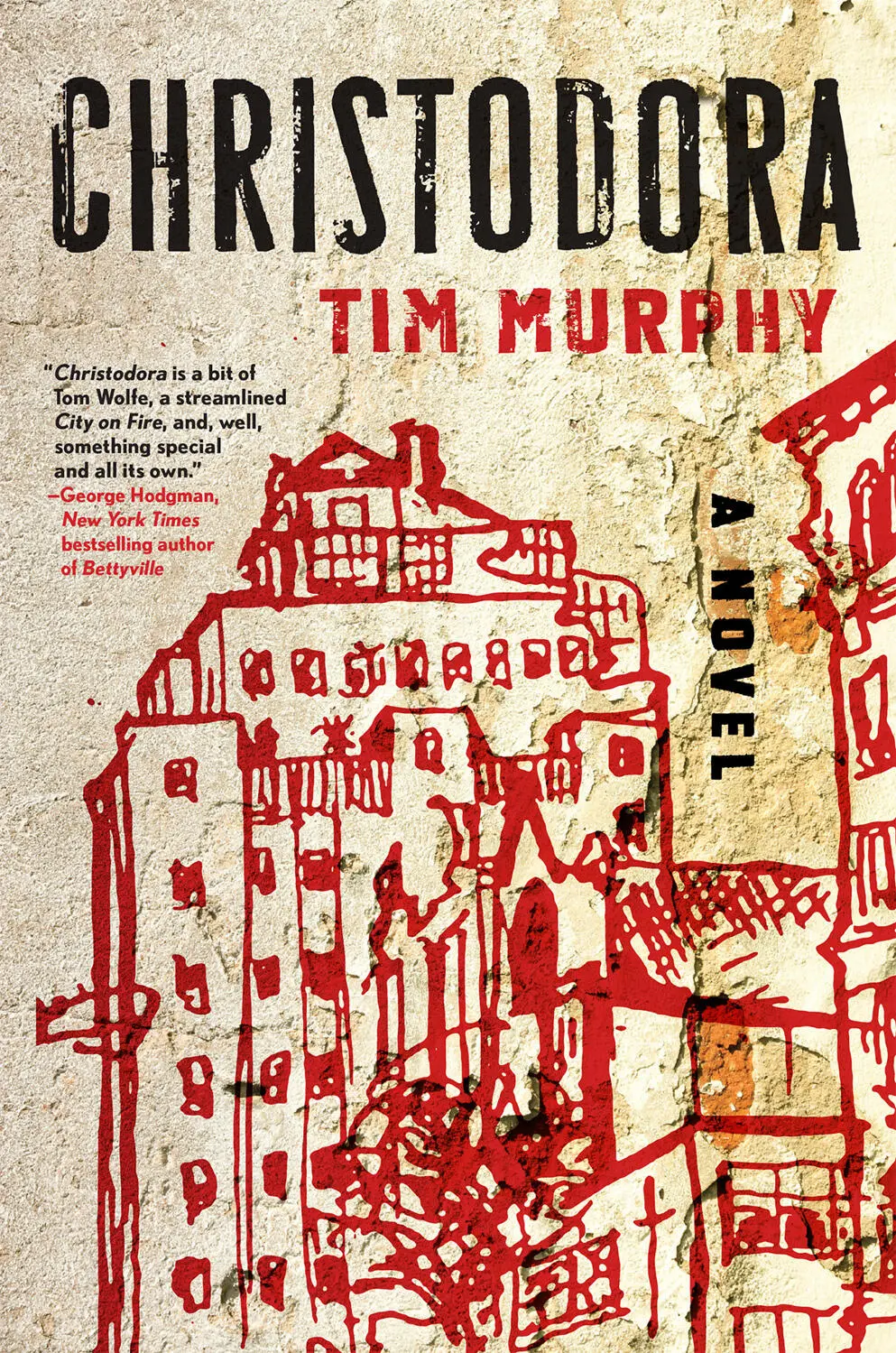
- Название:Christodora
- Автор:
- Издательство:Grove Press
- Жанр:
- Год:2016
- ISBN:нет данных
- Рейтинг книги:4 / 5. Голосов: 1
-
Избранное:Добавить в избранное
- Отзывы:
-
Ваша оценка:
Christodora: краткое содержание, описание и аннотация
Предлагаем к чтению аннотацию, описание, краткое содержание или предисловие (зависит от того, что написал сам автор книги «Christodora»). Если вы не нашли необходимую информацию о книге — напишите в комментариях, мы постараемся отыскать её.
recounts the heartbreak wrought by AIDS, illustrates the allure and destructive power of hard drugs, and brings to life the ever-changing city itself.
Christodora — читать онлайн бесплатно полную книгу (весь текст) целиком
Ниже представлен текст книги, разбитый по страницам. Система сохранения места последней прочитанной страницы, позволяет с удобством читать онлайн бесплатно книгу «Christodora», без необходимости каждый раз заново искать на чём Вы остановились. Поставьте закладку, и сможете в любой момент перейти на страницу, на которой закончили чтение.
Интервал:
Закладка:
“I am,” Milly said.
“She just started teaching at LaGuardia High School,” Ava said. It annoyed Milly slightly that her mother had seemed more impressed by Milly’s getting this job than any piece of art Milly had ever created. “That’s one of the best arts high schools in the city. And her boyfriend teaches at Art and Design High School.”
Sister Ellen seemed wholly unimpressed by this and cut to the chase. “The two of you could come out here Saturday afternoons and do art with the boys,” she said. “You could bring your artist friends. You could rotate.”
Milly glanced at Ava, who stood slightly behind Sister Ellen, smiling amusedly, wondering how Milly would handle the nun’s bossiness.
“It’s our day off,” Milly protested feebly. “But, I mean—”
“Well, you could come Sundays, then, after you’ve had a day off,” Sister Ellen pressed on agreeably. “Just for a few hours.” She gestured around at the boys. “They’re always here.”
Milly glanced at Ava, who shrugged slightly, as though to say, Don’t ask me, it’s up to you. Then Milly looked down at Mateo, at the top of his head and the chubby fingers holding the crayon.
“Of course we’ll come,” Milly said. She pulled her little black notebook and a pen from her bag, handed them to Sister Ellen. “Write your number here and I’ll call and we’ll arrange it.”
The nun took the little book and pen, looking quietly pleased with herself. “You won’t consider it work,” she said as she jotted in it.
Milly knelt down again and, in a flash, scratched the curly black head. “I’ll come back and we’ll draw more monsters together?”
He looked up at her, as though he was indulging her. “Sure, okay,” he said. “But I hate to tell you, there aren’t any friendly monsters.”
“Are you absolutely sure about that?” Milly asked.
He took a big breath, as though he was about to answer but then stopped to consider the question. “I’m pretty sure,” he said, nodding his head for emphasis.
Milly and Ava went to a Jamaican restaurant, got out of the stifling Labor Day — weekend heat into the A/C and ordered mint lemonade and jerk-chicken sandwiches. “You wanted to go there today just to see, um, Mateo?” Milly asked her mother.
Ava, her mouth full, shook her head. “We’re talking about replacement of a few of the boys back with their moms,” she finally said, dabbing at the corners of her mouth in a ladylike way with her napkin — an affectation Milly found funny and strangely touching.
“Are you serious?” Milly said. “Because of the new HIV drugs?”
Ava nodded. “Yep. That’s what everyone’s calling Lazarus syndrome. People are starting to live again. It’s a total mindfuck. And now they gotta figure out their lives. But it means, for a few of the moms, they want to try to raise their kids again. They’re not afraid they’re gonna die on their kids any time soon. So for some of them, we’re working on finding a group home where they can raise their kids together.”
“That is amazing,” Milly said. “Whoever would have thought. .” Words failed her.
“That people would finally stop dying?” Ava asked. “Not me! Fifteen years of death, death, death, then the people lucky enough to make it this far start getting better, stop looking like cadavers. Now they have to figure out how to pay their credit-card bills.”
Milly looked at Ava’s face: lined. Dark circles under the eyes. Hair gone gray and a middle gone thicker, as had her dad’s, even though Ava still called Sam her Elliott Gould and he dutifully still called her his Marisa Berenson. Seventeen years of drugs for Ava as well — drugs of a different kind: “My head meds,” Ava called them. And about a dozen awards since she’d started Judith House in 1990, including from the White House. The write-ups in the Times, New York magazine, Essence ; the 20/20 segment; the Vogue thing where they’d styled her and put her in a Donna Karan gown alongside a half-dozen other “contemporary warrior women.”
“Ava, don’t you get burned out?”
Ava considered a moment. “I wouldn’t know what to do with myself if I weren’t doing this,” she said. “The one thing I’m proud of in life is I left that fucking bureaucracy and actually managed to help people.”
Milly looked down at her sandwich, stung by the words. She could feel tears welling, though she wanted to be more adult than that.
“Oh, honey,” Ava clucked. Milly wanted to feel her mother’s hand on her own, but Ava didn’t put it there. “You know what I mean. I meant in my career. Of course I’m proud of you.”
That couldn’t have felt more cursory, as far as Milly was concerned. Milly dropped her voice. “You know, I turned out okay, Ava. I hold my life together. I have a steady job. I have a good relationship.”
“I love Jared!” Ava interjected.
“I know you do,” Milly said. Ava certainly loved Jared. Partly, Milly knew, because Jared came from the kind of old-money German Jew family Ava had always wanted to be from. WASPy Jews, instead of Ava’s shtetl stock.
“And you know I’m proud of you,” Ava said. But, Milly thought, she sounded irritated at even having to say it aloud. Milly knew it was time to get off this subject — it would just take her down a wormhole of bad feelings.
“I’m proud of you, too,” she told Ava.
“That’s sweet,” Ava said.
They fell into several seconds of awkward silence. Milly thought about her own pills, the antidepressant she’d been taking. Wellbutrin. After several months, Jared had said to her, “Something’s wrong, Millipede, you have to face it. And going on a mild-to-moderate med for your mild-to-moderate depression— mild to moderate , like the doctor said — does not mean you’re going to go down the same road as your mother. But you can’t stop ignoring that you have depression. You feel it every day, and so do I.”
So Milly had gone on Wellbutrin. And — it had helped? She was fairly certain she felt somewhat less. . what? Sad? That sense that it would all never be quite right, that that shadow of dread would always be there, flickering, sometimes rising up forcefully and forcing her down into the bed, into a book for hours as though it were something she could physically crawl into and close around herself, or out of the stifling sadness of the apartment and into the East Village for those long, long walks, just trying to figure it out, to think her way out of that vapor-like sadness. And sometimes the tears that would come out of nowhere on those briskly paced walks, Milly not even really caring who saw her crying quietly.
She wanted so badly to tell her mother about it. But she wouldn’t let herself. It was just too awful, the implicit accusatory nature of it— Look what you’ve given to me! That she and her mother might share this awful monster, this mindbeast that plagued women and made them crazy, made them major hassles for the people in their lives — neurotic Jewish women! — was far more than Milly could deal with. So, as they sat there in awkward silence, Milly did what she’d learned to do her whole life: look outward to other people and what was plaguing them.
“So this cutie, Mateo,” she asked, “does he know about his mother?”
Ava’s own eyes lit up; she, too, was clearly relieved that they were moving on, talking about other people and their problems.
“I don’t think he really knows yet,” Ava said. “Ysabel had him for only about a year before she went into St. Vincent’s for the last time, when Mateo went to Ellen’s house. My God.” Ava sighed. “That she went through with that pregnancy and that he came out normal and alive. That’s a miracle.”
Читать дальшеИнтервал:
Закладка:
Похожие книги на «Christodora»
Представляем Вашему вниманию похожие книги на «Christodora» списком для выбора. Мы отобрали схожую по названию и смыслу литературу в надежде предоставить читателям больше вариантов отыскать новые, интересные, ещё непрочитанные произведения.








Обсуждение, отзывы о книге «Christodora» и просто собственные мнения читателей. Оставьте ваши комментарии, напишите, что Вы думаете о произведении, его смысле или главных героях. Укажите что конкретно понравилось, а что нет, и почему Вы так считаете.