Gyula Krúdy - Life Is A Dream
Здесь есть возможность читать онлайн «Gyula Krúdy - Life Is A Dream» весь текст электронной книги совершенно бесплатно (целиком полную версию без сокращений). В некоторых случаях можно слушать аудио, скачать через торрент в формате fb2 и присутствует краткое содержание. Год выпуска: 2010, Издательство: Penguin Classics, Жанр: Современная проза, на английском языке. Описание произведения, (предисловие) а так же отзывы посетителей доступны на портале библиотеки ЛибКат.
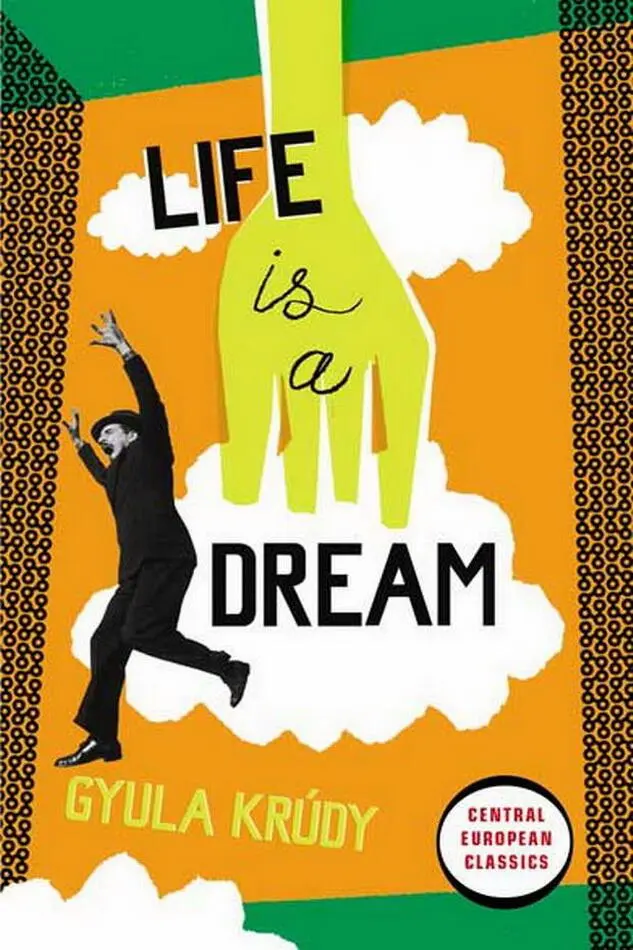
- Название:Life Is A Dream
- Автор:
- Издательство:Penguin Classics
- Жанр:
- Год:2010
- ISBN:нет данных
- Рейтинг книги:3 / 5. Голосов: 1
-
Избранное:Добавить в избранное
- Отзывы:
-
Ваша оценка:
Life Is A Dream: краткое содержание, описание и аннотация
Предлагаем к чтению аннотацию, описание, краткое содержание или предисловие (зависит от того, что написал сам автор книги «Life Is A Dream»). Если вы не нашли необходимую информацию о книге — напишите в комментариях, мы постараемся отыскать её.
Life is a Dream
Life Is A Dream — читать онлайн бесплатно полную книгу (весь текст) целиком
Ниже представлен текст книги, разбитый по страницам. Система сохранения места последней прочитанной страницы, позволяет с удобством читать онлайн бесплатно книгу «Life Is A Dream», без необходимости каждый раз заново искать на чём Вы остановились. Поставьте закладку, и сможете в любой момент перейти на страницу, на которой закончили чтение.
Интервал:
Закладка:
Therefore he directed all of his attention at the Parisi Street shoemaker consuming his meal, and inwardly cursed the chimney sweep who was on his way out, toothpick in mouth, reaching for his hat and many-pleated coat.
For here was truly a splendid portion of beef. Gourmands dream of such cuts of beef when they arrive past their usual lunchtime at the tavern they frequent, only to see the boiled beef crossed out on the menu as if exiled forever by the waiter’s pencil. And so Mr Sortiment’s covetous eyes (eyes that at times betrayed his true nature) kept reexamining that colossal slab of meat, which must have been cooked to a state of utmost tenderness in the kitchen that morning. That cut of beef may have included a part that patrons of taverns liked to call an ‘end piece’, while the enormous bone that crowned this prize portion of meat testified that the Parisi Street shoemaker’s was truly a regal helping of beef, no doubt due to favouritism on the cook’s part. (The maker of footwear obviously must have bribed her with a pair of slippers.) Sortiment envisioned the steaming hunks of meat, fatty parts and even bits of tallow that hung so appetizingly from that bone, all going into his own mouth. And his carious teeth craved the rich fare, although his doctor had advised him against fatty foods.
The shoemaker, you had to hand it to him, really knew how to deal with such regal spoils, so rarely attainable for the restaurant goer. First of all he made sure to tie a napkin around his neck. Next he lined up the salt and pepper shakers and even the mustard jar within easy reach, even though it was unlikely he would need the latter, given the plate of horseradish in vinegar served up, alongside the beef, by the sleepy waiter. The shoemaker certainly did not spare the salt. He used it liberally over the bits of vegetables that partially covered the meat, paying especial attention to the slices of potatoes, carrots, celeries and Savoy cabbage that came with the soup, always a favourite of cobblers who work sitting on three-legged stools. He salted the meat and turned it over to inspect it from the bottom with hungry eyes, as if he were checking out some female from head to toe. And he even salted the horseradish.
Hmm, reflected Sortiment, pushing away his half-consumed dish. This shoemaker is a bigger rascal than I would have believed …
Whereupon the shoemaker, grabbing the fork in his left hand, stabbed it into the meat so that the juice spurted, and started to slice it up into small pieces with his knife. By then Mr Sortiment had made up his mind. He was only waiting for the shoemaker to taste the beef, to decide by the expression on the man’s face … But unexpectedly the shoemaker seized a spoon and dipped it into the broth remaining in the bowl. He slurped the hot broth which obviously must have burned his mouth; none the less he went at it again and again (after seasoning it with a pinch of paprika), all the while shutting his eyes in pleasure or pain…This clinched the matter for Mr Sortiment, who suddenly recalled a bachelor friend of his, a retired judge, who liked to lean on his umbrella and speak slightingly of the world, his philosophy being that only what we eat is truly ours. Mr Sortiment was convinced that the judge would approve his next act …
‘Mozel,’ he began in a deliberate drawl, when he saw the waiter shaking his head in concern over the half-finished plate, ‘tell me, Mozel, might there be in your kitchen some bone about the size of a child’s fist with a few bits of meat left on it?’
‘But of course!’ replied Mozel, his face brightening. ‘And if there isn’t, we’ll see if we can make one.’
The editor gestured to explain: ‘You know, it shouldn’t be too big, just a nice little titbit that will still leave room for lunch.’
Mozel nodded, and directed his legs enveloped in loosely fitting trousers (which he must have pressed every night) towards the kitchen. Meanwhile Mr Sortiment kept an eye on the Parisi Street shoemaker. That individual was now dipping the tip of his knife into the horseradish in vinegar, and, removing a small heap from the abundant supply, placed it on a pre-selected mouthful of meat — part fatty, part sinewy — then balancing the meat on knife and fork, shovelled it into his mouth. A single, but all the more satisfied, movement of the jaw followed, as if a millstone had shifted inside the mouth, and the knife was already heading towards the horseradish, while the left hand broke off a piece of bread and held it in readiness over the table.
And now here came Mozel with a meaty bone resting on a double platter. Hmm, the shoemaker’s was a finer piece, obviously he had ordered first, thought the editor, eyeing the meat that was lined by a feathery, thin layer of fat …
‘Who is your butcher?’ he inquired absent-mindedly.
‘Dubovetz, on Lipot Street.’
… Before the editor launched into the appropriate rituals preceding the consumption of his beef, he cast a sudden glance at Mozel, who stood on his left, in a pose of almost worshipful attention. ‘Now what?’ inquired Sortiment, withdrawing the knife that was on its way towards the salt cellar. ‘Are you having second thoughts about bringing me this particular piece from the kitchen?’
Mozel gave off a tremendous sigh: ‘If my father were alive and came to have brunch at the Seven Owls, I couldn’t have given him a better portion. But the poor old man cannot be with us, because he rests in the cemetery in Vac, since a scoundrel named Kupriczky persuaded him to use his talents for the production of counterfeit five-forint bills …You see, my father had been assistant photographer to Professor Ellinger …’
‘Well, how did the bills turn out?’ asked the editor, sucking his teeth.
‘They only managed to produce a single five-forint bill before the police apprehended them, and the judge sentenced my father to ten years — for one lousy fiver, such as big spenders who have had one too many sometimes use to light their cigars with. A single fiver!’ Mr Mozel added after a pause and involuntarily reached under the tail of his coat to rattle the change purse concealed there.
The editor, too, envisioned a five-forint bill, with its depiction of nude mythological figures wielding spades, hoes and rakes in a green field. These were the bills the editor used to pay for poems and stories — he kept the money at home in a desk drawer, the banknotes neatly folded between the pages of a cookbook written by Aunt Rezi. And oh yes, Ligetsarki had wheedled from him two of those bills as an advance for a story that was still ‘forthcoming’ … This thought soured the editor’s mood once again, so that he began to notice that the meat was rather stringy, in other words, not the real thing, certainly nothing like the shoemaker’s — who was just at that moment reaching the stage in his meal where he started to round up the leftover pieces on his plate and from the bowl, fishing with his spoon in the remaining broth for bits of vegetables that he steered with a piece of bread, and capturing slivers of meat on his knife, to be advanced towards his slurping, opened mouth. Yes, they say it is precisely these last mouthfuls that nourish a man. — Ah, how splendid that helping of beef must have been, when even its wreckage was consumed with such passion!
‘Surely one five-forint bill is not worth ten years,’ murmured the editor without much conviction, for his vanity was flattered by the head waiter lingering near his table while there were other guests in the establishment.
Mr. Mozel responded: ‘Actually the ten years wouldn’t have been so bad. Anyway the old man did no more than three, before he died of consumption. But he left behind a girl, a stepdaughter with whom neither my wife nor myself can seem to do anything. She’s in her twentieth year and she’s already worked as a milliner, seamstress, tobacconist … But she just wants to be another Mariska Simli. She’s crazy, I tell you, totally crazy.’
Читать дальшеИнтервал:
Закладка:
Похожие книги на «Life Is A Dream»
Представляем Вашему вниманию похожие книги на «Life Is A Dream» списком для выбора. Мы отобрали схожую по названию и смыслу литературу в надежде предоставить читателям больше вариантов отыскать новые, интересные, ещё непрочитанные произведения.








Обсуждение, отзывы о книге «Life Is A Dream» и просто собственные мнения читателей. Оставьте ваши комментарии, напишите, что Вы думаете о произведении, его смысле или главных героях. Укажите что конкретно понравилось, а что нет, и почему Вы так считаете.