Gyula Krúdy - Life Is A Dream
Здесь есть возможность читать онлайн «Gyula Krúdy - Life Is A Dream» весь текст электронной книги совершенно бесплатно (целиком полную версию без сокращений). В некоторых случаях можно слушать аудио, скачать через торрент в формате fb2 и присутствует краткое содержание. Год выпуска: 2010, Издательство: Penguin Classics, Жанр: Современная проза, на английском языке. Описание произведения, (предисловие) а так же отзывы посетителей доступны на портале библиотеки ЛибКат.
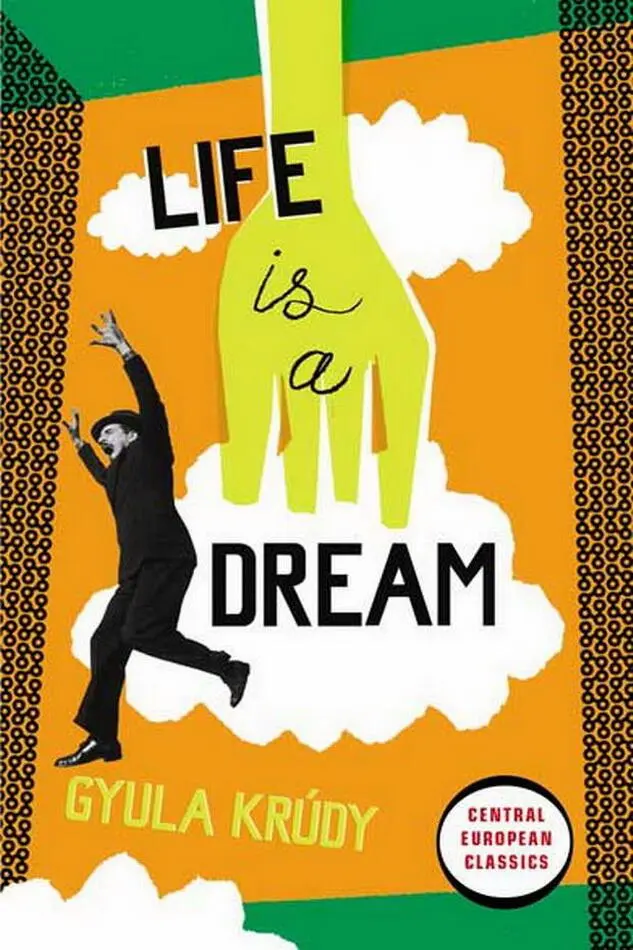
- Название:Life Is A Dream
- Автор:
- Издательство:Penguin Classics
- Жанр:
- Год:2010
- ISBN:нет данных
- Рейтинг книги:3 / 5. Голосов: 1
-
Избранное:Добавить в избранное
- Отзывы:
-
Ваша оценка:
Life Is A Dream: краткое содержание, описание и аннотация
Предлагаем к чтению аннотацию, описание, краткое содержание или предисловие (зависит от того, что написал сам автор книги «Life Is A Dream»). Если вы не нашли необходимую информацию о книге — напишите в комментариях, мы постараемся отыскать её.
Life is a Dream
Life Is A Dream — читать онлайн бесплатно полную книгу (весь текст) целиком
Ниже представлен текст книги, разбитый по страницам. Система сохранения места последней прочитанной страницы, позволяет с удобством читать онлайн бесплатно книгу «Life Is A Dream», без необходимости каждый раз заново искать на чём Вы остановились. Поставьте закладку, и сможете в любой момент перейти на страницу, на которой закончили чтение.
Интервал:
Закладка:
That rattle-trap lay waiting in a corner of the yard now, just like some partner in crime, holding the bag. The whip stood cocky and romantic, stuck upright in its holder, as if at a wedding — evidently the owner left it there expecting plenty of occasions for further use.
Terka headed towards the stable where Szindbad’s coppery dapple turned a cunning head from the feed-box to eye her.
‘It’s only me!’ — she reassured the equine who was famous for having spent her years as a filly in the service of an itinerant circus and was known far and wide for her unusual colours, in case anyone had a mind to steal her. Oh, how often Terka had felt like interrogating this ten-year-old mare about the places she had taken Szindbad!
Occasionally Terka would find ribbons of pink or other frivolous colours braided into the horse’s mane, and with a flick of the whip she would chide the horse, ‘You’re just as flighty as your master!’
But now she approached the animal with a certain amount of sympathy and untied her from the feed-box for she was familiar with the tricky knot Szindbad liked to employ, the same which was on his own apparel.
‘You’ll have to take your master home,’ she instructed the mare as she harnessed her to the cart, just as she had on dark winter mornings when Szindbad felt like another forty winks under the eiderdown. ‘Take him back to his old lady.’
She led the horse and cart to her door as noiselessly as if she were a thief in her own home… Then, mustering all her strength, she hauled Szindbad from the room by grabbing his yellow boots. Dragging him along the floor made Szindbad’s hair tousled like the feathers of a drake, but he arrived in the yard without injury. Then came a miracle only a woman is capable of: Terka hoisted the dead man, just like a sack of straw, up on to the cart. She propped him up, tied the reins to his hands, and hissed at the horse just as she had so often heard Szindbad do. The clever little horse turned towards the open gate and headed out, carrying Szindbad on the familiar road into the winter night.
So the dead Szindbad travelled on … seated on the same old cart that took him to his rich but aged wife Cezarina, to hefty, buxom Terka, as well as to other wenches here and there whose legs he deemed desirable during his lifetime.
Had he been truly dead, he would have fallen off the rickety vehicle; but this way, in suspended animation, he may even have listened to the usual creaky song of the cart. At any rate his head kept nodding as the wheels bumped and lurched along the rutted road.
Now he rode without stopping, past the ratty bushes at crossroads and the apathetic roadside acacias waiting for some wayfarer to hang himself on a branch, whereas formerly Szindbad would pull up at these spots to check out the messages left by wandering Gypsies who tied all sorts of colourful rags on the twigs. Was it under that tree that some road-weary tramp stretched out his bunioned toes for the last time, glimpsing angels in his final dream as he froze to death with a smile on his face? And by the side of that ditch there is that an old, useless ownership paper tossed away by disheartened horse thieves whose business came to naught — or was it a letter carrying someone’s entire life story, until rain and snow obliterated all such vanities …
Neither did the creaking cart stop at those outlaw-frequented taverns Szindbad could never pass by without inquiring from some old sheep-herder’s wife if anyone from these parts had been taken off to prison, or had a new son or daughter, or had been beaten to death the week before. Behind the small, barred windows of the wayside tavern the regulars heard the familiar creaking of the cart, but nothing doing; the bagpipe player looked up from the cinder heap, his eyes, red as winter sunsets, strained in vain; as for the tavern keeper, he might as well have sealed his long beard to the table with candle wax … The bedsprings of roadside inns would no longer groan under the weight of Szindbad in his cups — and womenfolk seated on iron-clad trunks riding to the fair would now be left in peace. Never again would Szindbad torment them with questions about the number of petticoats they had on for the winter journey.
Crickety-creak went the cart carrying the dead man, but no farmer with a young wife to guard grabbed the pitchfork at the approach of the wayward gentleman … Yet here and there light still streamed from the small rooms of a house in some hamlet, like the eyes of young girls kept open by curiosity even at night. Surely there were women gathered somewhere for an evening of quilting, feather-plucking and story-telling, where Szindbad had once listened reverentially, only to sneak up on the storyteller and give her a thorough tickling. And he would carry away with him scents and aromas that Cezarina could instantly peg as coming from a peasant home …
Arriving in a dark yard, the well-trained little mare came to a stop and whinnied lustily. Cezarina, in a sheepskin waistcoat, grabbing a stable lantern, stepped from her doorway like damnation and hellfire … Even in a state of suspended animation Szindbad still trembled at the sight of this woman who was as sharp and thin as a capital letter printed in a book of psalms.
‘Well, looks like he’s a goner …’ Cezarina pronounced after a brief scrutiny. The widow of a poultry-breeder, after a fowl plague she could assess at a glance the damages entailed by the fallen roosters and hens. (Pullets didn’t count for much, they were a dime a dozen, like any fledgling. But Szindbad had been a useful old rooster …)
Without lamenting, or indeed creating much of a fuss, she quickly decided what to do. She gave two or three slaps to the former circus mare eagerly trying to head for the stable, checked to see if there was a knapsack or other valuable in the hold of the cart, and pulled off Szindbad’s short fur jacket, for it was lined with lynx, and still handy for some deserving man … After brief hesitation she even took Szindbad’s astrakhan fur hat, for she herself had bought it for him at a shop in Miskolc.
‘Well now, go on back to your girlfriend, to your Terka. I sure won’t bother with your funeral, seeing as how you didn’t die at home,’ she said, depositing her husband’s things on the porch.
As the cart carrying the dead man was about to roll out through the gate, she caught up with the two-wheeler and yanked out the stylish whip-handle from its holder.
So now Szindbad and his cart proceeded on the familiar trail back to Terka’s house. The clever little horse stopped in the yard and whinnied. But whinny as she might, Terka had not the least intention of opening the door. She pretended to be asleep, but surely she must have been cursing under her breath … However, at daybreak, when the cold turned nippy, she heard Szindbad’s voice in front of her door: ‘Open up, woman, I’m freezing out here!’
(1925)
The Apostle of Heavenly Scents
As I recall it was one of those virginal, snow-flurried early spring days in the year 19** such as the editors of the Farmers’ Almanack never dare to predict, seeing as how the kisses thrown by snowflakes are rung in by the tweet-tweet of those little birds of March whose whistle, frozen silver, proclaims the certainty of fair weather around the corner. None the less, stepping out through the front door one still pauses for a shake of the head before deciding to set out on the daily rounds. Hmm, you think, it’s still too soon to don that new hat purchased in honour of the spring of 19**. Once again you are obliged to dress like some itinerant college student about to set out on a long journey, whereas with spring just around the corner one would like to entertain all sorts of different notions. — That’s how my thoughts ran, for I am a solitary man, without anyone to direct my wandering mind towards pleasant valleys or glittering mountain peaks.
Читать дальшеИнтервал:
Закладка:
Похожие книги на «Life Is A Dream»
Представляем Вашему вниманию похожие книги на «Life Is A Dream» списком для выбора. Мы отобрали схожую по названию и смыслу литературу в надежде предоставить читателям больше вариантов отыскать новые, интересные, ещё непрочитанные произведения.





Обсуждение, отзывы о книге «Life Is A Dream» и просто собственные мнения читателей. Оставьте ваши комментарии, напишите, что Вы думаете о произведении, его смысле или главных героях. Укажите что конкретно понравилось, а что нет, и почему Вы так считаете.