Nathan Hill - The Nix
Здесь есть возможность читать онлайн «Nathan Hill - The Nix» весь текст электронной книги совершенно бесплатно (целиком полную версию без сокращений). В некоторых случаях можно слушать аудио, скачать через торрент в формате fb2 и присутствует краткое содержание. Год выпуска: 2016, Издательство: Knopf, Жанр: Современная проза, на английском языке. Описание произведения, (предисловие) а так же отзывы посетителей доступны на портале библиотеки ЛибКат.
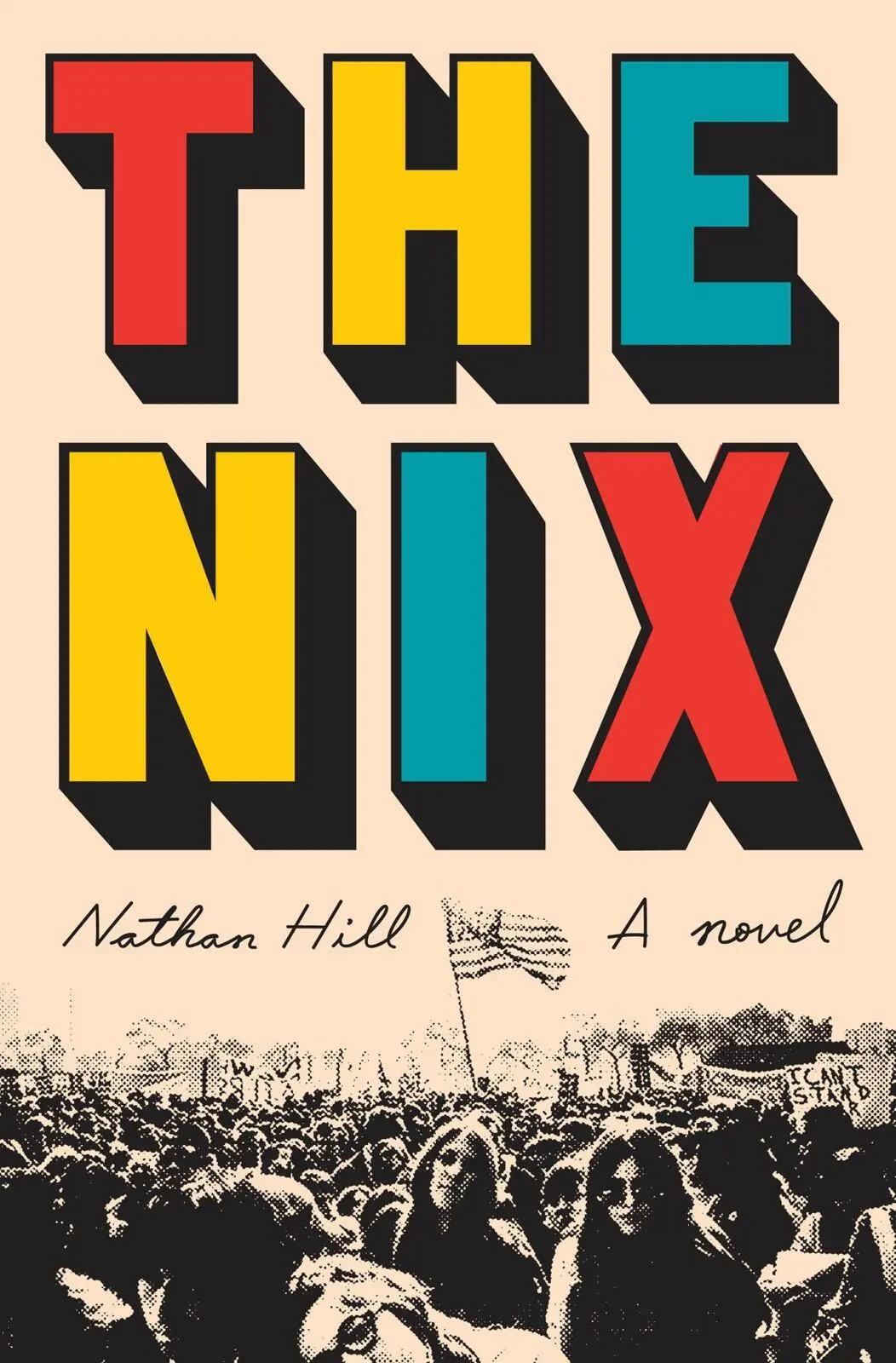
- Название:The Nix
- Автор:
- Издательство:Knopf
- Жанр:
- Год:2016
- ISBN:нет данных
- Рейтинг книги:5 / 5. Голосов: 1
-
Избранное:Добавить в избранное
- Отзывы:
-
Ваша оценка:
The Nix: краткое содержание, описание и аннотация
Предлагаем к чтению аннотацию, описание, краткое содержание или предисловие (зависит от того, что написал сам автор книги «The Nix»). Если вы не нашли необходимую информацию о книге — напишите в комментариях, мы постараемся отыскать её.
As Samuel begins to excavate her history, the story moves from the rural Midwest of the 1960s to New York City during the Great Recession and Occupy Wall Street to the infamous riots at the 1968 Chicago Democratic National Convention, and finally to Norway, home of the mysterious Nix that his mother told him about as a child. And in these places, Samuel will unexpectedly find that he has to rethink everything he ever knew about his mother — a woman with an epic story of her own, a story she kept hidden from the world.
The Nix — читать онлайн бесплатно полную книгу (весь текст) целиком
Ниже представлен текст книги, разбитый по страницам. Система сохранения места последней прочитанной страницы, позволяет с удобством читать онлайн бесплатно книгу «The Nix», без необходимости каждый раз заново искать на чём Вы остановились. Поставьте закладку, и сможете в любой момент перейти на страницу, на которой закончили чтение.
Интервал:
Закладка:
“Why you gotta walk alone all the time?” he said. “It’s not safe.”
“It’s perfectly safe.”
“There are dangerous people out here,” he said, and he gathered her up in his big arms and squeezed her right where it hurt.
“Ouch.”
“Oh, god,” he said, releasing her. “I’m a moron.”
“It’s fine.” She patted him on the arm. “I ought to get going.” Alice stood up. She felt the dampness in her jeans turning chilly. She wanted to go home. She wanted a shower.
“Let me drive you,” Brown said.
“No. People will see us.”
“I’ll drop you a couple blocks from the dorm.”
“It’s okay,” she said.
“When will I see you again?”
“Yeah, about that. Next time I’d like to try something different,” she said, and his heart leaped: There would be a next time!
“Next time,” she said, “I’d like you to choke me.”
Brown felt his butterflies disappear. “I’m sorry, what?”
“You don’t have to actually choke me,” she said. “How about you put your hand there and act like you’re choking me.”
“Act like it?”
“If you also wanted to squeeze a little, that would be fine too.”
“Jesus!” he said. “I am not doing that.”
She frowned. “What’s your problem?”
“ My problem? What’s your problem? Did I hear you right? Choke you? That’s going way too far. Why on earth would I do that?”
“We’ve been over this before. Because I’ve never tried it.”
“No. That’s not it. That’s a reason to eat teriyaki. That’s not a reason to goddamn choke you.”
“It’s all I have.”
“If you want me to do this, you need to explain yourself.”
It was the first time he’d really stood up to her, and he was immediately regretting it. He worried that she’d simply shrug her shoulders and leave. As with most dysfunctional couples, there was an imbalance between them regarding who needed the relationship more. It was an unspoken fact that she could leave at any moment with very little pain, whereas he would be devastated. A puddle of rejection. Because he knew nothing like this would ever happen to him again for the rest of his life. He would never again find a woman like Alice, and after she was gone he would return to the life she had revealed to be tedious and barren.
His response to Alice was really a response to the exigencies of monogamy and mortality.
Alice sat there thinking a moment, more reflective than he’d ever seen her. Part of her confidence was that she seemed to know exactly what she wanted to say at any given moment, so this pause felt unusual and out of character. She gathered herself up and looked at him above those dark sunglasses she always wore and breathed a heavy, somewhat exasperated sigh.
“Here’s the thing,” she said. “Normal sex with boys doesn’t really interest me. The usual stuff, I mean. Most boys treat sex like it’s a pinball game. Like it’s a matter of whapping the same levers again and again and again. It’s boring.”
“I’ve never played pinball.”
“You’re missing the point. Okay, different analogy: Imagine everyone was eating this cake. And they told you how good the cake was. And when you tried the cake, it tasted, you know, like paper and cardboard. It was terrible. And yet all your friends loved it. How would you feel?”
“Disappointed, I guess.”
“And crazy. Especially if they told you it wasn’t the cake’s fault. That the real problem was you. That you weren’t eating it right. I know I’m stretching the metaphor pretty thin.”
“So I’m a new piece of cake for you?”
“I just want to be made to feel something.”
“Have you told your friends about me?”
“Hah. No way. ”
“I embarrass you. You’re ashamed of me.”
“Listen, in real life, I’m an antiauthoritarian anarchist. And yet, there’s this electric part of me that also wants to be dominated sexually by a cop. I prefer to go with it and not judge. But I don’t think my friends would understand.”
“All these things we’re doing,” he said, “the handcuffs, the rough stuff. Are they, you know, are they working?”
She smiled. She touched his cheek lightly, the most gentle touch she’d ever administered. “You’re a good man, Charlie Brown.”
“Don’t say that. You know I hate that.”
She kissed him on the top of his head. “Go fight crime.”
She felt his eyes on her as she left. She felt his bruises on her neck and cheek. As she walked away, she felt a great cold glob of him sliding out.
6
IT WAS A WHISPER on campus, spread between one turned-on student and another. It was a secret not shared with the pro-war ROTC cadets, nor the fraternity jocks, nor the husband-seeking debutantes. Only the most committed, only the most sincere were allowed to hear it: On certain days, in a certain classroom, deep within the bewildering labyrinth of the Behavioral Sciences Building, for an hour at a time, the war was officially over.
Vietnam did not exist during this hour, in this class. Allen Ginsberg, the great poet newly arrived from the coast, led them, beginning each class with the same words: “The war is officially over.” Then the students repeated the words, then repeated them again, in unison, and the fact of their voices harmonizing made the words more real. Ginsberg told them how language has power, how thought has power, how releasing these words into the universe could begin a cascade that would make the words facts.
“The war is officially over,” Ginsberg said. “Say it until the meaning disappears and the words become pure physical things that erupt from the body because the names of gods used in a mantra are identical with the gods themselves. This is very important,” he said, raising a finger into the air. “If you say ‘Shiva’ you are not calling for Shiva, you are producing Shiva, creator and preserver, destroyer and concealer, the war is officially over.”
Faye watched him from the back of the room, where she sat, like everyone else, on the dusty linoleum floor — watched his swinging silver peace-sign necklace, his eyes blissfully closed behind horn-rimmed glasses, and all his hair, that scrum of black and tangled hair that had migrated from the now-smooth crown of his head down to his cheeks and jowls, a beard that shook as he shook, rocking and swaying during the prayer chanting like congregants did in the more exuberant churches, his whole body getting involved, his eyes closed, his legs crossed, he brought his own special rug to sit on.
“A body vibration like they do on the plains of Africa,” said Ginsberg, who with a harmonium and finger cymbals played the music they notched their chants to. “Or the mountains of India, or any place absent television machines that do the vibrating for us. We have all forgotten how to do this except maybe Phil Ochs singing ‘The War Is Over’ for two whole hours once, a mantra more powerful than all the antennas of the Columbia Broadcasting System, than all the broadsides printed for the Democratic National Convention, than ten full years of political speech yakking.”
The students sat cross-legged on the floor and rocked themselves to some private interior tempo. It looked like a room of spinning tops. The desks were shoved to the outer edges of the class. Someone’s jacket hung over the window on the door, blocking the view into the room, in case of passing administrators or campus security or some of the less-hip professoriate.
Faye knew that the war-is-officially-over chant would eventually give way to “Hare Krishna, Hare Rama,” and then they would end their hour together with the sacred vowel: “om.” This was how each of their classes had gone so far, and Faye felt crushed that all she might learn from the great Allen Ginsberg was this: how to sway, how to chant, how to growl. This was the man who’d written poems that burned her right through, and sitting in her chair on the first day of class she was worried she’d be struck dumb in his presence. Then she saw him and wondered where the nice neat man from the author photo had gone. No more tweed jacket and combed hair — Ginsberg had fully embraced the counterculture’s most obvious emblems, and at first Faye felt disappointed at the lack of creativity this implied. Now her feelings were closer to plain annoyance. She wanted to raise her hand and ask “Are we ever going to learn about, you know, poetry ?” if it weren’t such an obviously unwelcome question. For the students in this class didn’t care about poetry — they cared about the war, and what they wanted to say about the war, and how they were going to stop the war. Primarily, they cared about the war protest at the upcoming Democratic National Convention, now only days away. It would be a mighty thing, they all agreed. Everyone was coming.
Читать дальшеИнтервал:
Закладка:
Похожие книги на «The Nix»
Представляем Вашему вниманию похожие книги на «The Nix» списком для выбора. Мы отобрали схожую по названию и смыслу литературу в надежде предоставить читателям больше вариантов отыскать новые, интересные, ещё непрочитанные произведения.





Обсуждение, отзывы о книге «The Nix» и просто собственные мнения читателей. Оставьте ваши комментарии, напишите, что Вы думаете о произведении, его смысле или главных героях. Укажите что конкретно понравилось, а что нет, и почему Вы так считаете.