Joanna Kavenna - Inglorious
Здесь есть возможность читать онлайн «Joanna Kavenna - Inglorious» весь текст электронной книги совершенно бесплатно (целиком полную версию без сокращений). В некоторых случаях можно слушать аудио, скачать через торрент в формате fb2 и присутствует краткое содержание. Год выпуска: 2008, Издательство: Faber and Faber, Жанр: Современная проза, на английском языке. Описание произведения, (предисловие) а так же отзывы посетителей доступны на портале библиотеки ЛибКат.
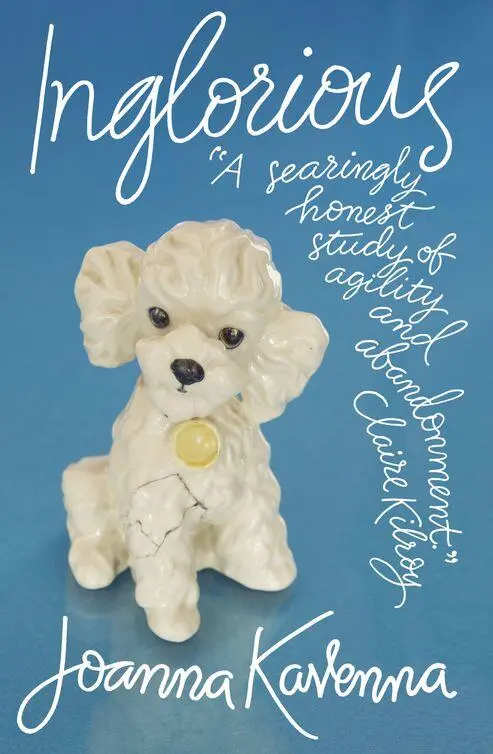
- Название:Inglorious
- Автор:
- Издательство:Faber and Faber
- Жанр:
- Год:2008
- ISBN:нет данных
- Рейтинг книги:3 / 5. Голосов: 1
-
Избранное:Добавить в избранное
- Отзывы:
-
Ваша оценка:
Inglorious: краткое содержание, описание и аннотация
Предлагаем к чтению аннотацию, описание, краткое содержание или предисловие (зависит от того, что написал сам автор книги «Inglorious»). Если вы не нашли необходимую информацию о книге — напишите в комментариях, мы постараемся отыскать её.
Having stripped herself of her former context, and become inexplicable to her friends and family, she embarks on a mock-epic quest for a sense of purpose, for an answer to the hoary old question 'Why Live?' Her comical grail quest is fraught with minor trials — encounters with former friends, unsympathetic landladies, prospective employers, theory-mongers, and denizens of the 'real world'. Rosa also falls into a state of constant motion, nervously treading around London. Yet her constant circumnavigations of the city fail to enlighten her, and she escapes from the city to join friends in Cumbria. This escape finally precipitates the climax of the book, the greatest trial, and the beginnings of her return to normality, whatever that was.
Inglorious — читать онлайн бесплатно полную книгу (весь текст) целиком
Ниже представлен текст книги, разбитый по страницам. Система сохранения места последней прочитанной страницы, позволяет с удобством читать онлайн бесплатно книгу «Inglorious», без необходимости каждый раз заново искать на чём Вы остановились. Поставьте закладку, и сможете в любой момент перейти на страницу, на которой закончили чтение.
Интервал:
Закладка:
‘Rosa,’ said her father. ‘Please don’t add a Messiah complex to your list of woes.’
‘That’s not what I mean.’
‘If you don’t like the office, then do something else.’
‘I mean, there’s so little time, and how are you meant to consider anything at all, when there’s this constant thing at your back — not even time’s winged chariot, I mean that’s there too, but the imperative — the imperative to earn money. And for that you have to adopt a mask. Dress up. Mark time. Squander days.’
‘It’s a basic,’ he said. ‘There’s no escaping it.’
Successive nights like rolling waves convey them quickly who are bound for death, she quoted, whenever anyone would listen. ‘Melodrama,’ said Grace, when Rosa said this to Grace in July when she had been ignorant and they had still been friends. ‘Plain melodrama! Get a grip, Rosa! You’re acting like a child!’
‘But a child doesn’t know the horror! The horror!’ said Rosa.
‘Don’t try to quote your way out of it,’ said Grace. ‘Don’t drag literature into it. You’ve had a terrible time. But we have to work. We all have to work. You just have to grow up!’
With her back against the wall (and on the wall was a poster saying ARE YOU MAKING THE MOST OF YOUR SAVINGS?) Rosa knew they were right. All of them: Grace, her father, the Grail Knights, the whole lot of them. (And now she thought TEMP might mean the Knights Templar, that seemed quite probable as she sat there with her hand on her heart and a feeling as if her blood was fizzing through her veins. A local branch. A modern version. Galloping towards truth.) They were joined together in a rousing chorus, the refrain something about getting on with it, not festering. Sharkbreath was in there too, telling her she couldn’t borrow any more. We all have to work, they were singing, moving crabwise along the stage. We all have to work! Life was short, and indeterminate, the mysteries of the universe quite out of reach, but action was required. You had to play a part. Simply, you might as well join in! You couldn’t just fall off the horse at the first hedge! Your mother has died, but worse things would happen. Your father will die, your lover, your friends, everyone will die, you included! Still, whenever she saw something that suggested a return to the office she found she couldn’t tick it. So she had gone along to the local library and asked if they needed any help. There at least she could read, she thought. She could brush her hands over the soft spines of books, stack them on shelves and she could sit at a desk and direct people to the large-print novels. She was mobile and fairly bright, she explained. She knew a few jokes and she had once been a decent raconteur. She could definitely manage a stamping thing, she said, a book stamper, a stampe de livres, whatever it was called, and she knew how to talk about books. A woman with bright red lipstick had asked her for references. Rosa said she would supply some soon, and offered to show just how she could stack. She had read a lot of books, she said. Mostly modern classics, though she had recently begun a course of reading, from the Ancients to the present day. Meanwhile she had read a lot of Dickens and much of Dostoevsky. Some of Gogol. Most of the Eliots, George and T.S…. Ask me about a book, she said, any book, I’ll pretend I’ve read it. She was trying to look practical and efficient, like a woman with better things to do who happened to feel like working in a library. But the red-lipped woman turned Rosa down. Apparently she didn’t present the right qualifications. Then she applied for jobs as a farm worker. She had a soothing image of herself living it up on a Welsh farm, drinking cider in the evenings and falling in love with a boy called Glynn. But so far no one had written back to her.
Another waste of time had been her interview with Pennington, the other day. She had really thought that job might be the one, a thing she could commit to, but Pennington had sorely disappointed her. The auguries were bad, and when she saw Pennington’s house she knew they were doomed, both of them. She was up in Kensal Green, at a forgotten line of houses far from the tube, and she looked at the snagged gate and the paint-peeling walls and the dirt-flecked windows and she stopped on the pavement, her hand poised above the gate. She was irresolute for a few minutes, perhaps it was longer, and then she found she was knocking on the door. She regretted it when she saw Pennington standing there, a man with a thatch of grey hair and a booming voice. He was smiling at her, rubbing his hands. His glasses, which were smeared with grime, had been mended with sellotape. He was looking for a proofreader, his advert had explained. ‘I have been working for twenty years on a definitive history,’ he said, as he led her through the hall to the living room of his small, shabby house. ‘I have various theories to prove. I need someone who can work with me on it. I can’t pay much. You’ll find it adequate, as long as your expenses aren’t great. Your main motive would be the experience. You would be dedicated to the research itself.’
No good, then , thought Rosa. I am dedicated only to my debt. But Pennington was saying, ‘I am very fastidious. I like people to work hard. I strongly believe the book will make me very famous. Possibly rich, in which case I would pay you a bonus. Of course if you found me a bear or if I found you a slouch’ — and he fixed her sternly, all of a sudden — ‘we could of course agree to part. I have been through a couple of assistants already. Since I began, a dozen or so. Good ones are hard to come by. Do you know anything about Ancient Egypt?’
‘A little,’ she said. ‘I have spent a lot of time in the British Museum.’ He was staring at her, screwing his face into a thousand tucks and creases, mapping himself.
‘Well, we have all been to the British Museum,’ he said. ‘Anyone from your schoolboy to your young Turk’ — my young Turk? What was the man saying, she wondered briefly? — ‘has managed to go to the British Museum.’ He said this with disdain. He definitely had her down as one of them, a vulgar day-tripper, lagging on the steps with an ice cream.
‘If I held up this,’ and he held up a hieroglyph of a figure holding a quill. ‘What would it mean?’
‘To write?’ said Rosa.
‘Good! Good! And this?’ And he held up a hieroglyph of a figure with its arms raised.
‘To praise?’ guessed Rosa.
‘Excellent. And this?’ And he held up a picture of a man tied to a stake.
‘Prisoner?’
‘Wonderful. And this one?’ And he held up a picture of a figure sitting in an arch.
‘I don’t know,’ said Rosa.
‘That’s a god wearing the sun’s disk and grasping a palm branch in each hand,’ he said. ‘But that one was difficult.’
Idly, Rosa wondered how long the game went on. And she discovered it went on for quite some time, as Pennington asked her to guess the meanings of another batch of hieroglyphs and to translate a line of them. ‘See how you do!’ he said.
Pen in hand, she went to it. She still wasn’t sure what he was paying. He had a fixed stare. He smiled a lot, but she couldn’t tell how deep the charm went. Unmarried, she assumed. Simple and terrible in his way, with his staring eyes, his shocking refusal to break eye contact. He dropped this stare only when he was reading through her translation, laughing richly at her foolishness, then he lifted his eyes again and looked long and hard at her. Eventually he said, ‘Brilliant!’ He was laughing at her. ‘Complete nonsense! But they often are! How were you to know? How could you possibly do it? Impossible! You were bound to get it all wrong. And you did! But you tried, nonetheless, you tried. And that is very important.’
Читать дальшеИнтервал:
Закладка:
Похожие книги на «Inglorious»
Представляем Вашему вниманию похожие книги на «Inglorious» списком для выбора. Мы отобрали схожую по названию и смыслу литературу в надежде предоставить читателям больше вариантов отыскать новые, интересные, ещё непрочитанные произведения.




Обсуждение, отзывы о книге «Inglorious» и просто собственные мнения читателей. Оставьте ваши комментарии, напишите, что Вы думаете о произведении, его смысле или главных героях. Укажите что конкретно понравилось, а что нет, и почему Вы так считаете.