Margaret Millar - Wives and Lovers
Здесь есть возможность читать онлайн «Margaret Millar - Wives and Lovers» весь текст электронной книги совершенно бесплатно (целиком полную версию без сокращений). В некоторых случаях можно слушать аудио, скачать через торрент в формате fb2 и присутствует краткое содержание. Город: New York, Год выпуска: 1954, Издательство: Random House, Жанр: Современная проза, Современные любовные романы, на английском языке. Описание произведения, (предисловие) а так же отзывы посетителей доступны на портале библиотеки ЛибКат.
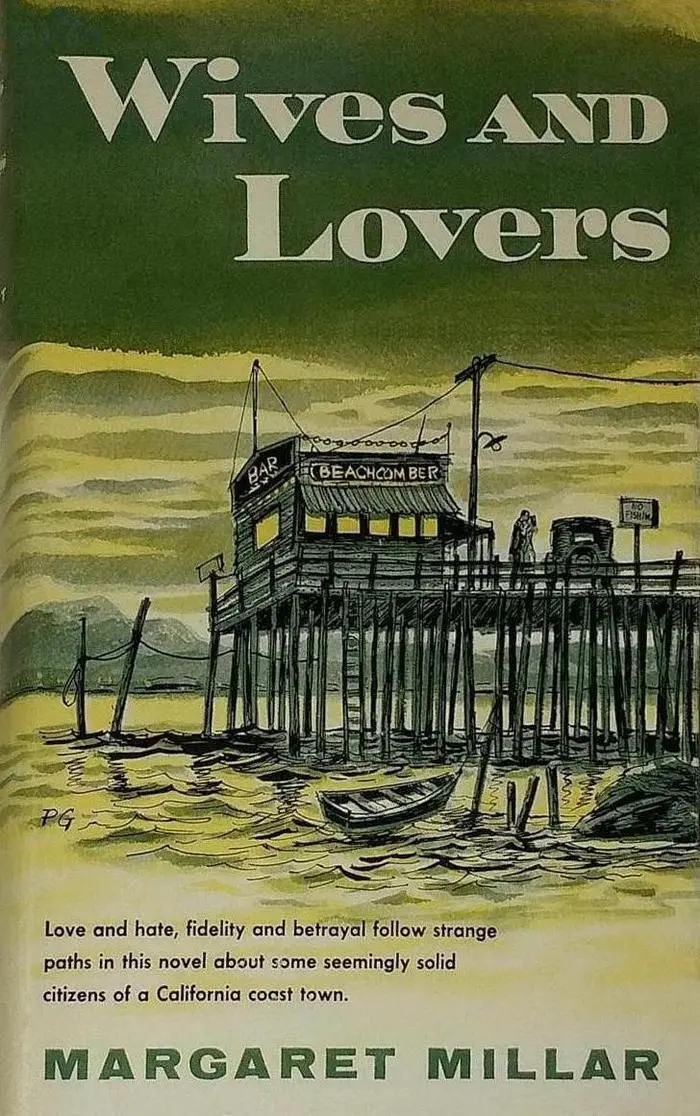
- Название:Wives and Lovers
- Автор:
- Издательство:Random House
- Жанр:
- Год:1954
- Город:New York
- ISBN:нет данных
- Рейтинг книги:3 / 5. Голосов: 1
-
Избранное:Добавить в избранное
- Отзывы:
-
Ваша оценка:
Wives and Lovers: краткое содержание, описание и аннотация
Предлагаем к чтению аннотацию, описание, краткое содержание или предисловие (зависит от того, что написал сам автор книги «Wives and Lovers»). Если вы не нашли необходимую информацию о книге — напишите в комментариях, мы постараемся отыскать её.
In a matter of weeks the girl Ruby followed Gordon home to Channel City and injected a somewhat discordant note into his otherwise peaceful marriage. Gordon’s wife, a fiercely virtuous woman, fought all through the hot summer to hold her husband, while most of the rest of Channel City lay prostrate under the burning coastal sun.
Yet Ruby’s all but hopeless love for Gordon is paralleled by other loves, equally poignant, equally real. Mrs. Millar’s novel shows, sometimes with biting humor, sometimes with warm compassion, how extraordinary the lives and loves of those around us can be.
Since her writing debut fourteen years ago, Margaret Millar has had a brilliant and variegated career as a mystery writer, as a humorist and as a serious novelist. For nearly half of those fourteen years she has been working on
It is her first major attempt to deal with the lives and loves of “ordinary” middle-class people in contemporary society.
Wives and Lovers — читать онлайн бесплатно полную книгу (весь текст) целиком
Ниже представлен текст книги, разбитый по страницам. Система сохранения места последней прочитанной страницы, позволяет с удобством читать онлайн бесплатно книгу «Wives and Lovers», без необходимости каждый раз заново искать на чём Вы остановились. Поставьте закладку, и сможете в любой момент перейти на страницу, на которой закончили чтение.
Интервал:
Закладка:
Harold was no ball of fire, but he was a good deal sharper than most people thought. He showed up badly in front of Hazel (his older sister) and Ruth (his conscience). In their presence he was always making inconsequential remarks, holding his hand up to his mouth as he spoke, as if in apology. Alone with Josephine he was different and talked quite freely about the government and the Teamsters Union, which had nice new headquarters downtown with a neon sign, and the atom bomb, which something would have to be done about, no matter if the baby turned out to be a boy or a girl.
The others might underestimate Harold, mistaking his good nature for laziness, and his dreaminess for impracticality, but Josephine knew better. Make no mistake, Harold thought great thoughts as he drove his truck.
Josephine took her toothbrush and tube of toothpaste from her bureau drawer and carried them into the bathroom. She squeezed a quarter of an inch of paste onto her brush and thought, by the time this tube is finished, I’ll know. I’ll be dead or the baby will be dead or we’ll both be alive and all right and Harold will be a father. By the time—
She had an impulse to press the tube and squeeze out the future inch by inch, an inch for each day, squeeze out the time, a long white fragile ribbon of toothpaste.
She replaced the cap, soberly. It was a brand-new tube, giant size, eighty-nine cents, and it would last a long, long time.
“—for breakfast?” Ruth’s voice floated into the turning pool of her thoughts.
“Oh. Anything. I’m not very hungry. Shredded wheat, maybe.”
“Hot or cold?”
“Cold. It’s going to be a hot day.” She was sweating already. The poison was seeping out of her system through her pores, underneath the maternity corset and the wraparound skirt and flowered smock. “No, I think I’ll take it hot, don’t you think so, Ruth?”
“I don’t know, it depends on how you feel.”
“Oh, cold then. It doesn’t matter. Anything.”
She followed Ruth into the kitchen like a sheep, and sat down heavily at the table.
“It’s such a nice day,” she said. “We should all do something, go down to the beach.”
“We can’t,” Ruth said sharply. “Not with the Mexican here. He’d probably go to sleep if he thought no one was watching him.”
Josephine smiled pensively. “Mexican babies are cute.”
“The very small ones.”
“And Chinese babies. I saw a Chinese baby in a buggy outside the Safeway yesterday. The way it looked at me! So knowing. It seems a shame — to grow up, I mean. Ruth, I know what we could do this afternoon. We could all go down to the harbor and see George. Maybe he’d lend us his sailboat, Harold’s crazy about boats.”
“I don’t know that it’d be good for you, all that up and down motion.”
“I don’t think it would hurt.”
“Anyway, you know my feelings on the subject of George.” Ruth let her feelings about George show on her face. They pulled down the muscles around her mouth and shriveled her eyes. “It’s my opinion that when you divorce a man you ought to stay divorced from him and not go phoning him and asking him over all the time the way Hazel does.”
“She feels sorry for him. He gets lonesome.”
“Even so. It’s a matter of taste. I have nothing against George, and I have nothing against Hazel, but if they want to see each other they should never have gotten divorced. It’s the principle of the thing.”
“Oh well. It doesn’t matter.” Josephine sighed imperceptibly. It was hard to talk to Ruth without coming eventually on something which was a matter of principle or good taste. Divorce, George, drunkenness, Mexicans, horse racing, leaving dirty dishes overnight, teenaged girls who giggled, motor scooters, two-piece bathing suits, dyed hair, chewing gum, not airing blankets every week and the School Board.
It was becoming increasingly difficult for Josephine to excuse Ruth, but each time she did it anyway.
“I bet the ocean looks nice today,” she said.
“The rest of you can go down if you want to. There’s nothing to stop you.”
“There’s nothing to stop you either.”
“I want to take the curtains down and wash them. Besides—” She left the word hanging in the air, radiating implications. Besides, there was the Mexican, he couldn’t be left alone to be lazy. And besides, she didn’t like the sea. Its soft inexorable voice spoke of violence and eternity. When she went out onto the pier where George worked, she felt the water beneath her and the water on each side of her and she always had the wild idea that the sky itself was part of the ocean and ready to drop down on her and slowly and gently drown her. Watching the sea gave her a feeling of expansion and disintegration inside her.
“Besides,” she said after a time, “there’s too much to be done around the house.”
She rose briskly, unable to resist her own bait. Something would have to be done about something, and everything about everything, and right now. Like a professional soldier ready to take up arms against anyone, for any reason, she marched out into the back yard on the offensive.
Escobar was on his knees digging out a root of wild morning glory with a knife. He looked up at her, squinting.
“Those are flowers,” Ruth said. “What are you digging them up for?”
“The lady of the house said on the phone to plant gardenias on this side.”
“Gardenias.”
“Yes, ma’am.”
“Gardenias. You’d think she was made of money. How much — how much do they cost?”
“For the one-gallon size, maybe about five dollars.”
“How many did she tell you to plant?”
“Six. She likes the smell, she said, ma’am.”
“Six, That’s thirty dollars. She must be out of her mind.”
“Yes, ma’am.”
“You mustn’t do it, until I get a chance to talk to her... Geraniums are plenty good enough. Some people get ideas beyond their pocketbooks. Some people think money grows on trees.” She let out a sudden harsh laugh. “For you it does. That’s funny. For you money grows on trees. ”
A spot of bright pink appeared in the center of her throat, as if someone had, with malicious accuracy, aimed a spoonful of paint at her. Knowing the spot was there, she covered it with her hand while Escobar wiped off his knife on his brand-new levis. His wife had told him to wear his old ones and he was sorry now that he hadn’t; it was a dirty job.
At noon, sitting with his back propped against the wall of the house, he ate his sandwiches and drank the warm Pepsi-Cola. Then he washed his face with the hose and dried it with his bandana.
A pile of weeds burned slowly in the yard. There was no open flame but the pile was diminishing, eaten away at the core, and the smoke rose thin and straight into the windless sky.
When Hazel came home after doing the weekend shopping she noticed with satisfaction that the eugenia hedge had been clipped, the yard raked, and the orange tree pruned, but Escobar was nowhere in sight.
She opened the screen door and went inside.
“Ruth,” she called. “Hey, Ruth! Where’s the Mexican gone?”
A gentle moan slid through the house. It seemed to come from nowhere and to mean nothing, except that somewhere, in any of the six rooms, something was still half-alive.
“Ruth, where are you?”
A second sound, louder and more definite than the first. Hazel tracked it down to the locked door of the bathroom.
“Anything the matter, Ruth?”
“No.”
“Are you crying?”
“No.”
“What on earth are you crying about?”
“No, no—”
On the other side of the locked door, Ruth leaned her head against the medicine chest over the wash basin. The tap was turned on, and the tears slid down her cheeks and dripped off her chin to mingle with the tap water.
Читать дальшеИнтервал:
Закладка:
Похожие книги на «Wives and Lovers»
Представляем Вашему вниманию похожие книги на «Wives and Lovers» списком для выбора. Мы отобрали схожую по названию и смыслу литературу в надежде предоставить читателям больше вариантов отыскать новые, интересные, ещё непрочитанные произведения.









Обсуждение, отзывы о книге «Wives and Lovers» и просто собственные мнения читателей. Оставьте ваши комментарии, напишите, что Вы думаете о произведении, его смысле или главных героях. Укажите что конкретно понравилось, а что нет, и почему Вы так считаете.