Роберт Фиш - Rough Diamond
Здесь есть возможность читать онлайн «Роберт Фиш - Rough Diamond» весь текст электронной книги совершенно бесплатно (целиком полную версию без сокращений). В некоторых случаях можно слушать аудио, скачать через торрент в формате fb2 и присутствует краткое содержание. Город: Garden City, N.Y., Год выпуска: 1981, ISBN: 1981, Издательство: Doubleday, Жанр: Современная проза, на английском языке. Описание произведения, (предисловие) а так же отзывы посетителей доступны на портале библиотеки ЛибКат.
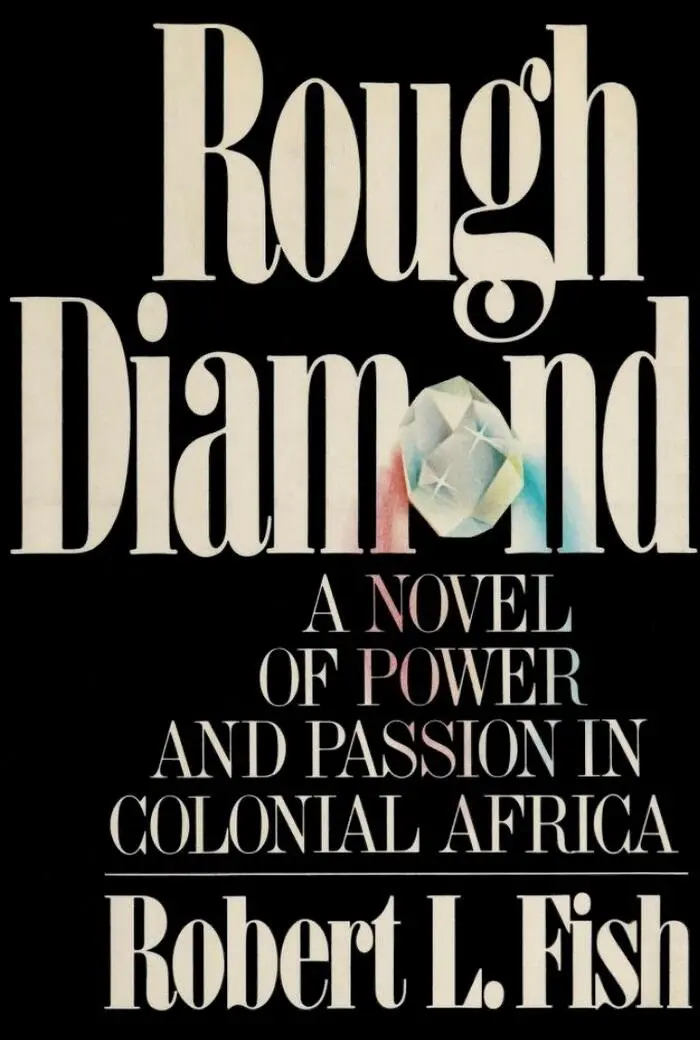
- Название:Rough Diamond
- Автор:
- Издательство:Doubleday
- Жанр:
- Год:1981
- Город:Garden City, N.Y.
- ISBN:978-0-385-15648-6
- Рейтинг книги:5 / 5. Голосов: 1
-
Избранное:Добавить в избранное
- Отзывы:
-
Ваша оценка:
Rough Diamond: краткое содержание, описание и аннотация
Предлагаем к чтению аннотацию, описание, краткое содержание или предисловие (зависит от того, что написал сам автор книги «Rough Diamond»). Если вы не нашли необходимую информацию о книге — напишите в комментариях, мы постараемся отыскать её.
Young Barney Barnato had nothing to lose when he abandoned his squalid existence in London’s East End and set out for the Dark Continent to make his fortune. He built an empire and became a threat to the ruthless Cecil Rhodes, who scorned the pauper-turned-tycoon and tried at every turn to destroy him.
But the ghetto Jew proved to be more than a match for the snobbish Rhodes, who had bought himself a title and craved total control of the diamond trade, where millions were made and lost overnight.
Barnato’s struggle, which took him from unbearable poverty to unimagined riches, from loveless slums to the loving arms of a beautiful woman, always stalked by the malevolent Rhodes, makes for a riveting novel blending history with fiction in the frontier days of nineteenth-century empire building.
Rough Diamond — читать онлайн бесплатно полную книгу (весь текст) целиком
Ниже представлен текст книги, разбитый по страницам. Система сохранения места последней прочитанной страницы, позволяет с удобством читать онлайн бесплатно книгу «Rough Diamond», без необходимости каждый раз заново искать на чём Вы остановились. Поставьте закладку, и сможете в любой момент перейти на страницу, на которой закончили чтение.
Интервал:
Закладка:
“No,” he said half angrily, and now it was as if he were speaking to himself and for himself. He stared at the ground, avoiding looking at the girl. “I’m angry at meself. I’m angry with me fer bein’ short, shorter even than you, and fer not bein’ good-lookin’ and fer havin’ to wear eyeglasses when I’m only nineteen years old. I’m angry with me fer not takin’ the trouble to talk proper when I really can if I want to. I’m angry with me fer bein’ a fool where you’re concerned. But mainly I’m angry fer wastin’ my time and yours by bein’ in love with you.” He looked up defiantly. “But I won’t bother you none no more.”
He started to climb into the cart; her hand on his arm stopped him, turned him to face her.
“Only one thing you said there is true,” she said, sounding angry herself. “That was when you said you’re a fool! You’re a fool to think any of the things you said.” She shook her head in irritation. “As if your height makes the slightest difference! And I don’t know what you think is good-looking in a man, but I suspect our opinions on that are quite different. As for the eyeglasses, my heavens! I think they make you look — well, older and even a bit distinguished. As for your speech, that’s pure laziness and we both know it. I could have you speaking properly in no time, if you’d only let me.” She hesitated a moment. “I’ll forget what you said about being in love because I don’t think either one of us really knows what being in love is. But what I would like to know is why you think you’d be wasting your time seeing me.”
Barney’s confusion had deepened. “You put your hands behind you when I come — came in. You didn’t even want to touch me.”
Fay looked at him steadily. “Take my hands.”
She held them out. Barney frowned and took them, holding them tightly. He stared down at their clasped hands, unable to see them clearly in the darkness, not knowing the reason for the gesture, but pleased to be touching Fay. “What about them?”
“You talk about being ugly; they are ugly. I was ashamed of them. I was afraid you’d be ashamed of them, too, and I didn’t want that. I culled dirt at the mine the first two months we were here; I broke up the lumps with a pick and shovel while Pa dug; we couldn’t afford help. I make the soap I use to wash clothes and the lye burns holes in the skin. My hands are awful. I never thought about them until I saw you walk into the tent tonight. Then I didn’t want you to see them.”
“Fay—”
“I didn’t think I’d ever see you again,” she said quietly. “We’ve been two miles away from each other for over six months, and you never made any attempt to look me up, to see how I was, what I was doing…” Her voice was on the verge of breaking.
“Fay, you don’t understand—”
“What don’t I understand? I thought we were friends—”
Barney took a deep breath. “My brother… Remember I told you he’d hit it rich in Kimberley? I wasn’t bragging or lying; I thought he had. Well, he hadn’t hit it big at all. In fact, he’d gone stony. And I had twenty quid to me name in me kicks — twenty pounds in my pocket, I mean, when I got here, and thin prospects. I couldn’t come to see you like that—”
“Why not?” Fay’s voice was bitter. “You couldn’t come to see a friend? I didn’t know a soul. I didn’t have a friend in the world. I still don’t. And who are we to be proud? You couldn’t come to see me because you didn’t have any money?” She looked at him steadily a moment and then looked down at the road. “My pa traded our oxen and wagon for a claim that gave less than twenty carats in a month, after digging a month on a claim he’d rented that gave even less. If the diggers didn’t advance the money for the cloth, we wouldn’t even be in tailoring.” She kicked at the dirt in the road, shook her head, and then looked up again. “Ah, what’s the use? You’re the one who doesn’t understand, Barney Isaacs.”
Barney continued to hold her hands tightly. Suddenly he bent and kissed the back of one hand and then quickly straightened up, feeling his face get red. Fay made no motion to indicate approval or rejection.
“I’m sorry,” he said, and meant it. “You’re right. I didn’t understand.” There was the briefest of pauses while Barney tried to find the right words. “Can I come around Sunday? The mines are shut down. We can have a picnic. I’ll bring everything,” he added hastily.
“I go to church.”
“Can I come around after church?”
Fay suddenly made up her mind. “Come around before church,” she said. “Come early, very early. We’ll go for a ride in the country. Away from here.” She looked around as if she could see the squalor about them in the darkness. “As far away from here as possible!”
She tugged her hands free; Barney released them reluctantly. She walked to the tent and then turned, looking back at him. “Good night, Barney Isaacs,” she said without expression, and disappeared inside.
Barney slowly climbed into his cart, his mind whirling. Fay Bees didn’t dislike him; from the way she had talked she even liked him. Oh, it wasn’t anything like love, he knew that; she had certainly made that clear enough. But it was friendship, and that was something. That was a great deal, and he’d been a fool for not having come to see her months before. Fay had had a rough time of it, and he might have been able to help in some way — but the reason he hadn’t, of course, was because he had been working for her, although naturally she would never know that, nor should she. The man Fay eventually fell in love with and married, Barney knew, would be good-looking and tall and not wear spectacles, but that didn’t necessarily mean that he’d be successful; and if Fay ever needed anything, Barney intended to see that she got it, no matter how he arranged it. He considered himself very lucky that somebody hadn’t offered her help during the six months he had allowed to pass without trying to see her. He could scarcely have blamed her had she been forced to accept.
It was a thought Barney preferred not to dwell upon. It hadn’t happened so there was no need to think of it, even though the thought kept trying to interject itself in his mind. Instead, he let old Rhodes carry him back to the center of Kimberley, through the tent village of Bultfontein, along the deserted Dutoitspan Road, aware of the fragrance of the night once the odors of the tent village were behind him and the open country between Bultfontein and Kimberley proper was being traversed. He felt totally alive, aware of everything about him, as if he had wakened from a long sleep. He remembered the thrill of holding Fay’s hands — strong hands they were, and fine hands, much put upon by the demands of a father who didn’t deserve a daughter like that — and he hadn’t noticed any roughness since his own were so calloused he couldn’t have noticed if he’d wanted to. He thought of her putting her hands behind her so he couldn’t see or feel what she thought was ugliness, and he felt proud in being considered a friend to that extent. It was a warm feeling, a good feeling, but also a sad feeling, in knowing he would never possess those hands, that girl, her love…
They had their Sunday picnic on the banks of the River Vaal to the west; not the Orange River to the south with the grave of Emily Bees to cast a shadow over the carefree spirit of the day. Fay Bees never wanted to forget her mother as she remembered her in Simonstown, a beautiful, wonderful, active, spirited person. The sickly, coughing, fevered, spitting woman who finally succumbed to the pressures of the trek and died to leave her daughter all alone was certainly not her mother, nor did Fay ever want to see again the stone cairn that hid from sight that stranger.
Читать дальшеИнтервал:
Закладка:
Похожие книги на «Rough Diamond»
Представляем Вашему вниманию похожие книги на «Rough Diamond» списком для выбора. Мы отобрали схожую по названию и смыслу литературу в надежде предоставить читателям больше вариантов отыскать новые, интересные, ещё непрочитанные произведения.







Обсуждение, отзывы о книге «Rough Diamond» и просто собственные мнения читателей. Оставьте ваши комментарии, напишите, что Вы думаете о произведении, его смысле или главных героях. Укажите что конкретно понравилось, а что нет, и почему Вы так считаете.