Keith Gessen - A Terrible Country
Здесь есть возможность читать онлайн «Keith Gessen - A Terrible Country» весь текст электронной книги совершенно бесплатно (целиком полную версию без сокращений). В некоторых случаях можно слушать аудио, скачать через торрент в формате fb2 и присутствует краткое содержание. Город: New York, Год выпуска: 2018, ISBN: 2018, Издательство: Viking, Жанр: Современная проза, на английском языке. Описание произведения, (предисловие) а так же отзывы посетителей доступны на портале библиотеки ЛибКат.
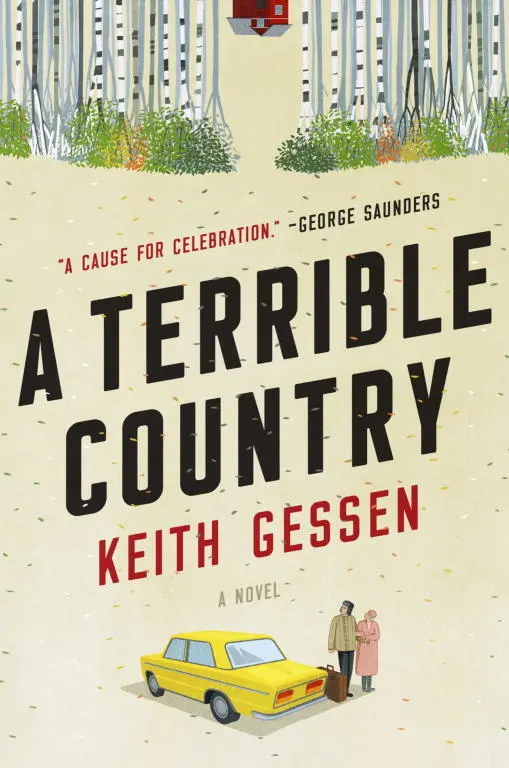
- Название:A Terrible Country
- Автор:
- Издательство:Viking
- Жанр:
- Год:2018
- Город:New York
- ISBN:978-0-735-22131-4
- Рейтинг книги:3 / 5. Голосов: 1
-
Избранное:Добавить в избранное
- Отзывы:
-
Ваша оценка:
A Terrible Country: краткое содержание, описание и аннотация
Предлагаем к чтению аннотацию, описание, краткое содержание или предисловие (зависит от того, что написал сам автор книги «A Terrible Country»). Если вы не нашли необходимую информацию о книге — напишите в комментариях, мы постараемся отыскать её.
A Terrible Country — читать онлайн бесплатно полную книгу (весь текст) целиком
Ниже представлен текст книги, разбитый по страницам. Система сохранения места последней прочитанной страницы, позволяет с удобством читать онлайн бесплатно книгу «A Terrible Country», без необходимости каждый раз заново искать на чём Вы остановились. Поставьте закладку, и сможете в любой момент перейти на страницу, на которой закончили чтение.
Интервал:
Закладка:
“I’m not leaving,” said Sergei. “I associate my fate with the fate of this country. No matter what.”
“Even if Putin comes back?” Katya asked. She meant if he came back as president. There was a sense—not really shared by the Octobrists, but Katya was not in October—that the Medvedev regime was more liberal, and a return to Putin would put an end to that.
“No matter what,” Sergei reiterated.
The table went silent. Sergei had said it very matter-of-factly, without undue drama, and still it had the effect of making everyone else feel that their attachment to Russia was inadequate.
“I feel the same,” Yulia said quietly.
The table was silent again, even more awkwardly now. I felt that people were looking at me, as if at this dinner party Yulia was breaking up with me. And in a way she was doing just that. I was from America, in the end. If she wasn’t going to leave Russia, then that meant we were kaput.
Unless.
“OK,” I said, speaking to her (I was right next to her), but also to the table. “Then I’m not leaving either.”
There was a momentary pause and then everyone laughed. We drank to me staying. Yulia kissed me on the cheek. “Don’t be an idiot,” she whispered to me.
“I don’t want to go anywhere without you,” I said.
She kissed me again.
And I meant it. These were my people. Fuck America. I would stay.
6.
SUMMERTIME
THAT SUMMER WAS MAGICAL. The weather just got warmer and warmer, to the point where it was maybe too warm, but that was OK—people simply walked around in shorts and flip-flops and took things slow. I loved walking to hockey in the heat, cooling off on the ice, and then reemerging into the summer. After hockey, Sergei would drop me off at Trubnaya and I would buy a Zhigulovskoye and then go sit with my hockey stuff on one of the benches on the boulevard and relax. The Moscow heat was a dry heat, like in Jerusalem. As I sat there I thought of how, back at the hockey rink, the Zamboni driver, in the dark Moscow night, was cutting the ice one last time so that the next day we could have a fresh new sheet. Occasionally on these evenings my phone would buzz in my pocket and it’d be Yulia asking if I wanted to see her. I always did.
Now that the weather was much better, we got to spend more time outside. It turned out there were yet more cities within the city. The city that I had always seen was a charming old European city that had been defaced and overwritten by Communism. And there was some truth to that. But over the years many of the buildings that would catch the eyes of a common tourist, the old pastel-colored cupcake buildings, had been fixed up and made to look new, whereas the buildings of the early Soviet school, which included Constructivist masterpieces, had been allowed to deteriorate. Walking around with Yulia clued me in to the great utopian experiment that had been attempted here, on the level of the buildings themselves, before it was abandoned and forgotten.
There was something else that she showed me, not having to do with Communism, exactly. The city that I knew was the city of avenues and side streets. The avenues were enormous highways; the side streets were quiet and rambling. But in between the side streets were the courtyards. You could go in, sit on a bench, drink a beer. I had seen people doing this in our own courtyard, and found it, mostly, annoying. But now that Yulia and I did it, or Yulia and I and Misha and Masha or Sergei, it was great. There were courtyards near my grandmother’s place, off Pechatnikov, that were quiet and almost ancient-seeming; the buildings around them had peeling pastel paint, and there were old trees, and in a few places people had tried to plant some flowers. None of the courtyards were beautiful or particularly well kept, but I saw now they had a beauty to them; they were leftover oases inside the giant metropolis. And gradually, even in the time that I was there, they were being wiped out: as the old buildings on Pechatnikov were knocked down and replaced with near exact replicas of themselves, the new owners always made sure to install sturdy gates, so that only the wealthy residents would be allowed in. The city was closing itself off from itself. But for now at least there were still places you could go.
The warm weather was good for our political activity as well. October started running its “Street University,” where various speakers would come and give a brief talk somewhere out in the open—the idea was less to attract random passersby than just to claim public space for public discussions. And also the general pace of our meetings, protests, and other activities increased, and we finally launched our website—Yulia organized a small party at Falanster to celebrate—and there were more things for me to translate, for which I was glad.
The thaw in the weather accompanied a political thaw of sorts. Medvedev was slightly more liberal than Putin, but the real change was that the spigot of oil money had finally run dry. World oil prices collapsed in the wake of the global financial crisis. In Russia, after ten years of sometimes astounding economic growth, the economy slipped into recession. You could fool all of the people some of the time, and some of the people all of the time, but as the weather grew warmer and the economy still hadn’t improved, the ruble had lost value but salaries had not been adjusted for inflation—well, it was as if some kind of lid had been lifted. In one Siberian oil town, workers whose wages hadn’t been adjusted for inflation in an entire year—during a time when the ruble had lost 20 percent of its value against the dollar, meaning that they had to swallow what was in effect a 20 percent wage cut—started organizing against their employer, good old RussOil. The head of their organizing committee was arrested and thrown in jail, supposedly for having a bag of heroin on him. When the organizing didn’t stop, another leader of the movement was beaten to within an inch of his life. When the workers walked out in protest, they were set upon by security, who proceeded to beat the shit out of them with baseball bats. Someone took a grainy cell-phone video, and Misha sent it around to our email list: it was surreal to see these Russian guys with baseball bats attacking a group of workers. The situation was so bad that Putin himself got involved and demanded that the wages be indexed. RussOil grudgingly complied.
Sergei and the others were very excited. Labor unrest was at the heart of their concept of political action. “The liberals have never even tried to speak to these people, and in fact they have nothing but contempt for them,” Sergei wrote on the October website. “They call them sovok . But in fact these sovok are the very people who have the power and the right to annihilate this regime.” The protest at RussOil and a few others like it were grounds for hope. “We’re not in a revolutionary situation,” Sergei told me one night as we sat in his car on Trubnaya. “We’re not even on the brink of a revolutionary situation. But at least we can start using the words.” Throughout the summer we held pickets in support of protesting workers, handed out leaflets at Moscow factories, and published excited reports on our website, analyzing the situation and predicting more labor unrest in the future.
I was still managing a few nights a week of hockey. Our luck against the white team had hardly changed; maybe once a month we’d beat them, if that. But for a week that summer, before he went back home to Seattle to settle down and get married, Michael from next door had two college friends visiting him. He had gone to school in Vancouver and his friends were Canadian, and at my prompting he had asked them to bring their hockey gear. They had been glad to, and I brought them to hockey with me. They were regular, unassuming guys, neither tall nor short, neither fat nor thin, and I could tell when they showed up with me that the guys on my team were underimpressed by “the Canadians.” But when they got on the ice the Canadians were unbelievable. The game was in their bones. We put them on a line with Oleg and they must have scored six or seven goals. The white team was so amazed they didn’t even bother trying to maim them. We won both games they played in. The team was thrilled, and Sergei quietly asked some questions about the Canadian health-care system.
Читать дальшеИнтервал:
Закладка:
Похожие книги на «A Terrible Country»
Представляем Вашему вниманию похожие книги на «A Terrible Country» списком для выбора. Мы отобрали схожую по названию и смыслу литературу в надежде предоставить читателям больше вариантов отыскать новые, интересные, ещё непрочитанные произведения.



Обсуждение, отзывы о книге «A Terrible Country» и просто собственные мнения читателей. Оставьте ваши комментарии, напишите, что Вы думаете о произведении, его смысле или главных героях. Укажите что конкретно понравилось, а что нет, и почему Вы так считаете.