Keith Gessen - A Terrible Country
Здесь есть возможность читать онлайн «Keith Gessen - A Terrible Country» весь текст электронной книги совершенно бесплатно (целиком полную версию без сокращений). В некоторых случаях можно слушать аудио, скачать через торрент в формате fb2 и присутствует краткое содержание. Город: New York, Год выпуска: 2018, ISBN: 2018, Издательство: Viking, Жанр: Современная проза, на английском языке. Описание произведения, (предисловие) а так же отзывы посетителей доступны на портале библиотеки ЛибКат.
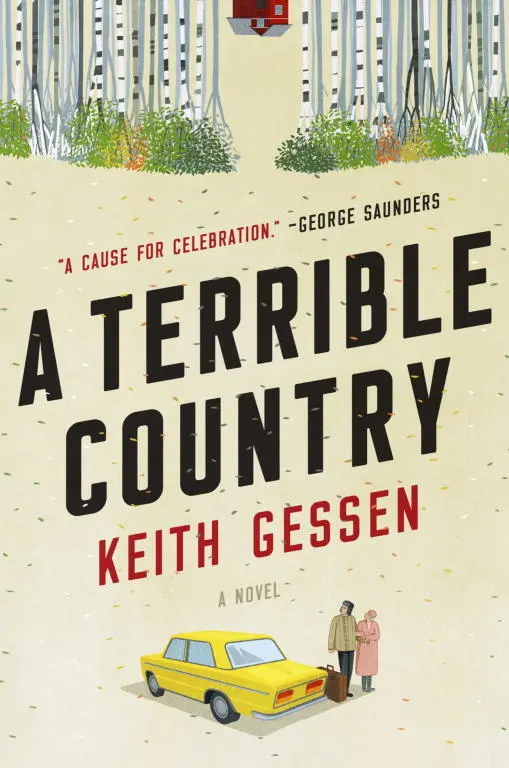
- Название:A Terrible Country
- Автор:
- Издательство:Viking
- Жанр:
- Год:2018
- Город:New York
- ISBN:978-0-735-22131-4
- Рейтинг книги:3 / 5. Голосов: 1
-
Избранное:Добавить в избранное
- Отзывы:
-
Ваша оценка:
A Terrible Country: краткое содержание, описание и аннотация
Предлагаем к чтению аннотацию, описание, краткое содержание или предисловие (зависит от того, что написал сам автор книги «A Terrible Country»). Если вы не нашли необходимую информацию о книге — напишите в комментариях, мы постараемся отыскать её.
A Terrible Country — читать онлайн бесплатно полную книгу (весь текст) целиком
Ниже представлен текст книги, разбитый по страницам. Система сохранения места последней прочитанной страницы, позволяет с удобством читать онлайн бесплатно книгу «A Terrible Country», без необходимости каждый раз заново искать на чём Вы остановились. Поставьте закладку, и сможете в любой момент перейти на страницу, на которой закончили чтение.
Интервал:
Закладка:
And then the same thing happened all over again. They didn’t want to let me play. I insisted. They said no. They couldn’t understand who I was. By this point the swelling in my cheek was gone, and I’d been speaking Russian continually for almost two months, meaning my small accent was also gone, and so I seemed to them like, basically, a regular guy. Why didn’t I have a network of people to whom I could appeal for an introduction to their hockey game? Grisha actually got up at one point and yelled, in his frustration at my refusal to leave, “Who are you and what do you want?!”
“I just want to play hockey,” I finally said. Grisha turned away in disgust, but Fedya, who had seemed like the mean one, said, “Come on Wednesday. Bring five hundred rubles.” I thanked him and got out of there before Grisha could rescind the invitation. Five hundred rubles would have been twenty dollars before the devaluation; now it was seventeen. I could live with that.
That was on a Friday. I spent the next five days imagining what playing hockey in Russia would be like, and then I found out. When I came in smiling to Fedya and Grisha’s locker room, Fedya barely looked up and without a hello simply said, “You’re on the other team,” and sent me to the neighboring locker room. The guys in there moved aside for me but otherwise paid me no attention. Out on the ice, Fedya and Grisha’s team subjected me to an extraordinary level of physical violence. I got hooked, hit from behind, and slashed, not least by big, bald Grisha. At one point one of their guys—not Grisha—slashed me so badly in the leg that I couldn’t take it anymore and slashed him back. He took real exception to this and made as if he were going to slash me in the head. At that point I didn’t care—I was not enjoying myself. One of the guys on my team pulled him back, marking pretty much the first acknowledgment from one of our guys that I was even there.
Fedya and Grisha’s team was good; they wore matching white jerseys and played together seamlessly. Our team was less good. We all wore different nonwhite jerseys (our goalie even wore a bright red one in the style of the old Soviet Olympic jerseys, with CCCP across the front) and did not play well together. On top of that, we had a bad attitude. On my first shift I got the puck in the offensive zone, chased it into the corner, and got plastered from behind by Grisha. The puck squirted away; my right wing, Anton, picked it up and tried to hit my left wing, Oleg, in the slot. But the pass was a little out of Oleg’s reach and got picked up instead by Grisha, who made a nice outlet pass to the right wing, who gave it to Fedya, who gave it back to the wing, who scampered down the boards and scored.
Our line came off; as soon as we reached the bench, Anton and Oleg started yelling at each other. They were big guys, over six feet tall, and a few years older than me; Anton wore a blue Ovechkin jersey from when he (Ovechkin) played for Dynamo; Oleg wore a red Karlovy Vary jersey and had a chubby, friendly face.
“What the fuck, Oleg!” Anton said. “Where were you looking?”
“ Blyad’ !” said Oleg. “What do you want from me? Put the pass a little closer to my stick and I’ll fucking get it. Fuck.”
This went on for the entire game. None of the guys yelled at me; they barely seemed to see me. But they kept yelling at each other.
In Boston, where I grew up playing, hockey players never yelled. In New York things were a little different; there was a Long Island school of hockey that was more exuberant, where guys talked more trash—but only to the other team. In Boston, entire skates could go by in total silence. If someone from the other team happened to say something to you, you were to give him a disdainful look and say, “Fuck you.” If he continued talking you could skate away or drop your gloves and fight. But more often than not, no one said anything. They just played.
I was, frankly, disgusted. We must have lost by six or seven goals and in the locker room afterward the mood was grim. No one invited me back for the next skate and I didn’t go. I would rather not play hockey, I thought, than play hockey with these dicks.
But by the next Wednesday, I was ready to try again. When I came into the locker room half an hour early, as a way of trying to establish a presence in the space, our goalie was already there. He was a small, thin guy, about my age, but a good goaltender—it wasn’t his fault the other team was much better than we were. “Ah,” he said now, “y-y-you’re here!” He had a slight stutter, and he was using the ty in a way that was clearly friendly. “We were wondering if you’d come. You may not have noticed, but we need some speed up front.” I was immensely grateful for this and laughed. “By the way, my name is Sergei,” he said. “Hello, Sergei,” I said, using the ty myself. We shook hands. Then we went out and lost again. Nonetheless, despite plenty of slashing and hooking against me, I felt better out on the ice. The guys were violent, but they were slow; I could take an extra half second and make sure my passes were accurate and then brace for a hit. I didn’t do anything extraordinary, but I began to have a sense of where I was. In the locker room afterward, one of the guys turned to me and said, “You coming on Friday?”
Another ty.
“Do you think I should?” I asked, using ty as well.
“I think you have to.”
“All right,” I said. I was on the team. It wasn’t a good team, and it was badly overmatched and indeed frequently humiliated by the white team, but nonetheless I was on it. One of the guys even asked me about my Ikea bag. “Is that comfortable?” he said.
“It’s OK,” I lied. “It lets my stuff breathe.”
The guy nodded—a little skeptically, but still.
As for my grandmother’s slippers, a few weeks after our failed trip to Olympic Stadium I was walking through an underground crossing on my way to a hockey store to get my skates sharpened when I saw a lady selling slippers. They looked sort of like my grandmother’s. “Excuse me,” I said, “where are these from?”
“Gomel,” said the woman.
“In Belarus?”
“Yeah, so? They’re just as good as Russian ones.”
“No, that’s great!” I cried, much to her surprise. Belarusians were sensitive about their products, post-Chernobyl. I bought two pairs and stuck them in my Ikea bag. My grandmother was very pleased and bragged continually on the phone about it to Emma Abramovna. I’m sure Emma Abramovna was thrilled.
And in the meantime, Dima had come to visit.
9.
DIMA COMES TO MOSCOW
ALL HAPPY FAMILIES are alike; ours, obviously, was not a happy family.
What had we done wrong? By most measures, you would have thought we’d done everything right. For a few years in the late 1970s, the Soviets allowed the emigration of their Jews. First they sent the criminals and critics (“Let them rob and criticize the Americans!”), but there were only so many criminals and critics, and they eventually started letting out computer programmers like my father and literary scholars like my mother. My parents weren’t stupid. When you are given a chance to emigrate from a poor, decrepit, crumbling country to a wealthy, powerful, dynamic one, you take it. They took it. They filed their application, bribed someone who said they’d help, sold all their stuff—and off we went.
It wasn’t easy. I was six years old when we came over, and even I could tell. We stayed with another family at first, then in a weird apartment in Brighton, at the very edge of respectable Boston. Someone stole our security deposit. With my father’s first substantial paycheck we bought a giant, ugly car. As my parents drove around Brighton visiting their Russian friends—all their friends were Russian—I sprawled on the backseat and slept.
Читать дальшеИнтервал:
Закладка:
Похожие книги на «A Terrible Country»
Представляем Вашему вниманию похожие книги на «A Terrible Country» списком для выбора. Мы отобрали схожую по названию и смыслу литературу в надежде предоставить читателям больше вариантов отыскать новые, интересные, ещё непрочитанные произведения.









Обсуждение, отзывы о книге «A Terrible Country» и просто собственные мнения читателей. Оставьте ваши комментарии, напишите, что Вы думаете о произведении, его смысле или главных героях. Укажите что конкретно понравилось, а что нет, и почему Вы так считаете.