Keith Gessen - A Terrible Country
Здесь есть возможность читать онлайн «Keith Gessen - A Terrible Country» весь текст электронной книги совершенно бесплатно (целиком полную версию без сокращений). В некоторых случаях можно слушать аудио, скачать через торрент в формате fb2 и присутствует краткое содержание. Город: New York, Год выпуска: 2018, ISBN: 2018, Издательство: Viking, Жанр: Современная проза, на английском языке. Описание произведения, (предисловие) а так же отзывы посетителей доступны на портале библиотеки ЛибКат.
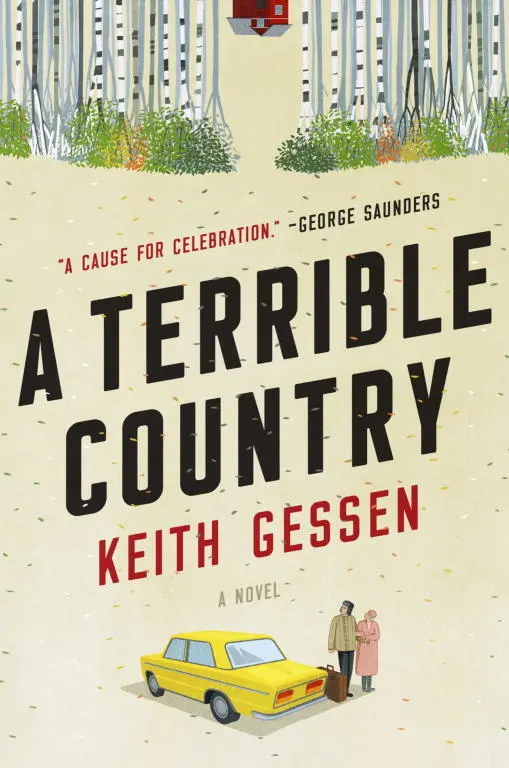
- Название:A Terrible Country
- Автор:
- Издательство:Viking
- Жанр:
- Год:2018
- Город:New York
- ISBN:978-0-735-22131-4
- Рейтинг книги:3 / 5. Голосов: 1
-
Избранное:Добавить в избранное
- Отзывы:
-
Ваша оценка:
A Terrible Country: краткое содержание, описание и аннотация
Предлагаем к чтению аннотацию, описание, краткое содержание или предисловие (зависит от того, что написал сам автор книги «A Terrible Country»). Если вы не нашли необходимую информацию о книге — напишите в комментариях, мы постараемся отыскать её.
A Terrible Country — читать онлайн бесплатно полную книгу (весь текст) целиком
Ниже представлен текст книги, разбитый по страницам. Система сохранения места последней прочитанной страницы, позволяет с удобством читать онлайн бесплатно книгу «A Terrible Country», без необходимости каждый раз заново искать на чём Вы остановились. Поставьте закладку, и сможете в любой момент перейти на страницу, на которой закончили чтение.
Интервал:
Закладка:
Everything after that happened pretty fast. A black Mercedes SUV—the ubiquitous black Gelenvagen, which resembles a hearse, rare in the U.S. but very popular in Moscow—pulled up, and a tall, blond young man emerged from the front passenger seat. This would be the boyfriend. We all turned and looked at him, Howard and I putting on friendly, nonthreatening faces. I figured that as the native Russian speaker I should be the one to introduce us, so I stepped forward and started to say something along the lines of “I’m Andrei and this is my friend Howard” when I noticed that the boyfriend had raised his hand, as if telling me to stop speaking, that in his hand he had something black that I could swear was a gun, and that the hand with this possible gun was flying at my face.
The gun hit my face before I had a chance to process the sequence of events; my knees buckled and I fell to the ground. “Hey!” Howard yelled. Then came the pain. It was a throbbing in my left cheekbone and a kind of spinning in my head. I was preparing to get hit again and I even put my arm up to block it, but when I looked up the Gelenvagen and Natasha were gone. The boyfriend who’d hit me hadn’t even said a word. I remained sitting awkwardly on the ground. I felt like I was very close to crying; the whole thing was so humiliating, this whole country was so awful, why was I even here?
“Jesus, fuck, I’m sorry,” said Howard. He was crouching down next to me, looking very upset. It hurt to speak so I didn’t say anything, but it wasn’t Howard’s fault. “That car had government plates,” he said. “That cunt was probably the son of a Duma deputy. Jesus!” He hailed a car to take us home.
It was a five-minute ride but it felt like forever. Howard sat up front with the driver. I held my cheek with my hand, hoping thereby to keep it from falling off my face. I wondered if it was broken.
“They fucked your friend up, huh?” the cabdriver said to Howard.
Howard nodded. “ Pistolet ,” he said, meaning “gun.”
“He hit him with a gun?” said the driver. He seemed genuinely concerned. “You foreigners,” he said, “you need to be careful. Nash chelovek inogda voz’met i po yebal’niku dast, prosto tak .” “Our person”—that is, a Russian—“is liable to just up and hit you in the fucker”—that is, the face—“for no reason.” He shook his head.
We stopped at the traffic light at the Clean Ponds metro, next to the big post office, not far from the statue of Griboedov where my grandmother and I had seen that protest. I kept taking my hand off my cheek to see if it was bleeding. It was, but only a tiny bit. Was that bad? I wondered. Would it have been better if it was bleeding profusely?
The driver seemed to feel bad about the whole thing, on behalf of all Russians, and reached his hand into his jacket pocket. I thought for a second that it was going to be another gun, but it was a flask. He handed it back to me.
“Russian medicine!” the driver said to me in English and laughed.
“Thank you,” I said in Russian. I took a drink from the flask—it was vodka.
“What, you’re Russian?” said the driver.
“Sort of, yes,” I said.
The driver now shook his head in disgust, as if, as a Russian, I should have known better. “But I’m not Russian,” I wanted to say to him. “I’m American. I’m from a place where shit like this doesn’t happen. I am going to leave here and you will never see me again.” I found even thinking this a humiliating experience. But I meant it. I had made up my mind to leave. I was a shitty caretaker of my grandmother and neither was I having the time of my life. I would write to Dima finally to ask when he was coming back, because as soon as he came back, I was gone. This was a terrible country, and I was not cut out for it.
The next morning I woke up with a very badly swollen but by all appearances not broken cheekbone. The pain was bad but worse than that was my grandmother’s shock at seeing me. I hadn’t thought to think of an excuse, but I did so now. The other day I had seen some Central Asian construction workers playing soccer in a dirt lot off Pechatnikov, and I now told my grandmother I’d been hit with a soccer ball. “It looks terrible,” she commented.
It really did look terrible, and continued to look terrible for two weeks. But the worst part might have taken place that afternoon. I decided to stay home from the Coffee Grind and ice my face as much as possible; in the middle of the afternoon my grandmother and I had some tea and listened to Echo of Moscow, when who should we hear being interviewed by Elena but my brother.
The week before, some protesters from a group called September had infiltrated a construction site on the new Moscow–Petersburg highway. I knew about this highway because Dima had bid to build gas stations on it and lost. The protesters draped signs over the bulldozers declaring that forests were for the people, not the oligarchs—the highway was going to be built through a large forest north of Moscow, destroying a sizable portion of it in the process—and tried to prevent construction crews from operating their machinery, including by pouring sugar into the gas tank of one of the bulldozers, apparently destroying its engine. In response they were roughed up by soccer hooligans hired by the construction company, and in the next day’s papers appeared photos of these nice young protesters, both men and women, getting attacked by thugs wearing MMA gloves. The construction company turned out to be part owned by a RussOil executive who was also a Duma deputy from the United Russia Party. There was enough outrage about it that the Duma deputy had to make a public statement. His statement was that this regrettable incident was the fault of “certain businessmen living abroad” who had been disappointed by the “operations of the free market” and were now trying to destabilize the situation. “We are a country of laws and respect for property,” he said. “When property is ruined at the behest of some foreign businessman, that’s something law enforcement needs to look into.” It seemed, I thought, like a potential reference to my brother, but at the time this struck me as so far-fetched that I put the thought away.
Now here was Dima on the radio, discussing this very thing with Elena. She was asking him about the deputy’s remarks, and whether he took them to be addressed to him.
“It’s Dima!” I cried.
“Oh?” said my grandmother, not immediately understanding. And then, “It’s Dima!”
“Do I think he was referring to me?” Dima was saying. “I have no idea. I can’t read the sick minds of the representatives of this sick regime. But I also think deflecting blame is a perfect sign of this sickness. So is lying. I can’t tell if they’re lying or they believe it, and I don’t care.”
“That’s true,” said my grandmother, but I was taken aback. First, by the thought that the official’s accusations might be true, and that Dima had organized some kind of rebel army. And second, by the way he spoke: this did not sound like a person who was planning to come back to Moscow anytime soon.
That evening Howard texted me to see how I was doing, and I asked if I could come over and check my email on his computer. From there I wrote Dima, said I’d heard him on the radio, and demanded to know what his plans were about coming back. I did not mention that I’d been pistol-whipped in front of Teatr, since he’d probably just call me an idiot for going there in the first place. In any case he wrote back right away to say he’d be coming to town at the end of October—we could talk about it then. This was an entire month away but I figured I could handle it. The swelling in my face would go down and then when Dima came I could tell him that I wanted to leave.
Читать дальшеИнтервал:
Закладка:
Похожие книги на «A Terrible Country»
Представляем Вашему вниманию похожие книги на «A Terrible Country» списком для выбора. Мы отобрали схожую по названию и смыслу литературу в надежде предоставить читателям больше вариантов отыскать новые, интересные, ещё непрочитанные произведения.









Обсуждение, отзывы о книге «A Terrible Country» и просто собственные мнения читателей. Оставьте ваши комментарии, напишите, что Вы думаете о произведении, его смысле или главных героях. Укажите что конкретно понравилось, а что нет, и почему Вы так считаете.