O Chin - Now That It's Over
Здесь есть возможность читать онлайн «O Chin - Now That It's Over» весь текст электронной книги совершенно бесплатно (целиком полную версию без сокращений). В некоторых случаях можно слушать аудио, скачать через торрент в формате fb2 и присутствует краткое содержание. Город: Singapore, Год выпуска: 2016, ISBN: 2016, Издательство: Epigram Books, Жанр: Современная проза, на английском языке. Описание произведения, (предисловие) а так же отзывы посетителей доступны на портале библиотеки ЛибКат.
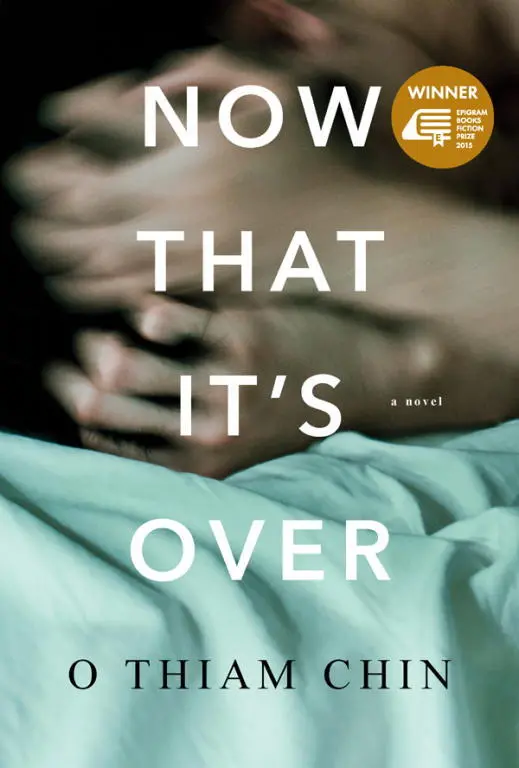
- Название:Now That It's Over
- Автор:
- Издательство:Epigram Books
- Жанр:
- Год:2016
- Город:Singapore
- ISBN:978-981-4757-28-7
- Рейтинг книги:4 / 5. Голосов: 1
-
Избранное:Добавить в избранное
- Отзывы:
-
Ваша оценка:
Now That It's Over: краткое содержание, описание и аннотация
Предлагаем к чтению аннотацию, описание, краткое содержание или предисловие (зависит от того, что написал сам автор книги «Now That It's Over»). Если вы не нашли необходимую информацию о книге — напишите в комментариях, мы постараемся отыскать её.
Winner of the 2017 Singapore Book Award for Fiction
During the Christmas holidays in 2004, an earthquake in the Indian Ocean triggers a tsunami that devastates fourteen countries. Two couples from Singapore are vacationing in Phuket when the tsunami strikes. Alternating between the aftermath of the catastrophe and past events that led these characters to that fateful moment, Now That It’s Over weaves a tapestry of causality and regret, and chronicles the physical and emotional wreckage wrought by natural and manmade disasters.
Now That It's Over — читать онлайн бесплатно полную книгу (весь текст) целиком
Ниже представлен текст книги, разбитый по страницам. Система сохранения места последней прочитанной страницы, позволяет с удобством читать онлайн бесплатно книгу «Now That It's Over», без необходимости каждый раз заново искать на чём Вы остановились. Поставьте закладку, и сможете в любой момент перейти на страницу, на которой закончили чтение.
Интервал:
Закладка:
Wei Xiang recalls the night before their trip, when she left the house late at night to go to the nearest pharmacy to buy motion-sickness pills; neither of them had ever been ill on their previous trips, let alone from motion sickness. As expected, Ai Ling came home empty-handed after an hour. Wei Xiang could not imagine what had possessed Ai Ling to head out alone in the middle of the night to look for something that they would not need, knowing well that the shops in their neighbourhood closed at ten. When she got back, all she offered as an explanation was that she was afraid she would get nauseous on the flight. In the end, she bought the medication at a pharmacy in Changi Airport before their flight.
A touch shakes him from his daydream. The boy has nudged him and is pointing at a distant spot towards the sea, signalling for Wei Xiang to follow him. Whatever he’s feeling, whatever misgivings or doubts, Wei Xiang can sense the boy’s urgency, evident in his animated gestures, beckoning him to take heed. The sun is edging towards the west of the island, tracing the height of the hill; it must be around four o’clock. It would be foolish to turn back now; it’s already too late to change to a new course of action.
So, with Wei Xiang’s silence as consent, the boy takes off down the street in the sandals. They slip through the ravaged townscape, across fallen, twisted telephone poles, through a flooded backyard filled with bloated bodies of chickens, stiff dark-hued feathers covering every inch of the water surface—Wei Xiang can smell the air getting danker, heavier in density—towards the sea. He feels a charge of adrenaline in his blood, aware that he’s running headlong into all kinds of danger, not knowing what will become of him should the waves rise again.
Closer to the sea, he can’t differentiate between the brown-and-gunmetal floodwaters and the sea itself, where one ends and the other begins. The water comes up to his knees at times, and then recedes to ankle-height, before another step brings him to a pause on soft, sticky mud. The closer they get to the sea—bare, wasted land around them, quiet and solemn like a cemetery, one or two coconut trees standing in stubborn resistance—the fewer people they see, until there’s no one in sight. The wind, pushing in from the Andaman Sea, whips in Wei Xiang’s ears, skimming the skin of the water. The boy stops, looks around, and moves to higher ground, away from the tangled roots of the thicket of mangrove they have found themselves in. By this time, Wei Xiang’s feet are covered with cuts and scratches, and the sea water is aggravating and numbing these wounds at the same time. Wei Xiang makes a deliberate effort not to look at the cuts, though he’s feeling a considerable amount of pain.
Soon they come to a stop and Wei Xiang realises that they are standing at a breakwater, a few metres above sea level, facing out into the expanse of light and water. All around, the unbreakable membrane of silence. He takes in the panoramic view and catches his breath, his lips cracked and bleeding. The boy has barely broken a sweat, his body radiating an otherworldly sheen. Following his gaze, Wei Xiang shields his eyes from the glare of the sun and stares out into the distance, trying to see what the boy is intently looking at.
Along the horizon, towards the northeast, a dark smudge rises out of the water, a hazy ridge of land masses. They must be smaller, outlying islands that pepper the fringe of the main island—hundreds of them, according to Ai Ling, who read up on the geography of Phuket in the guidebook, most of them too small and insignificant for any geographical or historical interest. Ai Ling had wanted to hire a guide and rent a boat to view these islands, to see some of them up close, to know what it’s like to step foot on these lands that have rarely seen human existence.
The boy takes a step forward and, without a word, dives into the water. Wei Xiang squats on his haunches, blood rushing to his head, and scans the water for the boy. Nothing, except the rough, continuous lapping of the waves against the cracked stones of the breakwater. He stays motionless, counting the long seconds—sooner or later, the boy will have to come up for air. Still he does not dare to move a muscle; anytime now, the boy will have to emerge.
And then, a few metres from where Wei Xiang is staring, a head pops up out of the water. He gasps and lets out a shout. The boy swims unhurriedly towards him. When he gets to the wall of the breakwater, he grabs onto the gaps between the stones with his fingers and pulls himself out of the water. The wet clothes cling to his scrawny frame with a downward pull, but the boy is unperturbed, his attention focused entirely on the act of scaling the wall—a grip, a tug and a pull, repeat.
When he reaches the top of the breakwater, Wei Xiang stretches out his arm to take hold of the extended hand, and yanks him up with a final pull. Still dripping, the boy steadies himself, his chest heaving. The sandals have disappeared from his feet; they must have fallen off during the dive. Wei Xiang pulls off his T-shirt and puts it over the boy’s trembling body. Then on impulse, Wei Xiang hugs the boy. The wetness and rigid coldness of the boy’s body goes right through Wei Xiang’s shirt and touches his skin, making his heart lurch. He pulls away.
The boy opens up his hand, palm faced upwards. Something glints in the light. Wei Xiang looks at it, and then takes a longer, harder stare. It does not make any sense, this thing the boy’s holding in his hand. A silver ring. The boy lifts it higher, as if beseeching Wei Xiang to take a closer look.
Wei Xiang reaches for the ring and looks for the carvings on the inside of the band—the tiny inscription is there: AL + WX. He pinches it in his fingers and glares at the boy, fear mounting. The ground seems to have fallen away from him, and Wei Xiang feels as if he were hovering in mid-air, waiting to hit the ground. The boy returns his stare; something softens in his expression. Tilting his head, he regards Wei Xiang with a puzzled look, and then turns to gaze out into the sea, to where the cluster of islands stands, a mirage of light and land. A few strands of wet hair fall across his eyes.
Wei Xiang collapses to the ground, his mind a gathering storm of dark thoughts. Something catches at the back of his throat. He looks up into the empty sky and feels everything around him coming at him, all at once, with a sharp clarity: the sultry heat, the distant call of a passing seagull, the crash of the waves, the grit of the tiny pebbles embedded in his soles. He thinks about Ai Ling, and the boy, and about the strange, unfathomable ways that life can bring and hold things together—but he can’t understand anything, not a single thing.
Wei Xiang closes his fist, holding the ring in the heat of his tightening palm, and brings it up to his face. Ai Ling—her name surfaces like a faraway dream, half-forgotten. He says it again and again, and each repetition of the name brings a certain, fearful finality to it.
Then Wei Xiang feels the light pressure of the boy’s body against his side, drawing him back to the present, to the breakwater where he is now. A growing despair is eating its way out of him, and all Wei Xiang can feel is the abysmal sense of coming apart, endlessly.
From somewhere around him, Wei Xiang hears the lilt of a song. It takes him some moments before registering the fact that the boy is singing. He sings for a long time without a break or an end; the song resounds in Wei Xiang’s ears, sinking into him, penetrating him. He finally comes apart, in the middle of it.
Even after the heat of the day has drained away, with the sea breeze blowing over them, leaving behind a speckling of salt on their skins, the song goes on uninterrupted, suspending Wei Xiang in a soft, protective spell.
Читать дальшеИнтервал:
Закладка:
Похожие книги на «Now That It's Over»
Представляем Вашему вниманию похожие книги на «Now That It's Over» списком для выбора. Мы отобрали схожую по названию и смыслу литературу в надежде предоставить читателям больше вариантов отыскать новые, интересные, ещё непрочитанные произведения.











Обсуждение, отзывы о книге «Now That It's Over» и просто собственные мнения читателей. Оставьте ваши комментарии, напишите, что Вы думаете о произведении, его смысле или главных героях. Укажите что конкретно понравилось, а что нет, и почему Вы так считаете.