O Chin - Now That It's Over
Здесь есть возможность читать онлайн «O Chin - Now That It's Over» весь текст электронной книги совершенно бесплатно (целиком полную версию без сокращений). В некоторых случаях можно слушать аудио, скачать через торрент в формате fb2 и присутствует краткое содержание. Город: Singapore, Год выпуска: 2016, ISBN: 2016, Издательство: Epigram Books, Жанр: Современная проза, на английском языке. Описание произведения, (предисловие) а так же отзывы посетителей доступны на портале библиотеки ЛибКат.
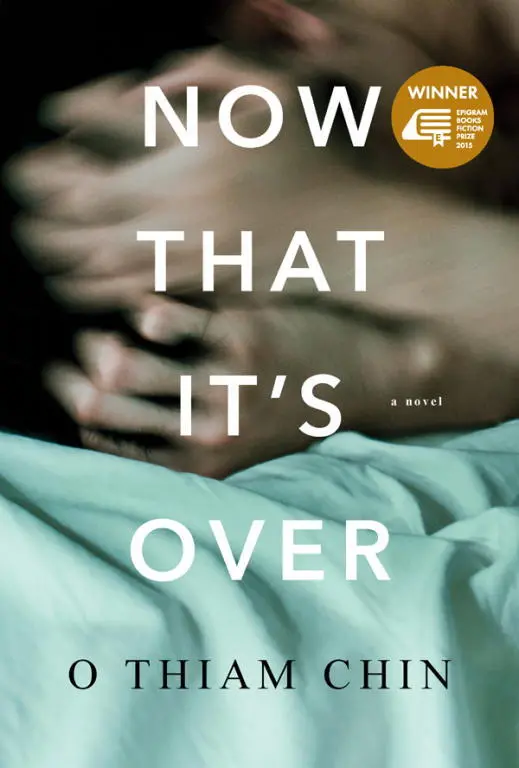
- Название:Now That It's Over
- Автор:
- Издательство:Epigram Books
- Жанр:
- Год:2016
- Город:Singapore
- ISBN:978-981-4757-28-7
- Рейтинг книги:4 / 5. Голосов: 1
-
Избранное:Добавить в избранное
- Отзывы:
-
Ваша оценка:
Now That It's Over: краткое содержание, описание и аннотация
Предлагаем к чтению аннотацию, описание, краткое содержание или предисловие (зависит от того, что написал сам автор книги «Now That It's Over»). Если вы не нашли необходимую информацию о книге — напишите в комментариях, мы постараемся отыскать её.
Winner of the 2017 Singapore Book Award for Fiction
During the Christmas holidays in 2004, an earthquake in the Indian Ocean triggers a tsunami that devastates fourteen countries. Two couples from Singapore are vacationing in Phuket when the tsunami strikes. Alternating between the aftermath of the catastrophe and past events that led these characters to that fateful moment, Now That It’s Over weaves a tapestry of causality and regret, and chronicles the physical and emotional wreckage wrought by natural and manmade disasters.
Now That It's Over — читать онлайн бесплатно полную книгу (весь текст) целиком
Ниже представлен текст книги, разбитый по страницам. Система сохранения места последней прочитанной страницы, позволяет с удобством читать онлайн бесплатно книгу «Now That It's Over», без необходимости каждый раз заново искать на чём Вы остановились. Поставьте закладку, и сможете в любой момент перейти на страницу, на которой закончили чтение.
Интервал:
Закладка:
I pull the bundle into my lap and take out a bun. Its skin has toughened, and already a few ants are crawling on it. I brush the ants aside and sink my teeth into the bun, the fillings spilling out of the corners of my mouth, flecks of vegetable falling on my chest. Within seconds, the bun’s gone. I’m tempted to eat another, but hold back, knowing that my supplies are limited. There’s no knowing whether I’ll be able to find other sources of food when I run out. I reach for the half-empty bottle of water and take a few sips, which barely satisfies my thirst. I have to keep moving. How long before night comes? The sun has hidden behind a strip of gauzy clouds. The insects buzz incessantly in the lethargic afternoon air.
Suddenly, something moves at the edge of my peripheral vision; the skin on my arms prickles. Turning towards the direction of the movement, I brace myself—what is it? Across the road, partially hidden behind a tree, a presence—something or someone? How long has it been there, without my knowledge? Its shape remains indistinct, its edges blending into the surrounding darkness. It simply stands there, an outline cut out of the fabric of the forest.
I stare for some time before the image slowly resolves into something that hits me like a punch in the stomach.
It’s the boy from the old woman’s hut, the one we buried.
I push myself off the ground, my legs unsteady. Leaning against the tree trunk, I blink several times, unable to make sense of what I’m seeing. The boy must be a projection of my fatigued, heated imagination, I tell myself. Yet, there he is, standing twenty metres away, staring, not moving. Perhaps he is some other boy who lives nearby and has chanced upon me—a stranger in the middle of nowhere; there’s absolutely no way he can be the same boy I buried two days ago.
Neither of us makes a move, each staring at the other across a chasm. My mind is a field of warring thoughts, failing to come up with a plausible explanation. I gather whatever remains of my senses and strength, and take a step forward. The boy immediately takes a step back, moving into the deeper shadow provided by the trees. In the darkness of the foliage, his skin glows with an aura of pale light. With each movement, his figure becomes smaller and smaller, flitting from tree to tree with preternatural ease.
I grab the bundle and move in ungainly steps towards the disappearing boy, not wanting to lose sight of him. Tripping over rocks and tree roots, I pick up my pace, trying to narrow the distance between us. But no matter how fast I’m going, I’m unable to cover enough ground to reach him. His retreating figure hovers at the margin of my vision, like a fixed point on the horizon, directing me. Ignoring the pain shrieking from every part of my body, I pursue the boy in fits and starts, my lungs on the verge of collapsing, each breath a razor-sharp intake of air. The perspiration stings my eyes and blurs my vision, but still I have the boy in my sights.
Cutting through thick undergrowth and thickets of shrubs and thorny bushes, I finally emerge into a clearing that looks out onto a sloping hill where I see a clutter of huts with wisps of smoke rising from them: a small village. Breathless, and bent with exhaustion, I look for signs of the young boy, but he’s nowhere to be found, leaving no tracks or traces of his presence. He has disappeared as simply and swiftly as when he first appeared.

“What were you like as a boy?” I asked Cody once.
“I don’t know, I can’t remember. You ask my sisters next time we go over to their place for dinner.”
“Seriously, nothing from your childhood? Like what did you do in school, who were your friends?”
“No, really, I can’t remember much of my childhood. Maybe some memories and impressions from here and there, but nothing worth remembering anyway.”
“But aren’t our impressions what count in how our memories are formed?”
“We embellish our memories all the time, don’t we? I mean, we revise them according to how we see and feel about our past at different points of our lives.”
“Yes, but they are all we have, right? Anyway, we can’t go back in time to relive what we’ve gone through, so we are stuck with what we can remember. But really you can’t remember anything from your childhood?”
“Well, if you are so dying curious to know, I guess you could say I was a weird kid.”
“We’re all weird in our own ways. When I was like six or seven, I used to catch butterflies and eat them because I thought their wings were so soft and light, like candy floss. Except their bodies were too gooey for my liking, bitter too. But their wings dissolved in my mouth like powdered sugar.”
“Damn, Chee Seng. Really?”
“Now you tell me something about your childhood, anything.”
“Okay, if you must know, my father always said I was very quiet, sometimes too quiet for my own good. Apparently I could go for days without saying a word. This was after my mother passed away.”
“For days?”
“Yes, my father told me I had a so-called ‘episode’ after she died, though I don’t remember anything about it now. He told me it went on for a week, and at the end of it, he was so worried that he even considered admitting me to the hospital, because I wasn’t eating or drinking. I just lay in bed the whole time and refused to talk to anyone. And then one night, I simply snapped back to myself and carried on like the past few days had never existed. My father told me all this later on. Like I say, that period of my life is a complete blank. It’s not like it’s something I’d want to remember.”
“You don’t remember a single thing from that incident?”
“Nothing. Anyway, it’s not important after a while, so why bother?”
By the time the villagers understand where I want to go, I’m exhausted beyond measure, no longer able to stand upright, and finally collapse. They carry me into a tiny thatched hut and lay me on a dirty straw mat. A cold drink is brought to my lips, and I gag and spit up while trying to swallow. Strange voices fill the air around me as my sight slowly resolves into a series of heavily-creased faces that crowd my vision. The villagers bring out plates of rice and fried vegetables and cajole me to eat, but I decline, my stomach raw and pulverised. Once again, I seek directions to return to Patong, through a fluttering of hand gestures and an odd word here and there. The men shake their heads and sigh loudly, uttering a stream of words, the gist of which I understand to be: don’t go, stay, wait. Again, I beseech them for help until they walk away to talk amongst themselves.
A small group of young children in tattered, threadbare rags surrounds me, excited like a litter of puppies, asking question after question, none of which I can decipher. Finally, one of the men comes up to me and takes me down a lane to where a row of houses stands. Women stand at the thresholds, watching us with open curiosity. In front of a small narrow courtyard, the man points to a rusty motorbike with a badly-torn seat, gets on it, and motions for me to hop on. He revs out of the village, a spray of dust trailing behind us. Not wanting to fall off the bike, I grip the man’s waist, praying that my strength will hold up for as long as it takes to get us to Patong.
Even before we reach the outer fringe of the town, the road is already jammed with traffic and people moving in both directions, making it almost impassable. Along the way, winding down the hills, I finally see the full extent of the destruction that has been inflicted on Patong and the beaches that line the coast; from high up, the town looks like a huge debris-clogged swamp, dark brown with large pools of brackish water glistening in the afternoon light, studded with stumps of decimated buildings. The shoreline has cut deeper inland, like the curved edge of a sickle. The sea remains proudly innocuous, placid.
Читать дальшеИнтервал:
Закладка:
Похожие книги на «Now That It's Over»
Представляем Вашему вниманию похожие книги на «Now That It's Over» списком для выбора. Мы отобрали схожую по названию и смыслу литературу в надежде предоставить читателям больше вариантов отыскать новые, интересные, ещё непрочитанные произведения.









Обсуждение, отзывы о книге «Now That It's Over» и просто собственные мнения читателей. Оставьте ваши комментарии, напишите, что Вы думаете о произведении, его смысле или главных героях. Укажите что конкретно понравилось, а что нет, и почему Вы так считаете.