Brad Felver - The Dogs of Detroit
Здесь есть возможность читать онлайн «Brad Felver - The Dogs of Detroit» весь текст электронной книги совершенно бесплатно (целиком полную версию без сокращений). В некоторых случаях можно слушать аудио, скачать через торрент в формате fb2 и присутствует краткое содержание. Город: Pittsburgh, Год выпуска: 2018, ISBN: 2018, Издательство: University of Pittsburgh Press, Жанр: Современная проза, на английском языке. Описание произведения, (предисловие) а так же отзывы посетителей доступны на портале библиотеки ЛибКат.
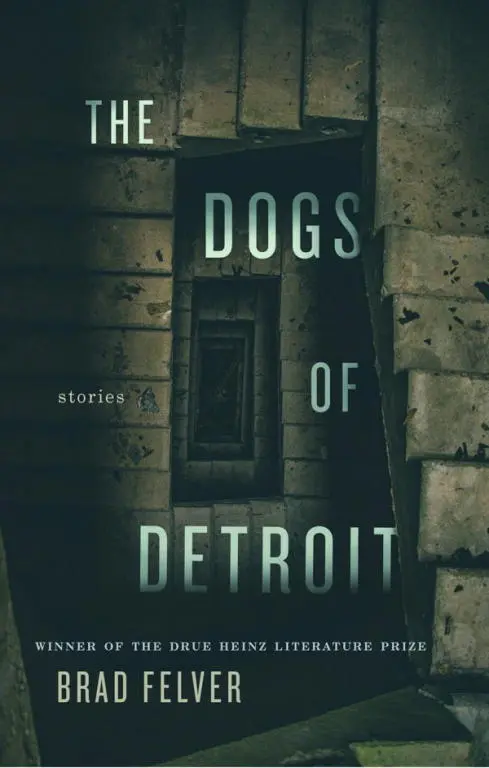
- Название:The Dogs of Detroit
- Автор:
- Издательство:University of Pittsburgh Press
- Жанр:
- Год:2018
- Город:Pittsburgh
- ISBN:978-0-8229-4542-0
- Рейтинг книги:4 / 5. Голосов: 1
-
Избранное:Добавить в избранное
- Отзывы:
-
Ваша оценка:
The Dogs of Detroit: краткое содержание, описание и аннотация
Предлагаем к чтению аннотацию, описание, краткое содержание или предисловие (зависит от того, что написал сам автор книги «The Dogs of Detroit»). Если вы не нашли необходимую информацию о книге — напишите в комментариях, мы постараемся отыскать её.
each focus on grief and its many strange permutations. This grief alternately devolves into violence, silence, solitude, and utter isolation. In some cases, grief drives the stories as a strong, reactionary force, and yet in other stories, that grief evolves quietly over long stretches of time. Many of the stories also use grief as a prism to explore the beguiling bonds within families. The stories span a variety of geographies, both urban and rural, often considering collisions between the two.
The Dogs of Detroit — читать онлайн бесплатно полную книгу (весь текст) целиком
Ниже представлен текст книги, разбитый по страницам. Система сохранения места последней прочитанной страницы, позволяет с удобством читать онлайн бесплатно книгу «The Dogs of Detroit», без необходимости каждый раз заново искать на чём Вы остановились. Поставьте закладку, и сможете в любой момент перейти на страницу, на которой закончили чтение.
Интервал:
Закладка:
And then it’s over. No more energy, no more anger. They exist together. For several minutes they hardly move, just pant and cough. This is the normal trajectory. Soon, they will rise to their knees, then stand and move into the house.
“Syringe Ebola into baby formula,” Polk says. He’s gasping, the words pulsing out in blurred waves. “Hack a newborn giraffe with a machete.”
“Okay.”
“Dynamite the Statue of Liberty.”
“Enough now.”
“Grocery bags full of puppy ears.”
“Polk.”
Polk stops sleeping in his bed. Too soft, too warm. Goodness to be found in small miseries: cold floors, festering splinters, fingertips burnt on light bulbs. He lies on the floorboards, no pillow, no blanket.
Outside the wind ravages the old house. The dogs, he can hear the dogs, howling and snarling, and then more snow comes, dampening the yelping echoes and covering old tracks. There is no sleep, not anymore, only an untended aggression that needs fed.
She is near, he knows this. He begins smelling her perfume, flowers and vanilla. More than once he moves her old ashtray from the table to the counter only to have it moved back by the morning. His father does not smoke. And of course, her prints. Is she too ashamed to come back? Is that it? Or is she angry with him because he didn’t say he loved her?
He sees her tracks again one morning, fresh tracks in the fresh snow. Not twenty feet from the front door, pacing around the grass cage where he fought his father. Keds, very clearly Keds. They slither through the tall grass, around the north side of house, up to each of the front windows. There they shrink and push deeper into the snow. On her tiptoes, peering in. He feels her lingering presence, as if they are trying to occupy the same space, as if she is trying to make sense of what has happened since she left. He examines each print, follows them out the backyard and through the split chain links. He tracks them north, fifty yards into the fields, the longest he has ever been able to track her, but then they enter into a depression of ice and evaporate. He circles around looking for an exit point, but there is none. Gone again.
Nearby is the pit bull mix that he shot the week before. It has a distinctive brindle pattern to its coat. Dilutions of gold on a black base crawl as if trying to escape. He is exposed, vulnerable without his rifle. Its stomach has been opened up, devoured. The other dogs, hungry for whatever protein still exists in this wasteland. And he thinks for a moment of the oddity of it all, how he kills the dogs and leaves them to rot, how the other dogs eat their pack-mates to survive. He hunts them and hunts for them. This canvas will never whiten. He isn’t sure what all this means, but he does know that the natural order of things has been upended, that he is caught up in it somehow.
Polk steals paint from school, tertiary colors, fills in every set of prints that might be hers. He squeezes paint into each print, filling it fully, cleanly, spreads it over every contour, and then moves on to the next print, and soon her trail glows, emerging from the snow and mud like collapsed stars. The paint will harden, freeze, will remain fixed there for as long as it takes for Polk to make sense of them. No more disappearing trails. He uses his stash of paints to categorize them by color, by direction, by timeframe, then draws a tape measure around the expanse of compound, slowly, from one set of prints to another, even measures stride lengths. He notes everything.
The dogs eye him but keep their distance, curiosity and mockery. Like an undertaker gazing at a body, perhaps. Polk doesn’t feel hunted exactly, but he feels something at the base of his skull, their lurking curiosity, feels how little he now belongs in this place. It belongs to the dogs.
Nights, he sits at the kitchen table. He moves the ashtray with her menthol butts to the counter, begins drawing a scaled map, every feature of the area, every print of hers, every color noted. He feels like a scientist tracking the migration patterns of some near-extinct species of bird. In time, her own patterns will emerge, her location. They must. For the first time since she disappeared he feels a goodness in himself, a warmth not from violence.
“What’s this?” his father asks.
“I’m not allowed to shoot the dogs anymore.”
His father sits next to him, looks the map over for a moment. “These are places you’ve seen her trail?”
Polk nods.
“This many?”
Polk keeps drawing, tracing a pencil across a ruler. Slow, precise movements.
“Polk?” his father says quietly, but Polk ignores him. He spends all evening drawing a map of the area, each set of prints noted and appropriately colored to indicate a timetable.
“My little cartographer,” his father says, but Polk ignores him still. This is more than a map. This is a timeline, a psychological study.
The next day, her ashtray is back on the table again. There are cigarettes in it, menthol butts that do not seem new but that he can’t recall seeing before.
He begins to see her footprints everywhere, glowing at him. They emerge from his father’s eyes. He sees them in headlights and oddly thrown shadows; during art class; in his dreams when he sleeps in short, hateful spurts. Sometimes the dog tracks morph as he stares at them, become longer, narrow, deeper on the ridges. Sometimes they are large and sometimes small, but they are all hers, this he knows.
“It’s not fair,” his father says. “None of it. I know that.” He tries to massage Polk’s shoulders, but Polk shies away. These attempts are clumsy and practiced now. They aren’t a family; they’re remnants of one. When she disappeared, their tripod crumbled.
There was a time, not very long ago, when they had been happy. He knows this now because he never thought about being happy. They had jobs, his father at the machine shop, his mother in the deli at the Kit Kat. She always brought home bologna that was almost expired, and they would fry it up until it bubbled and popped.
He clings to a single memory. Sledding a small scoop of a hill near baseball fields, dirty snow packed down. He tries to remember where this hill was, but the location eludes him. Was it a false memory? he wonders. Something he has manufactured to cope? His mother would give Polk a big shove, and he would slingshot down the hill, skittering and spinning where it turned into ice and when the speed became too much, he closed his eyes, afraid to see what lay below. Each time he shot down the hill he lost control, but always he would end up at the bottom, face up in the snow, always his father waiting, asking Should we go again? Then walking back to the house, having to wedge himself between his mother and his father because they were holding hands. He remembers her smell, flowers and vanilla. When they got home, he took a shower, but the water had gone cold again. Bad plumbing, dud water heater. When he walked into the front room still shivering and wet his father pulled a towel from the oven and swaddled him with it, and his skin slowly softened, his breaths lengthened until he felt whole and content.
Polk stops going to school, spends the days painting tracks, updating his map. He is meticulous, always bent over a set of prints or making notations. The pattern will emerge, the methods to her movements, this he knows. He plunges deep into the grounds of the Packard compound, even venturing into the buildings when he is feeling brave. Sometimes he sees vandals, other times photographers, but mostly he sees dogs and homeless who share the various buildings in relative peace. He maps and paints, maps and paints. He stops sleeping, just expands the map, growing weary and unpredictable. Everything begins to feel random. It begins to look like a star map, with constellations emerging, glowing at him.
Читать дальшеИнтервал:
Закладка:
Похожие книги на «The Dogs of Detroit»
Представляем Вашему вниманию похожие книги на «The Dogs of Detroit» списком для выбора. Мы отобрали схожую по названию и смыслу литературу в надежде предоставить читателям больше вариантов отыскать новые, интересные, ещё непрочитанные произведения.




Обсуждение, отзывы о книге «The Dogs of Detroit» и просто собственные мнения читателей. Оставьте ваши комментарии, напишите, что Вы думаете о произведении, его смысле или главных героях. Укажите что конкретно понравилось, а что нет, и почему Вы так считаете.